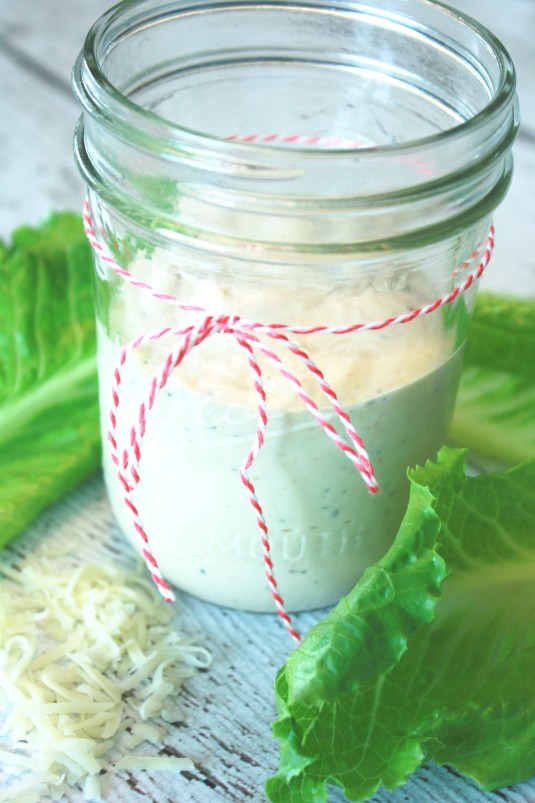
Copycat Outback Steakhouse Caesar Dressing
If you’re anything like us, Outback Steakhouse’s Caesar Dressing is a cut above the rest. It’s richer, has a definite garlic kick, and an unmistakable anchovy flavor.
This recipe took some doing, but after lots of tests, this is the closest we’ve come to recreating the dressing.
What Makes This Recipe Work
- This dressing tastes nothing like your average Caesar Dressing; it’s got that salty, savory, restaurant-quality taste. One tablespoon of anchovy paste will give your dressing that perfect base without overpowering it with a “fishy” flavor.
- You can find anchovy paste in a small tube in the seafood section of the grocery store. This is much easier than dealing with the canned anchovies, trust us on this one.
- We love using egg substitute to eliminate any concern for consuming raw egg. It also lends a nice richness and works wonderfully for emulsification in salad dressings and marinades.
- Using an electric mixer will save you some arm-wrenching. Give your dressing a good 30 second beat-up and your oil will fully emulsify creating a perfectly smooth dressing that will coat the lettuce instead of sinking to the bottom of your bowl.
- Letting your dressing sit for 12 hours allows it to thicken and mellows out the bite of the garlic. We’ve tested 4, 8, and 12 hour results. 12 hours is how it goes from “good” to “this is just like Outback’s!” Making it the night before guarantees it’ll be ready to serve at dinner.
What to Know Before You Start
- An electric mixer, though a hand-held mixer is fine
- This recipe was born out of a desire to recreate a favorite restaurant salad dressing and eliminate weeknight trips to Outback, which is difficult to do with little ones in tow. We’ve made this recipe several times in the past few years and continue to rave about it. We’ve seen lots of recipes for Caesar Dressing but the flavor of Outback’s is so unique that we thought we’d share how we recreate it at home. We think the secret is anchovies, which lots of recipes leave out, patience, and a good, solid, vigorous whisking/emulsification of the dressing, which is why we use an electric hand-mixer
If you’ve never used anchovies before, don’t worry. Anchovy paste is super easy to find in most grocery stores, usually in the aisle with the canned fish, comes in a teeny little tube, kind of like toothpaste, and lasts forever.
Just squeeze out what you need, pop the lid back on, and it’s good to go in the fridge for months to come. Trust me, one tablespoon of Roland anchovy paste will make this recipe.
It will give your caesar dressing depth of flavor, not “fish,” flavor.
Yield: Makes a lot of dressing, but it’s the perfect recipe to dress a family-sized salad. Stores well in a container in the refrigerator for up to 1 week.
- 1 cup mayonnaise*
- ¼ cup egg substitute, such as Liquid Egg Products or Just Egg
- ¼ cup grated Parmesan cheese
- ½ tsp. coarse ground black pepper
- ⅛ tsp. salt, more to taste
- ½ tsp. parsley flakes
- 2 cloves garlic, minced
- 2 tablespoons olive oil
- 1½ tablespoons lemon juice
- 1 tablespoon anchovies or anchovy paste
- 2 teaspoons sugar
- 2 tablespoons water
I recommend a wide mouth mason jar for storage. Just shake before serving.
Plastic can affect the flavor.
- Use good quality, full-fat mayonnaise for this recipe, such as Duke’s or Hellmann’s. Light mayo will result in a thinner dressing that doesn’t have much flavor, and Miracle Whip has a sweet and tangy flavor that will throw the dressing off. Mayo is the base for this recipe because it provides body, creaminess, emulsification, and fat which helps to transport flavor to your tastebuds.
Egg Substitute
Traditional caesar dressings include an emulsifier, which is a substance that enables two substances to combine that would not ordinarily combine. In dressings, the emulsifier helps the oil blend evenly with the acidic ingredient, such as vinegar or lemon juice in caesar dressing.
Raw egg yolk works well. I prefer to use an egg substitute such as Liquid Egg Products or Just Egg.
These are available in the dairy aisle of most grocery stores. There’s no need to expose yourself to raw egg when you have these great emulsifying alternatives that add a similar creamy mouthfeel to the recipe.
Add a whole egg or just a yolk at this point if you’re feeling brave. Almost all store-bought Caesar dressings contain an egg alternative which helps the dressing stay together for weeks without separating.
Olive Oil
The olive oil adds some fruitiness and richness. You could technically use vegetable oil but then you’re just adding fat.
Use whatever olive oil you have lying around, but reserve your really nice extra-virgin bottles for salads or pasta. Two tablespoons is enough to lighten up the dressing so it coats the lettuce smoothly instead of globbing up in chunks.
Lemon Juice
You need some kind of acid to help balance out all of the fat from the mayonnaise and olive oil and brighten everything up. Many recipes call for a splash of white or red wine vinegar which adds a sharper, more vinegary flavor.
Restaurants seem to use lemon juice as its flavor is a bit softer and less intrusive. Bottled lemon juice will work just fine since the dressing will sit for twelve hours which will mellow out the acidity.
In fact, the more processed, the better it seems to perform in the long run.
Anchovy Paste
This is a common sticking point for people making Caesar dressing at home. We know.
But trust us on this one. Without the anchovy, the dressing just doesn’t have something.
It will basically just taste like mayonnaise with a kick of garlic. Anchovies are full of glutamates, the thing responsible for that elusive fifth taste: umami.
We use Roland brand anchovy paste which will last for months in the fridge after you crack it open. You can use a tin of little baby anchovies if you’d rather.
Just be sure to really mash or chop them up so they’ll incorporate.
Mince two cloves of garlic. You can’t substitute garlic powder.
It won’t distribute correctly and it will change the flavor of the dressing drastically. The pungent bite that raw garlic has will recede into a balanced flavor after the dressing has been sitting for 12 hours.
Skip the rest and the dressing will be a little too garlicky and harsh.
Parmesan Cheese
Parmesan Cheese, a quarter cup, finely grated. I used the “real stuff”, but if you’re using the stuff that comes in the canister, that’s fine.
If you have Parmigiano Reggiano laying around, use that instead. It’s less salty and more complex in flavor, and will create a creamier dressing.
Whatever you use, make sure it’s finely grated so it will incorporate smoothly and won’t clump. The Parmesan cheese lends a bit of salt and umami to the dressing, plus that nutty Parmesan bite is tempered into something much mellower and helps give this copycat Outback Caesar dressing recipe it’s delicious flavor.
Sugar, I know this seems odd to add sugar to a Caesar Salad dressing recipe, but trust me, it’s needed. It rounds out the harsher flavors of the garlic and sharpness of the lemon juice, and is key to achieving a flavor that tastes more like Outback Caesar dressing and less like other Caesar Dressing recipes.
It’s not noticeable when you’re using the dressing.
How to Make It
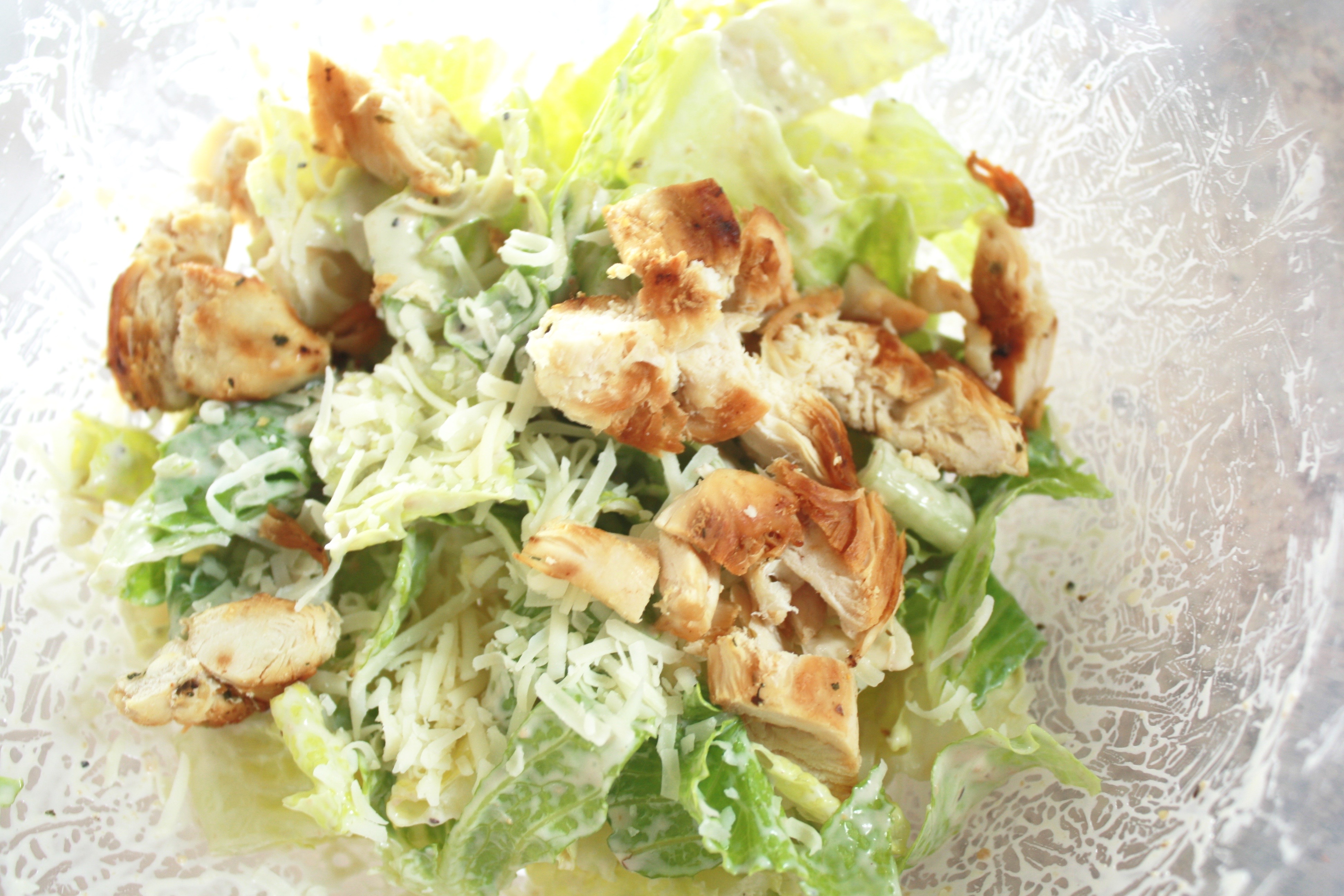
Add all ingredients to a medium sized mixing bowl. Unlike many other salad dressings where the oil needs to be added slowly while whisking to create a thick and creamy dressing, in this recipe you’re using mayonnaise which is already an emulsion and has body, so just add everything into a bowl and give it a beat with an electric hand mixer.
Beat for at least 30 seconds on medium-high speed until smooth and well blended and just starting to thicken a bit. It will continue to thicken a bit after it’s chilled.
This copycat Outback Steakhouse Caesar dressing tastes better after it’s had time to chill. Cover tightly, either in an airtight container or a mason jar, and chill for at least 12 hours before using.
Patience, this copycat Outback Caesar dressing recipe will taste better after it’s been refrigerated. Try to plan ahead.
What to Serve this Copycat Outback Steakhouse Caesar Dressing Recipe With:
Outback Steakhouse Caesar Salad: this copycat Outback Caesar dressing recipe is perfect for making your own Caesar Salad at home. All you need is Romaine lettuce, Parmesan cheese, croutons and this delicious dressing.
Use Romaine lettuce and not Iceberg for your homemade Caesar salad. Romaine holds up better to the dressing, Iceberg is much higher in water content and doesn’t hold dressing very well.
The Lettuce
Butter lettuce is too delicate to hold up to creamy, delicious Caesar dressing. You need something with some heft, body, and a little crunch.
Romaine is the most commonly used lettuce in a Caesar, and for good reason—it stands up to a hearty dressing without turning into a wilted mess. Tear it into bite-size pieces (about 1.5-2” chunks) so you don’t have to cut your salad into pieces.
Also, if you’ve washed your lettuce, make sure there’s not excess water sitting in the salad bowl—that will make the salad soggy and will thin the dressing.
The Parmesan
Since the Parmesan makes its way into the dressing, you’ll be adding some before you toss the salad and a little after. Save some for garnish.
Shaved Parmesan looks beautiful over a salad, and the shavings contain more of a punch than grated Parmesan. It’s easier than you think—all you need is a wedge of Parmigiano-Reggiano or Parmesan, though PR is so much better, and a vegetable peeler.
Run the peeler along the cheese and voila: ribbons of Parm.
The Croutons
This is the only component that takes a little work, but they’re delicious and it’s about a ten-minute investment. Tear some stale sourdough, Italian, or French bread into cubes.
Toss them with olive oil and garlic powder in a bowl. Lay them on a rimmed baking sheet and bake at 375 for 10-12 minutes until golden brown.
Set aside to cool. You can buy croutons at the store, but I find that the smaller croutons fall apart and turn to mush.
Make sure you’re getting the biggest ones you can find. Crunchy croutons are essential for this salad.
The Chicken
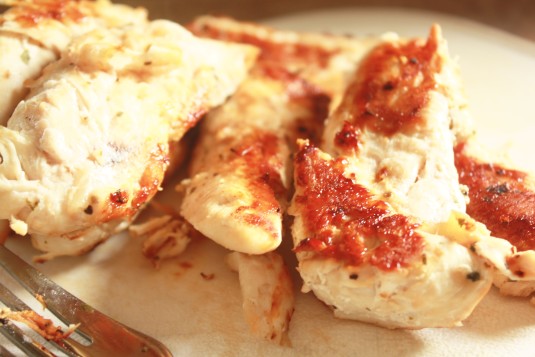
Cube some chicken breasts, season them well with Montreal Chicken Seasoning and cook them over medium-high heat. Let them rest and slice thinly across the grain.
How Much Dressing to Use
Since the dressing is pretty intense in a good, rich, and delicious way, a little goes a long way. Start with a little of the mixture and toss with your romaine, chicken, croutons and some of your shaved Parmigiano-Reggiano.
Taste a piece and add more as necessary. The heat of the chicken will wilt the lettuce slightly, which will make for a nice change in texture.
Add more shaved PR to garnish and dig in.
Add a couple of tablespoons of caesar salad dressing, or 3 to 4 tablespoons for a large salad that will serve 4, and toss well. Add more if needed.
You are looking for all of the lettuce pieces to be coated, but not coated to the point of drowning, with dressing. It’s easier to toss everything together in a large bowl to make sure everything is evenly dressed, then spoon onto individual plates.
How to Make a Caesar Wrap
This is where you’ll be glad you made the caesar chicken salad for dinner. All you need for lunch is some tortillas and those leftovers.
- Grab some large burrito-size tortillas so everything will fit when you roll them up. Warm them in the microwave or a dry skillet so they’ll be more pliable. This will help them not break when you roll them up.
- Chop some romaine, grab some of your leftover or store-bought grilled or sliced chicken and add them to your warmed tortilla along with a bit of leftover caesar dressing, starting with a tablespoon-ish and adding more if you like, and some grated or shaved parmesan cheese. You can also add a few of the leftover croutons to the mix.
- Pro-tip: Rather than pile all of the ingredients in the middle of the tortilla, lay out the chicken and lettuce first and spread them out nicely, leaving a little room at the top and bottom. Spread the dressing over top of the chicken and lettuce. That way you’ll get some of that great-tasting caesar in every single bite.
- Fold in the sides of the tortilla and roll it up as tightly as you can starting at the bottom. If you fill them just enough, and don’t go crazy stuffing them full of goodies, they won’t unroll themselves just as you’re picking them up. Slice in half on the diagonal and enjoy.
- Pro-tip #2: Eat them right away as the croutons will soften up pretty quickly.
This vs. Bottled Caesar Dressing
I get asked this quite a bit: Why should I make this from scratch when I can buy a decent bottled caesar at the grocery store?
There are lots of Caesar dressings at the store and many are pretty good. Ken’s Steak House and Cardini’s are good examples.
But as good as these are , they’re not as good as ours. These dressings are formulated to be stable for a long period of time.
To accomplish this they add more vinegar which results in a harsher dressing. They also add a stabilizer which makes the texture a bit unnatural and somewhat slimy.
Outback Steakhouse Caesar Dressing has a smooth, rounded flavor profile. The garlic is pronounced but mellow, the acidity is noticeable but not harsh.
The mayonnaise/egg base makes it smooth, rich, and full-bodied. This is the flavor we were going for and I think we hit the nail on the head with ours.
We think it tastes very similar to theirs.
Helpful Tips
- This dressing does require planning ahead as it tastes much better after 12 hours when the raw garlic mellows out. It takes 5 minutes to make. If you’re going to use it the next day make it now.
- Our recipe is cheaper than buying name-brand Caesar Dressing per serving, makes a lot and keeps as well. And it tastes better.
- If you’re going to have Caesar Salad for dinner and haven’t started making it, grab a bottle of Caesar dressing from the fridge, tear up some romaine, grate some parmesan and toss away. Life happens. We’re not judging. Just plan ahead next time 😉
Go easy on the dressing at first. It’s much easier to add more than to try and fix a too-dressed salad.
Is it necessary to use fresh grated Parmigiano-Reggiano?
I prefer it, and it’s one of those areas where I think you can taste the difference. Freshly grated Parmigiano-Reggiano is creamier, melts into the dressing better, and the flavor is much more complex than what you’ll get from a Parmesan from a canister.
However, it’s not a deal breaker. Use what you’ve got and enjoy.