
Salt is a natural abrasive that helps loosen stains and grime without scratching surfaces too badly. Salt also helps lift odors and shines copper and other metals.
For all of the following uses, coarse or kosher salt works best because it has more oomph for scrubbing, but regular table salt works well too.
There’s an array of ways to use salt as a household cleaner. Some are probably old-fashioned enough that your grandparents used them.
Salt is cheap and plentiful and works wonderfully well as a cleaner in the kitchen, on floors and linens, and around the house.
Scour a Cast Iron Pan
My husband believes that a cast iron skillet cleans itself. This belief stems from the fact that we primarily fry bacon in it, which is true, the fat helps keep it clean.
We save the pan by scouring it with coarse salt while it’s still warm and a wadded up paper towel. This lifts all of the gunk without ruining the pan’s seasoning and doesn’t require soap.
Remove Burnt Food
When I’m making soup or chili or some other lengthy simmering concoction I’m usually distracted and forget to stir and keep an eye on it. As a result, it’s reduced to a crunchy, inedible mess.
Rather than scraping away at it with a knife or scrubber and cursing under my breath, I add salt and water and soak or boil it for a while, loosening the burnt crud. This trick has saved numerous pots and pans.
Clean the Inside of Mugs That Have Coffee and Tea Stains
To remove tannin stains and restore the mugs to their former glory, rub salt on them with a dampened dishcloth. Rinse well and admire your formerly-new mugs.
Deodorize and Sanitize Cutting Boards
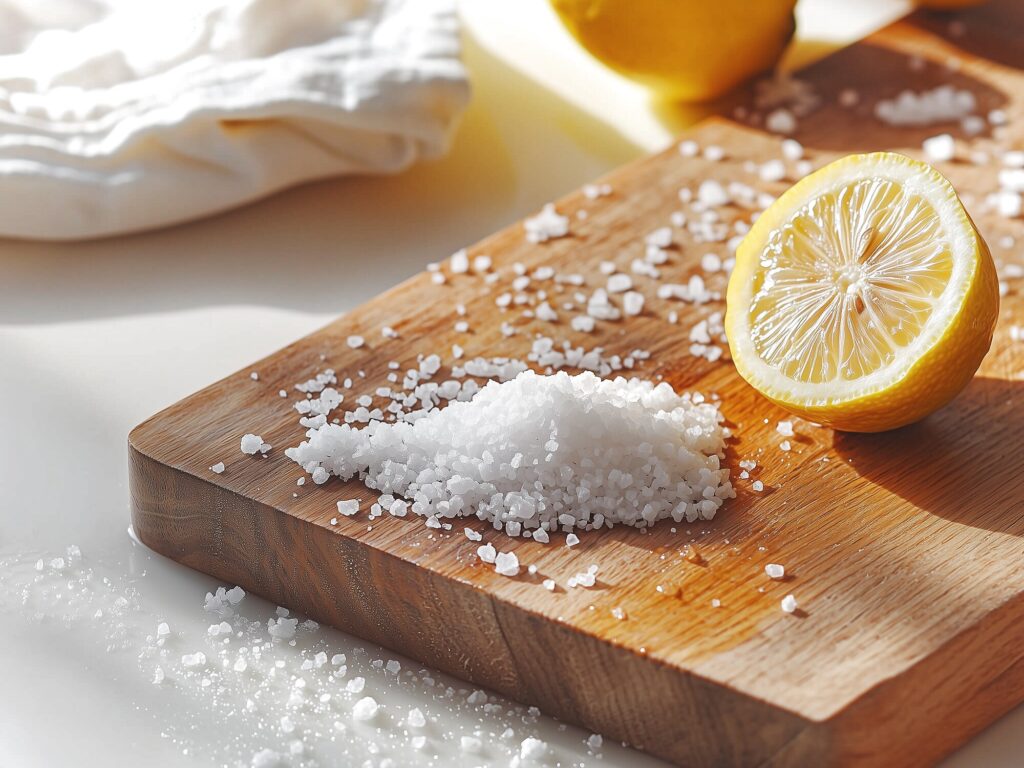
Nothing ruins a wooden cutting board like chopping up garlic and onion. Even after washing it still smells like last night’s salad.
To remove the smell, sprinkle coarse salt on the board and rub it with half of a cut up lemon. You can also use salt and a dampened dishcloth or a scrubber.
Not only will it remove the smell, salt helps remove stains on wooden and plastic cutting boards too.
Clean a Cloudy Glass Coffee Carafe
Coffee stains the heck out of my glass carafe. It’s difficult to scrub with anything more than my skinny pinky.
To clean, add 1-2 tablespoons of salt and a couple of ice cubes. Swirl and shake and voila, like new!
This trick also works well with glass pitchers that have been used for sweet tea.
Get Sneaker Stench Under Control
I was horrified to walk into my son’s room the other day and stumble upon his shoes. They smelled like death.
To rescue them I filled them with table salt, covered with a plastic baggie, and let them sit overnight. Salt absorbs the funk.
Empty, scrub, air out, repeat.
Clear a Slow, Smelly Drain
I love the smell of baking soda and salt. Especially when added to my floor drains when they start to smell funky or drain slowly.
Sprinkle baking soda followed by salt. Then slowly pour in a kettle of hot water.
Watch the grease and crud swirl down the drain. Repeat as needed.
Soak Up Fresh Oven Spills
I can’t count the number of times that something boils over in the oven. Rather than trying to scrub it out while it’s hot and gooey, sprinkle generously with salt and walk away.
Salt will soak up the mess. When the oven cools down sweep up the salt and enjoy your nearly-spotless oven.
Absorb a Fresh Spill
Red wine on our beige carpet. Been there, done that, cringed about it.
When it happens, sprinkle salt over the wet area to soak up as much wine as you can. Then, vacuum.
It’s not perfect, but it does help.
Clean the Soleplate of a Sticky Iron
If your clothes are emerging with little brown stripes from your iron, it’s time for a soleplate cleaning. Lay down some waxed paper or an old tea towel on a flat surface.
Sprinkle salt on top, then run your unplugged and hot iron back and forth over the salt. The buildup will lift.
Shine Tarnished Copper and Brass
When the shine starts to fade, rub it with a paste of salt and lemon juice or white vinegar. It will shine like new.
Clean Stained Enamel and Ceramic Cookware
Sometimes the food I’m cooking stains the bottom of my enameled Dutch oven. When this happens, dampen the stained area and scrub with coarse salt.
It cleans enamelware without scratching it. Salt can be used to clean other types of pots and pans as well, including ceramic-coated pans.
Remove the Odor From a Stinky Kitchen Sponge
The stench from our kitchen sponge sometimes overwhelms us. It’s time to rescue it with salt.
Fill a bowl with salted, concentrated water. Submerge the sponge, squeeze, repeat, then leave it to soak overnight.
Salt draws out the gunk that causes odor. Our sponge gets several uses before retiring.
Clean Out Narrow Vases and Bottles
If you’ve ever struggled to clean out a vase or a narrow-necked bottle, salt can help. Fill about 1/4 of the vessel with coarse salt and fill the rest with water.
Stopper the vase/bottle with your hand and swirl. Remove the salt/water mixture and rinse.
Repeat if necessary. The film will be gone.
Scour Porcelain and Stainless Steel Sinks
You can substitute salt for abrasive cleansers like scouring powder. Just wet a sponge and rub on some salt.
Our sinks are always shiny.
Remove Rust Spots
We have some rust spots on our cans and shelving that won’t budge. To remove them, try making a paste of coarse salt and lemon juice and let it soak.
The acid in the lemon works wonders on rust.
Scrub Grease off of Grills
It’s easier to scrub the grates when they are warm. Cover the grates with paper towels, sprinkle on some coarse salt, and scrub.
It’s quicker and you don’t have to worry about rogue wire bristles ending up in your vegetables like some people have experienced with wire brushes.
Remove Stains From Dish Towels
The dish towels that mop up messes in the kitchen often become soiled themselves. Mine look awful after a few days of service.
When they start to look tired, I boil a pot of water, stir in a good amount of salt, then soak the towels for about half an hour before laundering. They come out surprisingly brighter and newer-looking than expected.
Clear Cloudy Glasses With Salt
My hard water makes a film on my glasses as soon as I take them straight out of the cabinet. Fill them with salt and water and let them soak overnight.
Remove them in the morning, wash, dry, and admire.
Take Care of a Small Stove Fire With Salt
In case of emergency: Never put water on a growing grease fire! Salt will smother the flames.
If the flames grow call for help and evacuate.
Get Rid of Trashy Garbage Disposal Odors
Run the garbage disposal with ice, a small amount of salt, and citrus peels. The salt and ice will scrub the disposal while the citrus will leave it smelling lovely.
Clean Greasy Hands With Salt
Mix some salt and water with dishwashing soap for an abrasive and deodorizing handwash to take out greasy hands as well as fish, onion, or garlic smells.
Remove Watermarks Off of Wood
Make a paste of water and salt and apply to watermark. Test an inconspicuous area first.
Rub lightly then wipe off.
Loosen Stubborn Stains From Rags
Save stained rags by pre-soaking them in a bucket of hot, salty water before laundering. Stubborn stains that resist removal might surprise you by loosening in salty water.
My worst offenders are dog paw and pasta sauce stains.
Revive Yellowed Undershirts
My husband’s undershirts develop huge armpit stains that resist laundering. Pre-soaking them in salty, warm water usually works.
Sometimes they’re too far gone though and end up in my rag pile. But, many can be saved and worn another day.
Scour Grease Off of the Stove Top
Dousing sticky, baked-on grease on my stove with harsh chemicals is not on my agenda. Instead, I lay a wet rag over the grimy spots and sprinkle salt on top.
Rub vigorously, lift, wipe. Repeat as necessary.
Salt adds an abrasive quality to remove gunk. It’s cheaper than scouring powder too!
Scrub Glass Baking Dishes
When my glass baking dishes are too grimy to put away, I sprinkle them with salt, add a splash of water, then scour. The salt gets gritty, which helps loosen burnt-on food for easy removal.
Remove Burn Marks From the Bottom of Pots
Distractions happen and I’m not proud of the number of pots in my kitchen with blackened bottoms. My teenage sons aren’t immune either and we’ve been able to salvage pans that otherwise would have been tossed.
Cover the bottom of the pan with a thick paste of salt, add enough water to cover, boil, remove from heat, allow to cool, pour out the water and scrape away chunks of burnt food. Recently, I used this method along with soaking to rescue this pot that met its demise in a batch of burnt rice.
Refresh Wooden Bowls and Spoons
Just as salt removes unwanted food odors from your hands after preparing a recipe with lots of garlic or working with whole chicken, it removes food marks and smells from wooden spoons and bowls. After cleaning, rinse well, dry thoroughly to prevent warping and apply a bit of oil to spoons to bring out their beauty.
Clean Stained and Greasy Sheet Pans
Save special cleaners for more challenging projects. Grease and dirt on sheet pans comes away easily with salt.
Just sprinkle salt over the surface of the pan, allow to sit and wipe with a damp sponge. Salt is an abrasive but doesn’t mar the surface like some cleaning tools.
Clean and Sharpen Coffee or Spice Grinders
Ground coffee is oily and leaves a coating on grinder parts. Run some salt through the grinder and grind well to remove residue.
I also run salt through spice grinders, particularly after grinding strongly-scented spices like curry or nutmeg to prevent transferring their flavor to salt or pepper.
Sponge Floors
To prevent streaking when you mop ceramic tile, vinyl, linoleum, or other sealed floor that can be washed, add a pinch of salt to the warm, soapy water in your mop bucket. Don’t use salt on natural stone or unsealed wood floors because the abrasives and water will damage them.
Why Salt Works so Well as a Cleaner
It is hygroscopic, abrasive, odor absorbing, and it cleans! You save money by using salt instead of buying so many products off the market, and you keep harsh chemicals out of your home!
Salt is grandma’s secret weapon and great-grandma’s cleaning secret, and it’s an affordable and handy tool to have in every cleaning kit. Why put expensive, specialized chemicals on your shelves when salt is there?
Common Questions About Cleaning With Salt
Is it good to clean with salt?
Yes! It’s a mild natural abrasive that cleans without scratching, it absorbs wet spills, and deodorizes as well.
And it’s relatively inexpensive, so you probably already have some in your cupboard! Salt is also a low-impact option for many odd jobs in the kitchen and around the house.
How do you clean a cast-iron skillet with salt?
To clean your cast iron pan with salt, add some salt to a warm skillet and wipe it down with a paper towel or cloth. The salt will help remove any stuck-on food.
You don’t need to worry about removing the seasoning because it won’t come off when you’re cleaning. After you’ve wiped your pan down, rinse it off and then dry it off if needed.
Then, rub in a little bit of oil. Don’t use soap, though, because this can strip the seasoning from the pan.
What should you not clean with salt?
Avoid using salt on delicate surfaces such as non-stick cookware, glass cooktops, painted, or polished surfaces since salt is abrasive. Try using a smaller amount of salt, or using a finer-grained salt if you’re concerned about these surfaces.
Always test a small spot first!
Does salt remove rust and stains?
Yes! Create a paste out of salt and lemon juice (or vinegar) to dissolve rust stains that can then be wiped away.
Sprinkle salt on a new stain (such as red wine) and allow it to absorb the stain before it sets. Additionally, you can use salt as a mild abrasive to remove coffee and tea stains from your mug.
Can you mop your floors with salt water?
Adding a small amount of salt to warm mop water gives sealed tile, vinyl, or linoleum floors a gentle cleaning and freshening boost. Don’t use salt on natural stone or unfinished wood because they usually don’t stand up to abrasion or increased moisture well.