
Before there was lemon-scented cleaning spray, our grandmothers used the real thing. And now science has proven what our grandmothers already knew that the citric acid in lemons cuts through grease, dissolves hard-water stains, eliminates odors and removes stains.
It’s a powerhouse of a cleaner and it smells great. Try it you’ll be surprised how effective (and economical) lemon is compared to many of the cleaning sprays available!
Plus, you won’t stink like a chemical factory when you’re done.
I keep a bowl of lemons for cooking but I’d bet at least half of them get used for cleaning purposes around here. Between the 2 teens, a husband that puts fish in the microwave then walks away & a goldendoodle (Gigi) who thinks it’s her job to bring in all sorts of goodies from her adventures outside, my cutting board isn’t the only thing that needs a good scrub down around here.
Caveat emptor: Lemons are acidic, so keep them away from natural stone (granite, marble, etc.). Also, for particularly delicate items, rinse thoroughly after cleaning with lemon.
Here are 30 ways to clean with lemons (not including my favorite, the cutting board!):
1. STEAM-CLEAN THE MICROWAVE
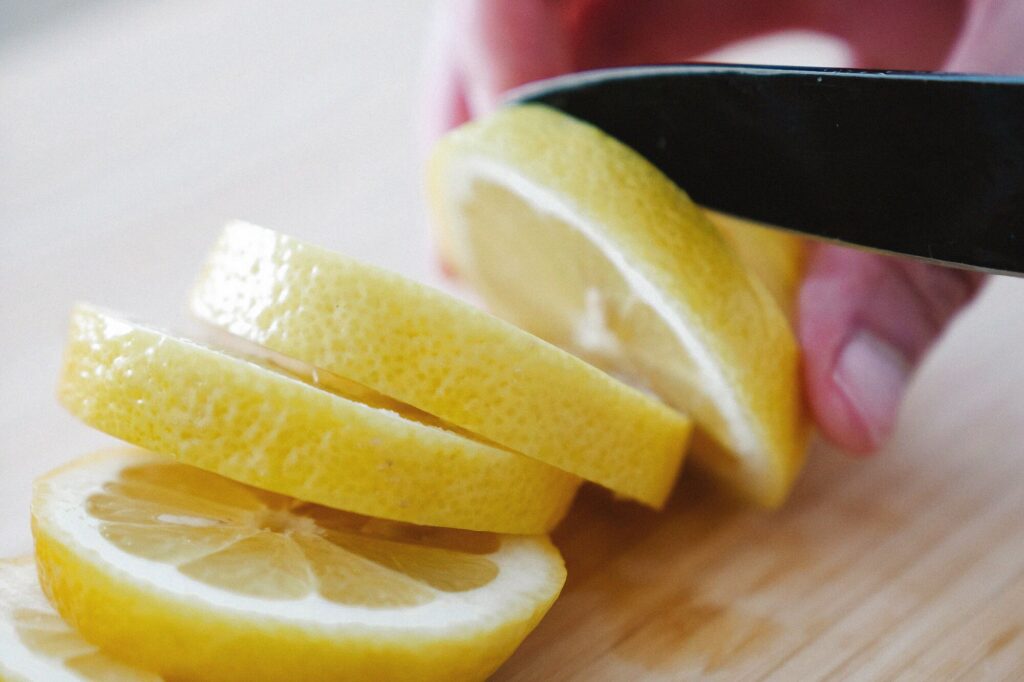
When my husband decides to heat-up some fish in the microwave and leave without covering, I walk into the kitchen, wrinkling my nose. When he returns to investigate why I’m wrinkling my nose at him, he feigns ignorance and wrinkles his nose at me.
It’s a constant dance. To combat this issue as well as random splatters and general gunk build-up, we now regularly steam-clean the microwave.
Fill a microwave-safe bowl with water, squeeze in some lemon, throw in the rinds, microwave for 3 minutes, open the door and wipe. Easy-peasy, lemony-squeezy.
2. FRESHEN AND CLEAN THE OVEN
Oven-cleaning isn’t high on my to-do list, so any hack that makes it easier is highly appreciated. Fill an oven-safe dish with water, squeeze in a lemon and bake.
Allow to cool, remove the dish and wipe down. While this isn’t a deep-clean, it helps remove lighter-duty messes and definitely removes any pesky smells.
3. SHINE TARNISHED BRASS AND COPPER
Cut a lemon in half and dip in coarse salt. Rub over tarnished brass or copper and watch them sparkle.
Rinse and buff with a dry cloth.
I tested it out on an old copper bottom pan, and it worked like magic! I sent before/after photos to my mama.
4. DEODORIZE THE GARBAGE DISPOSAL
Put some ice cubes in your garbage disposal along with a few slices of lemon or just the rinds. The ice helps to clean the blades and the lemon releases its fragrant oils.
This is such an easy way to get rid of nasty disposal smells and leave behind a nice zesty freshness. Plus, you’ll feel good after.
Trust me.
5. RESTORE CLOUDY HEADLIGHTS

The citric acid in lemons dissolves the oxidation that creates the foggy yellow haze over headlights. Here’s what you do: Dip half a lemon in baking soda and rub on headlights.
The mixture of citric acid in the lemon and sodium bicarbonate in the baking soda creates a chemical reaction that breaks down oxidation. Rinse off and behold clear headlights for improved visibility when driving at night.
I actually did this to our headlights one afternoon because I just HAD to see if it really works like everyone says it does. Now I get to rub this fact into my hubs’ face when he insists that if we leave things alone long enough they will somehow fix themselves.
6. SANITIZE AND DEODORIZE CUTTING BOARDS
Garlic, onion, other funky-smelling leftovers? No problem.
Take a lemon and squeeze it over your cutting board and sprinkle some salt. Scrub with half of the lemon.
Rinse and your cutting board will be like new. Works on plastic or wood boards and is great for sanitizing too.
Next time you’re staring down a grossed-out cutting board you’d like to toss, try this trick before buying a new one. Trust me, it works.
7. REMOVE HARD WATER STAINS AND LIMESCALE
Dissolve chalky deposits of minerals left behind when hard water evaporates by rubbing half of a lemon all over faucets and fixtures. The citric acid will eat away at lime scale.
Allow the lemon to sit for a few minutes, then wipe off with a rag. What used to take precious minutes to scrub off will be lifted away with little effort.
8. DESCALE THE KETTLE AND COFFEE MAKER
To de-lime your coffee machine, run lemon juice and water through it, or boil some lemon slices in water in your kettle, and remember to then rinse it out with fresh water.
The humble lemon is such an underrated workhorse. Descaling my kettle with lemon eliminates mineral deposits that have been making my morning coffee taste funny.
9. CLEAN AND SHINE THE SINK
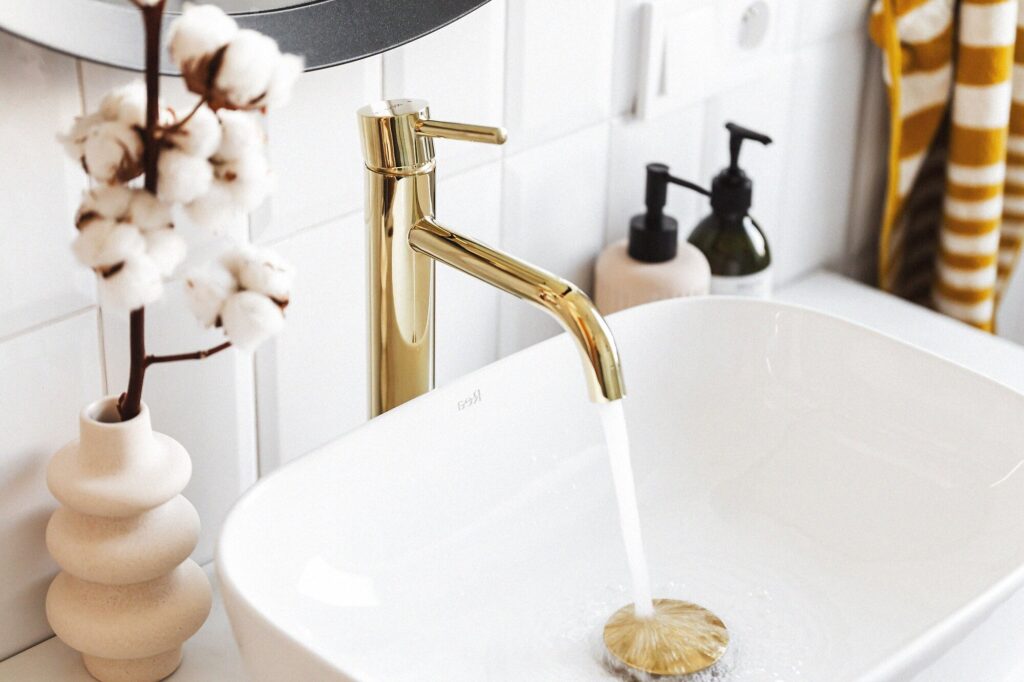
Scrub stainless steel or porcelain sinks with a cut lemon to lift away grease, eliminate smells and erase pesky water marks. Rinse well and enjoy a shiny sink with a pleasant citrusy smell.
And there’s nothing like giving your sink a quick wipe down with lemon at night to make your kitchen feel brand new, at least until morning.
10. BRIGHTEN DINGY WHITES
Lemon juice can act as a natural bleach in your washing machine. Just add some when you wash whites.
For extra-stubborn stains, soak garments in water with a generous helping of lemon juice and hang outside in the sun to dry. The combination of lemon juice and sunshine has been bleaching grayed-out white socks since my kids hit their teenage years.
11. REMOVE STAINS FROM PLASTIC CONTAINERS
That orange spaghetti sauce stain may be impossible to erase from plastic food storage containers but adding lemon juice when you wash them will lighten the stain and get rid of food smells, saving them from an eternity of neglect in the depths of the garage.
12. STREAK-FREE GLASS AND MIRRORS
Combine some water and lemon juice and use it to shine glass and mirrors. Spray the mixture onto windows, mirrors or other glassy surfaces, then rub with a lint-free rag for a crystal-clear shine.
Our family’s shared bathroom mirror gets an occasional lemon juice rubdown, as the mirror gets heavy use and ammonia-filled glass cleaners aren’t smells I want to linger in the bathroom.
13. POLISH CHROME FIXTURES
Cleaning fixtures and faucets is a fast, simple way to make your house shine, literally. Rub them with a cut lemon, then buff with a dry rag and watch water spots and streaks disappear.
This task only takes two minutes.
14. SCRUB AWAY RUST SPOTS
Scrub small rust stains with lemon and salt to get rid of rust. Rinse well to avoid leaving behind an orange-tinted residue.
I used this trick on my metal shelves in my pantry when I had a nasty rust ring where I’d been using a shelf to hold cans of food. Just make sure to dry the item well when you’re done.
15. CLEAN A GREASY CHEESE GRATER
If, like me, you’re not crazy about washing a greasy cheese grater, try rubbing it with half a lemon instead. The acids in the lemon will cut through the cheese and grease.
Plus, the texture of a lemon is great for getting into all of the teeny tiny holes that make a cheese grater so difficult to scrub.
16. REMOVE TEA AND COFFEE STAINS FROM MUGS
The tannic acid from coffee or tea will leave brown rings in teapots, teacups, coffee mugs, etc. Fill your stained item with lemon-infused water or straight-up lemon juice and allow to soak until stains are lifted.
This method will get your favorite stained coffee mug looking clean again.
17. DEODORIZE THE REFRIGERATOR
Try a simple trick when the refrigerator begins to take on a funky smell. Simply drop a lemon half or container of lemon juice into the refrigerator and replace as needed, every week or two.
18. CLEAN AND FRESHEN THE TRASH CAN
Take a half of a lemon and give your (cleaned) garbage can a quick wipe-down. Or leave the peels at the bottom of your garbage can for a natural deodorizer.
Lemon is great because it gets rid of garbage smells, not just covering them up with a lovely floral-sweet scent like a garbage can candle does.
19. LOOSEN STICKER AND LABEL RESIDUE
If you’ve been saving jars like me for a future pantry organization project, you know how difficult it can be to remove the sticky, gummy residue. Just rub with lemon.
The natural oils in the lemon or lemon oil will seep into the gunk and loosen it. Then, just wipe away.
20. RUN A LEMON THROUGH THE DISHWASHER
Fill a measuring cup with lemon juice and place it on the top rack. Run the dishwasher on a hot cycle to degrease the machine and get rid of funky smells.
I used to get a musty smell from our dishwasher and would occasionally run a lemon cleaning cycle to remedy the situation.
21. MAKE A NATURAL ALL-PURPOSE CLEANER
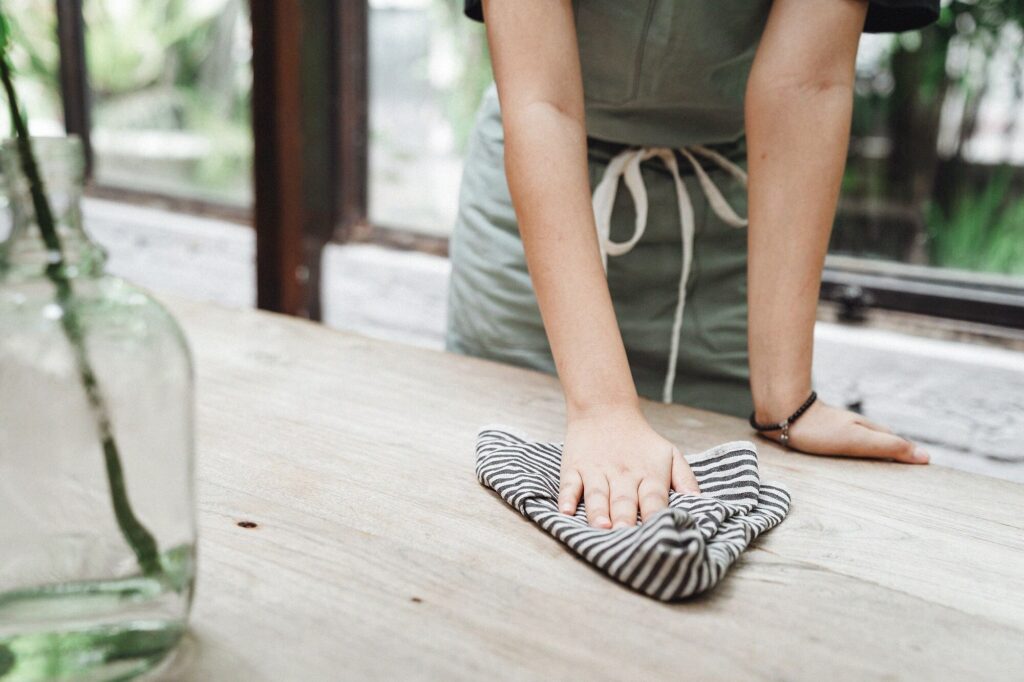
Save those lemon peels. Place them in a container, fill it with white vinegar, then cap and store for 1-2 weeks.
Strain and dilute with water, pour into a spray bottle and shake. Voila, citrus-scented, natural cleaner.
Use on all but natural stone. It cuts grease and grime on almost any (sealed) surface.
Not only can you put those pesky peels to good use, the lemon will mask that vinegar smell.
22. REMOVE LIMESCALE FROM THE SHOWERHEAD
Halve the lemon, rub it over the showerhead and allow it to sit. Rinse and watch that stream come back.
Limescale and other mineral deposits are no match for lemon. I rescued a sadly-dribbling showerhead with lemon and saved myself a trip to the store for descaler, and I did it all for just fifty cents.
23. CLEAN REUSABLE WATER BOTTLES AND THERMOSES
Old thermoses and other hard-to-clean bottles get funky with time. Fill them up with a mixture of lemon juice and hot water and let them soak.
My kids’ water bottles got funky. I cleaned them with lemon and gave them the stink test…eventually retiring them.
At least I felt good knowing that I tried everything I could to rescue them before consigning them to the trash.
24. LIFT SOAP SCUM IN THE TUB AND SHOWER
The acid in the lemon helps remove soap scum in the shower. Halve the lemon and rub over the walls of the shower and allow to sit for several minutes before rinsing.
This saves me from huffing and puffing over stubborn scum and saves time. I’ve been known to rescue the kiddo’s bath tub and their guilty conscience by splashing a little lemon juice on those pesky rings before rinsing away!
25. CLEAN GROUT WITH BAKING SODA
We’ve seen lots of ways to use lemon for cleaning. Pairing it with baking soda to clean grout is another.
Mix lemon juice and baking soda to form a paste. Apply to dingy grout and let sit for a few minutes.
Scrub with an old toothbrush and rinse. Voila!
Like-new grout. Caveat: lemon is acidic and will etch natural stone so skip this project if you have stone tiles.
When I first moved into my house I actually thought that’s just what kitchen grout was colored…gray. Try this project and you may be in for a pleasant surprise.
26. SHINE STAINLESS STEEL APPLIANCES
Spritz some lemon juice on a soft cloth and rub stainless steel in direction of grain. This is my favorite way to shine stainless and get out oily smudges and fingerprints.
This is much more fun to do than tell my husband he needs to stop touching the fridge with his sticky, dirty, gross, filthy fingers about 400 times a day.
27. REMOVE FOOD AND BERRY STAINS FROM HANDS
Lemon juice works well to remove stains left behind by berries, beets and anything else you leave behind when you’re chopping away at your recipe. It also zaps away odors left by chopping up onion or garlic.
28. DEODORIZE AND CLEAN THE BLENDER
Take a little bit of warm water, a slice of lemon, and a pump of liquid soap and run the blender for several seconds. Pour out and rinse.
Not only are your blades washed with no reaching in there, but any lingering odors will be history.
29. CUT GREASE ON THE STOVETOP
For me cooking = cleaning. Grease splatters and drips make themselves right at home in my stovetop.
I hate cleaning with harsh chemicals and enduring their noxious stench. Lemon is my answer.
Just rub half of a cut lemon over the grime and let sit for about a minute. The acid does the work.
For tougher jobs try sprinkling the stovetop with baking soda before rubbing on the lemon for some extra muscle. Rinse with warm water and wipe dry.
30. FRESHEN FLOORS WITH A LEMON SCENT
Add some lemon juice to the water you’re using to mop with, as it cuts through grime really well, and will leave your house smelling nice and fresh. It’s good for sealed tiles, vinyl, linoleum…just be careful about using it on natural stone or unsealed wood, as they don’t like the acid or the liquid, generally.
The only time I’ve ever felt that all is right with the world is right after I’ve given the kitchen floor a good mopping with lemon juice water. Sure, there’ll be another dropped snack in the morning and another muddy paw print when we come in from a walk, but it is nice to have things neat and fresh-smelling for a while.
In my opinion, lemon’s cleaning properties have made it a staple in grandmothers’ kitchens. It’s so convenient to have in your kitchen, inexpensive, natural, and cuts through grime, grease, and residue.
For lighter tasks, it polishes and shines metals, eliminates odors, and leaves a pleasant scent. One lemon = three spray bottles.
I’ll leave you with my final thoughts: Microwave and Brass: They’re your friends. Those two will sweep you off your feet just like the microwave hack swept me off my feet the first time I didn’t scrub.
The only caveat? Avoid acid on natural stone, and have a few more lemons around the house than you think you need.
One of them will eventually be the answer to “What do I use to clean this thing?” one too many times.
COMMON QUESTIONS ABOUT CLEANING WITH LEMON
Can lemon be used to sanitize?
Lemon acid is not a disinfecting agent so lemon can’t replace your trusty sanitizer if you’re looking to kill germs and bacteria.
Can I clean with lemon on my granite?
Lemon and other types of citric acid can dull, bleach, and/or stain natural stone like marble or granite. It’s best to avoid these types of materials when cleaning with lemon, and thoroughly rinse the area afterward to avoid the acid discoloring delicate surfaces.
What about hardwood floors?
Similar to natural stone, lemon juice isn’t kind to hardwood floors or brass-plated items.
Can I use lemon to descale my kettle?
Lemon works well for lighter tasks. For tougher jobs, white vinegar is less expensive and works better.
How do I make a natural, all-purpose cleaner with lemon?
Instead of throwing away the peels after squeezing out lemons, I’ll save them in a jar and cover them with white vinegar. Let the peels infuse into the vinegar for one to three weeks.
Strain the vinegar when it’s ready, then combine with equal parts water in a spray bottle. The lemon-vinegar solution works well on most household surfaces as long as they’re not porous or otherwise susceptible to citric acid.
How do I decide between lemon and white vinegar?
Honestly, it’s what’s in front of me at the time and what I’m cleaning. Lemon juice is more expensive, so I’ll reach for white vinegar to save pennies and reserve lemon for smaller tasks.
Vinegar doesn’t always have the pleasant lemony aroma. But both items answer the eternal, what do I clean this with? question.