THE BEST MARINADE FOR CHICKEN DRUMSTICKS
Want to amp up the flavor of your chicken drumsticks? Try them with this amazing marinade.
Oh how I used to love grilled chicken breast. They’re pretty and all.
But lately, my love affair with grilled chicken has taken a new, cheaper, and frankly better direction – drumsticks. At around 70¢ a pop, drumsticks are an absolute steal.
Especially considering how reliable and delicious they are.
WHAT MAKES THIS RECIPE RELIABLE
- Drumsticks are dark meat, meaning they’re a bit fattier than breasts. Fat is your friend when it comes to grilling – it’ll stay nice and moist at higher temperatures.
- Drumsticks have about a 10 degree wiggle room for error. Breasts have about 3. Drumsticks win again.
- Nine drumsticks will fill up a grill and provide ample protein for the whole family – we’re talking $6 in meat to feed the crew.
- The marinade is simple and delicious – just olive oil, garlic, beer, cumin, paprika, cayenne, black pepper, and sea salt.
WHAT EVERY INGREDIENT ACTUALLY DOES
BEER, THE TENDERIZER AND FLAVOR BUILDER
I love beer as a marinading agent for meats. Beer has a mild acid that denatures the proteins in meat, which is the same as what happens when meat cooks, but not nearly as aggressively as other acidic ingredients like vinegar and lemon juice.
Harsh acidic ingredients can leave meats tasting and feeling opaque and mealy, and beer does not.
The enzymes and acid in beer penetrate the meat and break down its fibers. Beer adds a subtle flavor that’s somewhat malty, yeasty, just a tad sweet and mildly bitter.
You’ll hardly taste beer in chicken marinated in it but it adds to the depth of flavor.
Chicken can marinate in beer for 8, 12, 18 hours and the meat’s texture won’t suffer, which would happen if lemon juice or vinegar had been used. You can marinade as short as 8 hours (necessary) or as long as you’d like but I think overnight is best.
Beer also helps the skin get extra browned, crispy, charred, and I’m drooling just writing this sentence. It gives the chicken a beautifully, deeply browned, crunchy skin like they’re from a good restaurant.
I like to use lagers because they’re very clean tasting. You can also use pale ales because the bitterness and hoppy-ness works well with cumin, or wheat beers for a softer, yeasty flavor.
Here are a few tips for the marinade:
- You can use apple cider vinegar if you prefer but I’d use 3/4 cup. The chicken will have a much sharper flavor. You can also use white wine or an equal parts mixture of white wine vinegar and water.
- Paprika adds an earthy flavor and color. Cumin also adds color and earthiness but has a stronger, more distinctive flavor. Together they’ll add a reddish hue and depth of flavor.
- Cayenne pepper will add some spice but it’s not very spicy. Add more or less depending on your spice preference.
- Garlic is another depth-building ingredient in this recipe.
- The alcohol will burn off during cooking. You’ll be grilling the chicken for more than 30 minutes anyway.
- Marinading time: marinade for at least 8 hours. Overnight is best.
- The marinade will be ready to use immediately so plan on getting the chicken to the fridge. You can refrigerate the marinade ahead of time.
- To get the best browning on chicken: grill at least 1/2 an hour and make sure the skin is very dry before grilling by blotting it down after marinading.
- Let the drumsticks come to room temp before grilling.
- Rest them on a plate after grilling before eating.
OLIVE OIL: THE CARRIER AND THE CRISP
Olive oil’s primary purpose here is to dissolve and distribute the fat-soluble flavors from the beer and spice mixture. The flavors of cumin, for instance, are fat-soluble, meaning the flavors won’t dissolve in vinegar.
When combined with oil, however, those flavors dissolve into the oil and are carried around.
Oil is also going to help the chicken to crisp up nicely. Water inhibits crisping; oil promotes it.
Oil-based marinades out-perform oil-vinegar marinades because oil penetrates into the meat much better than vinegar. You won’t taste the oil, but it’s performing a valuable function.
Use no more than is necessary to coat the chicken, where half a cup spread among nine drumsticks is just enough to coat them in a thin layer; any more would be too much and result in a greasy chicken.
GARLIC: NON-NEGOTIABLE DEPTH
Garlic is one of those flavors that doesn’t make itself obvious, as you’d never serve a plate of pure garlic at dinner, but it’s an indispensable component of so many recipes. Garlic is savory, vegetal, bitter, pungent, hot, rich, and meaty, meaning there’s no other seasoning that can fill those shoes.
This recipe would fall flat without it.
WHY MINCED GARLIC AND NOT GARLIC POWDER?
Two cloves of garlic is the optimal amount of garlic in this marinade recipe, and we encourage you to use fresh garlic. As the garlic sits in the marinade, especially in the presence of oil, the strong sulfuric compounds mellow and create a more subdued flavor.
If you marinate the chicken for 8+ hours, the skin will become infused with a rich, savory, not-at-all-pungent garlic flavor. Also, mincing the garlic allows the garlic to caramelize in the grill.
Larger pieces of garlic could potentially burn and create a bitter taste. When finely minced, the tiny garlic bits will cling to the chicken and caramelize beautifully!
CUMIN — EARTHY, WARM, UNMISTAKABLE
Half a teaspoon of cumin (for nine drumsticks!) adds a nice earthy, nutty and slightly-smoky flavor to the chicken. The amount is perfect to enhance the flavor of the other spices without overpowering them or making the drumsticks taste like they’re drowning in taco seasoning.
PAPRIKA — COLOR AND MILD SWEETNESS
Paprika brings a mild, almost sweet flavor that complements the cumin perfectly. Paprika also adds some gorgeous color to the chicken.
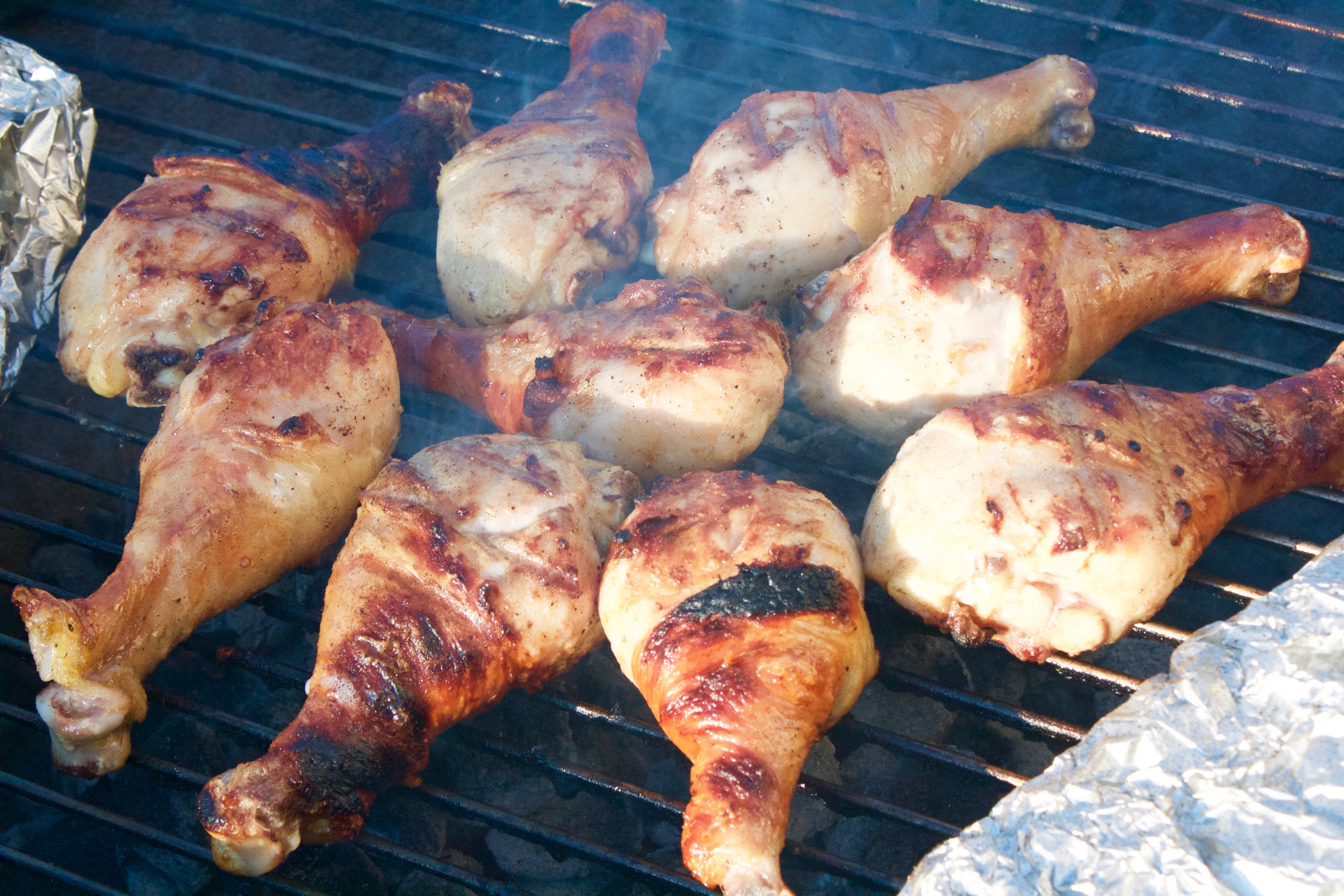
When cooked, the chicken’s skin has a gorgeous, deep, mahogany-orange color thanks to paprika.
TIP: Smoked paprika can be substituted for sweet paprika to give the chicken a slightly-smoky, almost-smoked-meat flavor.
CAYENNE — HEAT WITH PURPOSE
The marinade isn’t spicy per se, but has just enough heat to add some oomph to the flavoring. A mere 1/4 teaspoon of cayenne pepper (again, this recipe makes enough marinade for nine drumsticks) is just enough to add a little zip and subtle warmth.
It’s not spicy-spicy.
TIP: Feel free to add more or less cayenne pepper according to preference. A 1/2 teaspoon of cayenne is not too much and won’t overshadow the other spices.
Conversely, leave the cayenne out if cooking for small children or spice-shy adults.
SEA SALT AND BLACK PEPPER — THE FOUNDATION
Black pepper adds subtle earthiness, while sea salt balances the entire composition of spices. Salt and pepper.
The action of salt in a marinade or brine seasons meat from the inside out, drawing moisture from meat in a process called osmosis. Black pepper also seasons the meat but adds a more subtle spice flavor and a little heat.
Salt needs time to work its magic. Give it a minimum of 8 hours on a chicken drumstick for noticeable results.
WHAT TO KNOW BEFORE YOU START
Marinate at least 8 hours but preferably longer. The longer the chicken sits in the marinade the better because the marinade and seasonings penetrate further into the meat.
There’s a noticeable flavor difference between a drumstick marinated for 8 hours as opposed to a drumstick marinated for 15 hours. Stir or flip the drumsticks during marinating.
This makes sure all sides are marinated evenly and prevents pieces of chicken from staying above the marinade. Plan ahead.
I usually mix up the marinade the night before, add the chicken, stir well and then stick it in the refrigerator. When I get up in the morning I’ll stir or flip the drumsticks around before grilling to make sure they’re evenly coated with marinade.
Use a gallon-size freezer bag if possible. They’re easier to massage the marinade into the chicken and they lay flat in the refrigerator which allows the drumsticks to marinate evenly so nothing stays above the marinade.
If you use a container, make sure the drumsticks will lay flat in a single layer. Also, I like freezer bags because it’s easy to redistribute the drumsticks so they lay in one layer.
Remove excess air from freezer bag. It’s easier for the marinade to get to all sides of the chicken if excess air is removed from the bag before sealing.
You can use a large, deep baking dish instead of a gallon-size freezer bag. Make sure to cover with plastic wrap before refrigerating.
Using a container instead of a gallon-size freezer bag does make it harder to stir and redistribute the drumsticks. This will yield enough marinade for 9 drumsticks.
Beer can be replaced with apple cider vinegar. See recipe for amount.
HOW TO MAKE IT STEP 1: MAKE THE MARINADE In a medium-sized bowl add the following and stir until combined:
- 2 cloves of garlic, minced
- 1/2 cup olive oil
- 1 can/bottle of beer or 3/4 cup apple cider vinegar
- 1 tsp sea salt
- 1/2 tsp black pepper
- 1/2 tsp cumin
- 1/2 tsp paprika
- 1/4 tsp cayenne pepper
Now, whisk together the olive oil, beer, garlic, salt, pepper, cumin, paprika and cayenne pepper. This only takes about 30 seconds and doesn’t really require any effort.
You’re just trying to disperse the garlic and spices throughout the oil/beer mixture. The beer and olive oil won’t completely emulsify, so don’t worry if it doesn’t seem to come together.
At this point it’ll smell strongly of beer and garlic, but that will mellow during marinating and grilling. The mixture should take on an amber-orangey tint and might have some foamy scum from the beer on top.
STEP 2: MARINATE THE CHICKEN
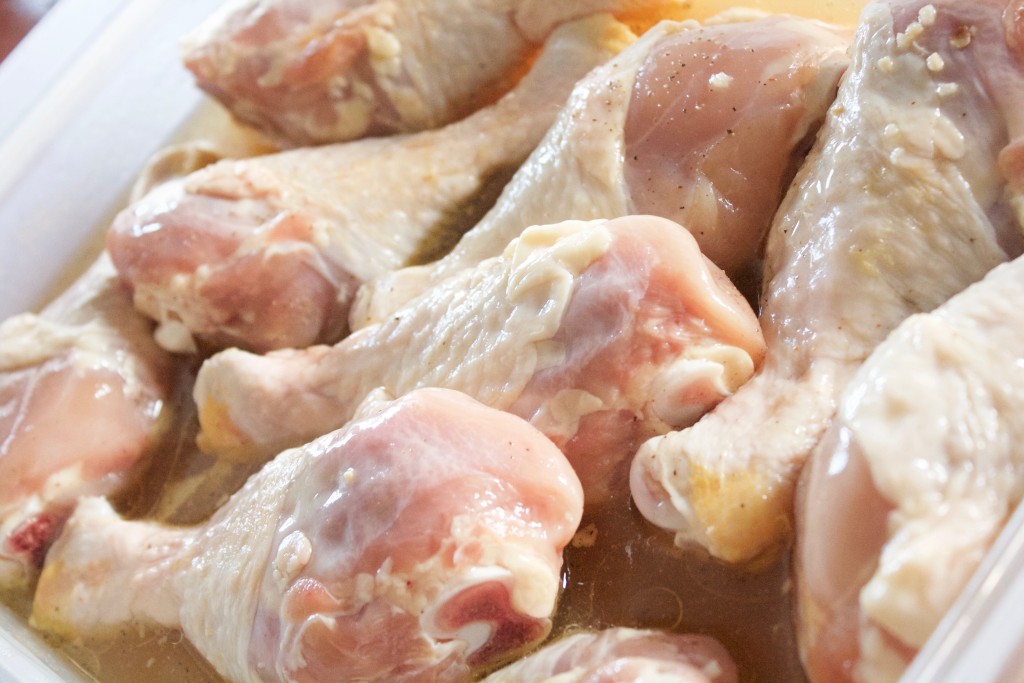
Add the drumsticks to the marinade, making sure all sides are coated. Cover tightly (or seal the zipper) and refrigerate for at least 8 hours (overnight if possible).
If using a container, give them a flip a couple times during marinating to redistribute the marinade and ensure all sides get evenly marinated.
When they come out they’ll have an orangy color from the marinade with a glossy sheen on the skin. Any areas that aren’t covered by skin will have taken on a more opaque look and feel a little firm to the touch, and this is the acid from the beer working its tenderizing magic.
Remove them from refrigerator and leave them at room temperature for about 20-30 minutes to help them cook more evenly.
STEP 3: PREP THE GRILL
For this recipe you’ll be setting up your grill with two zones, one side will be medium heat, or your “direct heat”, and the other will be low/no heat, or your “indirect heat”. If you have a gas grill, just have one side on medium and the other side off or low.
If you have a charcoal grill, pile all the burning coals to one side, leaving the other side empty. The idea is that you’ll be able to brown the drumsticks over the “medium heat” and finish them off on the empty/low heat side so they’re thoroughly cooked through but not burnt.
You can’t brown them AND cook them all on one side because they’ll either burn on the outside and be raw on the inside, OR be fully cooked but not nicely browned and crisp. Trust me.
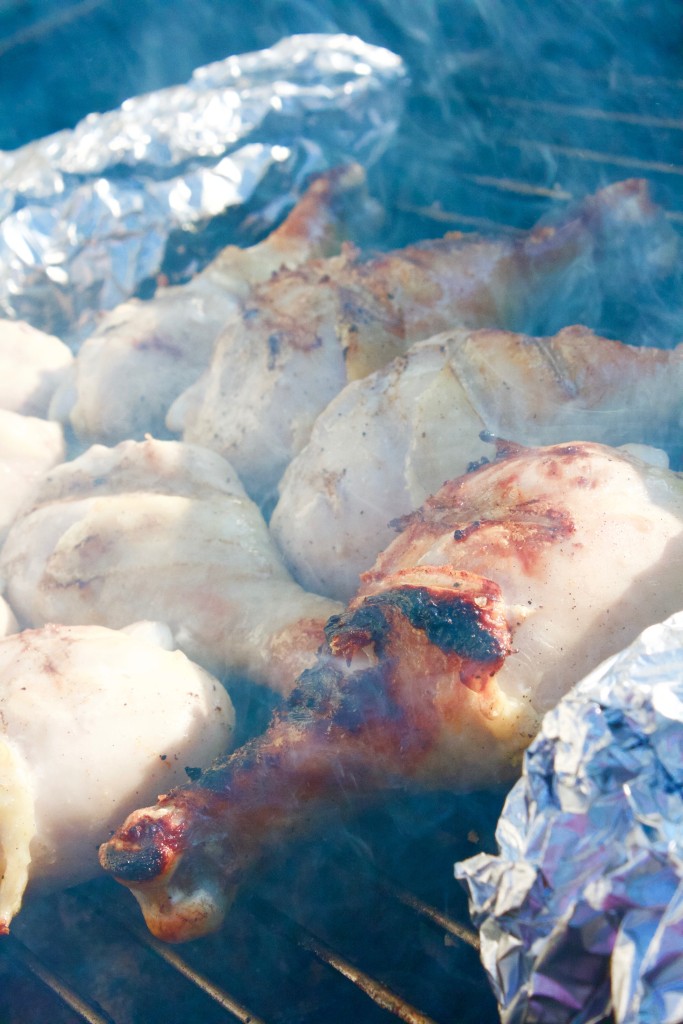
Medium heat is the best temp for this recipe, I’d say the grates should be between 375-400°F (see photo). You don’t want to do this recipe on high, it’s just tricky to get them browned nicely but not burnt, the paprika and garlic can char before they’re cooked through.
Make sure to oil the grates before grilling. Just pour some oil onto a folded-over paper towel and scrub it over the grates.
It’s okay if you do this while they’re cold, just make sure they’re HOT before adding chicken, the skin on these babies loves to stick to grates. When the drumsticks are added to a properly heated grate, they should SIZZLE.
STEP 4: GRILL THE DRUMSTICKS
Remove the drumsticks from marinade and pat them DRY, which isn’t really necessary, but it’ll help the skin be extra crisp. It’s OK if there’s still marinade in the crevices, where all the flavor is, but I’d pat the drumsticks pretty dry with a clean dish towel before grilling.
If the outside is too wet/marinated the skin can be a little steamy and not as crisp when grilling.
Add the drumsticks to the “direct heat” (medium heat) side of the grill and leave them BE, don’t fuss with them, don’t poke them, just leave them alone for 8-10 minutes. After about 8-10 minutes, they should easily lift off the grates, the skin should roll around nicely when you poke it.
If they’re sticking, leave them on a couple minutes, I’d say 2 more, because if you remove them anyway the skin can rip off in chunks and they won’t present as pretty.
Once they’re ready, flip them over and grill them another 10-15 minutes with the lid closed, which helps them cook more evenly and helps to get them cooked all the way through faster because all that delicious heat is circulating and not escaping. Total grilling time will be around 25 minutes for small drumsticks, 30-35 for average, and probably closer to 40 for really large ones.
Move them to the “indirect heat” side of the grill (low/no heat side) after turning them once, grill them with lid closed. You want to cook them on this side long enough that they’re thoroughly cooked but not long enough to burn/dry out the skin and spices.
If you cook them entirely on the hotter side they’ll be cooked through but will probably be burnt on the outside. This is why I like to call it a “two zone” cook.
STEP 5: CHECK THE TEMPERATURE
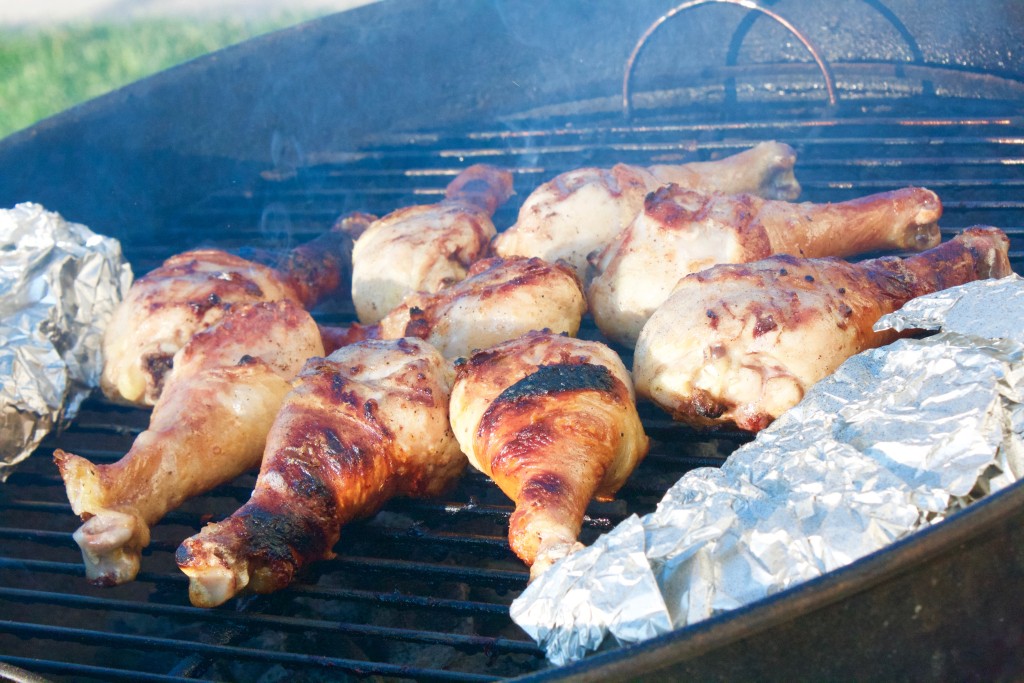
Chicken looks perfectly cooked when the skin is brown and juices run clear. Unfortunately, at this point, it might not be cooked through all the way.
The best way to tell when your chicken is fully cooked is with a meat thermometer. Use an instant-read meat thermometer to test for doneness by inserting it into the thickest part of the meat, near the joint.
This part of the chicken will be the last to reach the correct temperature. Once the drumsticks reach 165°F they’re done.
Remove them to a platter and serve.
HELPFUL TIPS FOR THE BEST RESULTS
Use a food thermometer to ensure chicken is cooked through. The only way to ensure chicken is fully cooked is to check its internal temperature.
Insert a digital or other reliable meat thermometer into the thickest part of the drumstick, making sure to avoid joints and the bone. Bone and meat register different temperatures, so avoid inserting the thermometer into the bone.
Wait about 2 seconds for the thermometer to take a reading. When your drumsticks reach 165°F, they should be firm but not tough when you press them, and the juices should run clear and meat should not look see-through.
- Grilled chicken drumsticks are juicy and tasty. Follow these easy steps for juicy grilled chicken:
- Use medium heat. Resist the urge to crank the heat up. Drumsticks take longer to cook than thinner meats like shrimp, fish, chicken breasts, etc. Garlic and paprika burn easily. Use medium heat so that the outside of the meat will cook before it burns. The slower the drumsticks cook, the more likely they’ll brown and crisp up.
- Leave them be. Resist the urge to lift, peek, fiddle with them. Leave the sides alone for about 8-10 minutes and flip. The skin should be releasing from the grill and crispier if you’ve waited. Flip and cook until cooked through. If you find the outside of the meat is getting darker and darker and starting to burn but the meat still isn’t cooked, adjust the heat and cook time. Ideally, you will set up two cooking areas. Cook them directly over the heat to get a nice browned, crispy crust on each side. Then, if needed, move them to the area without heat and close the lid to finish cooking through. If you have a grill that doesn’t allow for two cooking areas, lower the heat to medium-low and plan on a longer cook time.
- Use a meat thermometer to make sure they’re done. Chicken must be cooked through to an internal temperature of 165°F. Insert the meat thermometer into the thickest part of the meat, not touching bone.
- Let them rest. Take them off the grill and let them rest for 5 minutes. This allows the meat to redistribute its juices.
- Season to taste. My favorite is McCormick Montreal Chicken Seasoning. It’s like coarse salt with garlic and herbs. Use sparingly. The beer and garlic are already strong flavors in this recipe and I like a subtle herby salted finish.
Bone-in chicken thighs can be cooked exactly the same as drumsticks. Just account for a longer cook time because they’re thicker.
STORAGE AND MAKE-AHEAD
- Cooked chicken can be kept in an air tight container in the refrigerator.
Chicken marinates really well, so these drumsticks can easily be made ahead of time.
“Can you freeze marinating chicken?” Yes, uncooked chicken can be placed in a zipper-top freezer bag along with the marinade and frozen. As it defrosts, preferably in the refrigerator for 24 hours, it’ll continue to marinate.
This is also an easy way to make everything over the weekend and just pull it out of the freezer the night before to defrost in the refrigerator and cook.
WHAT TO SERVE WITH THESE
These are perfect to serve at summer get-togethers. Here are a few ideas for sides:
- Corn on the cob takes about 10 minutes to cook on the grill, so it’s perfect to grill alongside the chicken as it cooks during those last few minutes. Brush with butter and sprinkle with salt.
- Coleslaw, nothing beats the classic mayo and vinegar based slaw on a hot summer’s day. The cool, crunchy slaw pairs well with the charred spicy kick of these drumsticks.
- Potato salad is another favorite of mine to serve alongside grilled chicken. The creamy, hearty salad is a perfect counterpart to the savory drumsticks.
- Vegetable skewers or thickly sliced zucchini, red onion and bell peppers grilled alongside the chicken over indirect heat make an easy, delicious side. Just rub them with salt and oil.
- Ramen noodle salad, crunchy, fresh noodles in a light vinaigrette is the perfect side dish for a light, bright, summertime chicken drumstick meal.
- Baked beans are another summer BBQ classic. Their smoky sweet flavor is the perfect side dish for chicken thighs slathered in a cumin laced spice rub.
FREQUENTLY ASKED QUESTIONS
HOW LONG WILL THESE KEEP?
You can keep these drumsticks in the refrigerator for up to 4 days. When ready to enjoy, you can either enjoy them straight from the refrigerator, microwave, or pop them in an oven preheated to 350°F for 10 to 12 minutes.
Oven-reheating is the best way to revive some of the crispiness of the skin. Microwaving will work, but the skin will be a bit softer.
CAN I MAKE THESE AHEAD OF TIME?
These are best grilled and enjoyed right away. That said, they can be frozen for later.
Allow them to cool completely and transfer to an airtight container. Store them in the freezer for up to 3 months.
To enjoy, remove from freezer to refrigerator overnight. When ready, place them in an oven preheated to 350°F for 15 to 18 minutes, or until heated through.
CAN I GRILL CHICKEN DRUMSTICKS IN ADVANCE AND KEEP THEM IN THE FRIDGE?
Follow the same instructions above for freezing, except instead of storing them in the freezer, simply keep them in the fridge. Drumsticks will keep for up to 4 days.
Reheat as necessary.
CAN I BAKE THESE INSTEAD OF GRILLING?
Yes, these drumsticks bake up really well. Lay them on a wire rack set on top of a rimmed baking sheet.
This allows the air to circulate under the meat, otherwise they’ll steam a bit in their own juices. Bake them in a 425 F oven for 35-40 minutes, turning them over half way.
You need the higher temp for better color and texture, which is what you’d be getting from the open flame on the grill. Check the drumsticks with a meat thermometer to be sure they’re done before removing them from the oven, or 165 F in this case.
If the skins aren’t as crispy as you like, set your oven to broil and cook them another 3-5 minutes, keeping a close eye on them so the skins don’t burn. The paprika in particular will turn dark rather quickly under a broiler.
IS THE CAYENNE GOING TO MAKE THESE TOO SPICY FOR KIDS?
If you have little spice snobs at home, you can easily cut back on the cayenne. You might opt to leave out all of it.
WHAT KIND OF BEER SHOULD I USE?
I usually just use whatever is open in the fridge.
The type of beer you choose is going to make a difference in the final flavor of these drumsticks, so pick accordingly. Lighter colored beers like pale ales and lagers will be the most neutral.
Lagers are going to be the least noticeable, allowing the spice rub to take center stage. Pale ales have a nice bitter hoppy quality to them that would compliment the cumin nicely.
Wheat beers would be good for a yeasty softness. You can also use a darker ale or lager (amber, brown, etc.) for a richer and more complex flavor.
Steer clear of more strongly flavored beers, such as fruited beers or sours, as their flavors can be a tad overbearing. Non-alcoholic beer also works in this recipe if needed.
The tendering effect has more to do with the enzymes and mild acidity in beer than it does alcohol content.
Why did the skin come off my chicken on the grill?
This typically happens if the chicken is flipped before it has properly seared or if the grates were not oiled well enough prior to adding the chicken. If you encounter any resistance when attempting to flip the chicken leave them be and come back after another 2 minutes.
If properly seared the skin will easily release from the grate. Also, although this recipe calls for oil in the marinade it is still a good idea to oil your grates before adding your chicken.
CAN I USE THIS MARINADE ON CHICKEN BREASTS?
Yes but shorten the marinade time to 4 to 6 hours. Acidic marinades penetrate through leaner meats quicker than fattier meats causing them to breakdown faster than meats with higher fat content.
After about 6 hours in marinade the texture of breast meat can become mealy/grainy. They may taste great but texture-wise they’re not as pleasant.
Also keep a closer eye on the breasts while grilling since they will most likely reach a desirable internal temp faster than fattier cuts of meat. As mentioned above cook them to an internal temp of 165°F and keep in mind that depending on the heat of your grill this can be achieved after about 20 to 25 minutes.
Invest in a good meat thermometer if you do not already have one to ensure you’re not overcooking the breasts.
Can I adjust the spice level of this recipe?
This recipe isn’t very spicy but does call for 1/4 tsp of cayenne pepper. I think it adds a nice warmth that serves as a backstop to the paprika and salt but feel free to leave it out altogether if spice isn’t one of your family’s strong suits.
The marinade will still have plenty of flavor. Or, make two marinades, one with cayenne and one without, and have the best of both worlds.
My kids eat this recipe just fine, though they’re not spice lovers by any stretch of the imagination. This recipe makes 9 servings.
HOW DO I KNOW WHEN THE DRUMSTICKS ARE DONE?
The only certain way to tell if they’re done is to insert a meat thermometer in the thickest part of the drumstick, away from the bone, and make sure they have reached 165° F. They should also look like this: the skin should be a deep golden brown and crunchy, the meat should be completely opaque, with no pink/translucent areas, especially near the bone, and the juices should run clear.
However, color and juices can be misleading, especially with drumsticks, as it’s possible for them to look completely done on the outside but still be a little raw towards the joints. Using a meat thermometer (making sure not to rest against the bone when taking a measurement) will give you a reliable indication.
CAN I MAKE THE MARINADE WITHOUT ALCOHOL?
Instead of beer, you can use one of these options:
- ¾ cup of apple cider vinegar, which is more acidic than beer and will help to tenderize the meat. The tangy flavor complements the spices well
- An equivalent amount of non-alcoholic beer will work too with similar results.
- a mixture of ½ cup each of chicken broth and apple cider vinegar. The savory quality of chicken broth is reminiscent of beer.
CAN I GRILL FROZEN DRUMSTICKS?
Frozen chicken often ends up overcooked on the outside and underdone on the inside, which is not good! This recipe calls for thawed chicken.
You can thaw them in a refrigerator overnight before marinating. Another option is to keep the chicken in the plastic bag, remove as much air as possible and submerge in a bowl of cold water for 2-3 hrs.
Change the water every 30 mins. Once they’re thawed, add them to the marinade as directed.
RELATED RECIPES