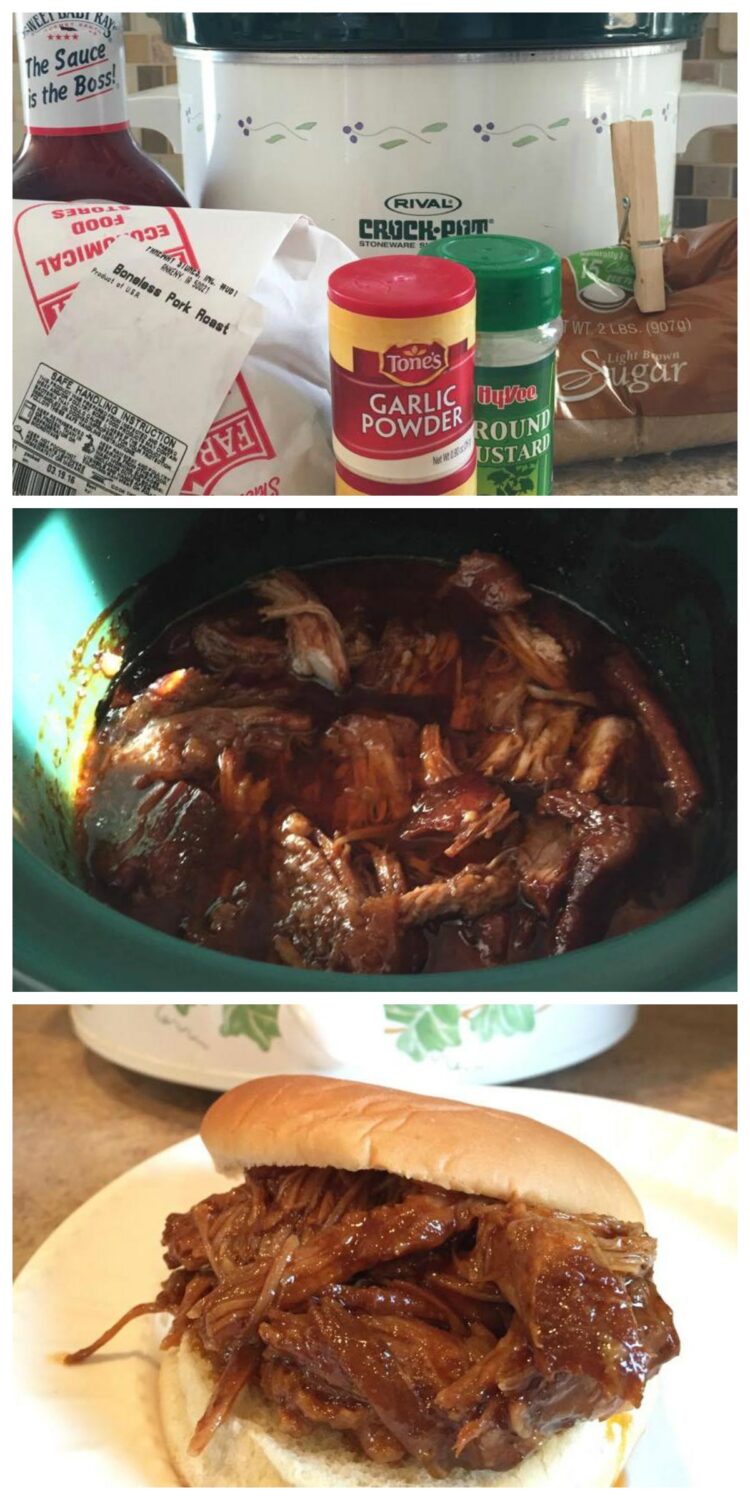
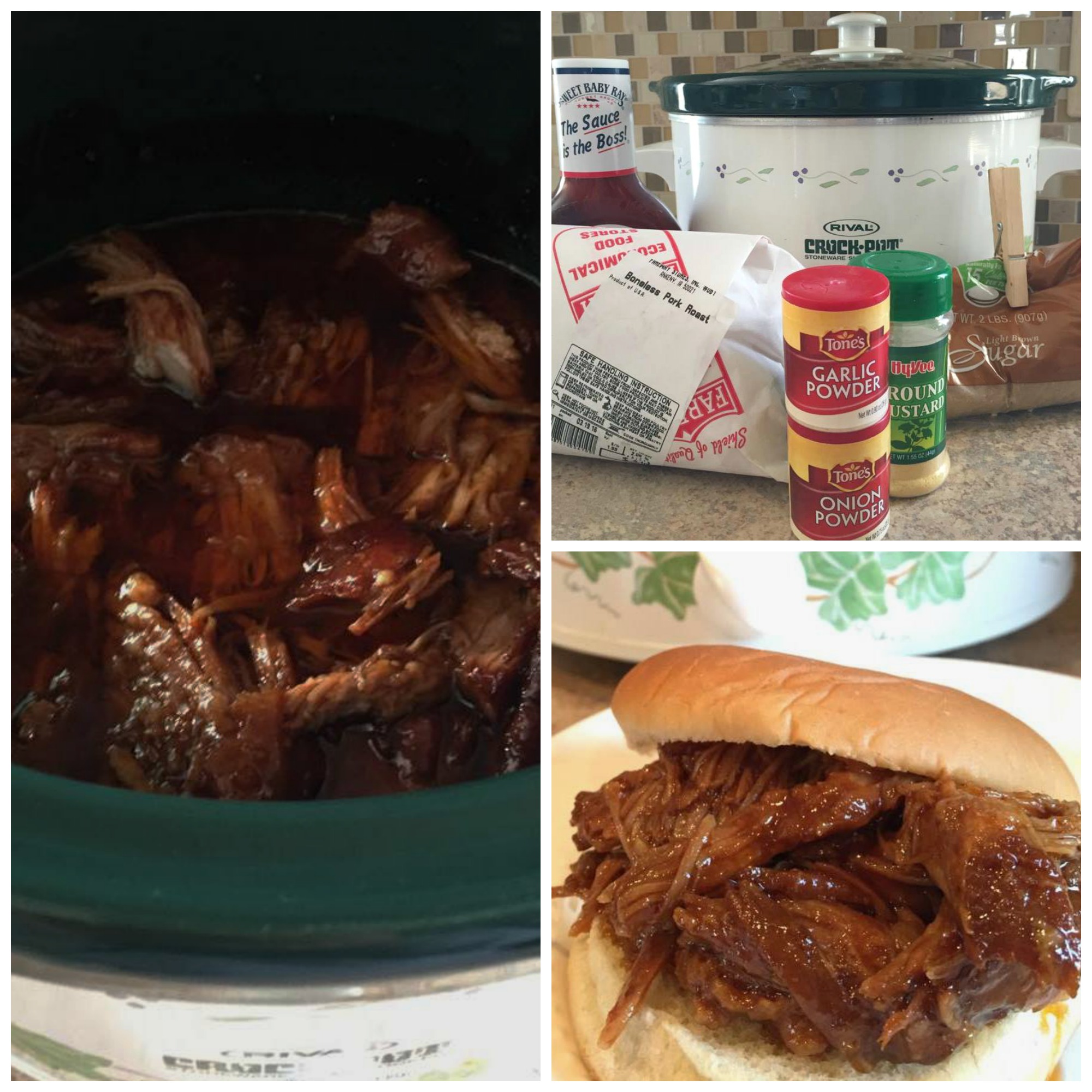
Slow Cooker Pulled Pork
When life gets crazy and you’re looking for an easy and delicious way to save yourself some time in preparing dinner during the workweek, this Slow Cooker Pulled Pork recipe is your ticket.
The only work is mixing together a few ingredients with some bbq sauce, adding it to your slow cooker with the roast, turning it on, and going on with your day. The rest is all slow-cooker work.
When it’s dinner time, shred, pile on buns, add toppings, and dig in. It’s crazy-easy pulled pork and perfect for those crazy-easy weeks.
Why This Slow Cooker Recipe Works
- The Right Cut of Pork, Why It Matters More Than Anything Else
The biggest determining factor for tender vs. stringy/dry pulled pork is the cut of meat used. Follow the cut of meat suggestions below for fool-proof juicy pulled pork every time.
- Simple but Delicious Sauce
The sauce is basically bbq sauce with some additions that make it sing. No fussing with rubs and mixes.
The brown sugar creates a lovely caramelization in the sauce, but feel free to leave that out if you’re looking for less of a sweet pork.
- Braising Liquid
The sauce and pork juices creates a wonderful braising liquid to cook the meat in that thickens up nicely during cooking.
- Cooks Low & Slow
This is a recipe that is destined for the slow-cooker. The collagen breaks down perfectly with the long, slow, low heat making shredding a breeze and ensuring a moist, perfectly-cooked roast.
- Leftovers Galore
Have plenty of leftovers for pulled pork sandwiches the following days. Or, get creative and use them in quesadillas, tacos, on top of a baked potato, etc.
Ingredients & Equipment
This recipe doubles easily, and if you have a large-enough slow-cooker you can make 4 pounds.
- cooking spray for slow-cooker
- pork roast, see above for discussion of best cuts
- 1/2 bottle bbq sauce, – garlic powder
- onion powder
- brown sugar, optional
- dry mustard
- bread & toppings as desired
What Cut of Pork Is Best for Pulled Pork?
When I make this slow cooker pulled pork recipe during busy-week meal prep, I’m using pork shoulder. Also referred to as “pork shoulder,” “pork butt,” or “Boston butt,” this cut of pork comes from the animal’s front shoulder, not the butt, contrary to its alternate names.
Pork shoulder contains more collagen, which turns into gelatin when cooked, and fat than other cuts of pork. This makes it ideal for cooking methods that take a long time, like braising and smoking.
When casein and collagen break down after simmering or smoking for hours, the resulting gelatin coats the meat’s muscle fibers and keeps them moist. As fat renders out of the meat while it’s cooking, it also serves to keep the meat moist.
With so much collagen and fat to fall back on, pork shoulder is pretty much foolproof in a slow cooker. If your 8 hour cook turns into a 9.5 hour cook because life happened, pork shoulder will forgive you.
Other cuts of pork? Not so much.
By contrast, other cuts of pork, like tenderloins, loin roasts, or even brisket are much, much leaner, meaning there’s very little collagen or fat to save them from drying out as muscle fibers cook. If you throw a pork loin in a slow cooker to simmer for 8 hours, it will emerge looking sad and feeling like a nest of stringy pork-y strings when you fork it.
Not fun.
Pork shoulder is typically one of the least-expensive cuts of meat at the butcher. Look for boneless pork shoulder roasts that are between 2-4 lbs.
You may notice some of them have a fat cap. If your cut does have a fat cap, pop the roast into your slow cooker fat-side up so the fat will render and baste the pork as it cooks.
Can I use a different cut of pork instead of pork shoulder?
You can use boneless pork riblets in lieu of pork shoulder, but use 2 lbs. They will not have as much connective tissue, so they will breakdown quicker.
Cook on low for 4 hours, stirring every hour.
Equipment That Makes This Easier
- Slow cooker. Mine has been faithful for a few years now. This is the slow cooker I recommend to friends when they ask for one.
- Sharp knife. Use it to carve up the cooked pork before pulling apart.
6-quart: If you’re going to use it often and not just for pulled pork, invest in a larger, 6-quart model. It will give you plenty of room for the roast so the lid seals correctly and heat circulates, and can accommodate larger cuts of meat or doubled recipes.
It’s great for feeding a family, or for cooking large batches to prep for the week.
4-quart: You can make the recipe as written with a 2 lb roast in a 4-quart slow cooker. However, you won’t be able to double the recipe to fill the cooker.
Bonus points for programmable slow-cookers that switch to keep-warm once finished: I’ve made this recipe so many times on weeknights that a slow-cooker with a timer is an absolute godsend. Set it on your way in the door from work, and dinner will be ready when you are.
Can you shred the pork with two forks? Absolutely.
Will you want to hurl your forks across the room afterwards? Also, absolutely.
The recipe can be made with forks, which takes about 10 minutes, but if you’re going to make pulled pork more than twice a year, invest in a pair of meat shredding claws. They’re so much easier to use on a big roast than forks, offering better grip and more leverage, and shred meat in about 90 seconds instead of 10 minutes.
What to Know Before You Start
You don’t need to add additional liquid besides BBQ sauce to slow-cooked pulled pork because it releases its own juices while it’s cooking. If this gives you heebie-jeebies, splash in a couple of tablespoons of broth, but I promise you won’t need to.
You do need to add BBQ sauce, though, as that is the basis of the recipe. For my recipe, I like the thick, sweet, tangy flavor of Sweet Baby Ray’s Original BBQ sauce (affiliate link below), because it clings to the shredded pork.
Stubb’s Original is another favorite of mine that isn’t quite as sweet and has a stronger smoke flavor. A lower cost option that’s still pretty good is Kraft Original.
You can use your preferred brand and style of cheese as there are quite a few good, budget friendly options.
Remove any butcher’s string or netting from the roast before cooking, trusting me that you will NOT want to fish them out of the meat when it comes out of the cooker.
Slow Cooker Pulled Pork
This slow cooker pulled pork recipe yields 4-6 sandwiches, but could easily be doubled to make more.
- 2 lb boneless pork roast – this recipe calls for a shoulder or Boston butt
- 1/2 bottle (about 9 oz) barbecue sauce (I used Sweet Baby Ray’s Original)
- 1/2 tsp dry mustard
- 1/4 tsp onion powder
- 1/2 tsp garlic powder
- 1/4 cup packed light brown sugar – optional
- hamburger buns to serve
How to Make It
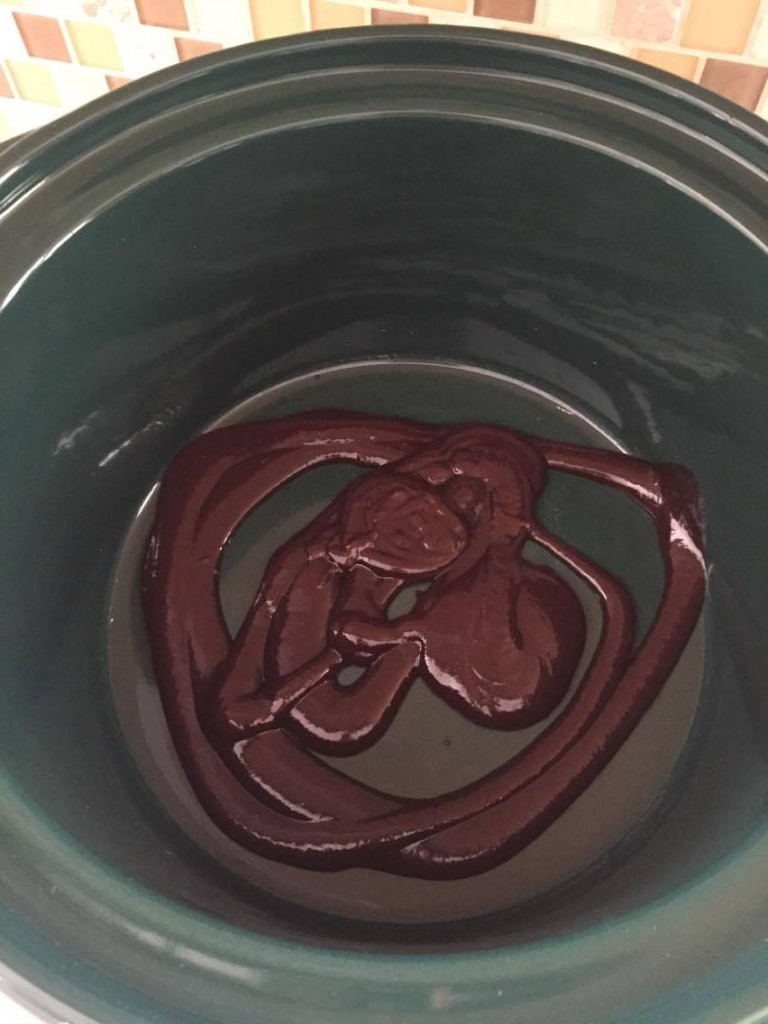
Add about a quarter of your barbecue sauce to the bottom of the insert. This helps ensure that the pork will be braised and not directly touching the bottom of the insert, preventing scorching and ensuring even cooking.
Remove and discard the butcher’s string that wraps around the roast. Place the pork in the insert, fat cap up, which will allow the fat to render into the pork as it cooks.
Pour the remainder of the barbecue sauce over the top of the roast so that it coats the top and drips down the sides of the roast. Sprinkle the dry mustard, garlic powder, onion powder and brown sugar (if using) over the barbecue sauce.
Use the palm of your hand to gently press the pork down, making sure to get into all of the grooves and crevices of the pork, this will help the barbecue sauce stick and will contribute to creating a tasty, well-seasoned coating that will shred up and add extra flavor.
Cover and cook on LOW for 6-8 hours. At 6 hours the roast will be perfectly edible and safe to shred, though it may be a little resistant, but 8 hours of slow and low cooking will make it fall-apart tender.
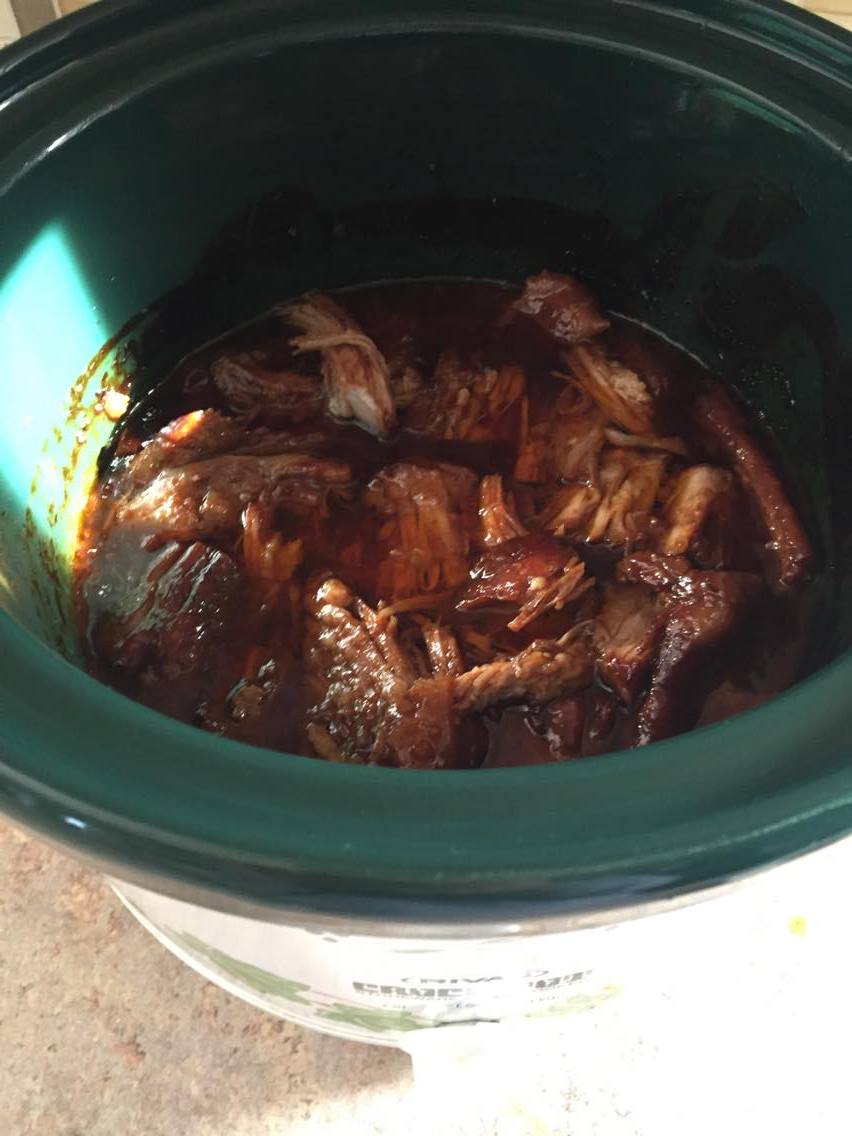
At 8 hours, you’ll find that the roast will have taken on a deep brown color thanks to the barbecue sauce and will have released a good amount of liquid into the cooker. The slow-cooked pork will have rendered fat to enhance the flavor of the bottle barbecue sauce and will be well-seasoned from the added spices.
This really does improve upon a jarred bbq sauce to make it seem home-cooked and delicious.
Shred and serve on hamburger buns with your favorite toppings.
Shred and Serve
Slow cooker pulled pork will be ready when it is extremely tender and falls apart. Insert a fork into the thickest part of the meat and give it a twist.
If the meat separates easily it is ready to be removed from the cooker, shredded, and served. If it seems resistant, cover and cook an additional 30 to 60 minutes.
Helpful Tips
- It takes a long time to cook a roast to the consistency of shredded, pulled pork. Resist criticism from impatient critics. The usual way of preparing pork in a slow cooker is for 8 hours on low. Using the high setting is not usually recommended, but if you do, check for doneness after 4 hours.
- A 2 lb. pork roast will look like it is about 1-1/2 lbs. after cooking due to liquid loss. It will be a dark brown-red color due to the barbecue sauce. Where the roast touched the ceramic it will have a slightly crispy, caramelized appearance. The cooking liquid, a combination of pork juices and barbecue sauce will resemble a thinner barbecue sauce and makes a delicious braising sauce for the pork.
- Remove the roast to a large bowl or platter (saving the braising sauce). Using two forks (or meat shredder claws) shred the meat in large chunks. Shredding should be effortless, and if not, the pork is not done cooking. Add the meat to the braise liquid and stir to coat. You may wish to stir in some additional barbecue sauce if you prefer saucier pulled pork. Serve on hamburger buns.
Slow cooker pulled pork is so simple to make there’s not much you can do wrong. Still, here are a few tips for success:
- Don’t skip the initial sauce layer on the bottom. Not only does this prevent the BBQ sauce on the bottom of the cooker from scorching, it helps to braise the pork shoulder from below.
- Fat side up. Placing the pork shoulder in the cooker with the fat side up allows the fat to render and baste the meat during cooking.
- Taste and adjust before serving. The flavor of the finished dish is going to be determined to a great extent by the type of bottled sauce you use. After shredding the meat, taste and add more BBQ sauce or salt, or a combination of the two, as desired.
- Drain or keep the liquid depending on your preference. After shredding the meat, you might like the idea of serving it without any of the braising liquid. Or you might like the idea of serving it swimming in it. Whatever your preference, use a slotted spoon to remove the meat and add as much or as little of the braising liquid back into the bowl as you like.
- Keep it warm for a crowd. If you’re making pulled pork for a larger group, such as a cookout or game day, and people will be eating at different times, keep the cooker on the Warm setting. The pork will be held at serving temperature for hours.
- Don’t lift the lid during cooking. Opening the lid lets out all that wonderful heat and steam. Plan on adding another 20-30 minutes of cooking time for each time the lid is opened.
What If Something Goes Wrong
- The pork is still too tough to shred. Don’t blame your shredding tools because it just needs more cooking. Return it to the cooker, cover, and cook on Low for another hour. Serving it now means you’ll be pulling apart very chewy pork.
- It’s dry. The pork was cooked for too long, that is, more than 8 hours, and didn’t have enough BBQ sauce to keep it moist, or the pork shoulder was very lean to start with.
- My pulled pork is too dry. Solution: Add a little BBQ sauce or some chicken or beef broth and stir. Allow to sit for about 15 minutes with the slow cooker turned off, but the shredded pork still warm. The meat will absorb the liquid.
- The BBQ is too sweet. Solution: Add some apple cider vinegar, starting with just 1 Tbls. It’ll improve the flavor of your BBQ, balance out the sweetness, and not be noticeable in the end product. Some people add a splash of worcestershire sauce to their BBQ for this purpose too.
- My pulled pork turned out with way too much liquid. Solution: This is easily remedied. Remove the shredded pork with a large ladle or slotted spoon into a bowl. Return as much of the liquid to the bowl as you’d like. That way you have some control over how much liquid you’d like. Alternatively, after shredding the pork shoulder, leave the lid of your slow cooker off and allow it to thicken a bit. About 20 to 30 minutes on the high setting does the trick.
- I left the pulled pork to cook way too long and it’s now mushy. Solution: About 12 hours in a slow cooker on the low setting results in a pork shoulder that doesn’t separate in such pretty little shredded pieces. Unfortunately, there is no solution for this situation. However, you will not regret eating the meat. It will be perfectly fine. You won’t notice as much of a texture difference if you serve it on a bun and add some cole slaw on top.
Storage and Make-Ahead
Refrigerator: Store leftover BBQ Pulled Pork in an airtight container in the refrigerator for up to 4 days. Store some of the liquid it cooked in with the pork to prevent it from drying out.
When ready to eat again, place in a skillet over medium-low heat. Add some water or beef/chicken broth.
Or reheat in 60 second increments in the microwave, stirring in between. Freezer: Store leftover BBQ Pulled Pork in an airtight container or zip-lock freezer bag, making sure pork is completely cooled before storing in the freezer.
Will last in freezer for about 3 months. Divide leftover pork into 2 to 4 person portions so you can take out and thaw in fridge overnight just what you plan to eat.
Reheat as noted above on stove top adding some water/broth.
Pulled pork is delicious and can be used in so many ways. I love making a 2 pound roast on Sunday morning and it lasts through Wednesday for lunches and dinners with no additional cooking required.
But, if you’re anything like me, you’re not looking to eat sandwiches for dinner on Tuesday night just because I had them for lunch on Monday.
What to Do With Leftover Pulled Pork
Pulled Pork Tacos
These are so easy to make and are a hit with the kiddos. Simply warm up a flour or corn tortilla over an open flame, like tossing them right on our stove top burner, layer with pulled pork, shredded cabbage or coleslaw and drizzle with lime sour cream.
We love them with BBQ pulled pork and creamy coleslaw on a tortilla, and the kids eat these up, whereas plain ol’ BBQ pork sandwiches are harder to convince them of. Add pickled jalapeños to take these over the top.
If you have company coming over and want to dress these tacos up, try layering warm tortillas with a layer of refried beans, BBQ pork, cotija cheese and finish with a squeeze of fresh lime. Oh, they’re good.
Pulled Pork on Baked Potatoes
Bake some potatoes right on the rack for about an hour in a 400 degree oven or cheat and zap them in the microwave for 5 minutes. Split open the potato and give it a good poke around with a fork.
Add a pat of butter, spoonful of sour cream, shredded cheese, preferably cheddar, and top with pulled pork. This one’s a winner.
The salty cheese, sweet bbq pork, and starchy potato equal yum. And, it’s practically no work.
By the time you’ve zapped the potato in the microwave, dinner will be done.
Pulled Pork Quesadillas
Place shredded Monterey Jack or cheddar cheese, or a combination of the two cheeses, onto one half of a large flour tortilla. Top cheese with a handful of pulled pork and, if you’re feeling spicy, a few slices of pickled jalapeño peppers.
Fold the quesadilla over and fry it in a skillet with a bit of butter until golden brown and heated through, about 2-3 minutes on each side over medium heat. Serve with sour cream and salsa.
My kiddos think quesadillas are very entertaining, but I think these are definitely superior to the classic chicken version. The sweetness of BBQ’ed pork with the melty cheese is fabulous.
Other Ideas
Pulled pork scramble – Spoonful of pulled pork in a skillet on medium heat until it begins to caramelize just a tad around the edges. Crack 2-3 eggs into the pork and scramble.
Serve straight out of the skillet, on toast or in a warm tortilla. Another good Saturday morning standby, as BBQ + eggs is strange combo until it isn’t and then you’re hooked.
You can also do this with a fried egg – the runniness of the yolk compliments the bbq sauce quite well.
Breakfast burritos – Scramble some eggs with the pulled pork (above) and serve in a large flour tortilla with some pepper jack cheese. Wrap it up and fry it seam-side down in a dry skillet for a minute to help it hold its shape.
Serve with sour cream and salsa.
I am a HUGE fan of BBQ + Breakfast combos and quick, easy, yummy lunches on a work day – these are a couple of our family’s favorites.
Serve this slow cooker pulled pork over a mound of white rice with some steamed broccoli on the side. Especially if you’ve got a rice cooker already going, this comes together in 10 minutes.
- Pulled pork pizza. Spread some BBQ sauce on your favorite pizza crust, top with mozzarella, some pulled pork and a few slices of thinly sliced red onion and pop in a hot oven at 450°F and bake until the pizza is cooked through and crispy.
- Make a batch of your favorite boxed mac and cheese and toss in a big handful of pulled pork. The BBQ sauce will mix right into the cheese sauce making this an unusual but surprisingly great combination.
- Chopped romaine lettuce, a handful of shredded cheddar, some crispy fried onions and a little ranch. Add some of this pulled pork on top and toss to combine.
Frequently Asked Questions
Can I make this with pork loin?
Pork shoulder is best for slow cooker pulled pork. You could make this recipe with pork loin but it’s not as ideal.
Pork shoulder has a lot of collagen and fat that melts during the long, slow cooking process. This gives it tons of flavor and makes sure it won’t dry out and is easy to shred.
Pork loin is much leaner and will cook faster than pork shoulder. It’s more likely to get dried out sitting in the slow cooker for 6 to 8 hours.
Some stores will tell you that you can use a pork loin to make pulled pork. I would always reach for pork shoulder first.
Should I sear/brown the pork in advance?
This recipe does not require browning the meat in advance. The fat in the pork plus the BBQ sauce adds plenty of flavor.
If you’d like a little more browning on the outside of the pork, heat up a large skillet over high and add a little oil. Add the pork roast and brown about 2-3 minutes per side.
You will get a nice, dark, caramelized color on the outside of the pork but honestly, it will make a small difference in the final product.
Can I cook this recipe on high?
You can but I’d rather cook this recipe on low. It will cook faster on high but won’t have the same texture.
High will take about 4-5 hours. The fat and collagen will not have time to fully break down cooking it on high and you’ll have a firmer pork.
Test with a fork at 4 hours. If the pork easily tears and twists with a fork, it’s done.
How do I know when it’s done?
Test the pork by sticking a fork into the thickest part and give it a twist. The meat should give very easily.
If it doesn’t, it needs an additional 30-60 minutes. Slow-cooked pork is very forgiving because you can’t really overcook it.
If anything, it’ll need an additional 30-60 minutes on LOW.
Can I use a smaller/larger roast?
Yes, 1 lb. roast also works. Slow cookers are amazing in that a 1 lb. roast and 4 lb. roast will take basically the same time to cook.
It’s the thickness of the meat that affects cook time and not necessarily the size of the meat. A 4 lb roast should fit into your 6 quart slow cooker just fine.
You may just have to bump up the recipe to fit, use the whole bottle of bbq sauce and double, or more, the seasonings. It may cook about an hour longer than the 2 lb roast, but honestly, you’ll be checking to see if it’s fork tender anyway and not going to pay attention to the time.
At what temperature should the roast be cooked?
The internal temperature of the roast should reach 195-205 degrees F. The reason is that at this temp the collagen (connective tissue in meat) completely melts.
Meat can be removed from heat when it reaches 190 degrees F but it’s going to be more difficult to shred.
My pork is tough.
What happened?
The most likely scenario is that your pork needed more time. Tough pork means there’s collagen left and it just needs more time to cook.
If you’ve been following the recipe as-is, keep the pork in the slow-cooker for another hour on LOW and be sure to cover it. Do not attempt to shred the pork.
It will shred, but it’s going to be more work than necessary. It’s going to be more stringy and less tender than it should be.
Properly cooked pork should shred with ease.
My BBQ sauce was too sweet. Help!
There are a number of options to help offset sweetness in BBQ sauce:
- Add a Tbsp of apple cider vinegar and stir through the sauce. It will help to offset the sweetness without tasting strongly of vinegar. Add more to suit your tastes.
- Add a tsp of Worcestershire sauce and a pinch of dry mustard for a bit of savoriness.
- Consider using a less-sweet BBQ sauce next time (Stubb’s Original is lower sugar than most).
How long does cooked pulled pork last? Can I freeze it?
Cooked pulled pork freezes better than most meats. Allow the meat to cool completely then store in an airtight container/freezer bag.
Try to add some of the cooking liquid to the container for easy reheating and to ensure it does not dry out. It will last for up to 3 months.
To reheat, remove from freezer and leave in refrigerator overnight to thaw. Place in a pan over LOW heat and add water/broth as needed.
Pulled pork reheats very well.
Related Recipes