
Blueberry Kale Smoothie Recipe
This easy-to-make Blueberry Kale Smoothie takes less than five minutes to make and is packed with antioxidants.
I’m working on eating more vegetables in a simple and easy way. One way is through smoothies.
However, I really don’t care for kale in salads, raw. So, this Blueberry Kale Smoothie is a winner in our house.
Even the teens drink them.
I’ve shared other kale smoothies but those recipes had a bit of a bitter taste. Also, they were a bit runny.
This one is creamy but not runny, not bitter and easy to make.
Why the Blueberries Do All the Work Here
The blueberries really shine in this recipe. First off, since they’re frozen, no need for ice.
No ice means the smoothie doesn’t get watery and diluted. Secondly, the green color of kale is totally masked.
This smoothie is more of a dark purple-violet color with no green specks. Lastly, the taste of kale is masked.
There’s no bitter aftertaste. It’s blueberries all the way.
Blueberry Kale Smoothie Ingredients
Blueberries: Frozen blueberries are best since they’re the primary source of flavor, will chill and thicken the smoothie and require less ice. If you’re going to use fresh blueberries add about 4-5 more ice cubes.
Try to make sure your blueberries are ripe. Somewhat under-ripe ones have a slightly sour taste and will accentuate the bitter taste of the kale.
Ice Cubes: Try not to use more than the recipe suggests. As the ice melts, it dilutes the smoothie and waters down the flavor.
Using frozen blueberries instead of fresh means you could possibly get by with only 3 or 4 ice cubes (not the suggested 5-6).
Kale: The recipe is written for 2 stems of kale. That should be about a cup of kale.
I find the taste of kale is almost completely masked by the flavor of blueberries. You can use curly or lacinato kale.
I like to remove the leaves from the stem. Otherwise, unless your blender is a monster, you’re likely to have a few pieces of kale in your smoothie that resemble tiny pieces of straw.
If your blender is a monster and you’re okay with tiny pieces of straw, ignore me and blend away.
Bananas: The banana adds body and creaminess to the smoothie so it’s not too thin. Try to find a banana that’s fairly ripe.
The riper the banana, the sweeter it will be and the smoother your smoothie will be. That means lots of brown spots.
If you use a banana that’s still a little greening yellow in spots, your smoothie will have a starchy bland quality. Believe me…I’ve made that mistake.
You’re better off buying bananas and waiting for them to ripen if needed. It’s an investment worth making.
Vanilla Almond Milk, Silk Brand: This recipe was tested with Silk brand Vanilla Almond Milk but you can use plain almond milk. You’ll either use about 2/3 cup to 1 cup, depending on your preference.
Using only 2/3 of a cup makes the smoothie quite thick. Adding the full cup makes the smoothie more suitable for a straw.
Protein Powder: Totally up to you. I like to add one scoop of my favorite whey protein.
Protein powder is an optional ingredient. Use it if you’re having this smoothie as your meal or right after a workout.
Otherwise, for a snack, leave it out.
How to Make a Blueberry Kale Smoothie
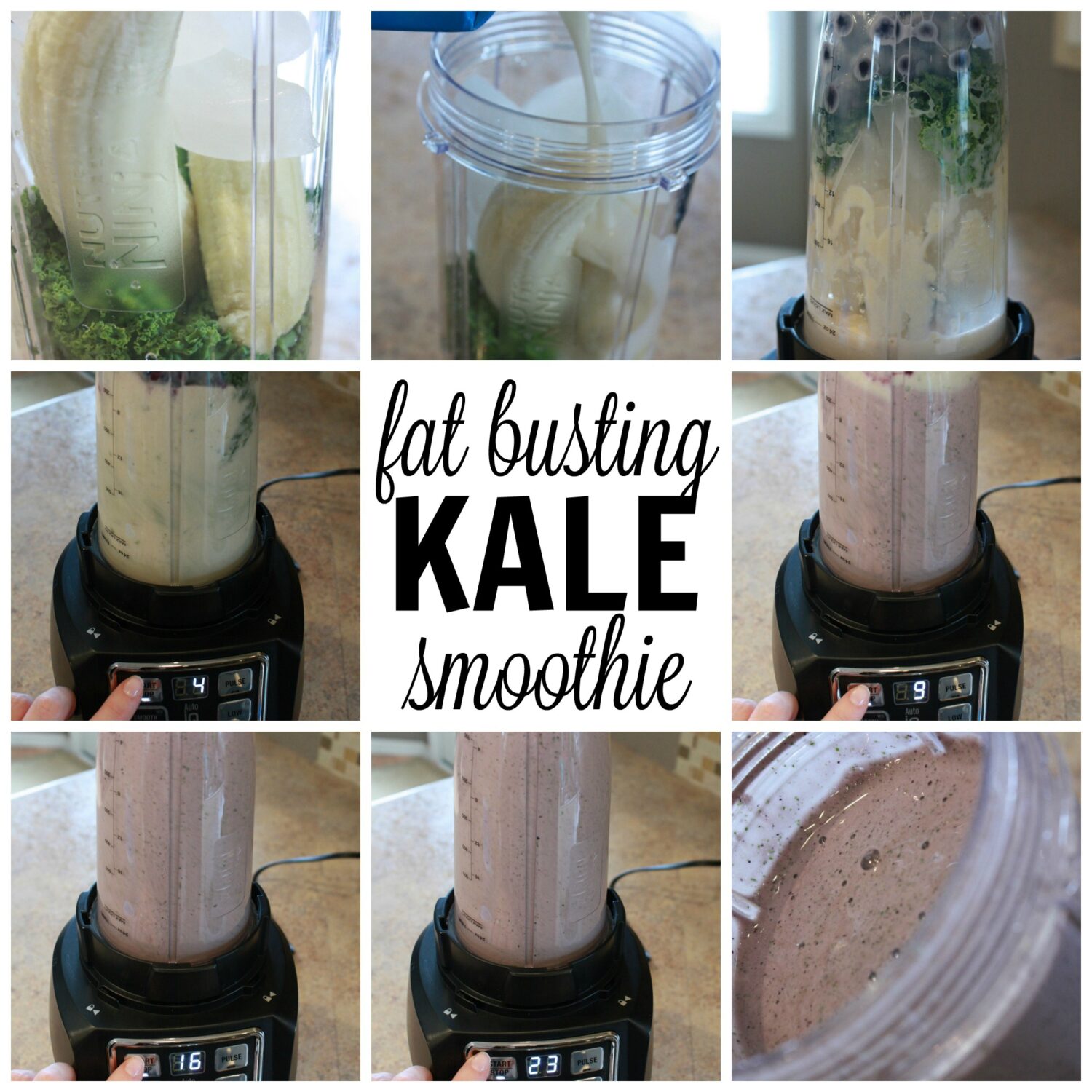
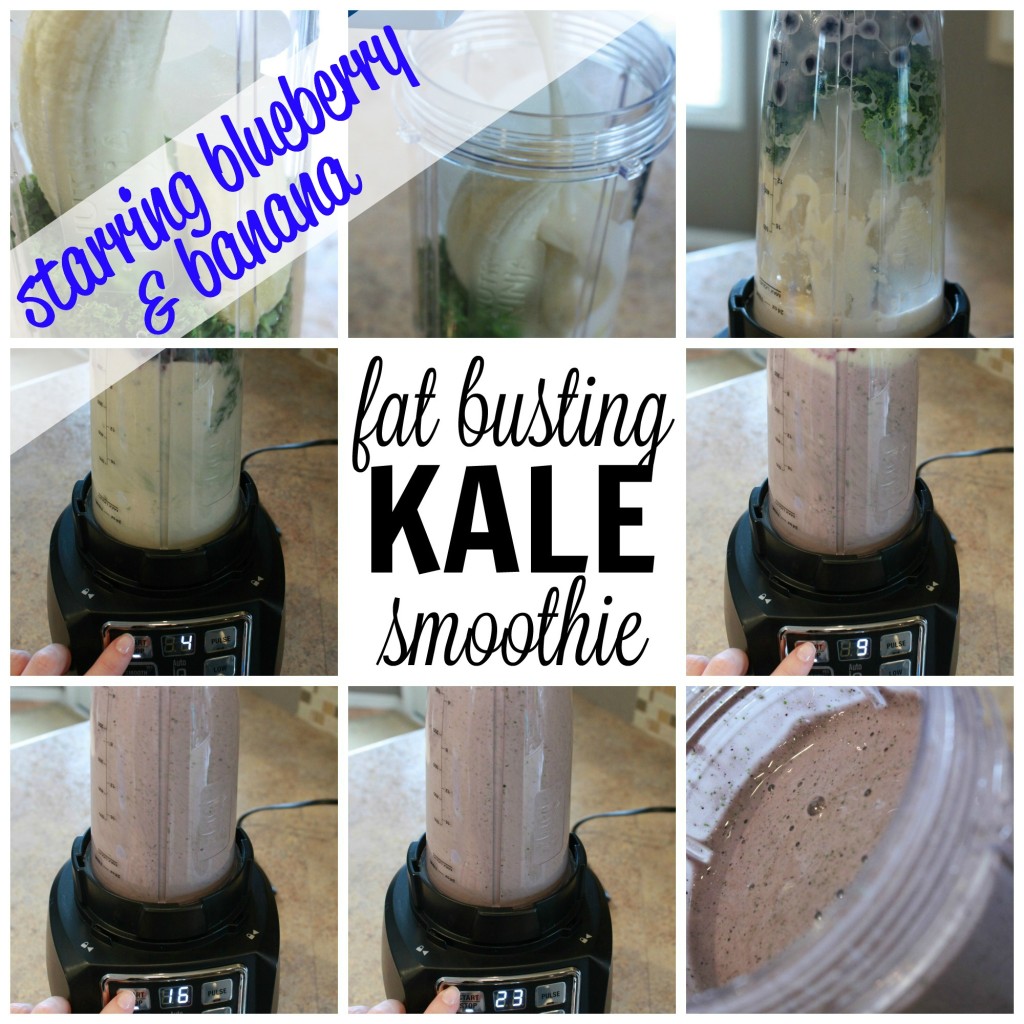
Pour the almond milk into the blender. Then take the leaves off the kale stems*.
Tear the leaves into big pieces and fold them into small bundles (see photo). Add to blender.
Break banana into 3-4 pieces and add on top of kale. Add blueberries and ice on top of banana.
Add protein powder (optional) last. Blend on low for 10 seconds, increase to high, blend another 20-30 seconds.
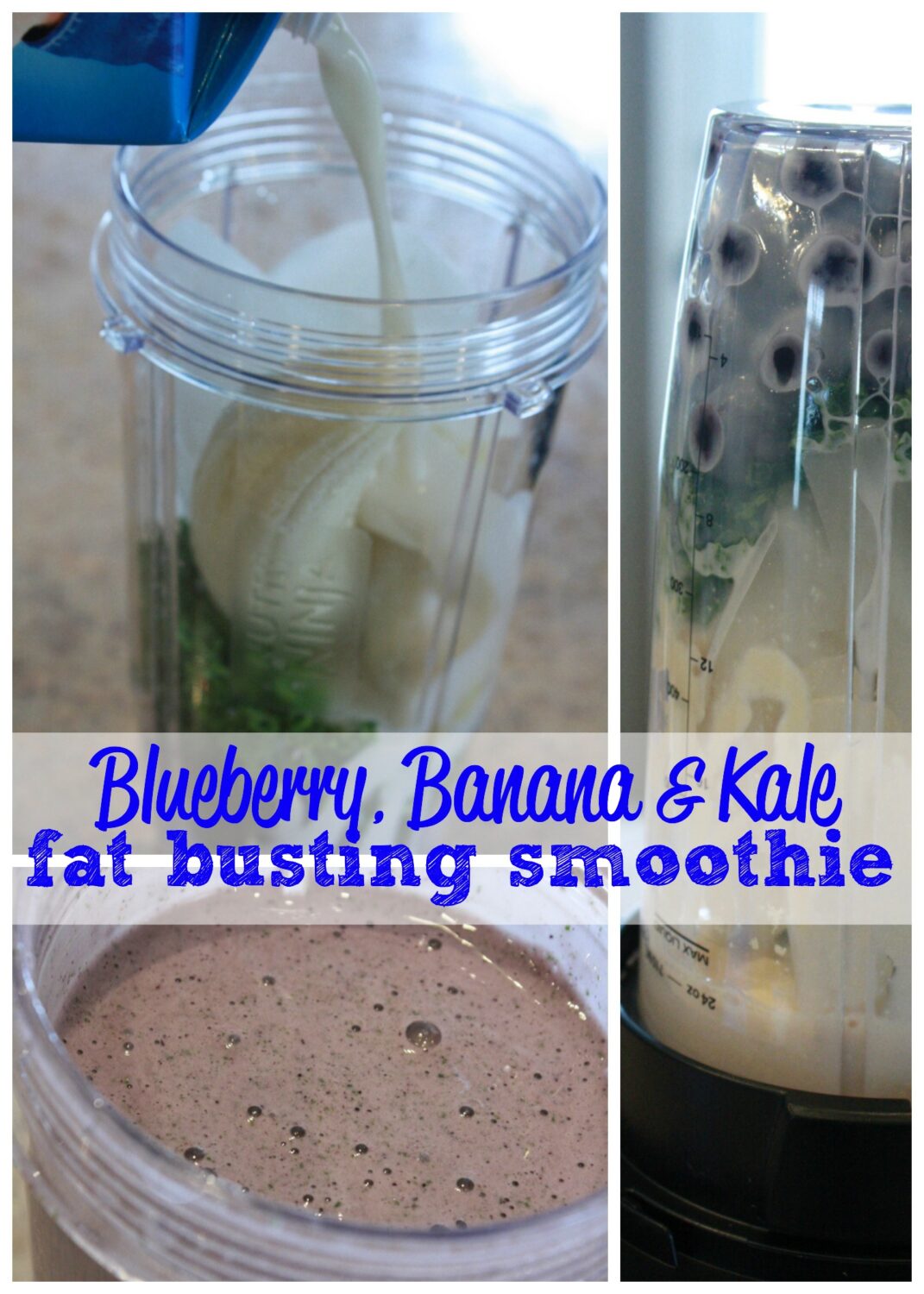
Smoothie should be a consistent color, such as purple-violet, and smooth. If it’s too thick for your liking, add a few ml’s of almond milk and give it a couple of pulses.
Pour into a tall glass. Best enjoyed right away.
*A high-powered blender will be able to break down kale stems. A standard blender like I have will have a harder time.
So save yourself the gritty texture by removing the stems.
A Few Things That Actually Help
I’ve made a lot of smoothies in my day. Through trial and error, I’ve found a few things that make blending easier and result in a better smoothie.
- Always add liquid first. It helps to lube the blender’s blades and gets them turning before they run into frozen banana or blueberries.
- Add kale before blueberries/banana. The weight of the ice and frozen blueberries help to push the kale into the blender’s blades.
- Add protein powder last. Otherwise, it’ll get caught on the sides of the blender.
- Break banana into 3-4 pieces before adding to the blender. Trust me. It blends way faster this way.
- Check the blender to see if it’s smooth. You’ll be able to hear a difference in the blender’s motor when the ice/frozen berries stop getting ground up. If not smooth, scrape the sides with a spoon and blend again.
If you find the texture of your smoothie is too runny, try using a couple of the frozen blueberries instead of ice. This will give it more flavor and thicken the texture.
Using too much ice can water down your smoothie once it melts.
- If you find the texture is too thick, gradually add more almond milk until you get the texture you’re happy with. Go slowly as you don’t want to make it too thin.
Other Directions You Can Take This Smoothie
- For a creamier, thicker texture: Add 1 Tbsp natural peanut butter to your smoothie. The recipe above is great with PB (trust me!), but the flavor of PB won’t really overshadow the flavor of blueberry. It just makes it really creamy. It will also make it thicker. Natural PB will blend easier and cleaner than creamy PB.
- For a thicker, more smoothie-bowl consistency: Use 1/2 cup full fat canned coconut milk in place of the almond milk. This will make the smoothie really thick. If you find the smoothie to be too thick, thin with water.
- To add some fiber: Add 1 Tbsp chia seeds. They won’t really impact the flavor of your smoothie. Just keep in mind that chia seeds soak up liquid and can impact the texture of your smoothie if left to sit for 10-15 minutes.
- For those of you that aren’t ready to tackle kale yet: Spinach is much milder in taste and will blend easier than kale. Try this recipe with spinach until you’re ready to make the switch.
Making It Ahead and Storing It
- These don’t really keep well if blended ahead of time. Within 20-30 minutes of blending they’ll start to separate. You can still drink it if you give it a good stir first, but a fresh, just-blended smoothie is the best.
- What I like to do is measure out individual servings of kale and blueberries into quart-size freezer bags on Sunday. Then in the morning I just pull one out the freezer, add the rest of the ingredients and blend. Done in 30 seconds. It’s the only thing I meal prep on Sunday’s, but I love it because it saves me some time on hectic mornings.
If storing ahead of time, store in an airtight jar and fill it all the way to the top to minimize oxidation. Shake well before enjoying.
Should I freeze ahead of time?
I do NOT recommend freezing after you’ve blended it. It won’t have the best texture when thawed.
What I recommend is freezing your ingredients ahead of time. For example, I will portion out individual servings of blueberries and a chopped up banana into individual freezer bags and add some kale to those.
When I’m ready to have a smoothie, I’ll add those frozen ingredients along with the almond milk and have this smoothie in less than 2 minutes.
Blueberry Kale Smoothie FAQ
Can you actually taste the kale?
Not really. The blueberries take over this recipe.
You may be able to taste a hint of kale as an undertone but not too noticeable. If you aren’t a fan of kale, try using baby kale instead of curly kale.
It’s less bitter and blends up much smoother.
Can I use fresh blueberries instead of frozen?
If using fresh blueberries, I’d recommend adding about 4-5 cubes of ice to get that nice, chilled consistency that frozen blueberries give to a smoothie. Also, if your blueberries aren’t super ripe, the smoothie may end up a little too tart and enhance the bitterness of the kale.
In that case, I’d go back to using frozen blueberries next time.
Do I need a high-powered blender?
If you’re using curly kale, consider picking off the leaves from the stem and discard the stem. That should get rid of any chunks.
What protein powder works best in this?
Vanilla and unflavored whey proteins mix perfectly. Chocolate would definitely change the taste.
Dairy free protein powders work well too (pea/rice protein). It can be a little grainier but the banana helps with that.
Can I make this without banana?
Unfortunately, there’s no real good sub for banana in a smoothie recipe. It gives it creaminess and sweetness.
You can sub in half an avocado for the creaminess, though you’ll miss out on that natural sweetness from the banana, or add a couple of tablespoons of Greek yogurt for some added creaminess and protein. Either way it’ll be a lot thinner than it is with banana, unfortunately.
I am NOT a huge kale in my salads kinda girl but I will happily chug a glass of kale when it’s masked with fruity, delicious, creamy, sweet goodness. This blueberry kale smoothie is one of those rare kale recipes that I’m OK with.
It’s refreshing, satisfying, and will leave you feeling like you’ve done your greens obligation for the week.
Other Drinks Worth Making

Love a good drink? Try my sweet, tangy Ocean Water Drink, a copycat recipe of the delicious Sonic drink.
If you’re a Frappuccino kind of gal, check out my easy to make Starbucks Frappuccino Copycat recipe. Something on the sweeter side?
My Crockpot Hot Chocolate recipe will be your new best friend.
Blueberry Kale Smoothie
Ingredients
Ingredients
- 1/2 cup blueberries frozen or fresh
- 2 kale stems about 1 cup kale leaves
- 1 banana
- 5-6 ice cubes
- 2/3 to 1 cup vanilla almond milk
- 1 scoop whey protein powder
Instructions
Instructions
- Add the blueberries, kale, banana, ice, almond milk, and protein powder to a blender.
- Blend until completely smooth, adding more almond milk if needed to thin the smoothie.
- Pour into glasses and serve right away.