
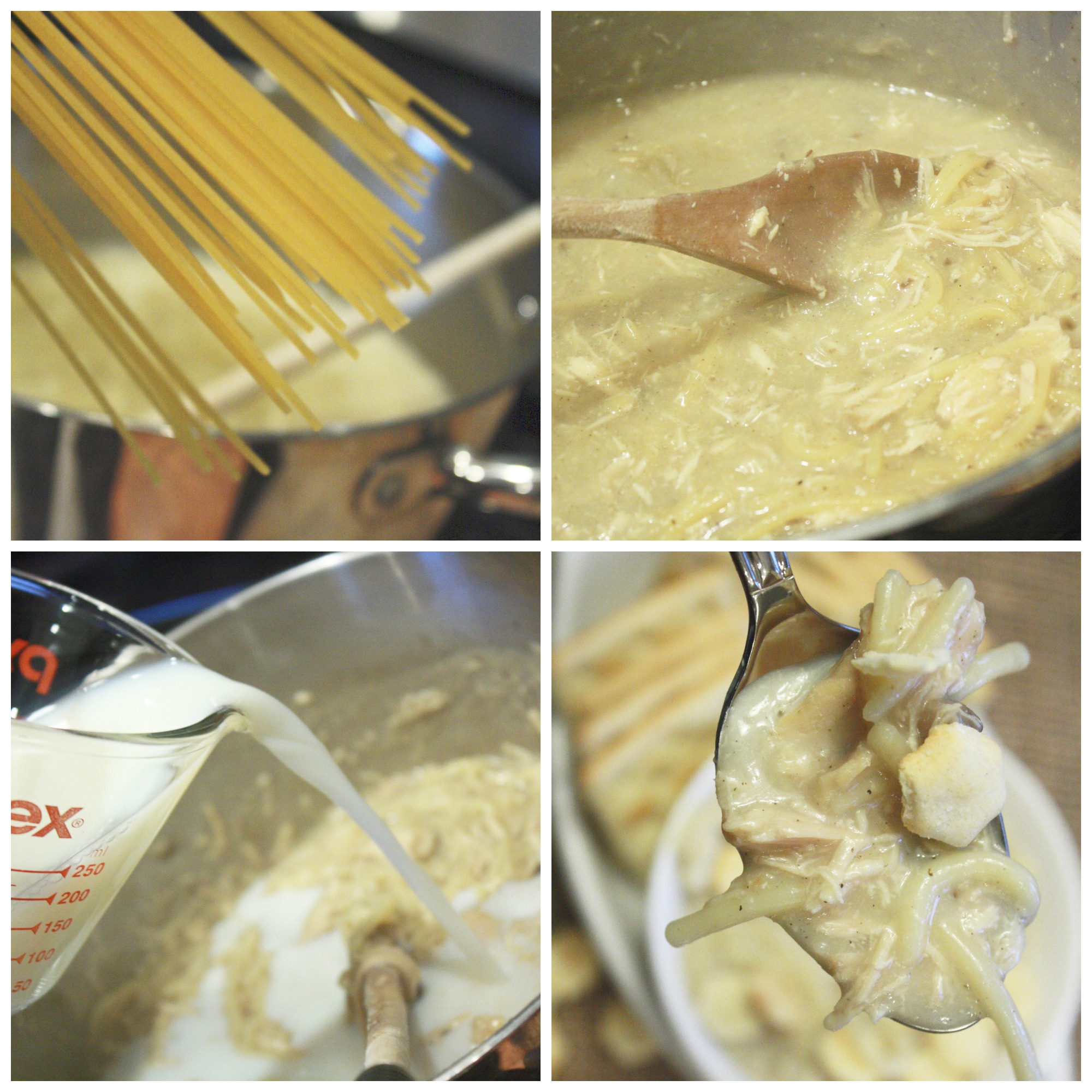
Chicken Noodle Soup Recipe
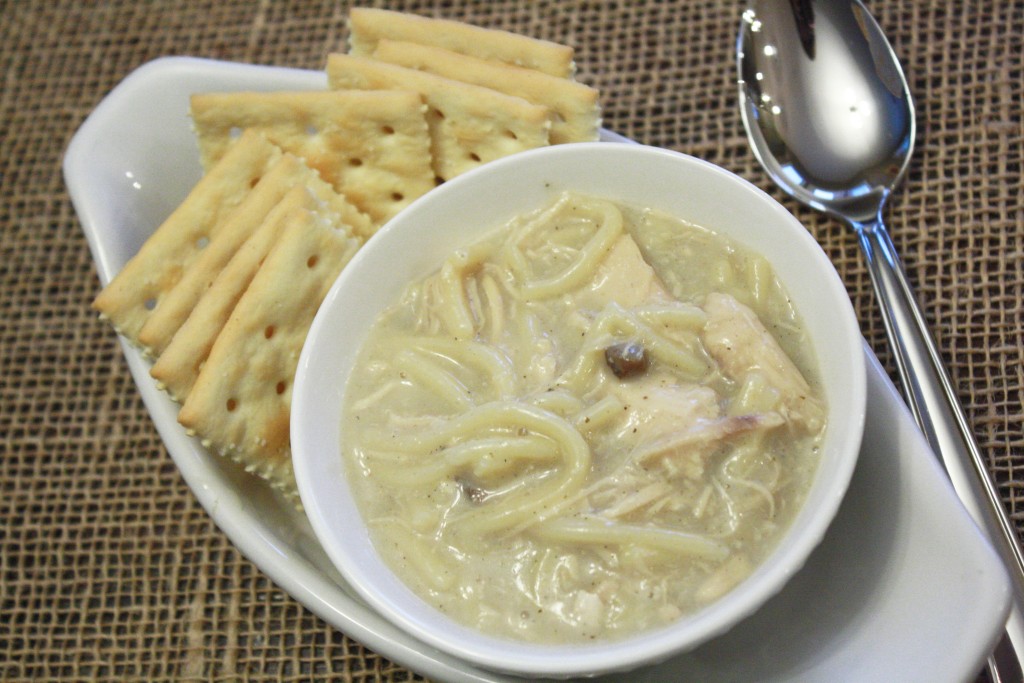
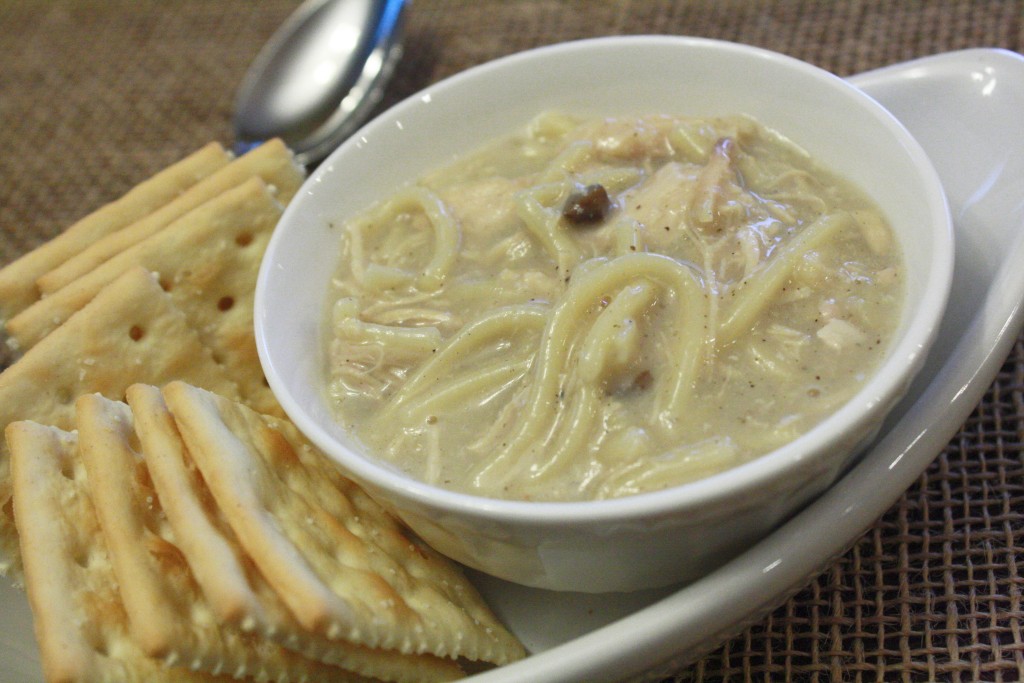
Chicken noodle soup should feel like a warm hug that is a little savory and thick enough to coat your spoon but not so thick that it sits as a brick in your stomach. This recipe lands exactly there. The swap that makes it work is using spaghetti noodles instead of egg noodles. They soak up the broth differently and cook down softer keeping the soup feel like soup instead of a casserole. If your whole life you’ve made chicken noodle soup with thick egg noodles that always makes it feel heavy, this one is most definitely worth a try.
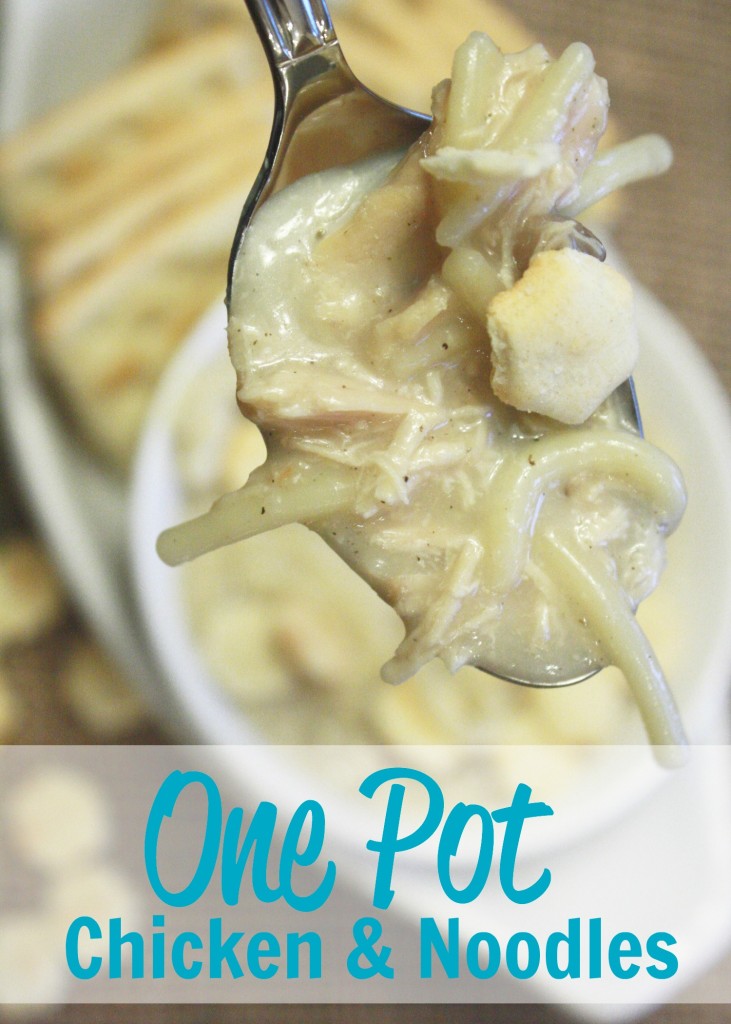
The other thing here that changes everything is how the chicken is cooked. Slow cooker, low heat, four to six hours — then shredded with a hand mixer directly in the bowl. It takes two minutes and produces chicken that pulls apart into long, even strands instead of rough chunks. It’s the kind of small process upgrade that makes you wonder why you ever did it the other way.
What Makes This Recipe Reliable
Many recipes are either too bland or too rich. Luckily, this recipe has delicious balanced flavor! There are some tricks to getting the balance just right. Let’s break them down before you get started!
Cream of Mushroom as the Base
Combining two cans of cream of mushroom soup with chicken broth creates a creamy, somewhat thick base without needing to use roux or cornstarch. The mushroom flavor is there, but very subtle. You won’t taste it as mushroom; it just adds depth to the flavor. If you want a totally clear broth, you can omit the cream of mushroom soup and instead add a tablespoon of flour to the sautéed onions. However, the cream of mushroom soup option is richer and more forgiving for weeknight cooking.
Lemon Pepper + Poultry Seasoning
There is a lot more going on here than you might think. Lemon pepper helps keep the soup from feeling heavy with its brightness. Poultry seasoning is a blend of thyme, sage, rosemary, and sometimes marjoram, and provides that signature chicken soup taste without you needing to measure out six different herbs. Two teaspoons of lemon pepper may seem like a lot, but it’s spot on for a soup of this size.
The Milk Goes In at the End
I like to add the milk last, after the 45 minutes of simmering, not just because it makes the soup the right consistency, but also because it keeps the dairy from scorching and curdling from all the cooking. When milk is added at the start, the end result runs the risk of being a little grainy, and having an off texture. The order of the steps here is really important.
Spaghetti Noodles, Not Egg Noodles
Spaghetti cut into 2-inch pieces allows the noodles to soften consistently and separate, absorbing just the right amount of broth to become tender without going mushy. While egg noodles do this as well, they can expand and make the soup feel more like a chicken and noodles dish instead of a soup. If that’s the result you’re looking for, egg noodles are great. If you’re looking for a soup that’s brothier and not as heavy, go for the spaghetti.
What You Should Know Before You Start
This soup may be simple, but there are a few things to look out for that could be tripping points.
The Soup Gets Very Thick During the Simmer
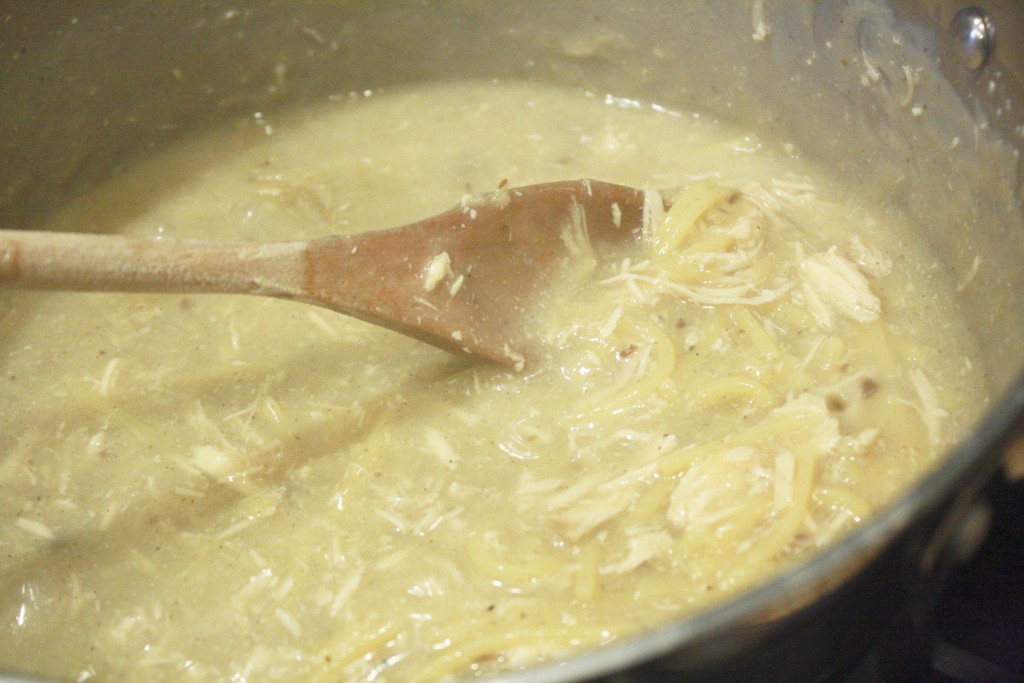
As the soup simmers for 45 minutes, the noodles soak up a lot of the broth and the soup may look more like a casserole – thick and dense. This is nothing to worry about. Please do not add more broth at this point. The milk you add at the end will bring it back to the right consistency. If you add broth too early, once you add the milk the soup will just be too thin.
Let It Rest Before Serving
The 10-minute rest period off the heat is NOT optional. It lets the noodles finish softening and allows the soup to thicken to the correct serving texture. If you skip the wait, the noodles may still have a noticeable sink and the soup won’t have come together. Ten minutes is well worth the wait.
Make the Chicken Ahead
This step can be done on a weekday if you have a slow cooker. You can either do this on a weekday by starting it before work or on a Sunday by making a big batch. A rough estimate for three cups of shredded chicken is about two big chicken breastes. When slow cooking the chicken, just pure water is a decent liquid, or if you would like to make the chicken seasoning a bit better, pure chicken broth will do.
The Hand Mixer Shredding Method
Put the hot cooked chicken into a big bowl, then grab a hand mixer and set it to low speed. Within about 30-60 seconds, the chicken will be entirely shredded. You’ll get an even texture and the chicken will come apart into strands. Take note, the chicken needs to be warm or close to hot. If the chicken cools completely, it will be harder to shred and you’ll end up with uneven pieces, so use it directly from the slow cooker.
Ingredients
This recipe yields about 8 to 10 servings, so you’ll have plenty to go around! It keeps well in the refrigerator, and you might find the leftovers to be even more delicious the next day after the noodles have absorbed some of the broth.
- 1 tablespoon butter
- 1 large onion, diced
- 3 cups cooked shredded chicken
- 3 cans (14.5 oz each) chicken broth
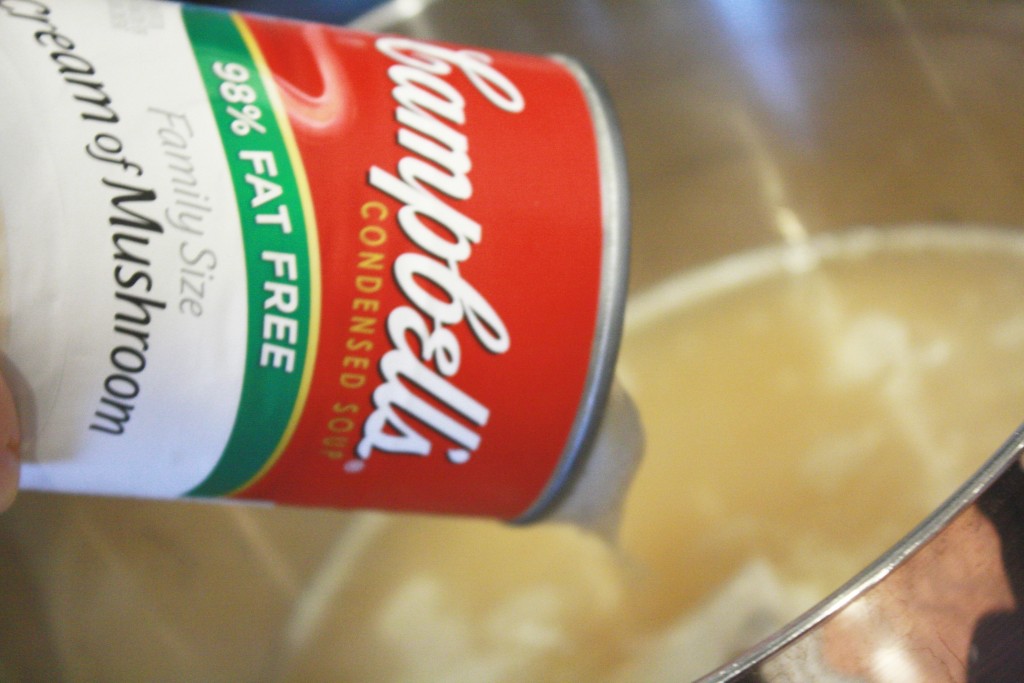
- 2 cans cream of mushroom soup
- 8 oz spaghetti noodles, broken into 2-inch pieces
- 1 teaspoon poultry seasoning
- 2 teaspoons lemon pepper
- 2 cups milk
- Optional: 5 celery ribs, diced
- Optional: 6 medium carrots, diced
Ingredient Notes
Chicken broth: Using low-sodium chicken broth allows you to control the amount of salt added. The cream of mushroom soup already has sodium, so starting with low-sodium broth will keep the finished soup from being too salty. You can always add salt at the table.
Cream of mushroom soup: This amount of soup requires two cans. If you don’t like mushroom soup, you can use cream of chicken soup instead! It’ll taste slightly different, but it will still be good. Avoid using condensed cheddar or cream of celery soup, as those will alter the taste in an undesirable way.
Milk: Whole milk always gives the best result. 2% is fine too. Using skim milk will make the soup thinner and a little less creamy. If you wish to make a very rich, thick end product, do not substitute heavy cream — cream will overpower the broth flavor.
Optional vegetables: Traditionally, chicken noodle soup has celery and carrots, and they work well here too. Chop them into small pieces (about ¼ inch) so they cook through during the 45-minute simmer. If you put them in as large pieces, they will still be firm when the soup is finished. If you’re adding veggies, do so at the same time as the chicken and broth, not during the saute step.
There are all sorts of pots you could use, but we highly recommend a heavy bottomed one. Your noodles will most likely stick to a regular saucepan (and maybe even scorch) during the 45 minute medium-low simmer, something a heavy bottomed pot can help prevent. If you’re considering buying a pot, we recommend a 6-quart dutch oven, which will help with even heat distribution and make your simmering much easier. These types of pots are useful for all sorts of meals – soups, braises, pasta – so they’ll definitely be worth the investment!
How to Make Chicken Noodle Soup
Step 1: Saute the Onion
In a big pot, over medium-low heat, melt your butter. Then, add your chopped onion. Make sure to stir occasionally and wait approximately 5 to 7 minutes as it sits. Just as a reminder, you want the onion to become translucent, not brown. If the onion is brown, it would give some sort of sweet, caramelized flavor, and that would not make sense for this chicken noodle soup. So, be sure to keep the heat low and be patient.
If you plan on using celery and carrots, add those with the onion. They will need the same amount of time to soften a bit before adding the liquid.
Step 2: Add the Main Ingredients
Put the shredded chicken, chicken broth, cream of mushroom soup, broken spaghetti noodles, poultry seasoning, and lemon pepper into the pot. Make sure to mix everything well. The cream of mushroom should not be clumped, and should be combined into the broth. As your stirring, use a wooden spoon or silicone spatula form the bottom to scrape.
Step 3: Bring to a Boil
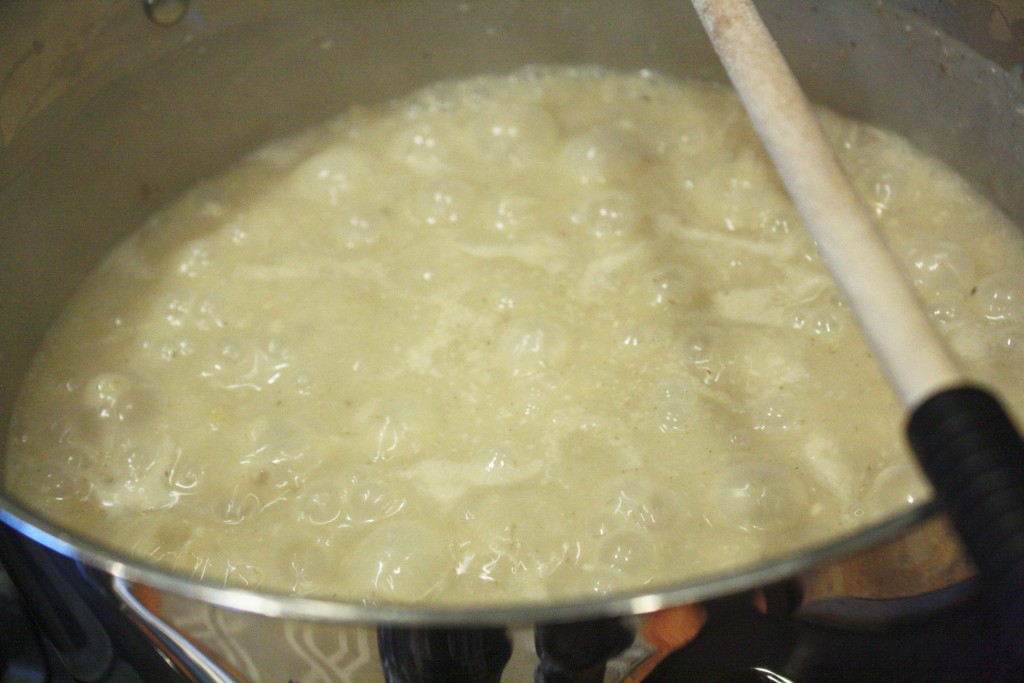
Now raise the heat to medium-high and allow the soup to reach a full boil. Make sure to stir the soup every so often to prevent the noodles from sticking. This process should take roughly 8 to 10 minutes depending on the type and brand of stove you are using. Be careful when watching this process. If this particular cream-based soup boils too quickly and hard, it may splash and create quite the mess. As soon as you see it boiling, make sure to turn the heat down.
Step 4: Simmer for 45 Minutes
Lower the heat to medium-low and let the soup continue to cook for 45 minutes, stirring every 10 minutes. During the cooking, the soup’s noodles will soak up a lot of your liquid, thickening it to almost a casserole-like texture. This is what you want the soup to do, and you should not add any liquid. Do not increase the heat to make it cook faster. You just let it simmer.
If the soup is starting to stick to the bottom of the pot, it’s time to lower the heat a bit and stir more often. Because they are so heat-retaining, you can drop the burner to low and they will still maintain a gentle simmer.
Step 5: Stir In the Milk
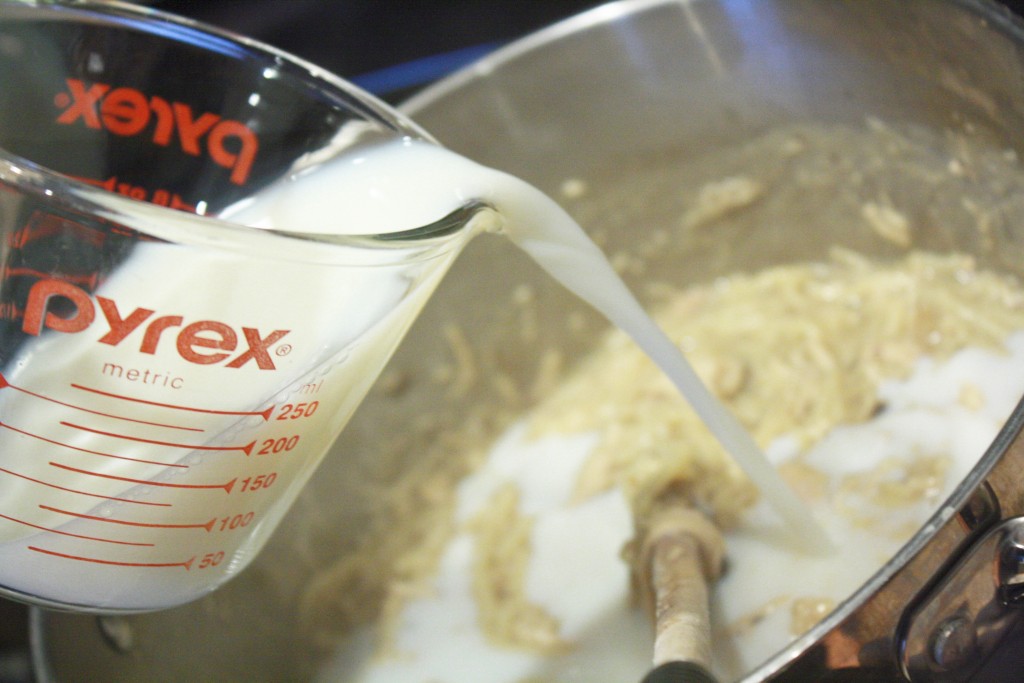
After 45 minutes, mix in the 2 cups of milk. The soup will lose thickness, and go from a casserole-like consistency to a soup-like texture. Put the pot back on the stove on low, and let it simmer for just a few minutes, but don’t let it boil hard after the milk is added. Stir gently, and taste to see if any more seasoning is required. If needed, add a bit of salt.

Step 6: Rest Off Heat
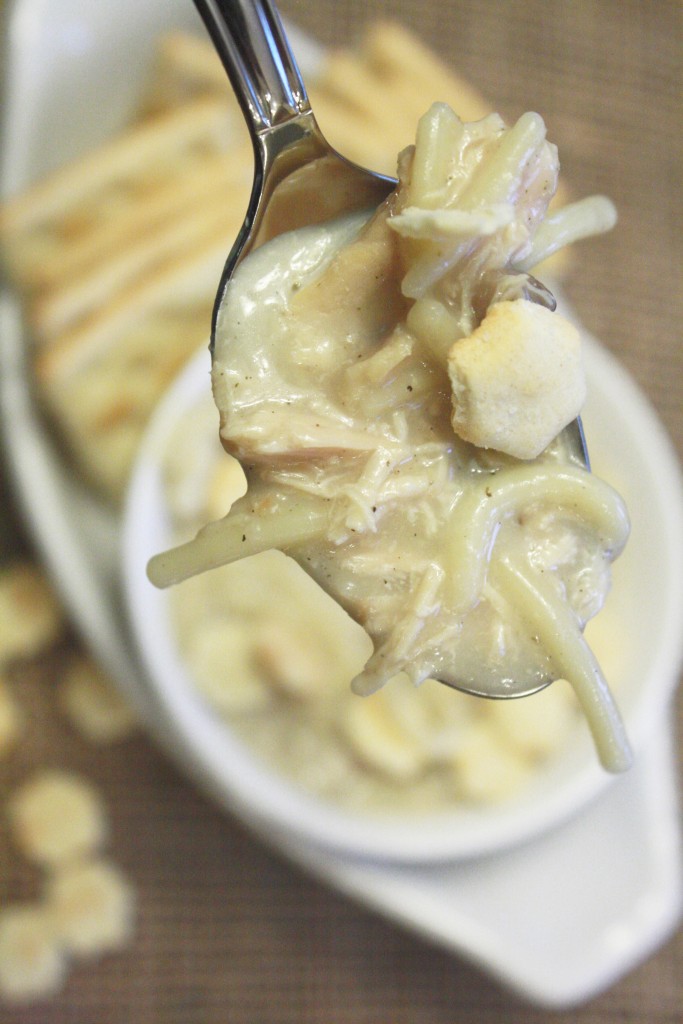
Take the pot off the heat and let it sit for 10 minutes before serving. The soup will turn thicker the longer you let it sit. While the soup rests, the flavor will keep developing, so don’t skip your extra time. Serve right from your pot using a ladle.
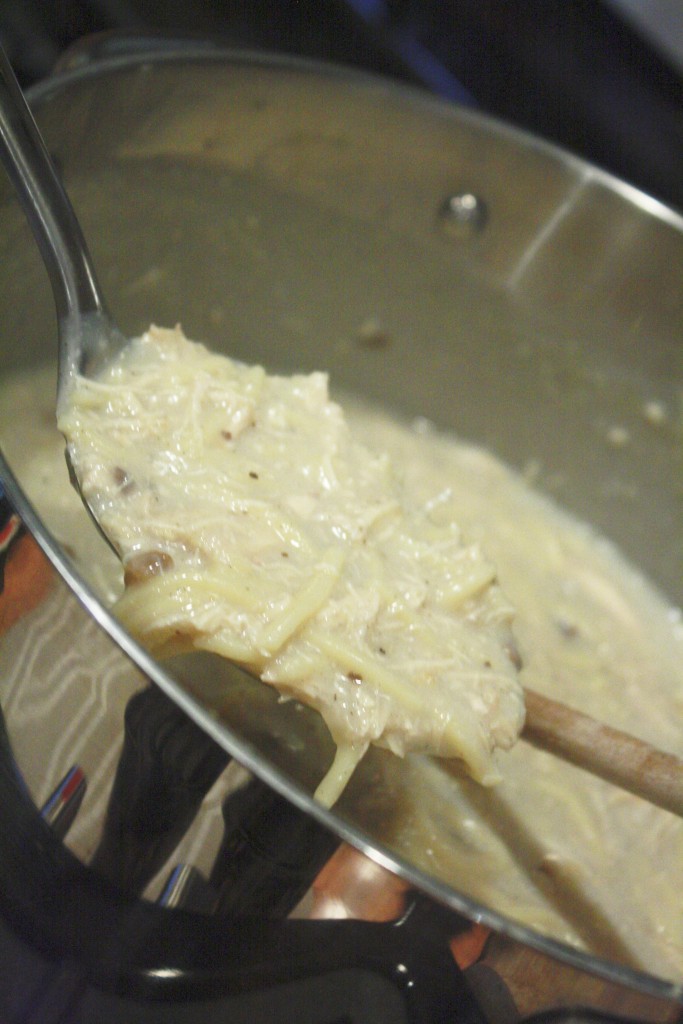
Every soup recipe deserves a sturdy stainless steel ladle. Longer handles keep your hand away from the steam and with a deep bowl you can serve soup without spilling. That may seem like a small detail, but every single time you make soup, it makes a difference.
Tips for the Best Chicken Noodle Soup
Break the Spaghetti Evenly
While breaking spaghetti into two-inch pieces try to keep the pieces of the same length. If the pieces vary in length they will cook unevenly, leaving you with some pieces overcooked, and some still firm. When snapping the spaghetti, do so in batches containing four or five strands each. It will break cleanly like that than if you tried to do the entire box at once.
Don’t Skip the Butter
One tablespoon of butter for sautéing the onion may not sound like a lot, but there is a reason the step is written this way. Cooking the onion in some fat, instead of just in a liquid, will cause some of the flavor in the onion to be released. If you try to just skip this step, and put all the ingredients in the pot at the same time, the onion will be cooked, but it will not help the final flavor of the soup at all. Those two minutes of sautéing will make a difference.
Season at the End
Don’t taste and salt the soup until after the milk is added. It might taste more salty before the milk is added because the soup has concentrated over the 45 minutes of simmering. Tasting at the beginning can make it too salty. After the milk is added and the soup sits for a while, that’s when you can get a true sense of the seasoning.
Add a Squeeze of Lemon at the End
(Optional but recommended) a small squeeze of fresh lemon juice — about a teaspoon — added right before serving brightens the whole bowl. The lemon pepper already adds some citrus notes but fresh lemon juice added at the end is different. Lemon juice lifts the flavor without making the soup taste lemony. Once you try it, you’ll most likely do it every time.
Use a Large Enough Pot
This recipe creates a huge quantity of soup — bigger than you may think. With the broth, milk, canned soup, and expanding noodles, you need at least a 6-quart pot. Using a 5-quart pot will leave an unsafe amount of room and will likely boil over. If you only have a smaller pot, cut the recipe in half instead of crowding the pot. A large soup pot in the 8-quart range gives you plenty of headroom for making stock, boiling pasta for a crowd, or soups like this.
The Soup Thickens as It Cools
If you’re dishing this up over the duration of a meal and the soup is sitting on the table for 15 to 20 minutes, it will thicken. This does not mean there is an issue with the recipe, it is just the pasta soaking up the broth. If it is thicker than you’d like, add a splash of warm broth or water to loosen it.
Variations Worth Trying
Add Garlic
Adding 2 or 3 cloves of minced garlic to the butter with the onion will enhance the flavor even more. Sauté the garlic until it becomes fragrant — about 30 seconds — before continuing with the rest of the recipe. Please do not use garlic powder as a substitute; fresh garlic does something special in the fat that garlic powder cannot do.
Use Rotisserie Chicken
If you don’t have your slow cooker chicken prepared, you can always use a store-bought rotisserie chicken. Remove the meat from the bones, and shred the chicken by hand. You won’t want to use the hand mixer method here, as rotisserie chicken is drier and can also be over-processed quickly. A standard rotisserie chicken will get you about 3 to 4 cups of meat, which is a little over what the recipe calls for, but using a little extra is fine.
Make It Creamier
For an even richer and creamier soup try substituting half-and-half for one cup of the milk in the recipe. This is particularly good in colder months when you want something a little more substantial. Don’t use all heavy cream as it will overwhelm the flavor of the broth and the soup will taste more like a pasta dish than a soup.
Make It Dairy-Free
Use unsweetened oat milk instead of the dairy milk. It has a neutral taste and thickens like whole milk. Stay away from almond milk. It’s too thin and has a slightly sweet and nutty aftertaste that shouldn’t be in savory soup. Also, in the saute step, replace the butter with olive oil and use dairy free cream of mushroom soup (most health food stores have this).
Double the Vegetables
The soupp recipe suggests that celery and carrots are optional but, if you doubles the recipe, and want it to be more substantial, use up to eight to ten medium carrots and six to eight celery ribs. This will make sure that every bowl is packed with veggies. Make sure to add the celery and carrots with the onion in the saute step so that they soften more.
Storage and Reheating
Refrigerating
Store soup in the fridge in an airtight container. If your soup has noodles, it will be much thicker once it has been refrigerated as the noodles will absorb even more of the liquid overnight. This is normal. When you are ready to reheat it, add some chicken broth or water to loosen it back to soup consistency.
Freezing
Yes, soup can be frozen, but there is a downside. The soup has spaghetti noodles in it and those do not freeze well. Once the soup is unfrozen, the noodles become soft and a little mushy. If you are thinking about freezing a batch, the best method is to make the soup without the noodles, freeze the soup, then cook fresh noodles in the reheated soup when it’s time to serve. This method takes more time but will be better in the long run.
If you’re freezing with noodles already in, use freezer-safe containers with tight lids and store for up to 3 months. To reheat, thaw overnight in the fridge and then heat on the stovetop.
Reheating
When it comes to reheating on a stovetop, try to use medium-low heat as much as possible. This way, the noodles do not stick to the bottom of the pot. You may have to add some more broth to keep the noodles from burning, so make sure to stir it frequently. The individual bowls can be reheated in the microwave. They should be heated for 90 seconds, stirring in between, until they are hot all the way through. Because of the way the noodles soak in heat, the soup will not be reheated uniformly.
Frequently Asked Questions
Can I use uncooked chicken instead of pre-cooked?
The 45 minute simmer is definitely not enough time to fully cook raw chicken from a food safety standpoint (icky!). Also, from my experience, chicken cooked in a soup, especially a cream-based soup, will tend to develop a somewhat rubbery texture as opposed to being tender. To start with raw chicken, you will first want to simmer the chicken pieces in the broth for about 20-25 minutes until fully cooked. Then remove the chicken, shred it, and add it back in (along with the noodles and other remaining ingredients).
Can I make this in a slow cooker instead?
Partially. Yes, you can finish cooking the chicken with a slow cooker, and this recipe recommends doing that. However, the last step of finishing the soup in a slow cooker is tricky because the noodles can get overcooked and super mushy as time goes on in the slow cooker. When you use the stovetop to finish/bulk up the soup, you get more control over the doneness of the noodles. If you want a fully slow cooker soup, add the noodles the last 30 minutes of the cooking time and monitor them closely.
What can I use instead of cream of mushroom soup?
Cream of chicken soup can be used interchangeably since the texture is the same and the flavor is not that different. Another option is to make a quick homemade substitute. To do this, melt 2 tablespoons of butter. Then, mix in 3 tablespoons of flour and, while continuously whisking, add 1 cup of chicken broth and 1/2 cup of milk until the mixture thickens. This will yield approximately the equivalent of a can of condensed soup. For this recipe, you’ll want to double it.
My soup is too salty. How do I fix it?
Here are a few suggestions. More milk will dilute the saltiness a little. You could also add a raw, peeled potato cut into large chunks — let it simmer in the soup for 15 minutes and then take it out. The potato will absorb some of the excess salt. You could also add an extra cup of low-sodium or unsalted chicken broth. For future batches, use low-sodium broth and low-sodium cream of mushroom soup to start. That will give you the most control.
Can I use a different pasta shape?
Yes. Small pasta shapes ditalini, orzo, small shells, or rotini work well in chicken soup. When adding pasta to the soup, check the directions on the pasta packaging to determine the cook time. Smaller shapes may cook quicker than the spaghetti, and watch for soup over-thickening. Egg noodles can be used as well, but be aware that the soup will be thicker and more substantial with the egg noodles than with the spaghetti.
How do I know when the soup is done?
The soup should be thick enough to coat a spoon, but still pourable, after the milk is stirred in and after resting for 10 minutes. The noodles should be cooked completely and should not have a firm bite in the center. While the heat distributes unevenly during simmering, taste a noodle as some of the noodles might be firmer than others. If the noodles are still firm after the 45 minutes, let the soup simmer for another 5-10 minutes before adding the milk.
Can I add more vegetables?
Sure! You can use frozen peas (add those in the last 5 minutes), diced potatoes (add those in with the broth — they’ll soften in 45 minutes), corn, green beans, or diced zucchini. If you add a lot of extra vegetables, think about adding an extra half can of broth to balance out the volume. Stay away from leafy greens, though, like spinach or kale. They let out a lot of moisture which can make the soup watery and weird looking.
Recipe Card
More Chicken Recipes to Try
If you made this soup and enjoyed it, here are some more chicken recipes you will probably want to bookmark. They are all uncomplicated, and useful recipes that are quick and easy to do on weeknights.
- Slow Cooker Chicken Tacos — three ingredients, shreds perfectly, works for bowls and burritos too
- Creamy Chicken and Rice — same general approach as this soup but with rice and a more casserole-style result
- Baked Chicken Thighs — bone-in, skin-on, about 45 minutes in the oven and better than most restaurant versions
- White Chicken Chili — creamy, with white beans and green chiles, substantially different from this soup but equally good on a cold day
- Chicken Tortilla Soup — brothy, tomato-based, topped with crispy tortilla strips and cheese
All of these recipes require similar methods — slow cooker chicken, building flavor in the pot first, letting the soup/disc rest before serving. Once you get the hang of one, the others come easily.
Chicken Noodle Soup Recipe
Equipment
- Large heavy-bottomed pot
Ingredients
Ingredients
- 1 tablespoon butter
- 1 large onion diced
- 3 cups cooked shredded chicken
- 3 14.5-ounce cans chicken broth
- 2 cans cream of mushroom soup
- 8 ounces spaghetti noodles broken into 2-inch pieces
- 1 teaspoon poultry seasoning
- 2 teaspoons lemon pepper
- 2 cups milk
- 5 ribs celery diced, optional
- 6 medium carrots diced, optional
Instructions
Instructions
- Melt the butter in a large pot over medium-low heat. Add the onion and cook 5 to 7 minutes, until soft and translucent. Add celery and carrots here if using.
- Add the shredded chicken, chicken broth, cream of mushroom soup, broken spaghetti, poultry seasoning, and lemon pepper. Stir until the soup is fully incorporated into the broth.
- Increase heat to medium-high and bring to a full boil, stirring occasionally so the noodles do not stick.
- Reduce heat to medium-low and simmer for 45 minutes, stirring about every 10 minutes.
- After 45 minutes, stir in the milk. Return to a low simmer for a few minutes without boiling hard.
- Taste and adjust seasoning with salt if needed. Serve warm.