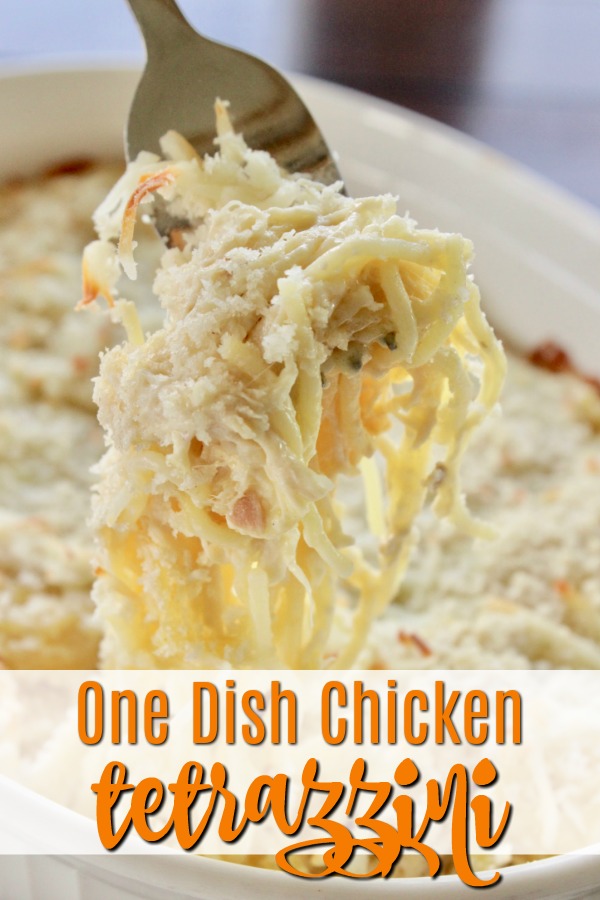
Easy Chicken Tetrazzini
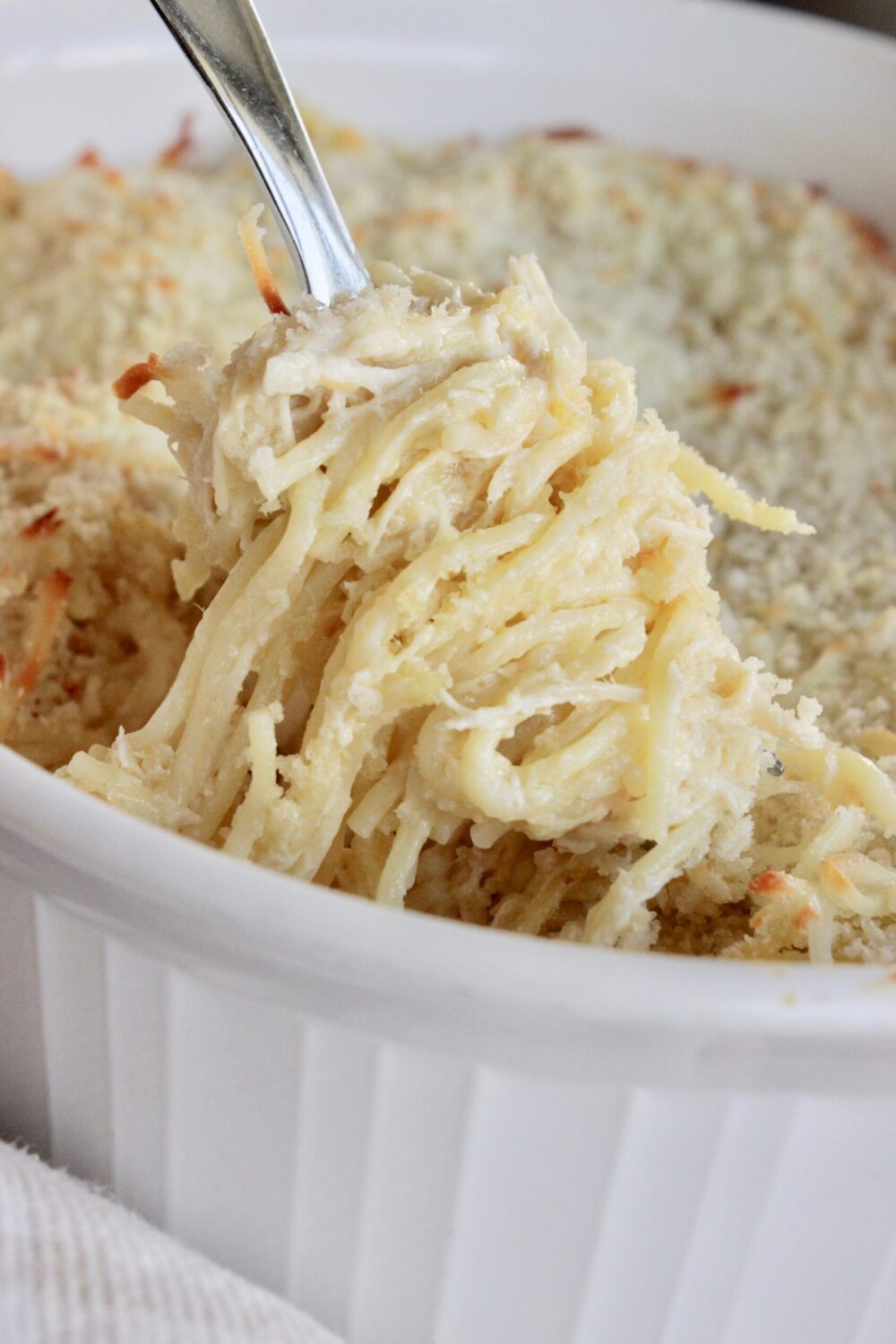
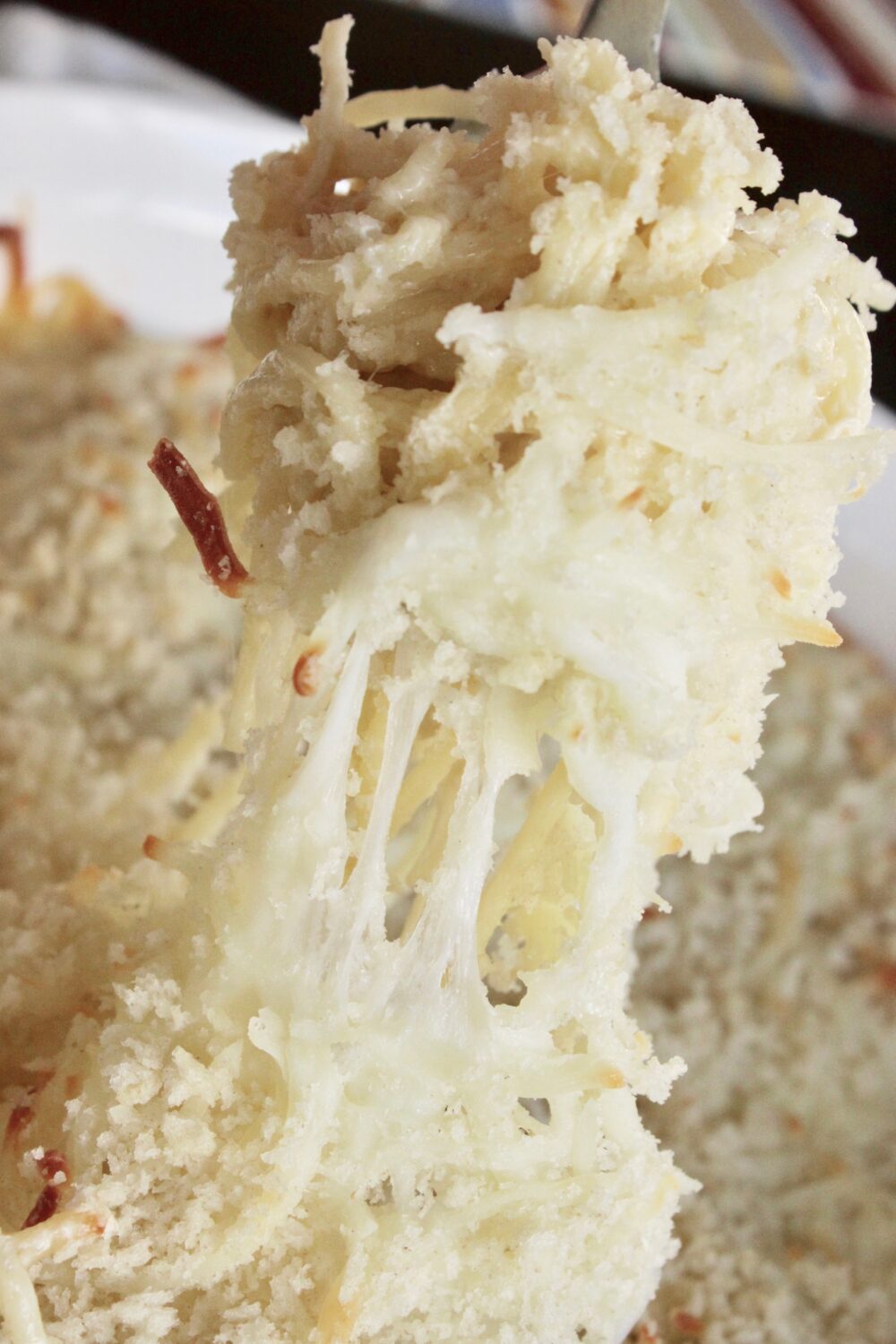
Chicken Tetrazzini casserole has a special spot in the repertoire. A thick layer of melted mozzarella cheese, crispy panko topping (added at the right time to keep it crunchy), creamy sauce, and tender shredded chicken with spaghetti is always a hit! Every time it’s served, the pan is scraped and with the first order for a meal to be dropped off, it’s the first casserole I consider.
What makes this version work is the sauce ratio. Two cans of cream of chicken soup and two cups of sour cream gives you base that’s genuinely creamy and flavorful — not gluey, not thin, not bland. The whole thing takes about 10 minutes of real prep work, then goes into 350 degree oven for 40 minutes. The hardest part is waiting for it to come out.
Why This Tetrazzini Doesn’t Turn Out Mushy
Many chicken tetrazzini recipes don’t stand out and can be too watery or too thick. And sometimes the finish product looks nice, but then ovrersitting turns it rubbery. However, this version does’t have those issues. it all cones down to a few specific things that make a difference.
The sauce ratio is the foundation. Sure, two cups of sour cream plus two cans of cream of chicken soup is an extreme amount of liquid. But you also have to consider that the pasta is going to absorb a lot of the moisture when it bakes, as well as the chicken will release juices. You actually need that much sauce. I learned the hard way that trying to lighten it up by cutting the sour cream to one cup resulted in a noticeably drier casserole. Stick to the full amount.
The pasta goes in undercooked by design. Cook the spaghetti for about one minute less than what the package directions say. You want it quite al dente — with some resistance when you bite it — as it finishes cooking in the oven with the sauce. If you put in pasta that is fully cooked, it will be overcooked when you take the dish out of the oven, and you will be left with a soft, mushy casserole instead of a firm one that holds its shape when you scoop it out. People skip this step the most, and it is the reason so many people end up with a tetrazzini that is less than stellar.
Drain and rinse the pasta. I know some believe you *shouldn’t* rinse pasta but in this case, it actually matters. You are not relying on the starchy pasta water to make the sauce stick, you will be mixing it with a cream sauce that has already been made. Rinsing halts the cooking from steaming and prevents noodles from sticking together as you finish mixing in the filling. A quick rinse with cold water immediately after draining will do the trick.
Every time shredded chicken will be the preferred option over chicken chunks. They are too big to integrate within the pasta and get evenly dispersed. Getting a large piece of chicken in a bite makes the bite less desirable and in some bites you get zero chicken. With shredded chicken all the chicken is present in every part of the spaghetti evenly. Using rotisserie chicken is not the only option. You can also use two large chicken breasts and even a whole bird. Just be sure to get at least 4 cups.
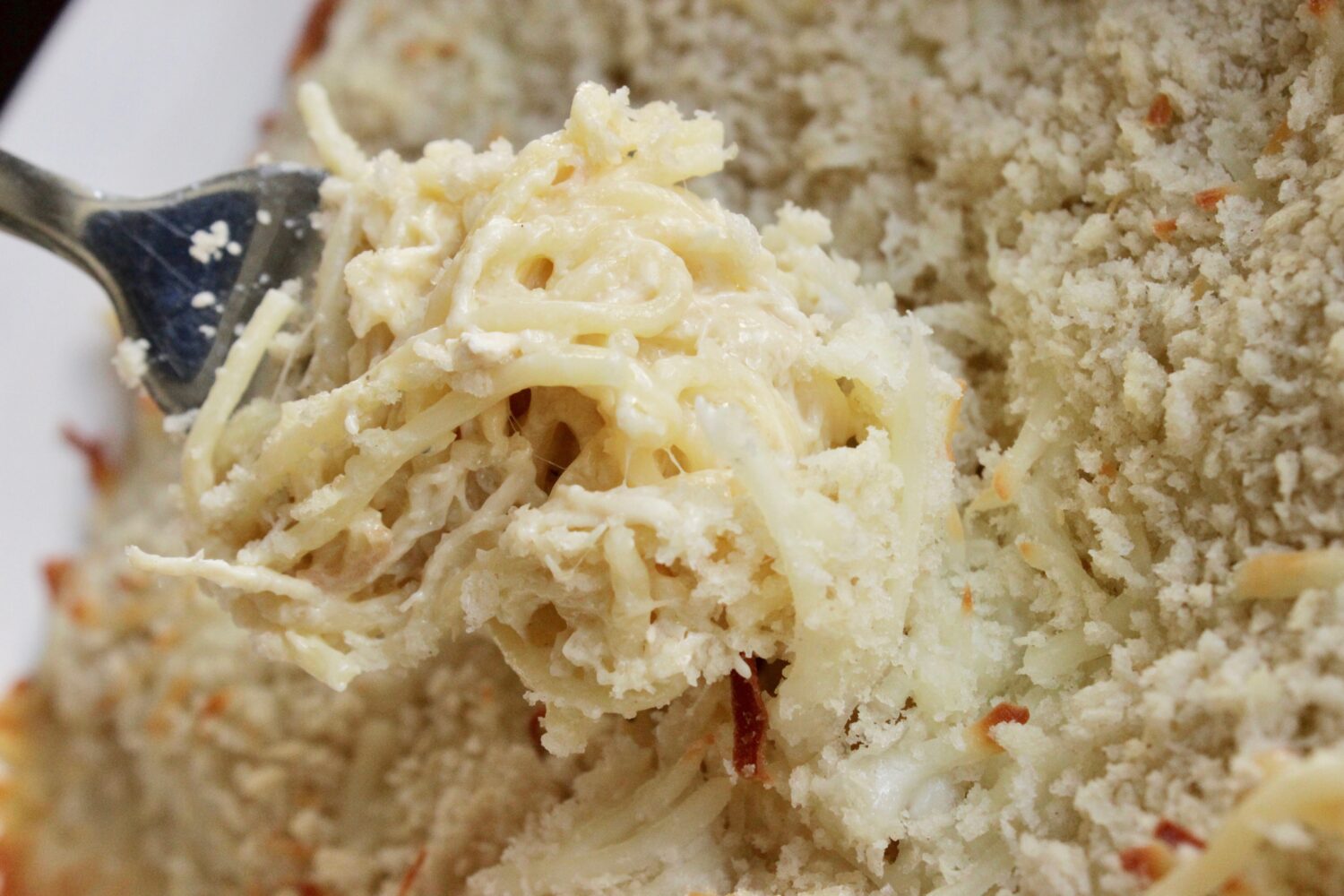
Timing the addition of Panko breadcrumbs is crucial. If you add them at the beginning, they will absorb steam, becoming a soggy paste. For the best crunch, add them in the last 10 minutes so they can brown while the casserole is bubbling. Creamy interiors and crispy tops in a dish is what differentiates a casserole from just a pasta dish with breadcrumbs.
Ingredient Notes
Normal thin spaghetti is great for this. Thinner noodles spread more evenly through the sauce, so feel free to use linguine or fettuccine if that’s what you have in the pantry, though fettuccine may need a little extra baking time as it’s thick enough that you might want to give it a little extra baking time. If you want to use shorter pasta, penne or rotini work too – they hold up well and make it easier to scoop into neat portions.
Cooked shredded chicken (4 cups) – A rotisserie chicken is most cost effective for this. A single large bird typically yields around four cups of shredded meat and is pricied about the same as two raw chicken breasts. If you are cooking chicken for this specifically, I prefer boneless thighs to breasts, as they tend to stay moister in the casserole, and they shred more easily. Breasts are fine, but they can dry out in the oven if they go in on the drier side. Regardless of what you use, make sure to shred it into pieces no bigger than an inch. Smaller shreds distribute better through the pasta.
Cream of chicken soup (2 cans, 10.5 oz. each) — Use regular (not low-sodium) The soup’s seasoning contributes to the overall flavor of the dish. Cream of mushroom is a widely used substitute that works just fine if that is what you have — it gives the casserole a slightly more earthy flavor that many people prefer. Some people do one can of each and that’s a solid middle ground.
Sour Cream (2 cups) — Using full-fat sour cream gives you the creamiest and richest sauce, whereas using low-fat is just a little thinner and less creamy. This does, however, still technically work. I’ve also used Greek yogurt before in a pinch — full-fat Greek yogurt works as a substitute decently — but it does add a bit of a tangy flavor that not everyone loves in a savory casserole. If you are going to substitute it, go for full-fat Greek yogurt and just know that the taste will be a little different.
Butter (1/2 cup and melted) – is used in the filling mixture and not just poured on top. It creates richness and helps sauce evenly coat the pasta. Please do not skip or lessen the amount used – this is a casserole and not a diet dish. The butter is doing the most.
Milk (½ cup) — Helps the sauce loosen a little so it doesn’t sit in clumps and flows into every corner of the casserole. I like using whole milk the best but I don’t notice a difference with using 2%. Skim milk should not be used — there is not enough fat in the soup to mix smoothly with the cream soup and sour cream.
Parmesan (2 tablespoons) – A small amount will be added into the filling, but it will be combined with the whole casserole so, it will not taste strongly of Parmesan. It just adds a bit of depth and savoriness. Please do not use the canister powdered stuff here – it is based off of cheese and will not function the same. The fresh grated and the shredded refrigerated stuff melts clean into the sauce. Parmesan that is powdered will make the sauce unnecessarily grainy.
Mozzarella (2 cups, shredded) – This goes as the main cheese layer on top. Bagged pre-shredded mozzarella is fine. If you want to achieve a better melt, you can shred your own cheese from a block. Pre-shredded cheese is covered in anti-caking starch which can cause it to melt less smoothly. For a casserole of this type, the difference is real but not too dramatic. Regardless of the above, please use the full 2 cups. Do not be tempted to use less.
Panko breadcrumbs (1/2 to 1 cup) – Panko is better than normal breadcrumbs because it provides a lighter and crunchier top layer. In the case that you only have standard breadcrumbs, feel free to use them – the top layer will still get golden and crispy even though it will not be as much as panko would provide. For a slightly more buttery taste, consider using crushed Ritz or butter crackers. Whatever you choose to use, make sure to add them in the last 10 minutes only.
What to Know Before You Start
A standard 9×13 baking dish is used for this casserole. A 9×13 dish With a cover is worth having for casseroles like this — great for transporting if you’re bringing dinner to someone, and you can prep ahead of time and refrigerate without having to hunt for a covering. Without a lid, you can use aluminum foil to cover it for storage.
Prepare for about 10 – 15 minutes as you do the following tasks: cook and drain the pasta, then, if needed, shred the chicken and mix the filling. The remaining tasks are waiting for the oven to handle. To make sure the filling doesn’t sit and get dry, have your 9×13 pan greased and ready before you start the filling.
Add salt, pepper, and Parmesan to the sauce mixture and taste it before starting to layer it into the pan. The saltiness of cream of chicken soup varies by brand. You may need to add more salt if you’re using a lower sodium version. If the filling tastes flat before baking, it will taste flat out of the oven. Correct the seasoning in the bowl.
By the way, this recipe makes a lot of food. That’s a generous six servings, without allowing for anyone to take seconds. If you’re cooking for two, and don’t want a week’s worth of leftovers, this splits perfectly into two 8×8 dishes. Bake one, and freeze the other unbaked. Same temperature, same time, but check it at 25 minutes instead of 30.
How to Make Easy Chicken Tetrazzini
Set your oven to bake at 350°F. While it heats up, get a 9×13 baking dish and grease it with some cooking spray.
Salt some water and put it on the heat. While it is heating pour the thin spaghetti into the water. Do not follow the package instructions and cook it for one whole minute less than it says. You’re aiming to keep it truly underdone, so focus on testing it at this point, and making sure it has a distinct bite in the middle. Then, rinse the spaghetti and drain the pot. This will stop the cooking process. While making the filling, set the colander aside.
In a big bowl, add your melted butter, shredded chicken, cream of chicken soup, sour cream, milk, salt, pepper, and parmesan. Stir until everything is mixed and the sauce is smooth. You may want to taste it here, this is your your last chance to adjust the seasoning! It should taste like chicken and be well seasoned, not bland.
Combine the drained spaghetti in the bowl, then incorporate it into the filling mixture. Use tongs or two forks to work the sauce around the pasta to get it evenly coated. The mixture should appear thick and creamy, and the pasta should be fully covered, with no strands bearing exposed sauce and no clumps of sauce.
Spread evenly into the baking dish. Top with the shredded mozzarella and use all of it. It may seem like a lot, but it reduces significantly in volume, and provides an important glue layer to anchor the Panko.
Bake for 30 minutes at 350°F. The cheese will be melted and the edges will be bubbling. Take the dish out of the oven and add an even layer of Panko breadcrumbs on top of the cheese. Place it back in the oven for 10 minutes and the breadcrumbs will be golden brown. For the last 10 minutes of cooking, keep an eye on it. Panko turns from golden to burnt really quickly, especially at the edges.
Please let your creation sit for 5 minutes. It will scoop much more cleanly after a short rest. If you dig in right away, the filling will run. While this doesn’t affect the taste, it will make your plating messy. Five minutes is all you need.
Tips for the Best Result
Feel free to use a rotisserie chicken. A large one will give you about four cups of shredded chicken, which is just what this recipe calls for. You don’t even have to cook it or season it, and it just takes about five minutes to shred. Using a rotisserie chicken is a time saver that does not compromise quality. Plus, the seasoning from the rotisserie skin will add flavor to the casserole.
Don’t add Panko at the start. I know I’ve said this before, but it’s the most common mistake. When added at the start, the breadcrumbs form a soggy crust that traps steam and will never become crispy. Only add them during the last 10 minutes. This goes for any recipe that includes breadcrumbs and a casserole — timing is everything.
The two cans of cream of chicken soup are already salted and are of different brands each with a different amount of salt content. Some are saltier than others. Make sure you taste the sauce mixture and adjust it before it goes in the oven. Once the casserole is out of the oven, it’s too late to make adjustments. An underseasoned casserole that has been in the oven for 40 minutes cannot be fixed.
Turkey is a great alternative to chicken. Same measurement, same preparation, plus this casserole is one of the best I’ve made using Thanksgiving turkey leftovers. The taste is a bit richer, but in a good way. If you’re making this the week of Thanksgiving, this is the perfect spot for that leftover turkey.
If the center is taking longer to cook than the top is getting brown, use foil to cover the top. This is not likely to happen at 350 degrees, but if your dish is shallower than usual, the cheese may brown too much before the casserole is cooked all the way. You have control if you add a loose tent of foil for the last 10 minutes of the first 30-minute bake. Then, remove it for the Panko step so the crumbs can brown.
No one likes sticky fingers when serving or distributing casserole spaghetti, so to make rope spaghetti easier to serve, you can break it before or after cooking. Rope spaghetti that’s been cut to less than half its length before cooking will distribute in the casserole more evenly when you go to scoop portions, and will make the overall plating/portions less difficult when you go to serve it. It really only changes the ease of portioning out servings — the flavor will not change.
Make-Ahead and Storage
To make ahead: Assemble the casserole — pasta, filling, cheese layer — and leave out the Panko. Cover tightly and refrigerate for up to two days before baking. To cook, take it out of the fridge about 20 minutes ahead of time to take the chill off (glass dishes shouldn’t go in the oven cold, and a cold casserole will take longer to heat through). As usual, add the Panko after the first 30 minutes of baking. If it went in cold, you may have to add 5 to 10 minutes to the total baking time.
Make sure to cover all leftovers when storing in the refrigerator. Yes, leftovers can be stored for up to 4 days. After a day, the pasta may begin to absorb the sauce that is in the container which may change the texture, but it will taste even better because the flavors have fully absorbed. To reheat, they can be microwaved for 90 seconds to 2 minutes. Alternatively, the dish can be covered in foil and placed in the oven at 325F for 20 minutes.
Freezer: This casserole freezes well. Prepare the entire dish, bake, and cool to room temperature. Then, freeze the entire dish or individual portions. For the best results, freeze up to two months. Wrap sections in plastic wrap and then foil, or divide into freezer-safe containers. To cook, thaw in the fridge overnight. Cover in the oven and reheat to 325° for 25-30 minutes or until heated through.Just like all other suggestions, this casserole freezes well, and you need to do the same thing you did to the rest of them: freeze the casserole for 4–6 hours, then take it out, wait for it to reach room temperature, and finally freeze each of the portions.
To freeze an unbaked casserole, prepare the casserole, place the Panko on top, wrap the casserole, and freeze it. When ready to bake, take it out of the freezer and place it in the fridge to thaw overnight. Follow the baking instructions, but add an extra 10 mins for a cold start. Add the Panko for the last 10 mins of baking.
Serving Suggestions
Chicken Tetrazzini contains protein, pasta, and sauce, so it’s a complete meal by itself. Adding a few easy sides won’t create a lot of additional work, but will round out the meal.
Pair with some garlic bread or dinner rolls. Because the sauce in the casserole is rich, you’ll want some bread to soak it up. A buttered and toasted under the broiler crusty baguette is done in three minutes and makes the whole meal feel more complete.
A basic garden salad balances the heaviness. Some cream soups have sour cream, butter, and cheese, so having something on the side that is green and acidic is a nice change of pace. You can serve romaine along with a simple vinaigrette, or if you want to go more Italian-American a Caesar would be good here.
Roasted broccoli and roasted green beans are the best side veggie options here. They should be roasted at high temperatures to ensure caramelization and crispness on the edges — soft, steamed veggies are a big no. The crunchy veggies create a nice textural contrast to the creamy pasta, and it’s really great.
Variations Worth Trying
Using cream of mushroom instead of cream of chicken changes the flavor profile slightly to be a little more earthy, which works really well. People like this version better sometimes. If you use cream of mushroom, you might want to add a cup of sautéed mushrooms to the filling to make it more mushroom-y.
You can include additional vegetables in the filling. You can just fold in the sauce some thawed and drained frozen peas, diced roasted red peppers, or even some sautéed mushrooms and you’ll still be good to go! You’ll want to do this when you’re mixing the filling. The simplest option is frozen peas, because they’re thawed in just a few minutes. Plus, you won’t even need to cook them beforehand.
Other types of pasta can be used here. Consider penne, rigatoni, or even egg noodles. In fact, egg noodles, and many other shorter shapes, are even easier serve because they scoop into more concise portion. If you choose to use egg noodles, be sure to prepare the noodles in the same manner — cooked for one minute less than the package directs and then rinsed with cold water.
To make it spicier, add a teaspoon of garlic powder and half a teaspoon of crushed red pepper flakes to the filling mixture. Substitute mozzarella with pepper jack cheese. The base sauce makes the spiciness of the pepper jack cheese creamy, and the sauce ends up being more mild.
I prefer making smaller casseroles, so here’s the most common variation I do. Divide the filling into two 8×8 pans. You can bake one for dinner, and freeze the other unbaked so you have a quick option for a non-thinking Tuesday dinner. To me, this is the actual weeknight meal planning strategy.
Frequently Asked Questions
Can I substitute rotisserie chicken or fresh cooked chicken with canned chicken? You can, but the texture is going to be different. Canned chicken is more finely shredded and is softer and less meaty than pulled rotisserie chicken. If canned chicken is what you have, make sure to drain it well, and break it up a bit before mixing it into the filling. The casserole will still taste good, it’s just different texture.
What can I do if I don’t have Panko? What if I don’t have breadcrumbs at all? You can completely leave them out. The casserole will still be creamy and cheesy as it would be with other toppings, it just won’t have that crunchy topping. Crushed Ritz crackers work great. You can use regular breadcrumbs, but they won’t get very crispy. If you’re looking for crunch and don’t have any breadcrumbs, it may sound wrong but crushed potato chips work surprisingly well.
Why is my casserole dry? Most likely it’s because the pasta was cooked all the way through before baking it. Moisture is left within al dente pasta that it releases during baking. This helps keep the sauce nice and loose. Cooked pasta has already taken in all of the moisture that it is going to take in and it competes with the sauce for moisture during baking. This results in a drier casserole. Undercook your pasta by a whole minute — this will make a big difference.
Can I reuse pasta? It can be reused and used as a dry ingredient that was stored (not sauced). It might be a little softer than fresh pasta so make sure to adjust the total bake time and remove it when it starts bubbling on the edges. If it’s pasta with sauce, then it’s better to start fresh due to moisture balance being off, so avoid using it as a dry ingredient and reuse instead.
Can I use cream cheese instead of sour cream? You can use softened cream cheese instead, but it’ll be thicker and richer, and you’ll miss the subtle tang from sour cream. Just be careful to fully incorporate it so you don’t end up with lumps. If you do that, the result is a denser, richer casserole – which some people prefer. Instead of 2 cups of sour cream, use 8 ounces of softened cream cheese and add a splash of milk to help loosen the sauce.
How do I know when it’s done? The middle should reach an internal temperature of 165°F. As a practical estimation, when the edges start to bubble, the cheese has melted, and the Panko topping has reached a golden brown color, you can consider it as completed. If the edges do look done and everything else looks melted and brown, but the center looks mildly underdone (pale, not bubbling), you can continue to cook this in 5-minute increments. Check every 5 minutes to see if it’s done until you reach around a total time of 40 minutes.
Can I make this gluten-free? Yes, that can be done by adjusting a few ingredients. Use gluten-free pasta (either rice or chickpea-based), cook to al dente and rinse just like wheat pasta. Use gluten-free cream of chicken soup (Pacific Foods makes one), and top with either gluten free breadcrumbs or crushed rice crackers. The cooking method remains the same. Gluten-free pasta can become softer than wheat pasta does in a casserole, so you should undercook (by more than one minute) the gluten-free pasta, like two minutes under the package directions.
What to Do With Leftovers
The truth about leftover chicken tetrazzini is that it is good for multiple days. Here are some suggestions on how to maximize what you have leftover.
For best results, microwave the pasta with a little milk. Things might be a little thick because the pasta tends to soak up the sauce, but be patient because this will certainly be a little thicker and dryer than that first meal. To get a better end result more like fresh, add a spoon or two of milk to the portion desired before microwaving and stir after reheating. This will help bring the sauce back to its original consistency, and thus will taste better.
It’s easy to make pasta soup with leftover tetrazzini. Take a portion of the leftover tetrazzini and place it in a small saucepan. Add in one cup of chicken broth and turn the heat to medium. As it warms, stir to break the pasta up into the liquid. You’re ending up with an awesome, creamy chicken noodle soup. It brightens up a lot with a squeeze of lemon right before serving.
Stuff it into a bell pepper. First, slice a bell pepper in half and remove the seeds. Next, fill the pepper with leftover tetrazzini, sprinkle a bit of extra mozzarella on top, and bake it in the oven at 375°F for 25 minutes. The pepper becomes softer and a little sweeter which counteracts the creamy, savory filling. This is a good option for an individualized serving when the rest of the family is having something different.
Make a fast lunch wrap. Cold chicken tetrazzini (from the fridge) and a handful of spinach wrapped in a flour tortilla. It might sound a little strange, but this really is a good lunch. The pasta is chilled and stays firm which is ideal because it won’t make the wrap messy. Requests like this come from my children.
Related Recipes
- Crockpot Baked Spaghetti — another easy baked pasta dinner that the whole family will actually eat