
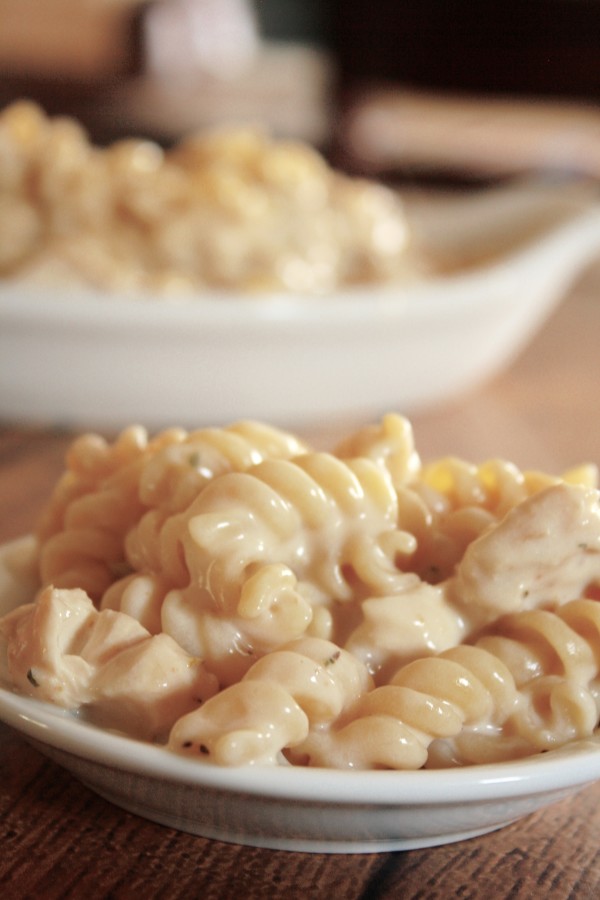
Easy Italian Pasta & Chicken Dish Recipe
This recipe comes together in one large skillet and can be on the table in 30 minutes. It’s flavorful and delicious.
It’s perfect as a busy weeknight meal and is sure to be a family hit.
Why This Combination Works
Alfredo sauce by itself is pretty heavy and one-noted. To make it sing you need a few things to cut through the fat and cream.
Montreal chicken adds a lovely charred flavor from cooking, plus garlic and black pepper which really complement the dish. The herbs from the Italian seasoning, particularly the oregano, really complement the alfredo sauce.
Finally, the melty goodness of the mozz is spread throughout the whole dish which gives each bite that melty stretchy cheese element.
Ingredient Notes
Chicken Breast
We call for two cooked chicken breasts in this recipe, diced into 3/4-inch cubes. We want to be able to grab a piece of chicken in every bite so plan accordingly.
Your chicken should be cooked before combining into this recipe. You can cook your chicken however you like, whether by skillet, oven, grill, or electric griddle, and it is your call.
Keep in mind that we’re just warming the chicken through here, it’s important it be cooked before adding to the recipe.
Montreal Chicken Seasoning
McCormick Grill Mates Montreal Chicken
Montreal chicken seasoning is a flavorful, well-balanced chicken seasoning, better than most of the generic chicken seasonings out there. Coat both sides of your chicken breasts with Montreal seasoning.
I know it’s a lot, but that’s how you get the best flavor. If you can’t find this particular brand of Montreal chicken seasoning, make your own by mixing together garlic powder, coarse ground black pepper, paprika, onion powder, and cayenne.
The basic flavor of Montreal seasoning is garlic and pepper with coarse salt.
The charred flavor of the grill is important in this recipe, it’s what keeps the chicken from tasting one-dimensionally bland or like it was added by accident.
ALTERNATIVE: You can save time in the chicken cooking department by purchasing two portions of breast meat from a store-bought rotisserie chicken. Shred and dice the meat.
Of course it won’t have the same flavor as Montreal-seasoned fresh chicken but it’s a good alternative. Pre-cooked deli grilled chicken strips work too.
Alfredo Sauce
Any name-brand alfredo will do: Bertolli, Classico, Ragu…you get the idea. Add the whole jar of alfredo (16 oz.) to the skillet along with one cup of whole milk.
This is important. Straight out of the bottle, store-bought alfredo sauce is too thick and will not adequately coat 16 oz. of pasta.
The whole milk cuts the thickness, prevents clumping, and thins out the sauce so it will coat the pasta. ALTERNATIVE: Substitute an equal amount of half-and-half or heavy cream for a richer alfredo.
Italian Seasoning
Italian seasoning is a mixture of various dried herbs that include oregano, basil, thyme, rosemary, and sometimes marjoram. Add a mere 1/2 teaspoon of Italian seasoning to the alfredo and milk mixture.
You’re going to think that’s not enough but trust me. The jarred alfredo is already flavored.
Too much Italian seasoning will give the alfredo a medicinal flavor. The Italian seasoning is to give it just a hint of herbal flavoring otherwise the alfredo just tastes like a lot of butter.
We like to use Italian seasoning for an easy way to add multiple herbs into this dish. If you prefer, feel free to mix and match your own.
We’d definitely recommend adding some oregano.
Rotini Pasta
Cook the 16 oz. of rotini according to the directions on the pasta box. Drain and rinse the pasta.
Rinsing the pasta prevents sticking and washes off any extra starches to avoid gummy pasta in the final dish. Also, it allows the alfredo to coat the pasta as opposed to soaking into the pasta.
I usually cook the pasta before I get started on the rest of the recipe so that everything comes together at the same time.
We prefer to use rotini in this recipe, the little spirals capture the alfredo sauce perfectly. Penne or spaghetti would be ok, but we’d recommend sticking with the rotini if you’re able.
Mozzarella Cheese
One cup of shredded mozzarella will pack dry, no liquid, in a measuring cup. Fresh mozzarella has too much liquid which will water down the mixture.
Provolone or an Italian mixture of shredded cheese works well too.
You can top with a sprinkle of parmesan right before serving for a nice, sharp, salty finish.
How to Make It
Boil salted water according to rotini directions. Add pasta and boil until al dente.
Remove pasta from heat, drain, and rinse in cold water. Set aside.
Sprinkle Montreal Chicken on both sides of the chicken. Heat a large skillet over medium-high heat and add the chicken.
Cook about 6 minutes per side, depending on the size of the breasts. Remove from heat and let chicken sit for 5 minutes before cutting into 3/4-inch cubes.
Set aside.
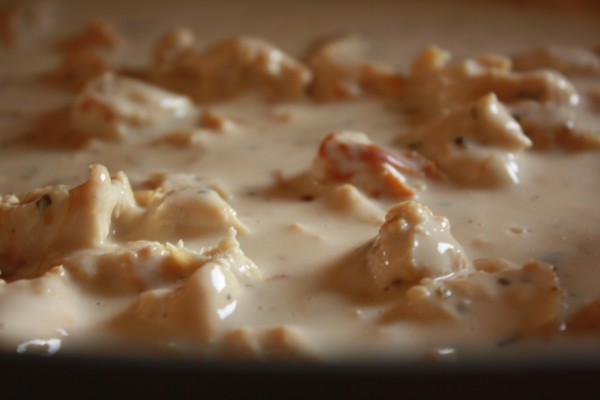
In a large skillet over medium heat, add the alfredo sauce and milk and stir well with a whisk. Add the italian seasoning, salt, and pepper.
Allow to simmer on medium heat, stirring occasionally. Cook for about 5 minutes, just enough for the spices to bloom.
Reduce the heat to low, add pasta and chicken. Cook for 10 minutes on low.
Add shredded mozzarella and cook for another 2 minutes, until melted. Serve immediately and enjoy.
Cautions
Do not overheat the alfredo sauce. If the heat is too hot, the sauce will separate and turn into a greasy mess.
It will look like butter on one side of the pan and grainy cheese on the other side of the pan. Keep the heat just low enough to simmer and you’ll be just fine.
Tip
You want the rotini to be ready before adding to the creamy mixture. When combined with the rest of the ingredients and cooked together for about 10 minutes, the rotini will absorb the creamy mixture and soften up.
You want to undercook the rotini by a couple of minutes so it’s not too soft by the time it’s done.
Simmer on low for 10 minutes, stirring occasionally. You want the sauce to simmer in order to meld flavors.
Do not overheat sauce.
Add shredded mozzarella. Stir well to combine, continuing to cook over low heat, stirring constantly.
Do not crank up the heat to incorporate mozzarella, it will clump. Remove from heat immediately when cheese has melted and incorporated into pasta.
Leaving the pasta in the warm skillet too long will cause the cheese to get very stringy and somewhat rubbery.
Serving Suggestions
Remove from heat and serve immediately, straight from the skillet. It looks beautiful and tastes even better served in a wide, shallow bowl.
Serving a crowd or having a dinner party? This is a very rich dish so guests will be sated by pasta and chicken alone.
However, a simple green salad will go well with the chicken or a classic caesar salad provides a nice acid complement to the creamy alfredo. Garlic bread is always a must-have too…for that extra sauce scooping action.
This would be considered a weeknight meal since the recipe stands on its own. If served during a dinner party I’d suggest a light dessert like sorbet or a simple fruit dish.
Storing Leftovers
This pasta dish like many creamy pastas will thicken as it sits. It’s important to add a bit of liquid, such as milk or chicken broth, and heat the dish on low in the same skillet it was cooked in, stirring occasionally, and cover.
This will loosen up the sauce again.
Cream sauce pastas get thick because the pasta absorbs the liquid when cooled. Add about 2 TBS of milk/broth for each serving.
Follow the same directions as above either heating it up on the stove or heating in the microwave. If heating in the microwave use short 60- to 90-second bursts, removing to stir between each burst.
Pasta dishes store well in an airtight container in the refrigerator for 3-4 days. You can freeze them as well, it’s best to place them in portion-sized containers for easy reheating.
Defrost overnight in the fridge and heat as directed. Add a splash of milk/broth before heating.
Pastas tend to get a little soft when frozen but will still taste great. Keep in mind when planning menus.
Freeze up to 2 months.
Variations
Add Sun-Dried Tomatoes: Acidic foods really help balance out creamy dishes. Stir in a handful of chopped oil-packed sun-dried tomatoes.
Make It Spicy: Add 1/2 teaspoon of red pepper flakes while you’re simmering the sauce. The red pepper flakes and black pepper in the Montreal Chicken make this recipe pretty spicy.
If you don’t care for spicy foods you may want to leave the flakes out.
Substitute Shrimp for Chicken: Shrimp will not simmer as well as chicken does, but they will taste great with the Montreal Chicken seasoning. Cook them quickly in butter and add them to the dish at the same time you’d add the chicken.
Substitute Italian Sausage for Chicken: If you like Italian Sausage thinly slice some, brown it in the pan and add at the same time you’d add the chicken. Scrape up the delicious browned bits from the pan as you stir together the sauce.
Those browned bits will add tons of flavor.
Add Some Vegetables: This recipe is a blank slate for veggies. Anything that’s tossed in at the end and melds with an alfredo sauce will work well here.
Here are a few ideas:
- Steam some broccoli and add the steamed florets when you toss the pasta.
- Saute some mushrooms in butter and add them with the chicken. They’ll melt into the alfredo and give it great umami flavor.
- Saute spinach until tender and stir in at the end.
Use Penne Instead of Rotini: Use penne and make this recipe in a 9×13 instead of in a skillet. Top with additional shredded mozzarella.
Bake at 375° F. for 15 minutes or until bubbly and golden. Great recipe to make for a crowd!
Large skillet: This recipe uses 16 oz of pasta so you’re going to need a large skillet that can contain everything. At least 12 inches across.
You may want to get one with walls that are at least 2″ so it doesn’t spill while you’re tossing the pasta. Electric skillet: I love an electric skillet for recipes like this where you’re simmering a creamy sauce for 10 minutes.
You can be assured that your heat is just right and your creamy sauce won’t separate. You can absolutely make this recipe on your stovetop but be sure to keep an eye on the heat.
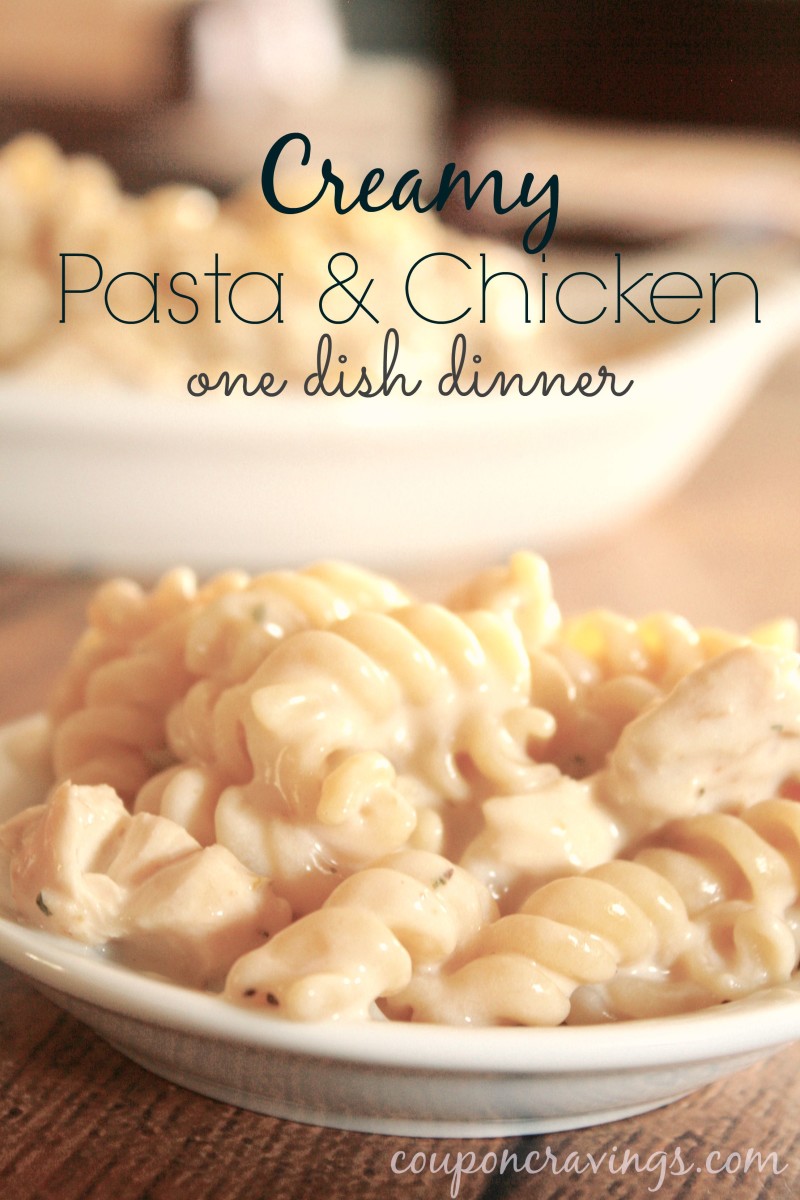
Easy Italian Pasta and Chicken
Equipment
- Large skillet
- Large pot
Ingredients
Ingredients
- 2 chicken breasts cooked and diced
- Montreal Chicken seasoning to taste
- 16 ounces rotini pasta
- 16 ounces Alfredo sauce
- 1 cup milk
- 1/2 teaspoon Italian seasoning
- salt and pepper to taste
- 1 cup shredded mozzarella cheese
Instructions
Instructions
- Cook rotini in salted water according to package directions until al dente. Drain, rinse with cold water, and set aside.
- Season chicken breasts with Montreal Chicken seasoning and cook through by your preferred method. Rest 5 minutes, then dice into 3/4-inch cubes.
- In a large skillet over medium heat, whisk together Alfredo sauce and milk until combined.
- Add Italian seasoning, salt, and pepper. Simmer gently for about 5 minutes, stirring occasionally.
- Add cooked rotini and diced chicken to the sauce. Toss to coat.
- Cook on low for about 10 minutes, stirring occasionally, so the pasta absorbs some sauce.
- Add shredded mozzarella and stir until melted through. Serve immediately.