

HAM BALLS WITH BROWN SUGAR HAM GLAZE
I love ham balls. They’re a traditional comfort food here at the house.
This version has a deliciously sweet brown sugar ham glaze.
Glazed Ham Balls Recipe – ground ham rolled into balls and baked in a sweet, sticky, tangy sauce is unbelievably good. The perfect leftover ham recipe for Easter or Christmas.
WHAT MAKES THIS RECIPE WORK
- The glaze. Oh, the glaze. Brown sugar, apple cider vinegar to take the edge off the sugar and ground mustard (subtle heat) = unbelievably delicious.
- Crushed corn Chex or corn flakes instead of breadcrumbs. Bread makes them gummy, cereal absorbs the milk and egg but doesn’t get too saturated = better texture.
- The combination of ground ham and ground pork, where the pork adds fat and tenderness and the ham adds salt and a little smokiness. You can find meat already mixed and sold as a “ham loaf” meat. Saves time.
- Egg binder. The egg keeps the meat from crumbling.
- Size of meatballs – all meatballs should be approximately the same size, about an inch, so they are cooked through and not dried out when they get glazed during the last 20 minutes uncovered baking time.
- Covered at first to create steam, uncovered to reduce the glaze. Come out of the oven thickened, bubbling at the edges and ready to devour.
WHAT TO KNOW BEFORE YOU START
- This makes A LOT of glazed ham balls. It’s great when feeding a crowd and freezes/reheats well, and you should freeze with sauce so they don’t get too dried out.
- Leftover cooked ham needs to be ground finely, and not in chunks, in order to make this recipe work. Use a food processor for the pork and ham.
- This recipe uses leftover cooked ham, which is perfect after Easter or Christmas.
These will fit into jelly roll pans, the ones with deeper sides. We need that because the glaze pools in the pan while they’re cooking.
You will likely need two pans to cook them all at once unless you pack them in nice and snuggly, they won’t get bigger. Flat cookie sheets will NOT be sufficient.
FOR THE HAM BALLS
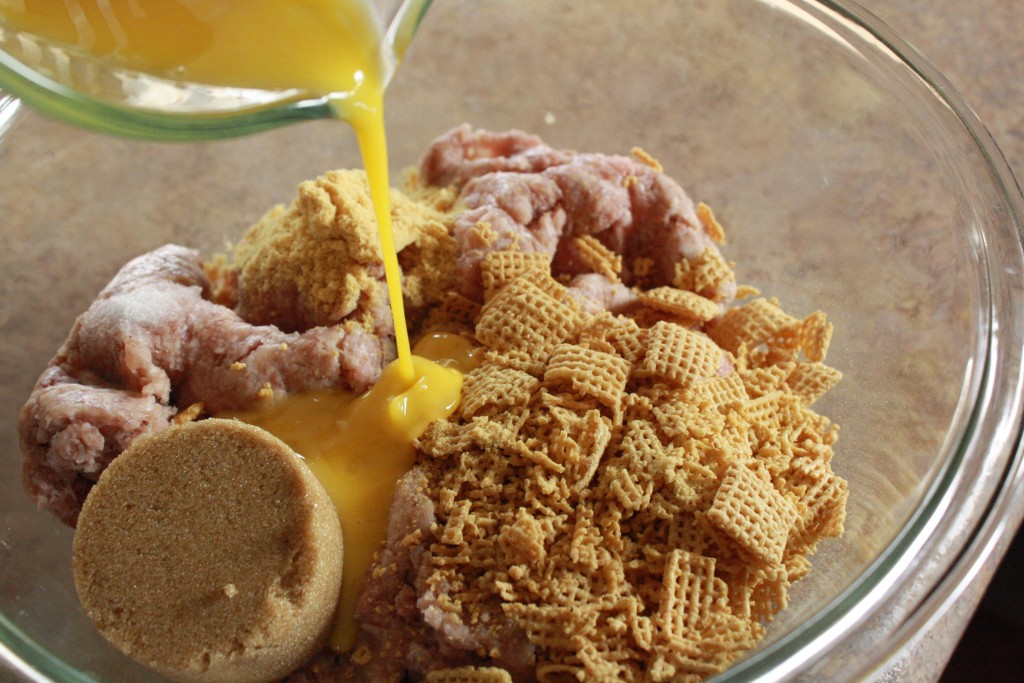
- 1 lb fully cooked, finely ground ham
- 1 lb ground pork (unseasoned)
- alternatively you can just buy 2 lbs of ham loaf mix
- 1 cup Corn Chex cereal or corn flakes
- 1/4 cup packed light brown sugar
- 1 Tbsp mustard powder
- 1/2 tsp salt
- 1 cup milk
- 1 egg, lightly beaten
FOR THE HAM GLAZE
- 1 cup packed light brown sugar, not dark, as the molasses flavor will be too strong
- 1/4 cup apple cider vinegar, not white vinegar, as you need the acid to make this work
- 1 Tbsp mustard powder
HOW TO MAKE HAM BALLS WITH BROWN SUGAR GLAZE
STEP 1: MIX THE MEAT
The glaze is a couple of minute endeavor, so get started on that while you’re forming these into balls.
Mix all of the ingredients for the meat together well, then shape into balls. You can make them bigger if you want, but remember, the bigger they are, the longer it will take them to cook.
- Corn Chex are less sweet than corn flakes, but either one will work. Crush them BEFORE measuring. You can’t sub breadcrumbs unless you want to do some figuring on reducing the milk.
- The pork adds some fat, which means tenderness, so make sure you get the unseasoned variety. You can totally cheat and get ham loaf mix, which is ground ham and pork already combined. The ham needs to be FINELY ground or it won’t incorporate into the mix properly.
- The mustard in the meat is the dry, powdered variety. It blooms when heated, so you’ll get that mustardy zing without the bite. The glaze also has some, so we’re tying that flavor through everything.
- The brown sugar in the meat is just enough to provide some sweetness, nothing crazy.
- The salt is really just to bring out the flavor in the pork since the ham is pretty salty on its own.
- I like to use whole or 2% milk to keep them moist, but you could go lighter.
- You could totally add another egg, but trust me when I say you will have a more rubbery end product. One egg is enough to bind it all together.
Transfer the meat mixture to a large bowl along with Corn Chex, brown sugar, ground mustard, and salt. Add milk and egg.
Mix with a fork or your hands until combined. Do not overmix or texture of meat will be dense.
The mixture will be a little tacky, this is normal.
STEP 2: ROLL THE BALLS
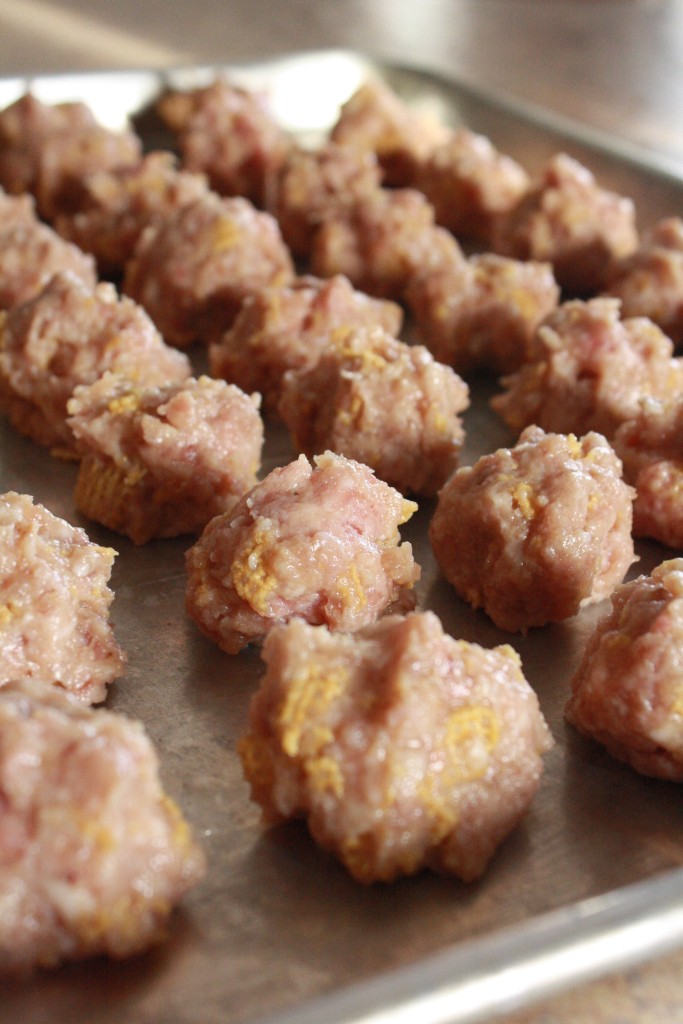
Roll the meat into 1” meatballs, placing them on a plate in the meantime. You should end up with a batch of meatballs.
Use a #40 cookie scoop. They will be more uniform in size and will therefore cook at the same rate.
Plus, it’s important to keep meat temperature consistent.
Rolling meatballs can be messy and frustrating. To make it easier:
- Keep a bowl of water nearby. Dip your hands in the water as needed to keep meat from sticking.
- Take advantage of pre-made ham loaf mixes available at most grocery stores in the meat section. Not only does it take the guesswork out of which meats to use and how much of each, it’s already ground.
STEP 3: MAKE THE GLAZE
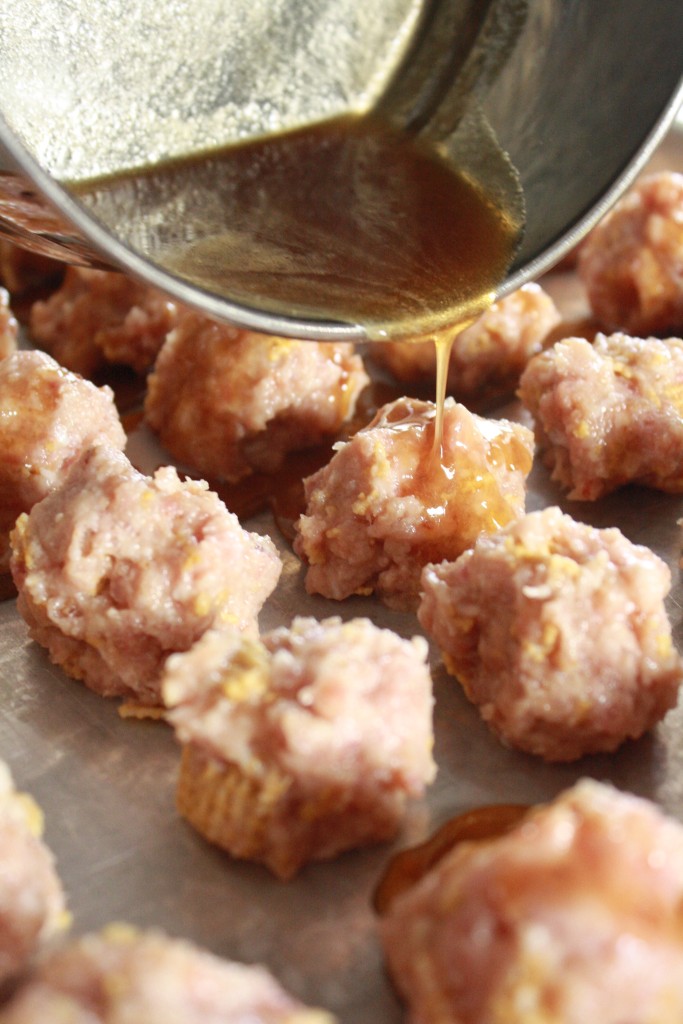
As you are forming the meatballs, prepare the glaze by adding 1 cup brown sugar, the apple cider vinegar and 1 Tbsp of ground mustard to a saucepan and warm over low heat. Stir for 3-4 minutes until the mixture is warm, smooth, and the brown sugar has melted.
If it gets too thick, stir in a little water a teaspoon at a time. Set aside.
- You’re going to pour this glaze on top of the uncooked meat, so it has to be nice and runny. If it has had a chance to cool and thicken up, add a splash of water and heat it until it loosens back up.
- Again, the mustard here is dry, powdered mustard.
- Brown sugar is much easier to work with when it’s packed. You can also purchase it pre-packaged, which makes life so much easier.
- I like to make this glaze with apple cider vinegar because it’s a little tart and cuts through the sweetness. However, you could easily make it into a classic “pineapple” flavored glazed ham by substituting pineapple juice for the vinegar and adding a pinch of ground ginger.
- I know mustard isn’t everyone’s cup of tea, but this is a case where it really does bring out the flavor of the glaze and balances out all of the sweetness. If you’re feeling brave, add 1 tsp Dijon mustard and a pinch of cayenne pepper to kick up the heat a notch.
STEP 4: GLAZE AND BAKE COVERED
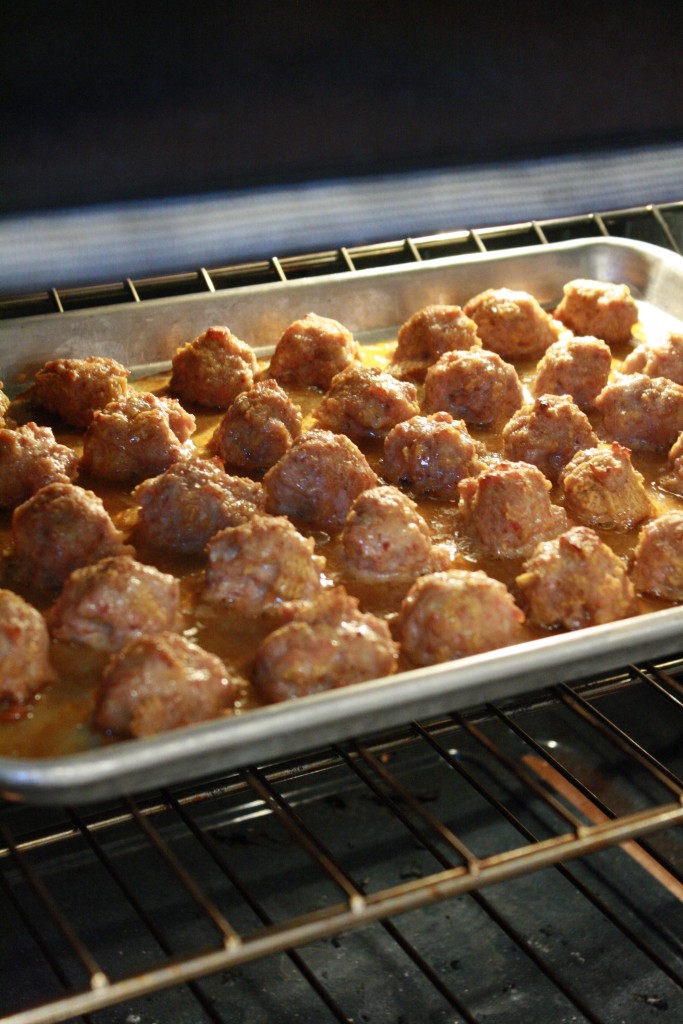
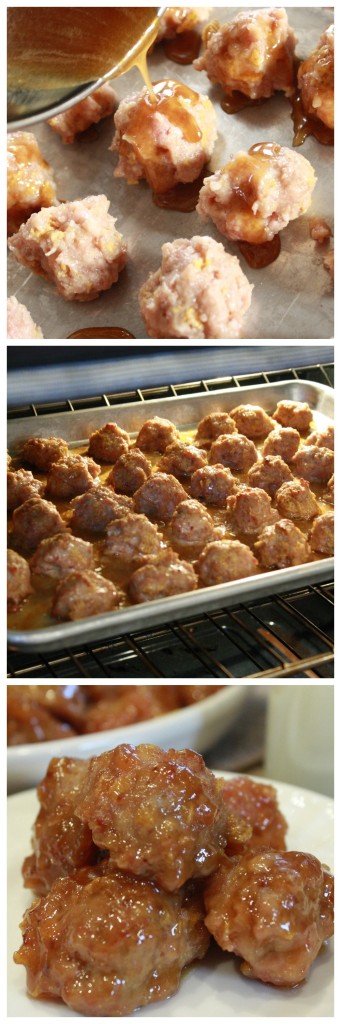
Place the meatballs in a single layer in the pan so that they are touching but not piled on top of each other. Spoon the warm glaze over the meatballs.
Cover with aluminum foil and bake in the oven for 20 minutes at 350 degrees F.
- I find it’s easiest to make this recipe directly in the pan that they’ll be baked in. If you don’t want the glaze to go directly onto your pan, line it with aluminum foil first.
- It’s important to cover the ham balls tightly in order to keep them moist. Don’t worry if they’re not browning as much as you’d like at this point, they will catch up.
STEP 5: UNCOVER AND FINISH
Uncover and continue to bake for 20 minutes, or until edges are starting to caramelize and the glaze is shiny. An instant-read thermometer should register 160 degrees.
Remove from oven.
- Check the internal temperature of the balls in the center of the pan, not those on the edges, because those will be done before the ones in the middle.
- Want to make these in your Crockpot instead of the oven? Simply shape meatballs, make the glaze as directed, pour the glaze over the meatballs in the cooker, then cook on low for 4-5 hours or high for 2-3 hours. They won’t caramelize as nicely on the edges, but they are a heck of a lot easier.
STEP 6: TOSS AND SERVE
Remove the ham balls from the baking sheet and place in a serving dish. Add the glaze from the baking sheet and toss to coat.
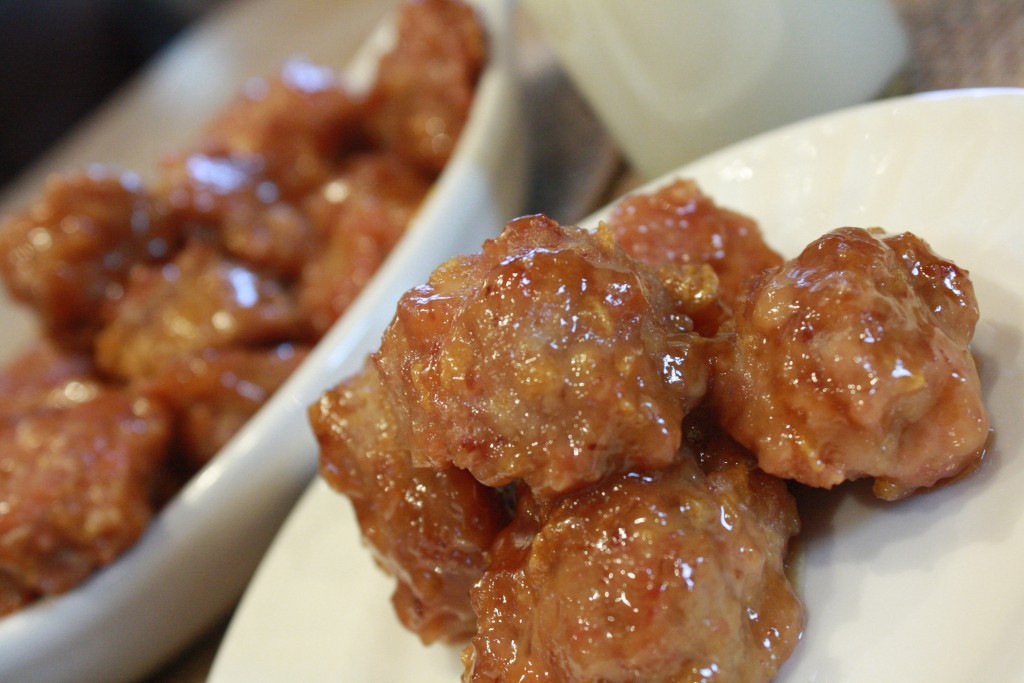
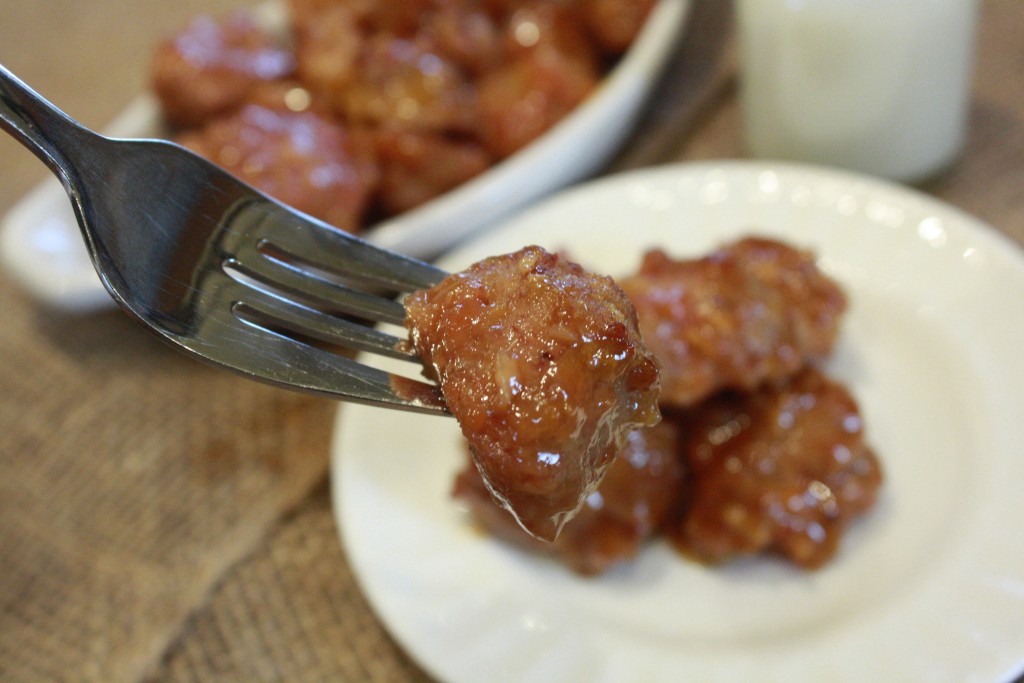
Sprinkle with more glaze as needed. Serve.
SERVING IDEAS
Serve as an appetizer on toothpicks at your next holiday party or potluck.
When serving as a main, choose sides that aren’t going to compete with the sweet-savory glaze. Something with a mellow flavor like cheesy potatoes or buttered egg noodles are ideal.
Same goes for vegetables. Something on the bitter side, like green beans or broccoli.
Here are a few ideas:
- Charred Oven Roasted Green Beans
- Easy Oven Roasted Broccoli
- Green Bean Casserole, Homemade Cornbread, or even frozen biscuits work well here
- Creamy Macaroni Salad
- Coleslaw
- Classic Deviled Eggs
HELPFUL TIPS
Can I make these ahead of time?
Absolutely. Follow directions above to prepare and bake the glazed ham balls and allow to come to room temperature.
Cover tightly and store in refrigerator until ready to serve, even overnight. When ready to serve, preheat the oven to 325 degrees and bake ham balls covered for about 20-25 minutes.
Or, simply add the ham balls to your slow cooker, fill the bottom with a couple of tablespoons of water, and heat on the warm setting until ready to serve, for no more than 2 hours.
Can you freeze glazed ham balls?
You can freeze the ham balls before or after baking:
- Before baking, form into balls, lay on parchment paper lined baking sheets and freeze until balls are hard. Add to freezer bags and freeze. When ready to bake, arrange frozen balls on a baking sheet, pour glaze over top and cover tightly in foil. Bake as directed, adding an additional 10 minutes to the cooking time.
- After baking, cool glazed ham balls completely before freezing. Place ham balls in a single layer in a freezer-safe container or zip-top bag, separating layers with waxed or parchment paper. Freeze until needed. When ready to serve, place balls in a baking dish, add a splash of water, cover tightly in aluminum foil and bake at 350 degrees for about 25-30 minutes.
What do I do with leftovers?
These glazed ham balls keep well in an airtight container in the fridge for 3-4 days. To store, coat meatballs with any glaze remaining on the baking sheet before transferring to a container.
To reheat, arrange meatballs in a casserole dish, sprinkle with water and cover tightly in aluminum foil. Bake at 325 degrees for 15-20 minutes.
You can also nuke them in the microwave, adding a little water and reheating in short increments.
LEFTOVER IDEAS
- Cut the glazed ham balls in half, pile them on some nice slider buns, add a smear of Dijon mustard and enjoy.
- Slice up the glazed ham balls, mix them with some egg noodles, add a little bit of cream and you have yourself a quick and easy weeknight pasta meal.
- Freeze them. See directions above.
FREQUENTLY ASKED QUESTIONS
Can I use canned ham?
Yes, but keep in mind canned ham has a bit more moisture so reduce the amount of milk by 1 or 2 tablespoons. Processed leftover baked ham is best.
What if I don’t like apple cider vinegar?
White wine vinegar would be the next best. What other substitutions can be made?
You can use other kinds of vinegar but the glaze does require acid to cut the sweetness. Keep in mind regular white vinegar is stronger than apple cider vinegar so you might want to reduce the amount to 3 tablespoons instead of the called for ¼ cup.
What size meatballs should I make?
You can make bigger meatballs, however, we found the recipe works best with the suggested one-inch meatballs. These will be done in the allotted cooking times at an internal temperature of 160°F.
Larger meatballs may not be fully cooked in the middle, especially when cooking in 40 minute increments at 350 degrees like we do in the recipe, even though they are done on the outside. Always test with a meat thermometer if you aren’t sure if your meatballs are fully cooked.
CAN I USE BREADCRUMBS INSTEAD OF THE CEREAL?
You can, but the traditional recipe calls for Corn Chex. They provide a lighter and more interesting texture.
If you use breadcrumbs, use 1 cup just as you would the cereal. The texture will be more dense with breadcrumbs.
Keep in mind that different binders absorb liquid differently, so you may find that using breadcrumbs makes your recipe come out more on the dry side. Panko breadcrumbs have a lighter texture than standard bread crumbs.
IS THE GLAZE ENOUGH FOR THE WHOLE BATCH?
The glaze makes enough to coat a whole batch of 4-5 dozen 1” balls and bake. If you’d like extra to drizzle over them on the table, make 1.5x the recipe.
It’s an inexpensive recipe that takes less than 5 minutes to make.
RELATED RECIPES
- Slow Cooker Pot Roast is another big-batch dinner that you can set and forget on a busy week.
- Pork Chop and Hashbrown Casserole is a big, hearty recipe that’s easy to throw together.
- Quick Breakfast Casserole is the perfect recipe for those leftover ham slices.
- Mongolian Beef is a favorite here. The sweet and savory sauce is fantastic.

Ham Balls with Brown Sugar Ham Glaze
Equipment
- Rimmed baking sheet
- Small saucepan
Ingredients
Ingredients
- 1 pound fully cooked ham finely ground
- 1 pound ground pork
- 1 cup crushed Corn Chex
- 1/4 cup packed light brown sugar
- 1 tablespoon ground mustard
- 1/2 teaspoon salt
- 1 cup milk
- 1 egg lightly beaten
- 1 cup packed light brown sugar for glaze
- 1/4 cup apple cider vinegar
- 1 tablespoon ground mustard for glaze
Instructions
Instructions
- Preheat oven to 350°F. In a large bowl, combine ground ham, ground pork, crushed Corn Chex, brown sugar, mustard, salt, milk, and egg until just combined.
- Roll mixture into 1-inch balls and place in a single layer on a rimmed baking sheet.
- In a small saucepan over low heat, combine glaze brown sugar, apple cider vinegar, and mustard. Stir 3 to 4 minutes until smooth.
- Pour warm glaze over ham balls. Cover pan tightly with foil and bake 20 minutes.
- Remove foil and bake 20 more minutes, until glaze caramelizes and ham balls reach 160°F.
- Transfer to a serving dish and gently toss with glaze from the pan. Serve hot.