
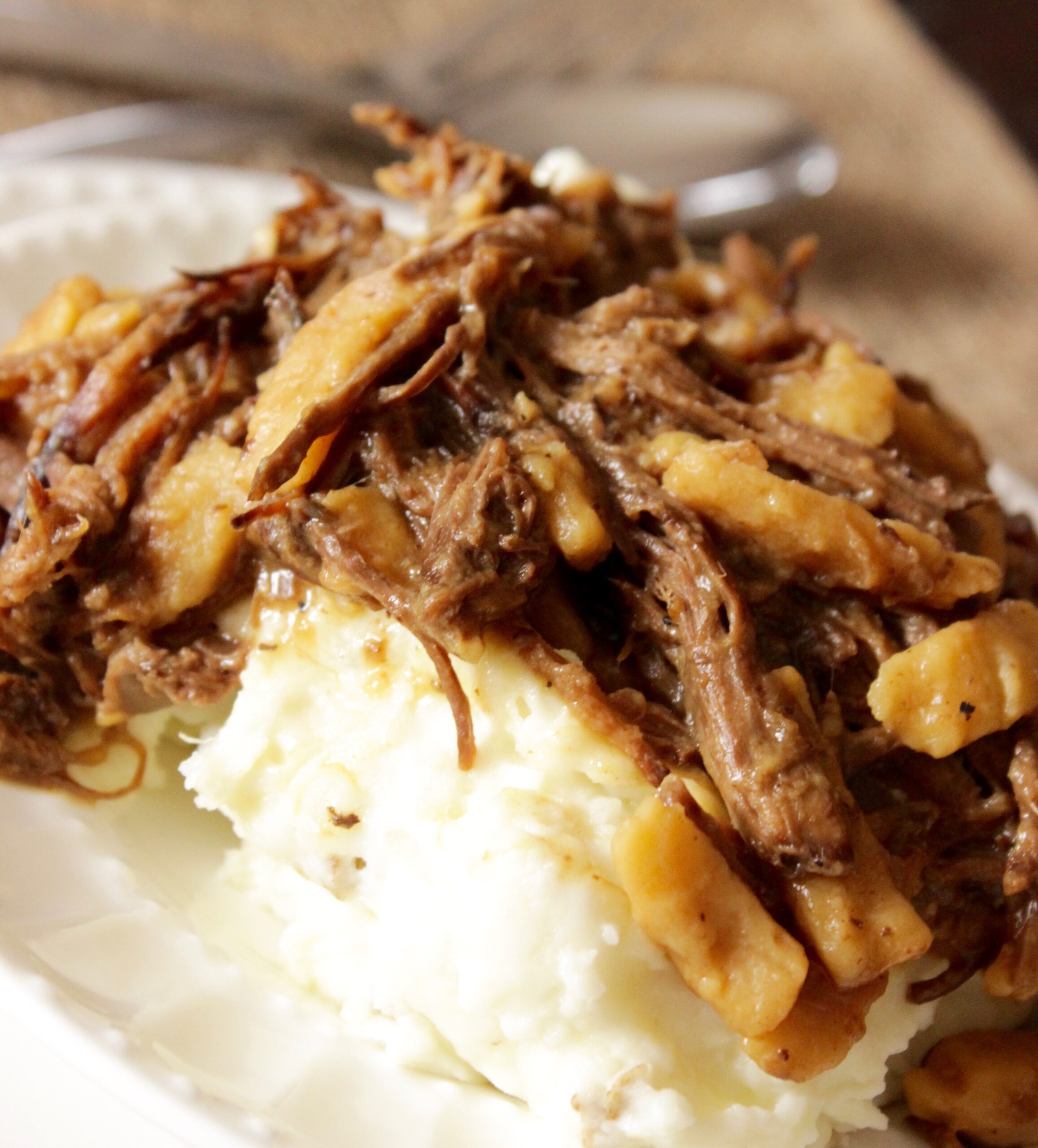
Crock Pot Beef and Noodles
Beef and Noodles is such a comforting meal for me. For some reason I associate it with sickness or weathering a cold winter.
My husband will happily chow down on beef and noodles. My kids will happily chow down on beef and noodles.
We can all happily chow down on beef and noodles.
Why the Broth Tastes Like It Cooked All Day (Because It Did)
Now before you run to grab that sirloin or round roast…STOP. Chuck roast is the best cut to use.
It’s one of the more economical cuts of beef to purchase. It has the right amount of fat and connective tissue that when cooked for a long period of time results in silky, rich, and oh-so-tender shredded beef.
Leaner cuts will yield a much drier beef and will not give your broth much of a body. Trust me here.
Chuck roast it is.
Next up…SEAR it. Now, I know that’s not the easiest thing to want to do.
But hear me out. Season your beef well, heat up a large skillet with some oil over medium high heat and brown each side for 2-3 minutes.
You are not looking for cooked beef. You are looking for a nice, dark, and fragrant crust on each side.
Trust me here too. Sear it.
You will thank me later.
The rest of the recipe is dead on easy. Throw beef into your Crock Pot along with all of its beautiful seared juices…cover…cook on LOW for 6-8 hours.
When you get home from work or about an hour before dinner boil some homestyle egg noodles. The thick kind.
The kind that soak up all of those beautiful beefy juices. When noodles are done, shred beef with two forks, your kids will swear it’s steak…pour off any extra fat…mix beef and beefy juices with your cooked egg noodles.
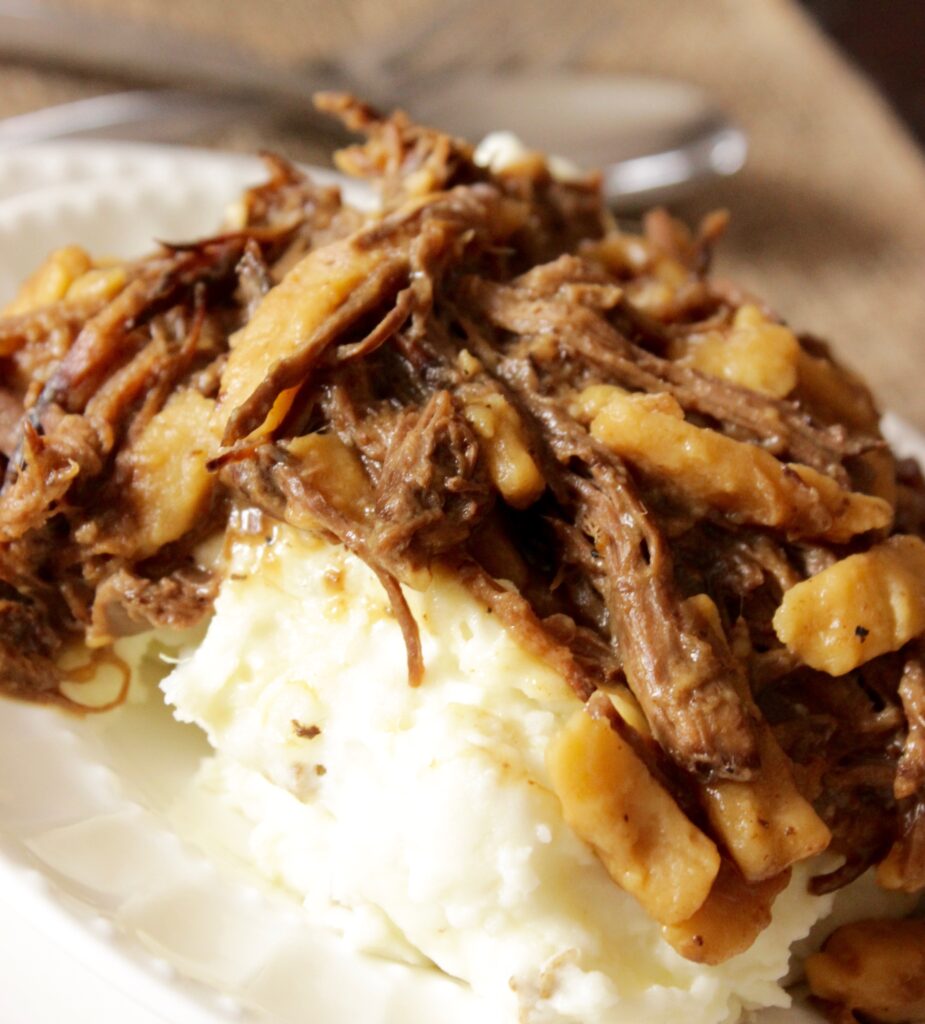
Serve in a bowl with some bread on the side or serve over some delicious and creamy mashed potatoes. Trust me, the latter option is the best way to do it.
I’m not even sure why we ever went any other route. Enjoy.
The All-Day Timeline and How to Make It Work
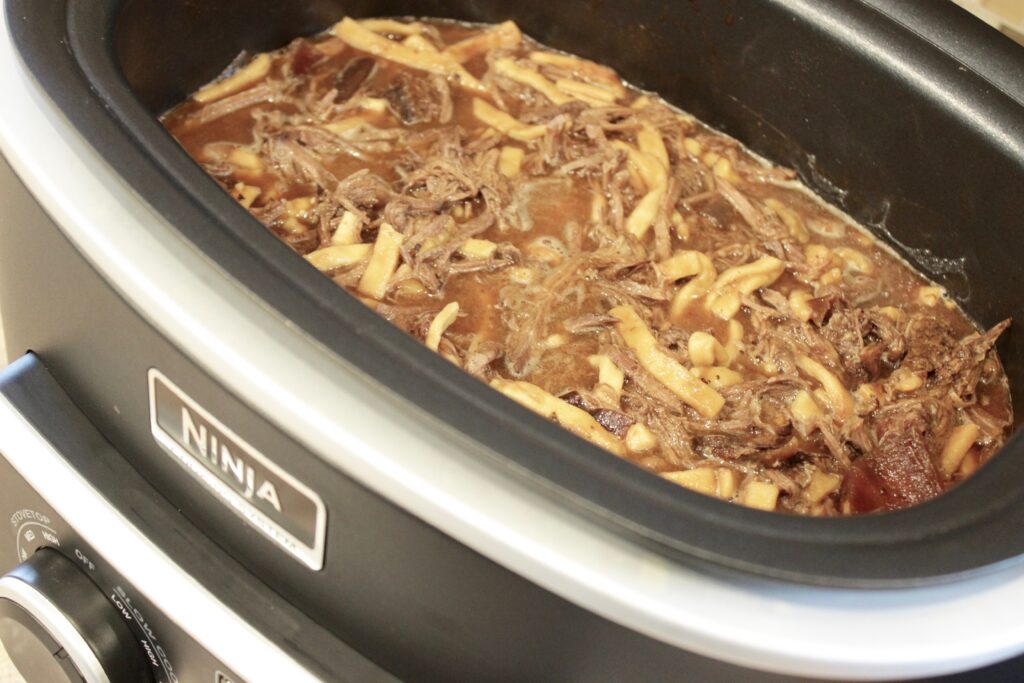
All told, this recipe takes one full day with 6 to 8 hours of cooking, but it’s divided into two sessions, morning and evening, and only about 30 minutes of that is hands-on prep. Here’s a rough outline of what needs to happen and when.
In the morning, while you’re getting the kids ready for school:
- Brown the meat. It’s true, you could skip this step, but this is where we’re going to leave the norm behind and take this soup to a whole new level. Browning meat produces unique flavoring agents that no amount of time in the crockpot will reproduce. Those extra 5 minutes will produce a slow-cooker beef noodle soup worthy of its own restaurant. Season beef. Brown beef on stove top. Add to crockpot with onion. Cover. Leave. Get busy with life. Come home, shred beef, make broth. Cook noodles in a pot of boiling water. Combine beef, broth, noodles. Enjoy.
Tips and Techniques
Here are the ins and outs of taking your crockpot beef noodle soup from okay-ish to awesome:
- Use Better than Bouillon. You can pick this stuff up for a few bucks and it’ll sit in your refrigerator for months. It’s concentrated beef base, not to be confused with bouillon cubes, and it gives your soup that deeply satisfying taste that makes it taste like it was simmered on the stove all day, when in fact it’s only been in the crock all day. It’s an ingredient you’ll be surprised isn’t in everything you’re cooking.
- Don’t add extra salt. Since this recipe calls for steak seasoning and Better than Bouillon, you’re going to have plenty of salt in there. Start with three heaping teaspoons of Better than Bouillon and see how it tastes before you add another. It’s hard to fix a bowl of beef noodle soup that’s too salty.
- Cook the noodles separately. You could throw them directly into the soup, but they’ll get overly soft and absorb more of the broth than you’d like. Besides, if you’re running 20 minutes behind schedule to sit down to dinner, they’ll be better with a few extra minutes elapsing.
- Save the noodles for the end. It’s best to combine all of the ingredients together right before serving so that the noodles don’t get too soggy.
But with these tips, you’ll never again make soggy egg noodles or beef that isn’t quite cooked through.
- Use the right noodles. This recipe calls for Reames Frozen Egg Noodles because they’re a little thicker than typical egg noodles and have a homestyle feel. They also do not turn to mush if submerged in a hot broth. Most large grocery stores have them in their frozen section, by the frozen dinners or pasta. If you cannot find them, try another type of thick, frozen egg noodle. Thin noodles will not produce a very hearty result.
- Use the right-sized crockpot. I used a 6-quart crockpot for the 2 pound roast. If yours is 4-quart, you’ll need to scale the amount of meat down a tad so it isn’t over-crowded. Otherwise everything should fit nicely for an even-cooked meal.
- Resist adding liquid. Believe me when I say that there will be liquid. This recipe calls for 6-8 hours of cooking and during that time, the juices in the meat will soften and settle in the bottom of the crockpot. Adding water would only thin-out those juices. You will add a water/bouillon mixture AFTER shredding the meat in order to create the final beef broth.
- Use chuck roast. Chuck roast has enough fat throughout the meat to withstand the long, slow cooking. Those fat deposits will melt away after sitting on low temp for hours. By the end of hour 6, you’ll be amazed at how soft the meat has become. It’ll fall apart and shred easily with two forks. An arm roast should be okay, but may require more time. Lean cuts will not shred well and won’t make much or tasty broth.
- Choose an oil that won’t burn during searing. Use any neutral, high-heat oil for searing the beef. Vegetable, canola or avocado are great options. Be sure the 2 Tbsp are heated up nicely and shimmering BEFORE adding the beef. Adding the meat too soon will cause it to steam.
- Steak seasoning. Any kind will do, but my fave is Montreal Steak Seasoning which is a mixture of salt, coarse black pepper, garlic, coriander and other spices. It saves me having to measure out all of them. Use 1 Tbsp.
A 2 pound roast will need a good application of Salt and pepper and Steak Seasoning. Make sure to season the entire surface of the roast as you will be searing all sides.
This will make a delicious crust on the outside of the roast that adds tons of flavor to the broth while its cooking.
Onion (½, diced). Don’t worry about sautéing the onion before hand, just chuck it in the crockpot raw with the meat.
Trust me when I tell you after 6-8 hours of cooking, you won’t even be able to tell there was an onion in the dish. It will be fully incorporated into the broth giving it a nice subtle sweetness.
Water (4 cups). You will be shredding the meat and returning it back into the crockpot before adding the remaining ingredients.
At that point add 4 cups of water. You want enough broth to coat the noodles when its all mixed together, no more no less.
Better than Bouillon concentrated beef base (4 heaping teaspoons). You will find Better than Bouillon in a tube in the refrigerator section of the store.
It is much more flavorful than bouillon powder or cubes. Add 3 heaping tsp and taste the broth, if it needs a bit more body add 1 more.
You could also use beef broth instead of Better than Bouillon and add about 4 cups and omit additional salt.
Worcestershire sauce (2 teaspoons). This adds a bit of a punch and a nice depth to the dish.
Too much can be overwhelming though so stick to 2 teaspoons.
Minced garlic (1 teaspoon). You can buy garlic already minced in a jar at the store which makes measuring out 1 teaspoon very easy.
Otherwise use 1 medium sized clove minced. Add garlic at same time you are mixing Better than Bouillon and Worcestershire sauce together and whisk them into broth mixture.
Do NOT add with meat at beginning.
Reames frozen egg noodles (24-oz. bag). You could probably get away with other noodles but Reames egg noodles are a favorite of mine for beef noodle soup.
You will need thick, wide, homestyle egg noodles, which will retain their texture and chewiness when added to the broth. Most regular dried egg noodles are much thinner, so you should use frozen thick egg noodles, which will greatly influence the integrity of this recipe.
Brands include Reames egg noodles. Find them in the freezer section with other frozen foods.
How to Make Crock Pot Beef and Noodles
Step 1: Season and Sear the Roast
Pat dry chuck roast with paper towel. Season all sides generously with steak seasoning, salt, and pepper.
Heat vegetable oil in a large skillet, preferably cast iron, over medium-high until it’s smoking or shimmering. Add the chuck roast, sear for 2-3 minutes without disturbing.
Turn over and repeat. Leave some areas less browned than others, but strive to get a nice, dark crust on the meat.
It’s okay if the middle is still raw.
Step 2: Into the Crockpot
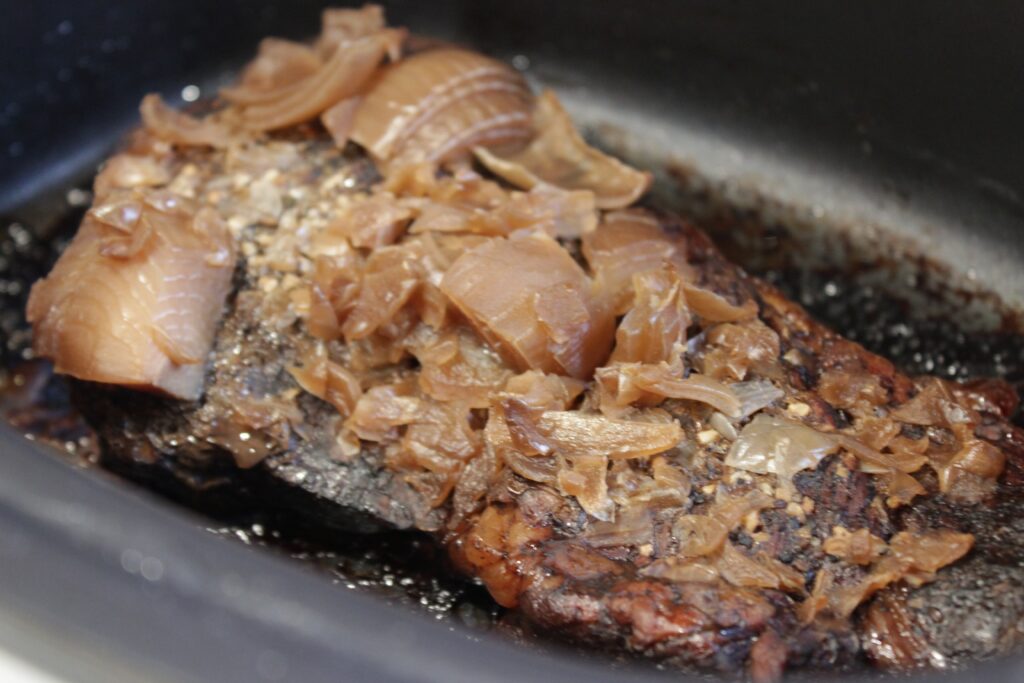
Add the chuck roast to a 6-quart crockpot and surround with the onion. Cover the roast generously with onion.
At this point, do not add any water or broth. We want those cooking juices concentrated for now.
Cook on low for 6-8 hours, checking at the 6 hour mark as crockpots vary in temperatures and roasts in thickness, until meat is cooked through and falls apart easily with two forks. If the roast is still holding together after 6 hours, give it another hour.
Step 3: Shred the Beef
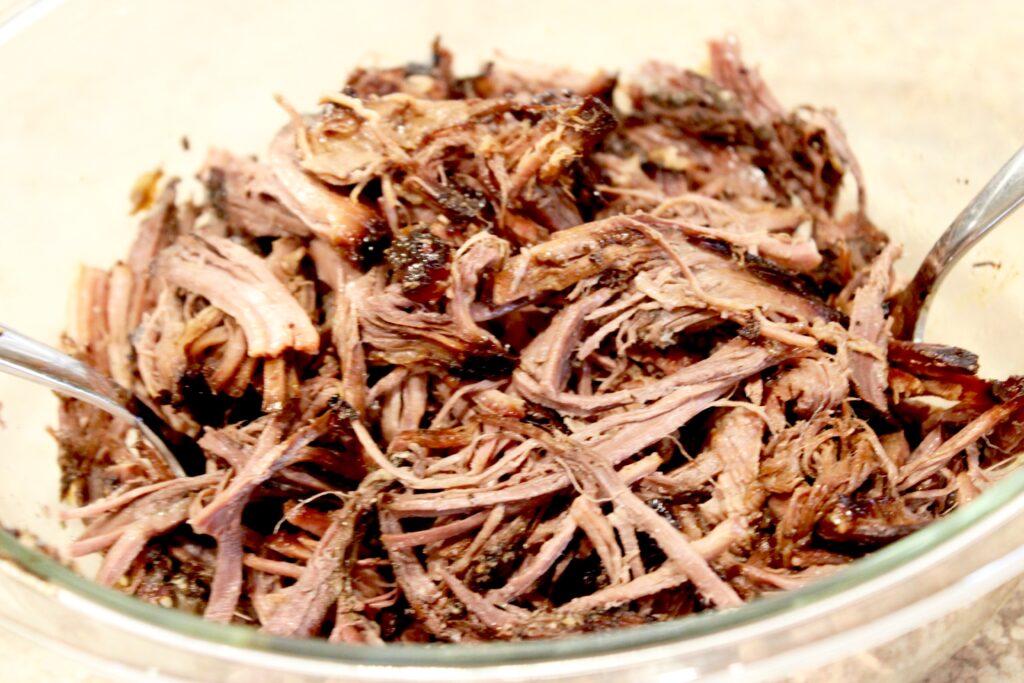
When the roast is cooked, use two forks to shred the beef.
It will be hot and fall apart at this point, so use tongs or a large fork to remove it. Place in a large bowl or on a large cutting board.
Use two forks to shred. If there are any large pieces of fat or gristle you do not like, remove them.
Fat adds flavor, so it’s okay if some of it ends up mixed into the shredded meat. But, if you know that you don’t like chewing on fat, remove the larger pieces that are readily apparent now.
Step 4: Build the Broth
Return the shredded roast to the Crockpot. In a small bowl, stir together water, Better than Bouillon, Worcestershire and garlic.
Use a mini-whisk or fork to incorporate the Better than Bouillon. Stir the broth mixture into the beef and the cooking juices.
Place lid back onto the Crockpot and allow to simmer on LOW for 30 minutes to allow the flavors to marry. During this time, give the broth a taste.
Feel free to increase the amount of Worcestershire sauce if you want more saltiness, or increase the amount of Better Than Bouillon if you want more of a beef flavor.
Step 5: Cook the Noodles
While the broth is simmering, salt a large pot with water and place on high heat on the stove. Once the water comes to a boil, add egg noodles.
Follow directions on the box for cooking times, which can be anywhere from 20-40 minutes depending upon whether or not the Reames noodles are still frozen or have defrosted some. You want the noodles to be cooked and tender but have some chew to them.
Remove from heat and drain well. Add noodles to beef and broth mixture, stirring to incorporate.
Noodles will soak up broth right away. Serve hot.
Five Small Details That Keep This From Being Just Fine
Pat the roast dry before seasoning. Meat holds onto water and you don’t want to create steam in your skillet.
Just ten seconds with a paper towel makes a world of a difference in how nicely it will brown.
Serve on top of mashed potatoes if you like.
If you can, mince your own garlic.
Buy Better than Bouillon ahead of time, it’s not found everywhere and can be tricky to find.
Buy the Reames noodles ahead of time, same story there. They are easier to find than Better than Bouillon but not everywhere either.
This recipe for roast noodle soup will be cooked in your crockpot, however, before transferring all of the ingredients, make sure you brown the roast. Browning will enhance the flavor.
Pre-heat your skillet for 1-2 minutes on medium-high, THEN add your cooking oil and heat until shimmering before adding the roast. If done correctly, you’ll be able to pick the meat back up with ease and not end up dragging pieces of meat around your skillet.
If you hear no sizzle after adding the roast to the skillet, take it back out, allow the skillet to heat for another minute and try again.
Set it and forget it. Resist the urge to peek- I promise that each time you remove the lid, you’ll be adding another 20-30 minutes to cooking time.
If your slow cooker has a glass top, you can peer into it without removing the lid.
I find it best to use a larger (6 quart) crockpot to accommodate the roast, broth, and the noodles.
Approximately 30 minutes before serving time: Taste the broth. Does it need anything?
Another cube of beef bouillon or maybe a pinch of salt? Perhaps another teaspoon of Worcestershire sauce or a small pinch of black pepper?
Season accordingly. Add egg noodles.
These little guys soak up all of that delicious hot broth. They’ll be ready to eat in approximately 20 minutes.
If you leave the noodles in the crockpot for 30 minutes they’ll be way too thick and cooked. Trust me on this one.
Start the noodles 10 minutes after you add the broth mixture- that’ll leave your broth mixture simmering for 30 minutes total.
How My Husband Eats It vs. How I Eat It
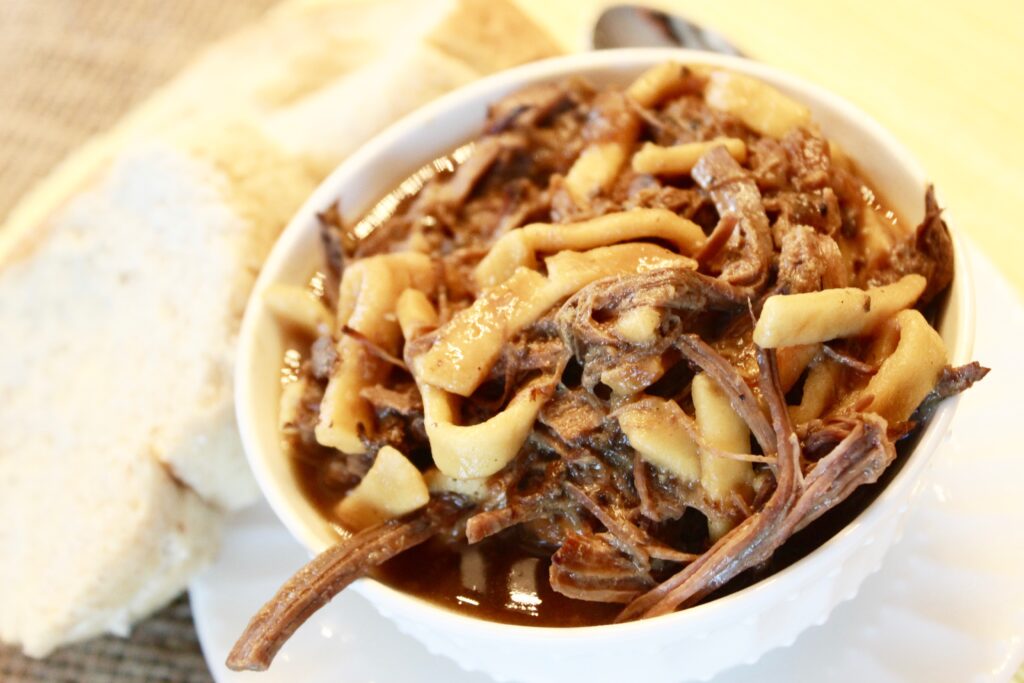
My husband loves beef roast noodle soup and eats it with slices of thick, hearty bread that soak up the broth. He could eat this recipe weekly, and he’s not one to complain.
I think it’s fabulous over some REAL mashed potatoes.
Trust me, beef broth + mashed potatoes = delicious. Yes, I’m aware that noodles + potatoes is carb-city, but the potatoes are really just there to soak up all of that delicious beef broth.
If you’re looking for an easy and delicious comfort food, beef + noodles + potatoes is the way to go.
How to Serve This Recipe
This dish is hearty enough to serve with just a green salad on the side. Or, if you want to go all out, roast up some veggies.
Carrots and green beans pair especially nicely. You could even serve it with some rolls or biscuits.
Overall, dinner rolls/biscuits + beef and egg noodles over mashed potatoes + side salad = dinner for the whole gang. Give it a try.
Five Ways to Change This Up
Skip the noodles and serve over mashed potatoes
Who knew such a minor change would make this recipe taste like an entirely new dish. Leaving out the egg noodles and serving this over some creamy mashed potatoes has the consistency of beef stew.
It’s delicious. If you have some leftover, refrigerated mashed potatoes, this is a great option.
Add vegetables to the crockpot
Depending on the vegetables that you add, you can put them in from the beginning, such as baby carrots and diced celery, and allow them to soften/caramelize all day. If you’re looking for some secret veggies that your picky eaters won’t notice, try adding some sliced mushrooms at the beginning of cooking.
By the time they’re done, most of the mushrooms will melt away and leave a wonderful flavor. For more delicate vegetables like frozen peas, I’d wait and add them at the very end once the meat is shredded and simmering away in the broth.
Make it creamy with cream of mushroom soup
I know what you’re thinking…cream of mushroom soup?! You betcha.
It’s amazing. Stir a whole can of the boring, beige, original cream of mushroom into the broth mixture and enjoy a nice, creamy, thicker consistency.
Note: The soup does add a lot of saltiness, so you might want to ease up on the bouillon.
Use a different seasoning blend
Seasoning: This recipe calls for Montreal Steak Seasoning but any commercial steak seasoning would work well. You could even make your own using a blend of garlic powder, onion powder, coarse ground black pepper, and salt.
Use your best judgement as you’ll need to use more than you think, especially if you’re using a 2 pound roast.
Brothier Beef Noodle Bowl: If you’re going to use the beef and noodles in a soup/brothy bowl or if you’re planning on serving with potatoes you may want to add an additional cup of water and Better than Bouillon to the recipe, using 5 cups water instead of 4 and about a tsp additional bouillon. This is especially helpful for leftovers.
Egg noodles soak up A LOT of the liquid.
How to Store It and Why Day Two Is Better
This recipe will keep, refrigerated and covered, for up to 3 days. You may need to loosen up the beef and noodles with a splash of beef broth or water before serving.
This can be done either in the microwave or on the stove, reheating over low heat. Honestly though I think it’s even better the second day as all of the flavors have a chance to blend and soak in overnight.
Make Ahead Tips
You can sear the roast after seasoning it the night before then transfer it back to a container in your fridge. In the morning add the roast to your preheating crock pot with the onions, seasonings, etc.
Freezer Frenzy
The shredded beef freezes beautifully. Leave some broth with the beef when freezing for up to three months.
When ready to serve, defrost overnight, heat on the stove, serve over FRESH egg noodles. Noodles don’t freeze well and get a little mushy when thawed.
Four Things to Make With What’s Left
Beef noodle soup
Add about 2-3 cups of beef broth to the beef/noodles mixture, as the more you add the more like a soup it’ll taste. Also add some diced carrots and celery.
Return to stove and simmer 20 min.
Beef pot pie
The best thing about this recipe is that you can shred the beef and keep the noodles separate. That way, if you don’t want to have beef and noodles again, you can use the shredded beef for something else.
We made pot pie one night. Simply place beef and frozen carrots and peas into a baking dish and top with refrigerated pie crust or biscuit dough.
This will take about 30 minutes to make.
Beef over baked potatoes
Sometimes there’s only 1-2 servings of beef left. It’s easier to eat them up at once by having them over a baked potato.
Simply split baked potato, spoon beef and some of the broth from the crockpot over potatoes, and top with shredded cheddar cheese and a dollop of sour cream. Done in 5 minutes.
Beef dip sandwiches
My husband loves these. Simply shred the beef, place on hoagie roll with provolone cheese, broil in oven for 2-3 min to melt cheese.
Spoon the beef broth into a small bowl and serve alongside sandwich, though you may need to heat this up. Use a small ladle for dipping and it’s just like getting them at a restaurant.
What You Actually Need for This
There is nothing special you need for this. I used a 6 qt crock pot, and the roast fits perfectly.
Some examples of brands that can be used for this are Crock Pot®, Hamilton Beach®, or an Instant Pot®, just make sure you have it on the slow cooker setting.
For the best results I’d recommend a heavy-bottomed pan like cast iron or a heavy stainless steel. A good sear requires high heat and cast iron and heavy stainless hold their heat better than other options.
Thinner pans will not give as good of a result. Nonstick pans won’t get as hot as you need.
Crock Pot Beef and Noodles FAQ
Can I use a different cut of beef?
Chuck roast is best for this recipe. The fat in chuck makes the meat moist and adds flavor to the broth during the long, slow cooking.
Arm roast is slightly leaner than chuck and will be a little less expensive. You will need to cook an arm roast a little longer than chuck.
Sirloin, round, or any other cuts that are very lean will not work as well in the slow cooker. Lean cuts of meat don’t shred well and will be very dry in a slow cooker.
Do I have to sear the meat first?
You can skip the browning if you are pressed for time. However, searing meat gives it a nice, browned crust which adds depth of flavor to the beef and noodles.
A slow cooker will never reach the temperatures of a hot skillet so this is the only way to get that crust on your meat. Five minutes of your time will result in more flavorful beef.
Can I shred beef with an electric mixer?
The classic way to shred two pounds of beef is with two forks. If you’re feeling lazy, you can use an electric mixer.
Use the beaters and go on the lowest speed. You will be surprised how quickly it shreds large quantities of beef.
What kind of utensils can be used to stir in a crock pot?
Silicone spatulas and wooden spoons are the most common utensils for combining ingredients without scratching your crock pot. Use whatever works for you.
Can I cook the noodles directly in the crockpot?
Yes. Adding frozen egg noodles is an easy shortcut.
Simply add the egg noodles on top of the beef after adding the broth mixture and shredding. Serve immediately or leave on low for another hour.
Cooking the noodles directly in the beef broth softens the noodles a bit as they absorb the beefy goodness of the broth. Bonus points for not washing another pot.
This is the method I use when I know we’ll be eating immediately.
My beef isn’t fork-tender after 6 hours.
What should I do?
Beef should be easily pullable apart with two forks when it’s ready. If yours is resisting, just keep it in the slow-cooker a little longer.
Some chuck roasts, especially cuts that are on the thicker side or came from an older cow, can take a full 8 hours. Also, some slow cookers run cooler than others.
If yours is one of those, you’ll need to plan on leaving this in it a bit longer. There’s no harm done by cooking it longer.
Should I add the fourth teaspoon of the Better than Bouillon?
It can vary based on the brands of steak seasoning, Better than Bouillon, and Worcestershire sauce you use – they’re all adding some level of salt. If possible, I’d give it a taste before adding more BtB and before adding the noodles.
If you’re using a particularly salty steak seasoning, I’d err on adding only 3 tsp. of BtB in the beginning. Also, the broth will taste less salty once you add the noodles because they soak up quite a bit of the liquid.
It’s always easier to make the broth saltier than it is to fix it if it’s too salty, so err on using a little less.
Where do you find Reames frozen egg noodles, and what else can I use?
They’re in the frozen section at most large grocery stores, such as Walmart, Kroger, Hy-Vee, and Meijer, usually located with frozen pasta, frozen meals, frozen breakfasts, etc. If you can’t find them, try another brand of frozen egg noodles as long as they’re nice and thick.
Regular egg noodles aren’t really going to have the right texture for this recipe, nor would thinner pastas.
Can this dish be made ahead? How do you recommend storing/reheating it?
The beef and broth will store and reheat just fine. To reheat, I’d warm the broth over low heat on the stovetop with the beef.
A microwave should work too. Noodles don’t keep as well in the broth, as they’ll get a little more and more mushy each day.
To make ahead, boil your own noodles and keep them separate OR make it without noodles and add those right before serving.
Can I cook this on high in the crockpot to speed it up?
“This will still turn out tender and shreddable, although you may want to leave it a little longer. If you prefer, you can cook the meat on high for 4-5 hours instead of low for 6-8.”
Other Slow Cooker Dinners Worth Starting in the Morning
Crockpot Ravioli Casserole – This is such an easy, hands-off meal. Only four ingredients.
French Dip Crock Pot Sandwiches – Piled high with shredded beef on a hoagie roll. Serves the cooking juices on the side for dipping.
Philly Cheese Steak Crock Pot Recipe – All of the deliciousness of a Philly cheesesteak sandwich, peppers, onions, beef, melted cheese, minus the hassle of standing over a hot stove.
Funeral Potatoes – You could even serve this cheesy casserole alongside the beef and noodles for an ultimate comfort meal.
Crock Pot Beef and Noodles
Equipment
- 6-quart slow cooker
- Heavy skillet
Ingredients
- 2 pounds chuck roast
- 2 tablespoons vegetable oil for searing
- 1 tablespoon steak seasoning Montreal Steak Seasoning recommended
- salt and pepper to taste
- 1/2 onion diced
- 4 cups water
- 4 heaping teaspoons Better than Bouillon concentrated beef base start with 3, taste, add 4th if needed
- 2 teaspoons Worcestershire sauce
- 1 teaspoon minced garlic
- 24 oz bag Reames frozen egg noodles
Instructions
- Pat the chuck roast dry with paper towels. Season all over with steak seasoning, salt, and pepper.
- Heat vegetable oil in a large skillet over medium-high until shimmering. Sear the roast 2–3 minutes per side until a dark crust forms. Set aside.
- Place the seared roast and diced onion in a 6-quart crockpot. Cover and cook on low 6–8 hours. Do not add any liquid at this stage.
- Remove the roast and shred with two forks, discarding any large pieces of fat. Return shredded beef to the crockpot.
- Whisk together water, Better than Bouillon, Worcestershire sauce, and minced garlic until the bouillon is dissolved. Pour over the shredded beef and stir to combine. Set crockpot to low and simmer 30 minutes.
- Bring a large pot of salted water to a boil. Cook Reames frozen egg noodles per package directions, about 20–40 minutes. Drain.
- Stir noodles into the crockpot. Taste the broth and adjust salt if needed. Serve hot in bowls or over mashed potatoes.