Copycat Outback Steakhouse Caesar Dressing
The Outback Steakhouse caesar dressing has a specific tang to it — a little richer, a little more garlicky, with that anchovy depth that makes you keep going back for more. I started making this copycat version at home years ago because dining out with kids on a weeknight stopped feeling like a treat and started feeling like a logistical operation.
This dressing comes together in under five minutes with an electric mixer, but then it needs 12 hours in the fridge. That waiting period is not optional — it’s what takes this from “pretty good” to “this tastes exactly like Outback’s.” Make it the night before and it’ll be perfect by dinnertime the next day.
What Makes This Recipe Work
Caesar dressing is one of those recipes that sounds simple but falls flat constantly. You’ve probably had a homemade caesar that tasted weirdly flat, or too lemony, or like something was missing but you couldn’t name it.
The gap is almost always the anchovy — and how everything comes together in the mixing process. This recipe solves both.
- Anchovies are non-negotiable. This is what gives restaurant-quality caesar dressing its salty, savory backbone. Roland anchovy paste comes in a small tube in the canned fish aisle — it’s the easiest way to add anchovies without dealing with whole fish. One tablespoon adds depth without tasting “fishy” at all.
- Egg substitute keeps it food-safe. Traditional caesar dressing uses raw egg yolk, which some people are (reasonably) wary of. Egg substitute gives you the same richness and emulsification without the raw egg concern.
- The electric mixer matters. Beat with an electric hand mixer for at least 30 seconds — this fully emulsifies the oil and creates the smooth, creamy texture that makes it coat the lettuce evenly instead of pooling at the bottom of the bowl.
- 12 hours of rest transforms it. The garlic mellows, the flavors meld, and the dressing thickens to that perfect consistency. There are no shortcuts here — plan ahead.
What to Know Before You Start
Make this dressing the night before you plan to serve it. It genuinely needs that 12-hour rest in the refrigerator — not because it’s unsafe before then, but because the flavor is noticeably better after it’s had time to develop.
I’ve tested it at 4 hours, 8 hours, and 12 hours. The 12-hour version wins every time, and not by a little.
If you’ve never cooked with anchovies, anchovy paste is the easiest entry point. Roland anchovy paste comes in a small toothpaste-style tube and lives in the canned fish aisle at most grocery stores.
You squeeze out what you need, cap it, and it keeps in the fridge for months. One tablespoon is not a lot — you won’t taste “fish,” you’ll taste that deep, savory quality that makes caesar dressing taste like caesar dressing and not just garlicky mayonnaise.
This recipe makes enough for a large salad for a family. It keeps in the fridge for up to a week, so it’s worth making the full batch.
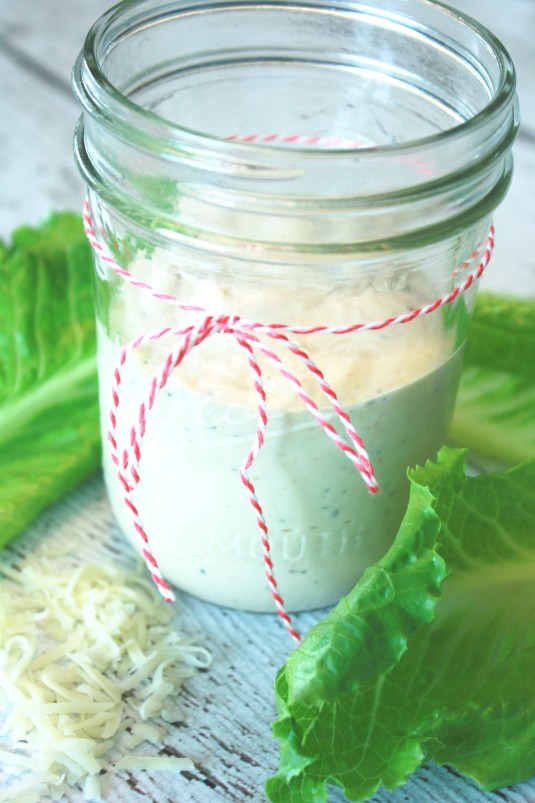
Store it in a wide-mouth mason jar — easy to shake before serving and keeps for a week in the fridge without the dressing absorbing any plastic taste.
Ingredients
- 1 cup mayonnaise
- ¼ cup egg substitute
- ¼ cup grated Parmesan cheese
- ½ tsp coarse ground black pepper
- ⅛ tsp salt (add more to taste)
- ½ tsp parsley flakes
- 2 tablespoons olive oil
- 1½ tablespoons lemon juice
- 1 tablespoon anchovies or anchovy paste
- 2 cloves garlic, minced
- 2 teaspoons sugar
- 2 tablespoons water
A Closer Look at the Ingredients
Every ingredient in this recipe is doing a specific job. If you’re curious about what each one contributes — or why leaving it out would hurt the final product — here’s the breakdown.
Mayonnaise
Mayonnaise is the base and the body of this dressing. It provides the creamy texture, the fat content that carries flavor, and the emulsification that holds everything together.
Full-fat mayo is the call here — light mayo will make a thinner, blander dressing. Duke’s and Hellmann’s both work well.
Do not use Miracle Whip; it has a sweet, tangy flavor profile that will throw off the entire dressing.
Egg Substitute
Traditional caesar dressing is built on a raw egg yolk emulsion — the egg yolk acts as a binder that keeps the oil and acidic ingredients from separating. Egg substitute (like Just Egg or the liquid egg products in the dairy case) gives you the same binding and richness without the food safety concern of raw egg.
If you’re comfortable with raw eggs, you can use one whole egg or just the yolk. The egg substitute version is what most restaurant-style bottled caesars use, and it’s what makes this dressing stable enough to keep for a week without breaking.
Olive Oil
Two tablespoons of olive oil add richness and a subtle fruity undertone. The oil also helps thin the dressing slightly so it coats the lettuce evenly rather than clumping.
You don’t need an expensive extra-virgin here — a mid-range olive oil is completely fine. What you don’t want is a neutral vegetable oil, which adds fat without adding any flavor.
Lemon Juice
Lemon juice is the acid that gives caesar dressing its signature brightness. It cuts through the fat of the mayo and oil and lifts all the other flavors.
Some caesar recipes use white wine vinegar or red wine vinegar instead — those work, but they give a sharper, more vinegary note. Lemon juice is more rounded and is what most restaurants (including Outback) use.
Fresh-squeezed lemon juice is slightly better than bottled, but bottled works fine in this recipe because the flavor gets mellowed by 12 hours of rest anyway.
Anchovy Paste
This is the ingredient people hesitate on and then become converts about. Anchovies — or anchovy paste — provide glutamates, which are the compounds responsible for the umami quality in food.
Umami is what makes something taste deeply savory and satisfying rather than flat. Without anchovies, your caesar dressing will taste like garlicky mayo.
With them, it tastes like caesar. Roland anchovy paste is widely available and keeps for months in the fridge after opening.
If you use whole anchovies from a tin instead, chop or mash them fine before adding so they fully incorporate.
Garlic
Two cloves of fresh garlic. Mince them as fine as you can.
The garlic mellows significantly during the 12-hour rest — what tastes sharp and raw right after mixing becomes soft and rounded by the time you serve it. If you skip the rest period, the garlic will overpower everything else.
If you let the dressing rest properly, the garlic becomes one of several flavors rather than the dominant one. Do not use garlic powder as a substitute — it won’t distribute the same way and the flavor profile is noticeably different.
Parmesan Cheese
Parmesan cheese adds salt, umami, and a sharp, nutty note that rounds out the dressing. The recipe calls for ¼ cup grated Parmesan — the canister kind (like Kraft) works, but if you want to level up, use freshly grated Parmigiano-Reggiano.
The real stuff has a more complex, less salty flavor and creates a slightly creamier texture in the dressing. Either way, grate it fine so it incorporates smoothly rather than leaving clumps.
Sugar
Two teaspoons of sugar might seem out of place in a savory dressing, but it’s the secret to why this tastes like Outback’s instead of a generic caesar. The sugar doesn’t make the dressing sweet — it rounds out the sharpness of the lemon juice and garlic and creates a more balanced, restaurant-style flavor.
Don’t skip it.
How to Make It
Add all ingredients to a mixing bowl. Beat with an electric hand mixer for at least 30 seconds until smooth and well combined.
Transfer to a jar or airtight container and refrigerate for at least 12 hours before serving.
That’s it. The hardest part is waiting.
A few notes on technique: dump everything in at once — there’s no need to add the oil slowly like you would for a traditional emulsified vinaigrette. The mayonnaise is already an emulsion, so it does the heavy lifting.
Beat on medium-high speed for a full 30 seconds. The dressing will look uniform and slightly thickened when it’s ready.
It will seem a little looser than you expect at this stage — that’s normal. It thickens considerably in the fridge.
How to Build the Caesar Salad
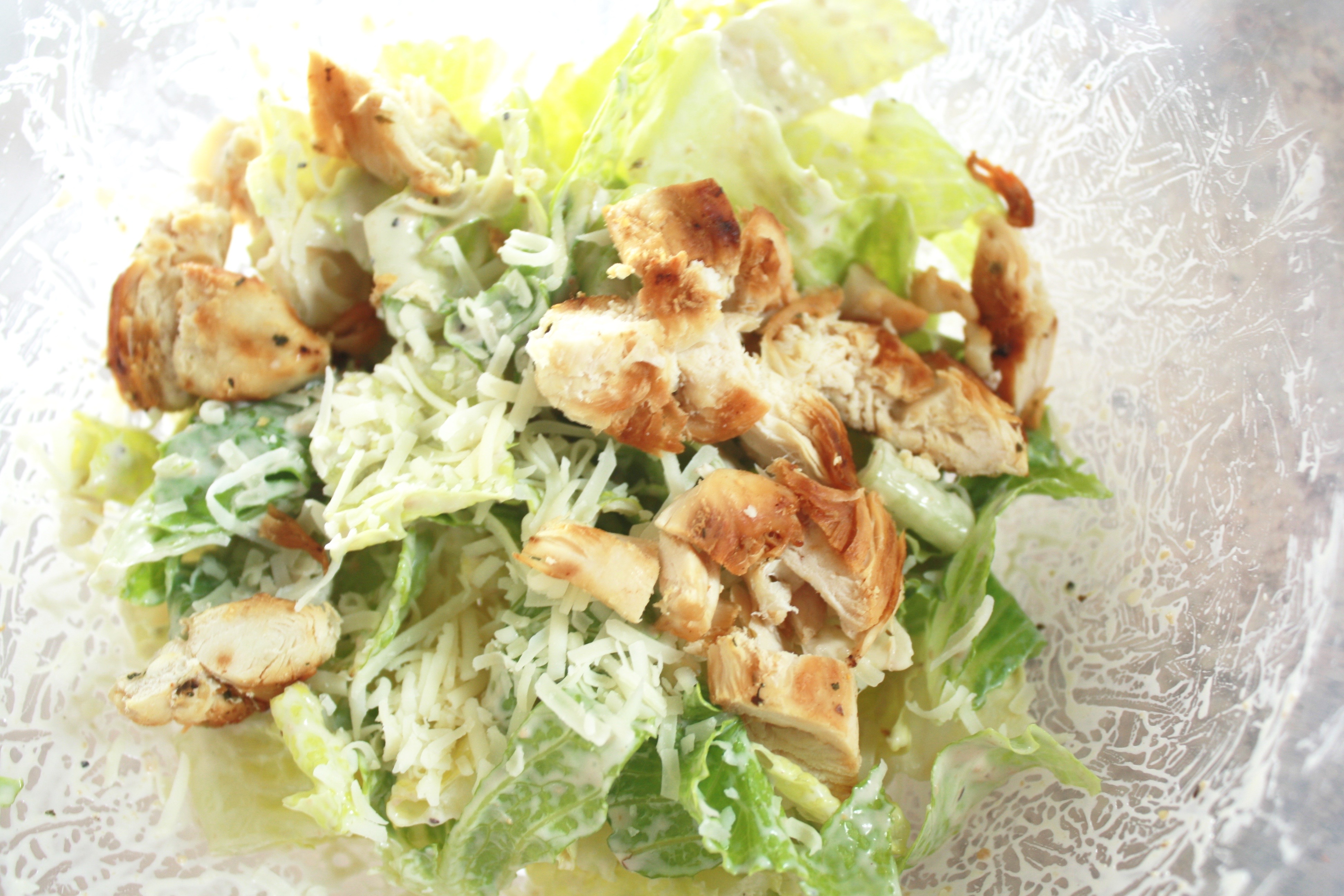
Romaine lettuce, Parmesan cheese, croutons, and this dressing. That’s the classic combination — don’t overthink it.
But the way you put it together matters more than most people realize.
The Lettuce
Romaine only. Iceberg is too watery and doesn’t hold up to the dressing.
Butter lettuce is too soft. Romaine has the right amount of crunch and structural integrity to stand up to a rich, creamy dressing without immediately wilting.
Chop or tear it into pieces that are big enough to be satisfying but small enough that you don’t need a knife at the table — roughly 1.5 to 2-inch pieces. Dry the lettuce well after washing.
Wet lettuce dilutes the dressing and makes everything soggy.
The Parmesan
Use it twice — some goes in the dressing, and you add more on top when you serve. Shaved Parmesan on top of the finished salad looks better than grated and gives you little pockets of concentrated cheese flavor.
For the topping, use a vegetable peeler to shave it directly from a wedge of Parmigiano-Reggiano if you have it. For the dressing, grated is fine.
The Croutons
Homemade croutons are genuinely better than store-bought and take about 10 minutes. Cube day-old bread (sourdough, Italian, or French bread all work), toss with olive oil and garlic powder, spread on a baking sheet, and bake at 375°F for 10–12 minutes until golden.
If you’re going the store-bought route, look for larger croutons — the small, hard, uniform ones tend to dissolve too quickly and turn to mush. You want something that holds up for a few minutes in the dressing before softening.
The Chicken
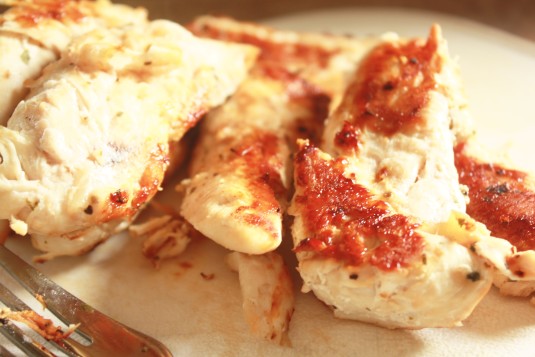
I season mine with Montreal Chicken Seasoning and cook it in a skillet over medium-high heat until it gets a good sear. Slice it thin across the grain so it’s easy to eat in a salad.
I like to add the chicken while it’s still a little warm — toss the salad first with the dressing and cold ingredients, then lay the chicken on top so the warmth from it slightly wilts the lettuce just at the edges. It’s a small thing but it makes a difference in the texture of the finished salad.
How Much Dressing to Use
Less than you think. This is a rich dressing and a little goes a long way.
For a large salad serving 4 people, start with about 3–4 tablespoons, toss thoroughly, taste, and add more only if needed. The goal is lightly coated lettuce — every piece should have some dressing on it, but no piece should be drowning.
Toss in a large bowl so you have room to really coat everything evenly, then transfer to serving bowls or plates.
For best results: toss and mix everything in a large bowl first, then divide into individual serving bowls. This gets the dressing evenly distributed rather than having half the salad overdressed and half underdressed.
How to Make a Caesar Wrap
The caesar wrap is one of those lunches that sounds simple and somehow always hits. It also uses up leftover chicken and dressing from the night before in the best possible way.
Start with the largest flour tortilla you can find — the burrito-size ones (10 or 12 inch) give you room to actually roll it without everything falling out. Warm the tortilla briefly in a dry skillet or microwave so it’s pliable and won’t crack when you fold it.
Lay the tortilla flat and add: a handful of chopped romaine, a few slices of grilled or sliced chicken, a tablespoon or so of dressing, shaved or grated Parmesan, and a small handful of croutons if you have them (they add crunch but break down after a few minutes, so eat the wrap fairly quickly). Some people also add a thin layer of the dressing spread directly on the tortilla before adding the filling — that’s good, adds extra flavor to every bite.
To roll it: fold the sides in first, then roll from the bottom up, keeping it tight as you go. If the wrap is overstuffed it’ll unroll on you — less filling than you think you want, rolled tightly, is better than a maximalist wrap that falls apart.
Cut it in half on a diagonal. Lunch solved.
This vs. Bottled Caesar Dressing
I get this question a lot: why bother making it from scratch when there are decent bottled caesars at the grocery store? Fair question.
Here’s the honest answer.
Most bottled caesar dressings — even the ones people swear by, like Ken’s Steak House or Cardini’s — are optimized for shelf stability, not flavor. That means more vinegar (sharper, less balanced), more salt, and stabilizers that give it a slightly gummy texture.
They’re fine. They’re convenient.
But they don’t taste like restaurant caesar.
The Outback Steakhouse caesar specifically has a creamier, more rounded flavor with more garlic depth and less sharpness than most bottled versions. That’s what this recipe replicates.
The egg substitute and mayonnaise base creates a richer mouthfeel, and the 12-hour rest lets the garlic mellow in a way that bottled dressings can’t replicate because they’re not built to be used the next day.
The other honest answer: this recipe costs less per serving than a good bottle of caesar dressing, it makes more, it keeps just as long, and it tastes significantly better. The five minutes of active work is worth it.
Where bottled dressing wins: true convenience, no planning ahead, no waiting 12 hours. If you need caesar dressing at 6pm tonight and didn’t plan ahead, buy the bottle.
If you’re planning a dinner for tomorrow, make this.
Helpful Tips
- Go easy on the dressing at first. This is a rich dressing — start with less than you think you need, toss, taste, and add more. It’s much easier to add than to fix an overdressed salad.
- Freshly grated Parmesan is better. Pre-grated Parmesan in the canister works, but freshly grated Parmigiano-Reggiano gives the dressing a creamier texture and more complex flavor. It’s worth the extra two minutes if you have a block of it.
- If the dressing is too thick after refrigerating, whisk in a small splash of water to thin it to your preferred consistency. Start with a teaspoon at a time — a little water goes a long way.
- Make it the night before. Seriously — 12 hours is the minimum. I’ve tried it at 4 hours and it’s fine, but at 12 hours it’s noticeably better. Make it before bed, use it for dinner the next day.
- Dry your lettuce thoroughly. Water on the lettuce dilutes the dressing and makes the salad watery at the bottom of the bowl. A salad spinner is ideal; paper towels work if you don’t have one.
- Add croutons last. Toss your salad fully dressed first, then add croutons right before serving. This keeps them from absorbing the dressing and going soft.
Storage
Store in a sealed jar or airtight container in the refrigerator for up to 1 week. Store it in a wide-mouth mason jar — easy to shake before serving and keeps for a week in the fridge without the dressing absorbing any plastic taste.
Give it a quick stir or shake before using since the ingredients may separate slightly as it sits.
The dressing actually continues to improve for the first 24 hours and then plateaus. Day 2 and Day 3 are often the best.
After day 5 or so, the garlic starts to get a little sharp again as the sugar and acid have less influence, so use it up within the week.
Frequently Asked Questions
Can I leave out the anchovies?
Technically yes, but the dressing won’t taste like Outback’s — or like authentic caesar dressing — without them. Anchovies are the flavor foundation of caesar dressing.
If you’re anchovy-averse, try anchovy paste first (it’s milder and less “fishy” than whole anchovies) before you skip it entirely. You might surprise yourself.
What can I substitute for egg substitute?
You can use 1 whole egg in the same quantity if you’re comfortable with it. The egg substitute is just the food-safe version.
Some people also use 2 tablespoons of sour cream, which adds a slight tang and similar richness. The result will be slightly different but still good.
Is this dressing gluten-free?
The dressing itself contains no gluten ingredients — just double-check your specific brands of mayonnaise and any sauce you add to the salad. The croutons on the salad are where gluten usually enters the picture — swap in gluten-free croutons or skip them entirely.
My dressing came out too thick. What do I do?
Add water a teaspoon at a time and whisk until you hit the consistency you want. The recipe already calls for 2 tablespoons of water, but refrigeration thickens it further.
Start with 1 teaspoon of additional water, stir, and check — you can always add more but you can’t take it out. If you accidentally add too much water and the dressing is too thin, whisk in a small spoonful of mayonnaise to bring it back.
My dressing came out too thin. What do I do?
First, check whether it’s actually rested for 12 hours — the dressing thickens significantly during refrigeration. If it’s fully rested and still too thin, whisk in an extra tablespoon of mayonnaise.
You can also add another tablespoon of grated Parmesan, which will absorb some liquid and add body. Thin dressing usually means it either didn’t rest long enough or got a little too much water added.
The dressing is too salty. Can I fix it?
Caesar dressing is naturally on the salty side because anchovies and Parmesan are both salty ingredients. If your dressing is too salty, the easiest fix is to add a little more mayonnaise and a small squeeze of lemon juice to balance it.
Also check your Parmesan — freshly grated Parmigiano-Reggiano tends to be less aggressively salty than the canister variety. Next time, hold back on the added salt (the ⅛ tsp in the recipe) until after you taste it.
The dressing isn’t tangy enough. What am I missing?
Add more lemon juice, ½ teaspoon at a time, until you hit the brightness you want. Taste after each addition.
You can also add a tiny splash of white wine vinegar if you want a sharper edge. The sugar in this recipe deliberately tones down some of the acidity — if tangy is your priority, reduce the sugar slightly (try 1 teaspoon instead of 2) next time you make it.
Can I make this dairy-free?
You can omit the Parmesan or substitute a dairy-free Parmesan alternative. The flavor won’t be identical — Parmesan adds a lot of the savory depth — but the dressing will still work and taste good.
The rest of the ingredients are naturally dairy-free.
Can I use this as a dip?
Yes — especially with the thicker consistency after it’s been in the fridge. It works as a dip for raw vegetables, as a spread on sandwiches and wraps, or as a dipping sauce for chicken strips.
It’s particularly good as a dip for grilled artichokes if you want to take it somewhere unexpected.
Related Recipes