
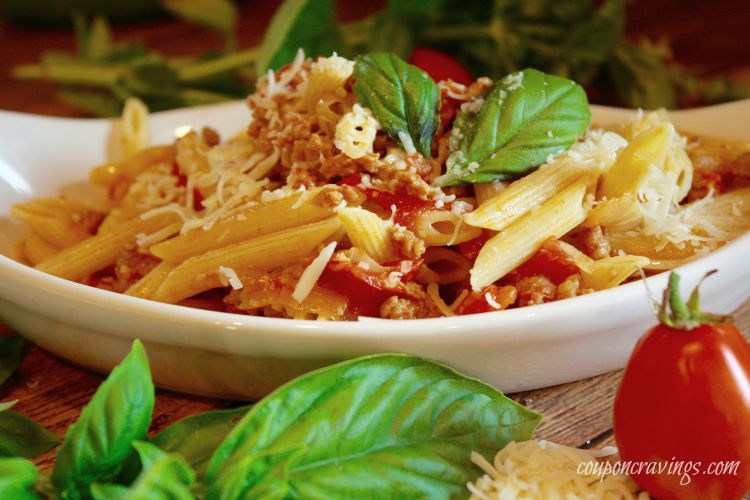
Italian Sausage Pasta with Fresh Tomato, Basil and Pecorino
Every August, when all of my tomato plants are laden with ripe tomatoes, I find myself making this recipe. It’s easy, fast, and celebrates the absolute BEST tomatoes you’ll EVER TASTE in your life.
I love the pecorino romano cheese in this dish. If you’re not a pecorino fan, use whatever melty cheese you’d like.
Fresh, ripe tomatoes are critical, releasing their own juices and coating the penne lightly.
Why This One Is Worth Making
- It takes less than 30 minutes to prepare.
- It’s a one-skillet meal.
- It’s summery, easy, and perfect when tomatoes are super-ripe.
- It balances well with starch, meat, and fresh veggies.
- The two minute cook time for the tomatoes is KEY, so follow directions.
- Be sure to get everything done at the same time by cooking the penne while you’re cooking the sausage. You want to dump the penne right in and toss, because nobody likes cold penne.
Pecorino, not Parmesan. Pecorino Romano is much sharper and saltier than Parmesan.
It holds up better against the strong flavor of the sausage. Some of the pecorino is added to the pan to melt into the food, some is sprinkled over the top.
One skillet after the pasta pot. This recipe is simple, requiring only one large nonstick skillet after cooking the pasta.
What to Know Before You Start
This recipe doubles easily. All of the quantities increase appropriately.
Read through the recipe once or twice and assemble all of the ingredients before starting. Once the sausage hits the skillet, things will be moving along fairly quickly.
Chop the tomatoes, slice the onions, mince the garlic and tear the basil and put it in a small bowl before heating up the pan. You’ll have about four minutes of action-packed steps after the pan is hot, until you add the garlic, during which you’ll be chopping and adding ingredients to the pan.
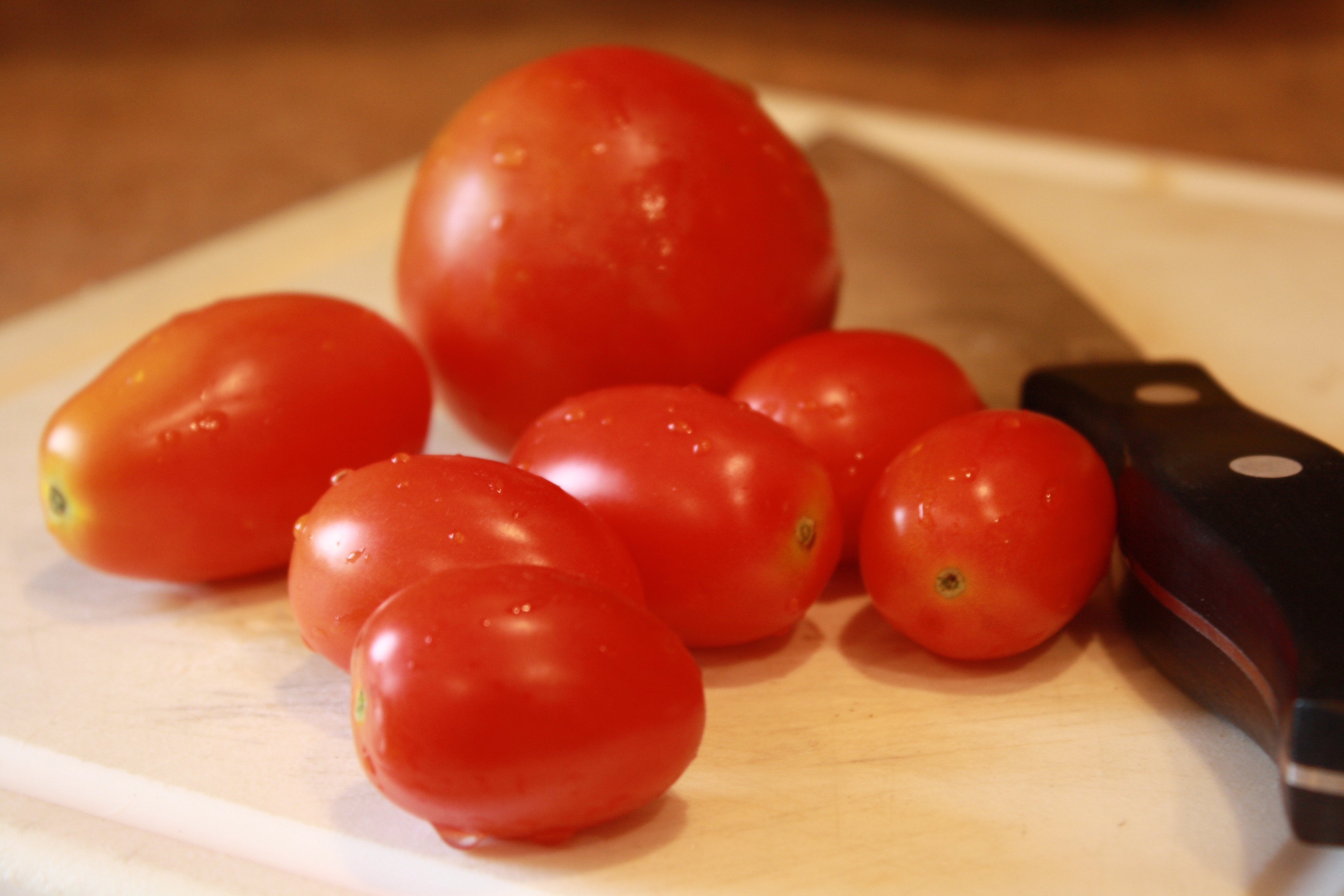
Use ripe, fresh, soft, delicious, summertime tomatoes. If you live somewhere that gets nice, ripe, summertime tomatoes, use them in this recipe.
There’s no substitute. The amount of tomatoes seems like a lot, but they’re cooked down quite a bit.
Do NOT use sad, gray, mealy tomatoes you find at the grocery store in January. If you don’t have access to great fresh tomatoes in summertime, drained canned tomatoes are definitely better than sad, gray, mealy tomatoes you find at the grocery store in January.
Penne Rigate is best for this recipe. “Rigate” means ridged, which helps hold on to all of that wonderful sauce.
Ingredients
- 8 oz penne pasta, uncooked weight (see notes)
- 8 oz sweet italian sausage, casings removed, see notes
- 1 cup onion, “vertically sliced”
- 2 tsp olive oil (see notes)
- fresh, grated pecorino romano cheese to serve
- fresh, ground pepper to serve
6 Tbsp Pecorino Romano cheese, divided, preferably freshly grated yourself instead of using pre-grated*
How to Make It
Step 1: Start cooking the pasta. Bring a large pot of water to a boil over high heat.
Add pasta and cook according to directions on package. We wouldn’t salt the water because the Pecorino will give this dish plenty of saltiness.
You want the pasta to be finished at the same time the ingredients in the skillet are finished, so start with an eye towards the goal. Once cooked, drain pasta and set aside.
Step 2: Cook the sausage and onion. While pasta is cooking, heat a drizzle of olive oil in a large nonstick skillet over medium-high heat.
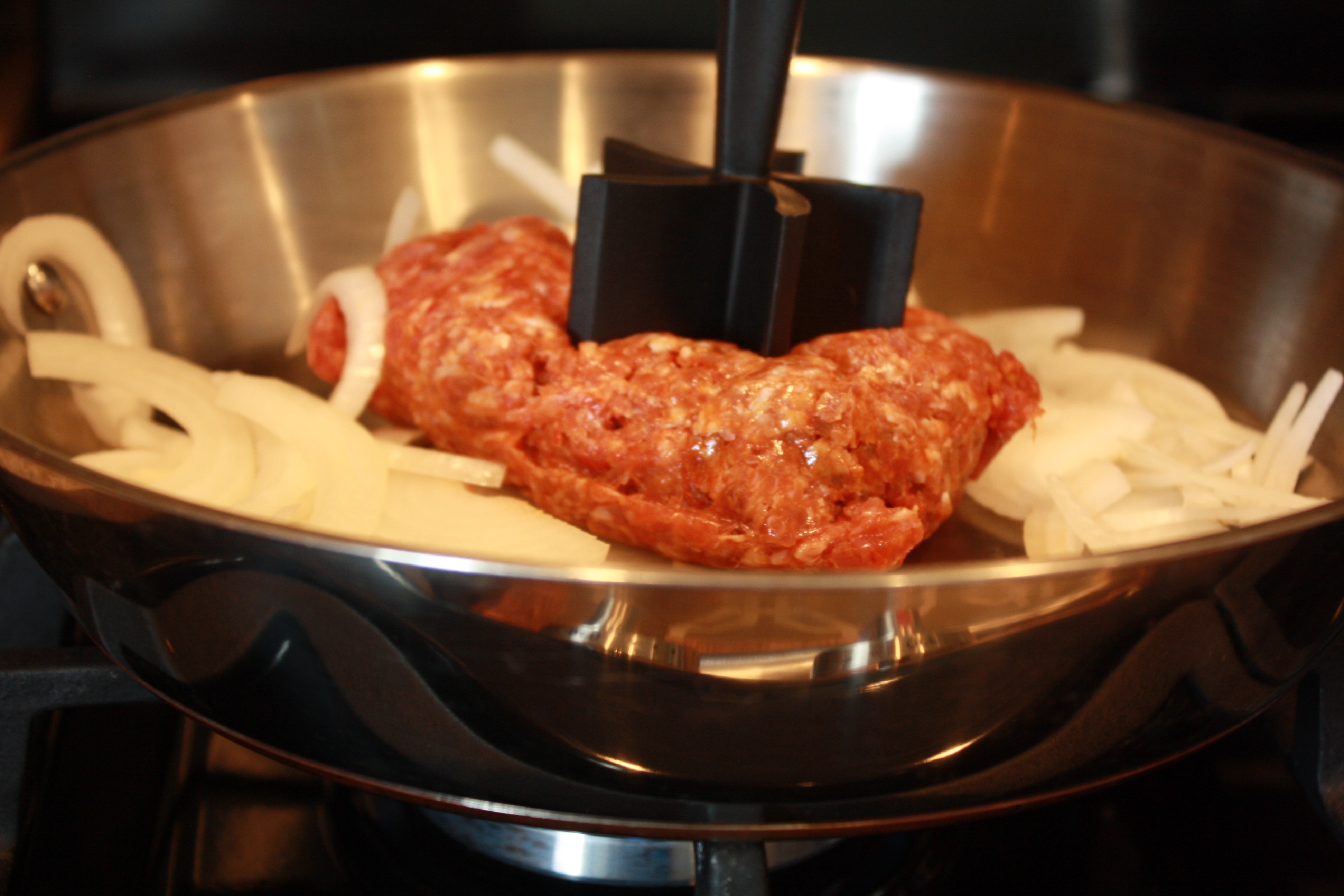
Add sausage, removing meat from casings if sausage comes in links or breaking into smaller pieces if sausage is pre-ground, and onion. Stir often and cook for about 4 minutes, until sausage is cooked through and onions are softened and translucent.
Step 3: Add garlic. Add garlic to skillet and stir constantly for about 2 minutes, making sure garlic doesn’t burn and become bitter.
Garlic should be nice and fragrant at this point.
Step 4: Now add the tomatoes. Stir them into skillet and cook for another 2 minutes.
Tomatoes should be starting to soften and give up their juice.
By now, all of that juicy tomato juice will have released and it’ll look like there’s water in the pan. This is what’s going to coat the pasta.
Don’t be alarmed.
Step 5: Remove the skillet from the heat.
Incorporate the drained pasta, 2 tablespoons Pecorino Romano cheese and season with salt and pepper. Stir to combine.
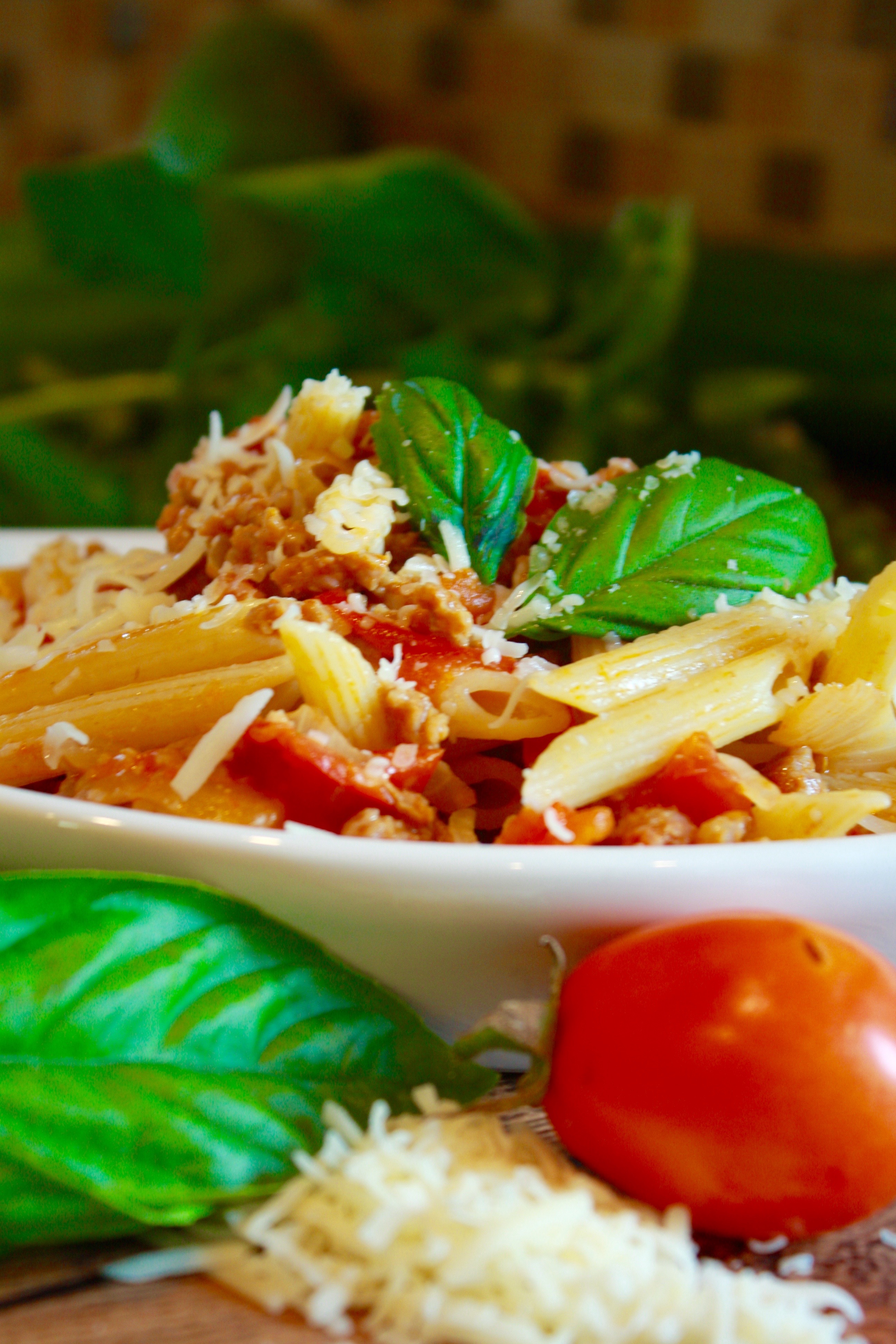
We don’t want to add the drained pasta to a hot pan. The residual heat is all we need to warm it and melt the Pecorino to bind it all together.
Adding the drained pasta to a hot pan will make it overcook and get a little mushy.
Step 6: Complete and Serve – Portion into bowls
From my blog post… Top each bowl with torn basil. I also like to add another tablespoon of Pecorino to each bowl right before serving it.
Serve immediately and enjoy.
- We like to use whatever type of tomatoes are in season and look delicious. We’ve made this recipe with halved cherry tomatoes, rough-chopped roma tomatoes, and halved garden tomatoes. You can’t go wrong.
- Freshly-grated cheese will melt much better than pre-grated cheese, which is coated in substances to keep it from clumping together and therefore tends to be drier.
A Tool That Actually Helps
I know it’s not absolutely necessary to have this tool, but I’ve had this meat chopper for years. It does make breaking up the sausage into small, evenly-sized pieces so much easier than banging around with a wooden spoon.
It’s very sturdy and well-made and I’m happy to recommend it. You can mince ground meats of all kinds with it.
It’s a definite timesaver.
Helpful Tips
Pecorino Romano cheese is quite salty, so use the 1/4 teaspoon amount as a guideline, then taste the sausage/tomato mixture for seasoning. You may not need any additional salt at all.
I recommend using freshly grated Pecorino over the stuff from the green can. If you absolutely hate grating hard cheeses, try getting the Pecorino already grated at the deli counter.
It’s not as good as freshly grated, but better than the stuff from the green can.
If you prefer hot Italian Sausage over the sweet variety, feel free to use it here. Nothing else needs to change and the tomatoes and basil balance the spiciness well.
The trick to this recipe is NOT boiling down those tomatoes into a cooked sauce. They only cook for 2 minutes, tops, and are ready when they are barely cooked – still juicy and soft, but still in one piece.
That’s what gives this recipe its fresh summer time vibe.
Rather than slicing the onion, cut them vertically from the root to the tip into strips. The onion will better melt into the dish.
If sliced, the onion will remain in ring form.
Serving Ideas
This recipe makes a complete and hearty meal all on its own. If you’d like to add an accompaniment, a simple green salad with lemon and olive oil dressing would be great.
Crusty bread is always welcome for mopping up that yummy tomato juice left in the bottom of the bowl. Right now zucchini is everywhere.
Try serving alongside sauteed or roasted zucchini.
Variations
Hot Sausage, feel free to substitute hot italian sausage for the sweet italian. Follow the recipe as stated.
Add Spinach – Once you’ve taken the tomato/sausage pan off the heat add a few handfuls of baby spinach. Toss with tongs until spinach is evenly dispersed.
The residual heat in the pan will wilt the spinach. Then proceed to add the pasta.
Spicy – If using sweet italian sausage add a 1/4-1/2 tsp of crushed red pepper when adding garlic for a little spice.
Different Pasta – Rigatoni is a great shape to use in this recipe but any shape besides long pastas will do well here, such as fusilli or farfalla. Long pastas like spaghetti or angel hair won’t marry up as well with the sausage since it will be in crumbs.
Substitutions – Parmesan cheese could be used in place of the Pecorino. It’s not quite as salty or strong so you’d probably use a little more.
Can I use canned tomatoes instead of fresh? Yes, use one 14.5 oz can of diced tomatoes, drained.
It’s not the same, but it can be done in a pinch.
Storage, Make-Ahead, and Leftovers
Make Ahead – You can cook the sausage, onion, garlic, and tomato portions of the recipe up to 2 days in advance and keep it in the refrigerator. When ready to serve simply cook the pasta and toss everything together.
Leftovers will last about 3 days covered and stored in the refrigerator. Each day they sit the pasta will continue to soak up that delicious juice.
To reheat leftovers use medium-low heat in a skillet adding a splash of water to help thin out the pasta and loosen up the juices. You can also nuke in the microwave, covered, on medium.
Either way, I’m sure you’ll want to top it off with more cheese and basil.
Freezing is not recommended since pasta doesn’t freeze well and neither do fresh tomatoes.
Frequently Asked Questions
Can I use sweet Italian sausage instead of hot?
Yes, you can. Sweet Italian sausage is very similar to hot, since both are flavored with garlic, herbs, fennel.
The difference is that hot is flavored with crushed red pepper, sweet is not. They’re interchangeable, because meat/fat ratio and cooking procedures are identical.
Can I prepare ahead of time?
The sausage/tomato mixture keeps well in the refrigerator. You can easily re-heat in a large skillet then boil the pasta and assemble.
You could very well make this recipe when entertaining by serving guests bread, wine, appetizers, etc., then when they’re seated, you’d be able to make this in about 10 minutes, depending on the number of pasta servings. Finish with fresh basil and cheese.
Do I need to remove sausage casings?
You can, if you like. Simply use a sharp paring knife to slit the casing lengthwise and remove.
You can also purchase sausage without casing, saving yourself this step. Or simply squeeze the meat into the pan, discarding the casings.
Can I use Parmesan instead of pecorino Romano?
You can use Parmesan if Pecorino Romano is not available or if you simply prefer Parmesan. Pecorino Romano is sharper, saltier which makes a nice contrast with the sausage.
However, Parmesan will be delicious with this pasta. You may want to adjust other salty ingredients accordingly since Parmesan is not as salty as Pecorino Romano.
Do I need to add salt to the pasta water?
This recipe does not call for adding salt to the pasta water since Romano cheese is pretty salty. However, if you prefer cooking your pasta in salted water, omit or reduce the amount of salt called for at the end of the recipe (1/4 tsp).
Taste before adding the amount of salt indicated in recipe.
Can I make this recipe during the winter?
If you can get really good tomatoes in your area, absolutely. However, generally speaking, tomato quality is not that good during the winter.
Using tomato sauce would make a delicious, easy, winter skillet pasta, but would not technically be a fresh, summer pasta.
Italian Sausage Pasta with Fresh Tomato, Basil and Pecorino
Ingredients
- 8 ounces uncooked penne pasta
- 2 teaspoons olive oil
- 8 ounces sweet Italian sausage casings removed
- 1 cup vertically sliced onion
- 2 teaspoons minced garlic about 2 cloves
- 1 1/4 pounds fresh summer tomatoes chopped into 3/4-inch pieces
- 6 tablespoons fresh Pecorino Romano cheese grated and divided
- 1/4 teaspoon salt
- 1/8 teaspoon black pepper
- 1/4 cup fresh basil leaves torn
Instructions
- Cook penne according to package directions, omitting salt. Drain and set aside.
- Heat a large nonstick skillet over medium-high heat. Add olive oil and swirl to coat.
- Add sausage and sliced onion. Cook 4 minutes, stirring and breaking up sausage, until no pink remains and onion is softened.
- Add garlic and cook 2 minutes, stirring constantly, until fragrant.
- Stir in tomatoes and cook 2 minutes, just until they begin to soften and release their juice. Remove from heat.
- Add drained pasta, 2 tablespoons Pecorino Romano, salt, and pepper. Stir to combine.
- Divide into bowls. Top each serving with remaining Pecorino Romano and torn basil. Serve immediately.