
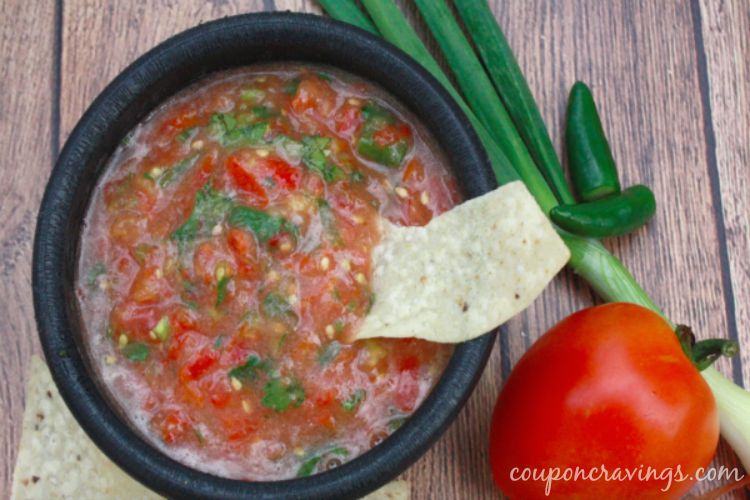
Homemade Salsa with Fresh Ingredients
Fresh ingredients take salsa to another level. This salsa with tomatoes, jalapeños, cilantro, and cumin is amazing on chips, tacos, grilled meats, eggs, you name it.
The salsa has a hint of smoke from the cumin and has just the right amount of heat.
My go-to salsa recipe
Homemade salsa has been in rotation in our house for many, many years now. I could eat it everyday.
Guests can’t get enough and are begging for the recipe before they’re done with one bowl. This salsa is quick to make and goes from counter to fridge in a flash.
Homemade salsa beats jarred salsa hands down. You can’t beat the fresh and delicious flavors of summer tomatoes.
The Blender Is Doing More Work Than You Think
This salsa recipe calls for blending because I love a pourable salsa that clings to chips and coats everything. Restaurant style if you will.
Hand chopping the vegetables and combining makes more of a pico de gallo and I’m not crazy for the water that separates and pools on the bottom of the dish when using a chopped salsa. You can make it with a food processor, but I find the results a bit uneven and it ends up chunkier than I like.
Blend for just about 15 seconds for perfect salsa. Thirty seconds is about as long as I’ve gone and it foams up, which I find less attractive but does not impact flavor.
Tomato Quality Is the Whole Ballgame
This is a simple salsa recipe so quality ingredients are essential. During the height of summer is prime salsa making time for me as tomatoes are at their ripest.
I’ve been known to make salsa when I stumble upon a spectacularly ripe bunch of tomatoes though.
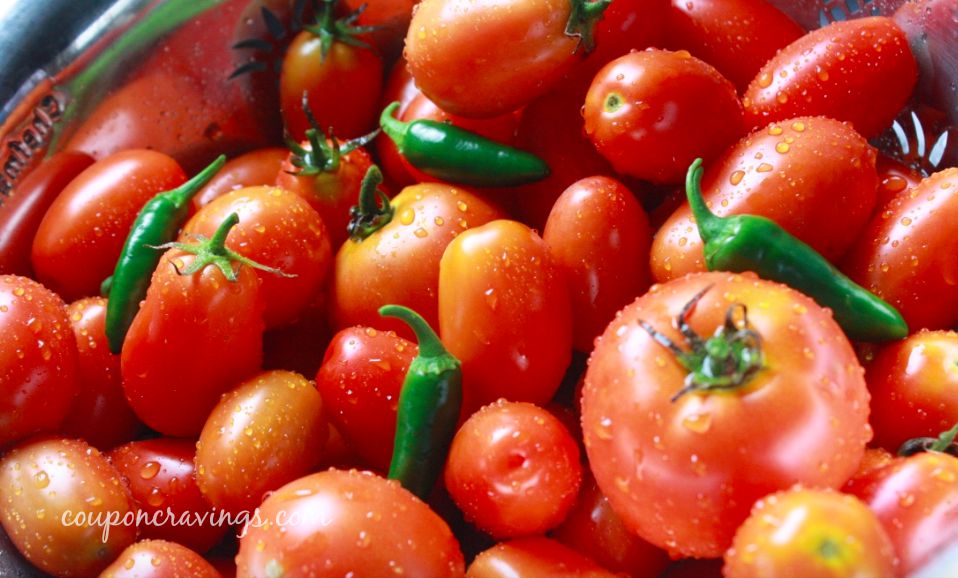
Roma and slicer tomatoes make the best combination. Romas offer great structure and slicers are juicier and add some depth.
Use what’s available or what you like.
Make It the Night Before If You Can
Homemade blender salsa is amazing. It’s also even more amazing after it’s had some time in the fridge.
If you’re making it for a party, assemble it the night before to lighten your workload and give the salsa time for all of its flavors to mingle. The garlic, the cumin…they’re all so much more prominent the next day and take away that raw, just-blended flavor.
Thirty minutes helps, but overnight is better – trust me, you’ll be kicking yourself if you don’t have time for that overnight chill because this salsa will leave you thinking that you snuck some salsa straight outta a restaurant.
Every Ingredient and What to Know Before You Add It
Tomatoes
Tomatoes are the basis of your salsa so you want to make sure you’re starting with good ones – there’s no amount of seasoning that’s going to fix bland tomatoes. I’ve used fresh before and it’s perfectly fine if you’re lucky enough to have really tasty tomatoes on hand – if your tomatoes are anything less than perfection, use a 28 ounce can of whole tomatoes.
Canned tomatoes might not sound glamorous but it’s a game-changer. Use all of them, including the juice, for a darker colored salsa with a more intense tomatoey flavor.
How many tomatoes do you need? Well, your blender should be about 3/4s full which will vary from blender to blender.
For mine, that’s about 16-20 medium tomatoes. Roma tomatoes are my personal preference because they’re meatier and have less water which results in a better textured salsa but it’s fine to use whatever’s available.
No need to remove seeds and skin but you can carve out any gnarly looking stems.
Jalapeño
Remove the seeds from the jalapeño if you’re going for a milder salsa. Keeping the seeds will result in a medium level of heat.
Two jalapeños, whole, will make it downright hot. I love spicy food up to a certain point, so I typically leave the seeds in but take them out if I know the salsa is going to be consumed by folks who can’t handle much heat.
How hot do you like your salsa? I like a little kick, so I love to use serranos in homemade salsa.
You can totally sub jalapeno peppers for serranos, or vice-versa. Serranos are “REALLY” hotter than jalapeno peppers so be mindful of this fact.
Personally, I prefer starting with jalapenos and adding serranos for extra heat as needed. It’s hard to take the heat out once they’re all blended.
If you don’t like ANY heat, use a green bell pepper instead of serranos or jalapeno peppers.
Green Onions and Yellow Onion
Instead of green onions, you can use yellow onion in this recipe. However, I love the combo of green onions AND yellow onion in homemade salsa.
The green onions bring a nice brightness to salsa, but yellow onion has a richer, deeper flavor. Cut your yellow onion into quarters or halves.
If you’re one of those “anti-cilantro” people, then fear not. Substitute an equal amount of flat-leaf parsley instead of cilantro in this recipe.
Cilantro does have a very distinct taste so it’s a matter of personal preference. Parsley is a perfectly acceptable sub if you don’t care for cilantro or if your bunch of cilantro tastes a little soapy.
Use just leaves, not the stems.
Substitutions and tips for salsa
Garlic: Fresh garlic is best for salsa, but jarred, minced garlic is okay if needed. Just know that the flavor will be a little flatter with jarred minced garlic.
No need to chop the garlic. Just toss in two or three cloves.
Lime juice: Homemade salsa is SO much better with fresh-squeezed lime juice instead of the stuff from a bottle. Cut up to two limes in half and juice them, or use a citrus press if you have one, until you get two tablespoons of juice.
Cumin: Do NOT skimp on the ground cumin. It adds a lovely, earthy depth of flavor.
This is the step that will take your salsa over the edge and make it taste like it belongs on a menu instead of your blender. If you’ve been hoarding your spices since 2021, it’s time to say goodbye.
Invest in fresh spices for best results.
Sugar and salt are totally personal. Use them to finish off your salsa.
How to Make Homemade Salsa
Step 1: Prep your tomatoes
Chop tomatoes into small pieces. It’s OK to leave the seeds and skins on.
Step 2: Add everything else
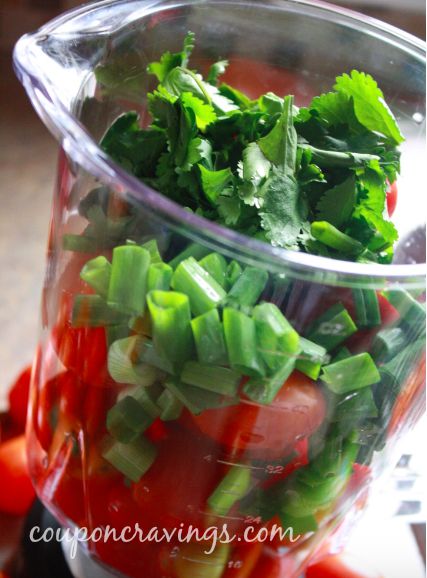
Fill blender 3/4 full. You can add all ingredients at once; they don’t need to be layered.
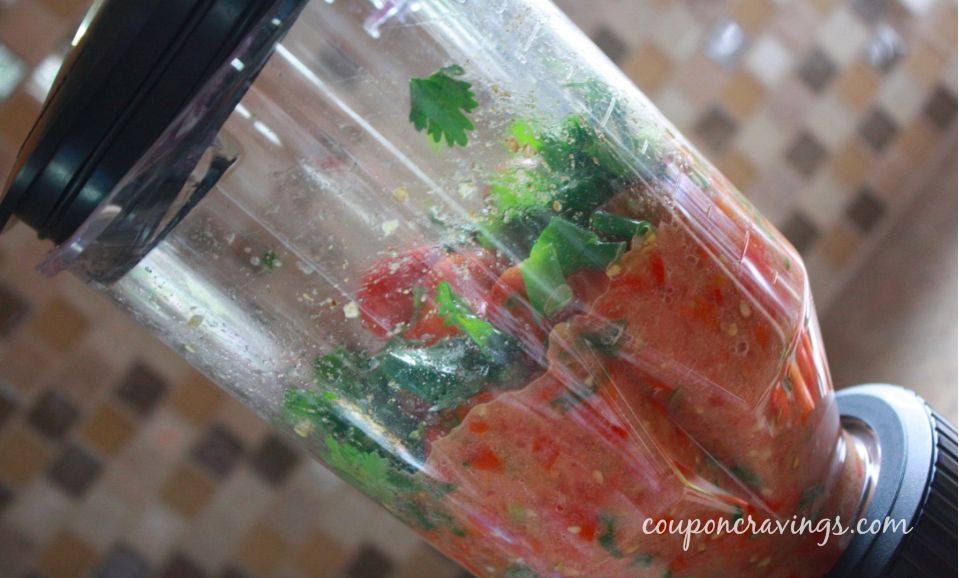
Blend until smooth. If your blender is like mine and is an old, inexpensive blender, it’s best to hold the top down, trust me, the last thing you want is a burst of tomato juice all over the blender and possibly you.
A high-end blender should prevent this, however. I’ve made this recipe in an inexpensive, older blender as well as a fancy Nish blender.
They’ve both worked great.
Step 3: Blend
Add all ingredients to blender and blend for about 15-20 seconds, until smooth and pourable. Pulse a couple of times if you like a chunkier salsa.
Step 4: Taste and adjust
Add sugar and salt and blend again for a few seconds. Start with only about 1/2 teaspoon of each.
It’s important to season to your own tomatoes. Depending on the time of year, some tomatoes are more acidic (require more sugar) than others.
Others are sweeter and may not need any additional sugar. Taste salsa after adding the seasonings and add more or less sugar/salt as necessary.
Remove lid and stir to combine. Taste and adjust seasonings if necessary.
It’s very easy to under-salt salsa with this recipe, make sure to add more if necessary. If the salsa seems runny, try adding a little more salt and/or a little more lime juice.
If it’s too tart, add a little more sugar. If you like your salsa really spicy, add the seeds from the reserved jalapeño into the blender and blend for about 5 seconds.
Step 5: Refrigerate before serving
Refrigerate salsa until ready to serve. Serve with chips and enjoy.
TIP: When tasting, use a chip instead of a spoon to get a truer sense of the salsa’s saltiness, salted chips will mask some of the salsa’s saltiness.
If you find that your salsa is a bit more watery than you’d like, try leaving it in the refrigerator (uncovered) for 30 minutes, as it will thicken a bit.
A Few Things That Actually Make a Difference
I’ve been making this recipe for years now, and I’ve tried tweaking it here and there, but these are the things that make the biggest difference to me:
The quality of your tomatoes. Using poor-quality tomatoes will result in a pretty bland salsa.
And tomatoes that aren’t quite ripe will make the salsa a bit bitter. So use good tomatoes!
Chilling the salsa. You can serve this salsa at room temperature, but I prefer it chilled, both for its consistency and its taste.
Give it at least 30 minutes in the refrigerator and you’ll be happy. Overnight, if you can, is best.
If you find that you need to pour off some of the liquid, which is more likely to happen when you’re making salsa with super-juicy summer tomatoes, that’s OK, but know that you’re pouring off some of the flavor. Try chilling it first (see above) because that should help.
This salsa recipe was written with blender-in-mind, so I recommend making at least a double-batch, which is how I make it. It freezes well.
Make salsa throughout the summer and freeze it and you’ll be salsa’d out until at least October.
How Long Homemade Salsa Keeps and How to Freeze It
The salsa will keep for five to seven days in an airtight container in the fridge. It’ll taste best on days two or three, as the flavors have had more time to meld.
Starting on day five, it will begin to taste less fresh.
Can I freeze salsa?
Yes, salsa freezes well! Spoon into freezer-safe containers leaving room for salsa to expand as it freezes, cover, and freeze for up to 3 months.
It’s handy to freeze in 1 cup portions so you’re not defrosting more than you need. One cup is plenty for a few chips and salsa appetizer or a small crowd.
To serve, defrost in refrigerator overnight. Expect salsa to be a little thinner when thawed.
Stir well and taste for seasoning before serving.
Homemade Salsa FAQ
Can I use canned tomatoes instead of fresh?
Substitute 1 28 ounce can whole tomatoes (undrained) for fresh tomatoes. Salsa won’t have the same bright flavor as salsa made with fresh, summer tomatoes but it’ll be a worthy stand-in, especially when compared to flavorless, mealy grocery store tomatoes in the winter.
How do I make it less spicy?
For a milder salsa, remove the white membranes and seeds from the jalapeño before chopping. For extra-mild salsa, skip the jalapeño and add a small amount of green pepper.
If you like the idea of sweet salsa, add some sugar after you’ve blended everything else together.
How do I make it spicier?
For a spicier salsa, leave the seeds in the jalapeño or use additional jalapeños. For a seriously hot salsa, substitute serrano pepper for jalapeño or stir in some hot sauce after blending salsa, and you can use your favorite hot sauce as-is; it won’t change the salsa’s flavor.
Can I make this without a blender?
I like the consistency of salsa blended in a blender because it resembles the pourable, smooth salsa served at Mexican restaurants. You can make salsa in a food processor if you don’t have a blender or want chunkier salsa.
Pulse ingredients in food processor, taking care not to over-process salsa (over-processing causes foaming). Some folks even prefer salsa made without blender or processor; you can dice or mince vegetables by hand and enjoy a tasty, pico de gallo style salsa.
Why does my salsa taste flat?
It’s possible your tomatoes were a little acidic, so salsa could use a pinch of sugar to balance the acid. Stir in a little sugar and taste.
Alternatively, you could add a little more lime juice, salt, or garlic.
Can I water-bath can this recipe?
I have not tested this recipe to see if it’s safe to water-bath can. Different batches of tomatoes have different ph levels and different proportions of the ingredients could affect whether it’s safe or not, so I’m unable to say that it is.
For salsa, your safest bet for storing it at home is freezing it. But, if you do wish to can salsa, I’d look into guidelines from a trusted resource like the National Center for Home Food Preservation for a recipe that’s been tested to make sure it’s safe.
What if it’s bland?
Bland salsa is most often due to one of three things: not enough salt, not enough lime juice or not ripe enough tomatoes. Give your salsa an additional pinch of salt and squeeze of lime and stir to see if that helps.
Keep in mind though, no amount of seasoning will mask tomatoes that have no flavor.
How many Roma Tomatoes is enough?
Since tomato sizes vary, there’s no definite answer to this. It should fill the blender about ¾ of the way.
For me, that is about 16 to 20 medium Roma tomatoes but if yours are large slicer tomatoes, you’ll probably need less.
Other Dips and Salsas Worth Making
- Canned Tomato Salsa, skip off-season produce with a tasty alternative
- Corn and Black Bean Salsa, a heartier salsa that’s great as a dip or side
- Corn and Black Bean Salsa with Avocado, comes together in about 10 minutes
- Chili’s Skillet Queso, make this too and you’re all set for a great spread of chips and dips!
Homemade Salsa with Fresh Ingredients
Equipment
- Blender
Ingredients
Ingredients
- 16-20 medium tomatoes or enough to fill a blender about three-quarters full
- 1 jalapeno seeds removed for mild heat
- 4 green onions cut into 1-inch pieces
- 1/4 to 1/2 yellow onion
- 1 handful fresh cilantro leaves
- 2-3 cloves garlic
- 1 teaspoon ground cumin
- 2 tablespoons fresh lime juice
- 1/2 teaspoon granulated sugar
- 1/2 teaspoon salt plus more to taste
Instructions
Instructions
- Rinse the tomatoes and roughly chop them into halves or quarters. Add enough tomatoes to fill the blender about three-quarters full.
- Add the jalapeno, green onions, yellow onion, cilantro, garlic, cumin, lime juice, sugar, and salt.
- Blend on medium until the salsa reaches your preferred texture, about 15 to 30 seconds.
- Taste with a chip and adjust with more salt, lime juice, sugar, or jalapeno seeds as needed.
- Transfer to a covered container and refrigerate for at least 30 minutes before serving.