Easy Chicken Tetrazzini
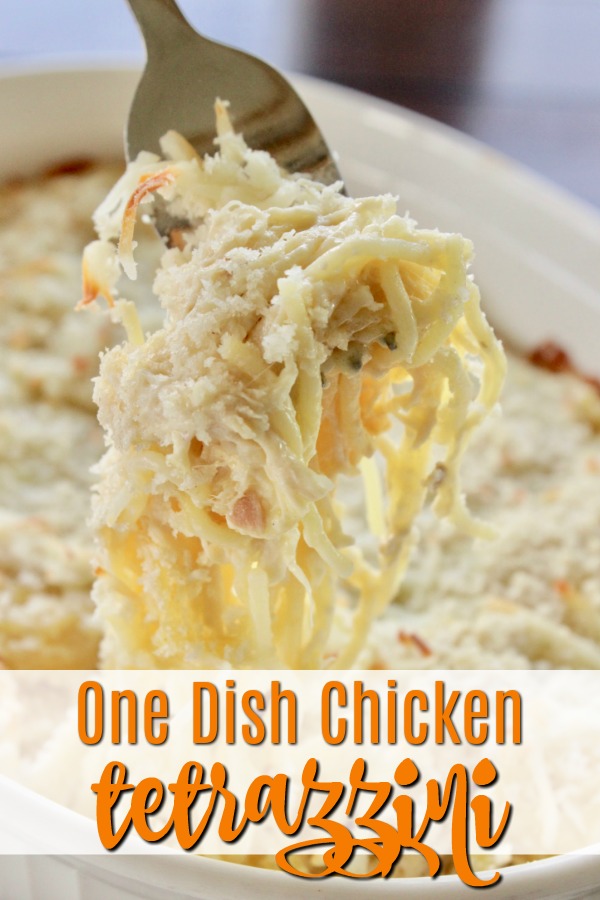
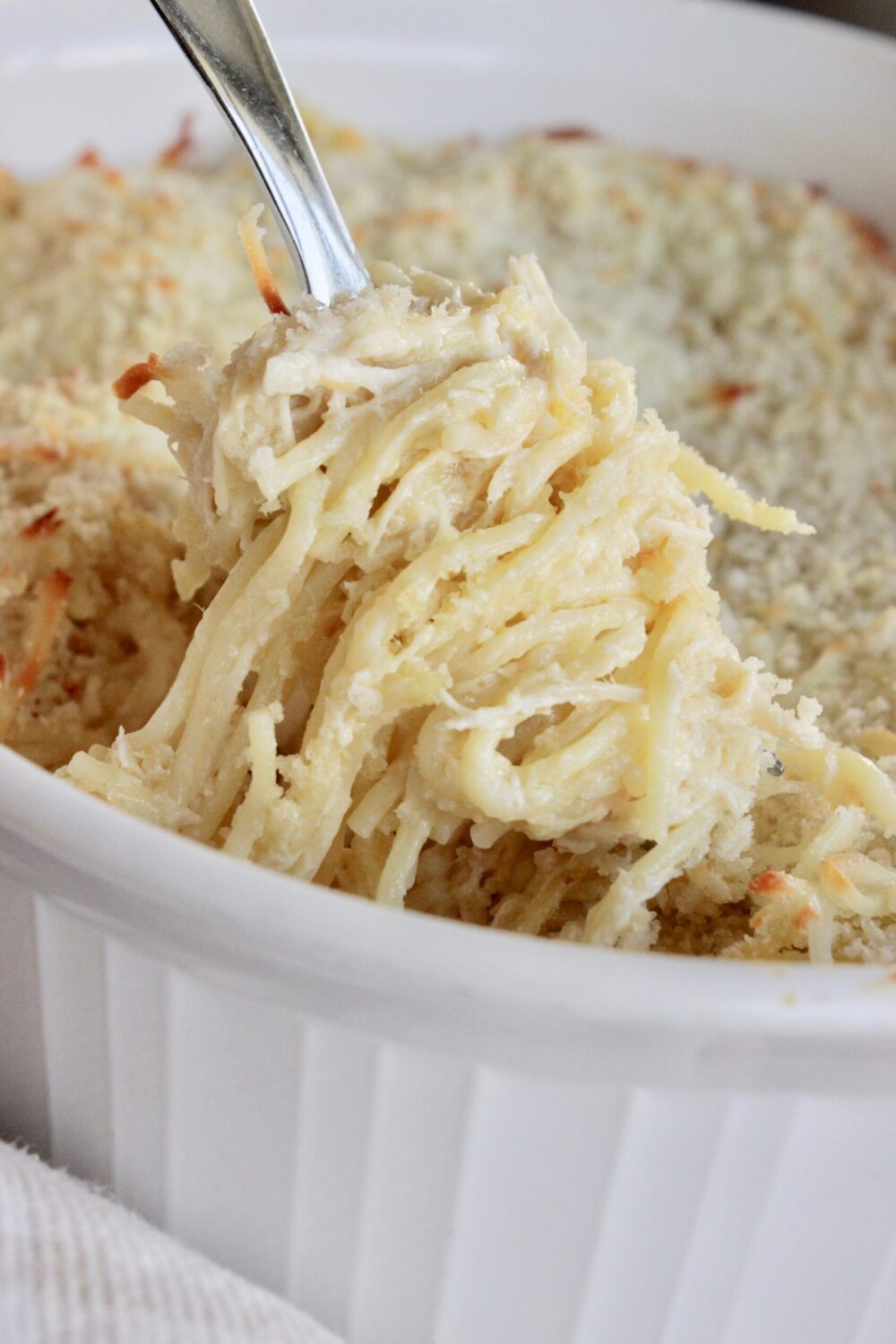
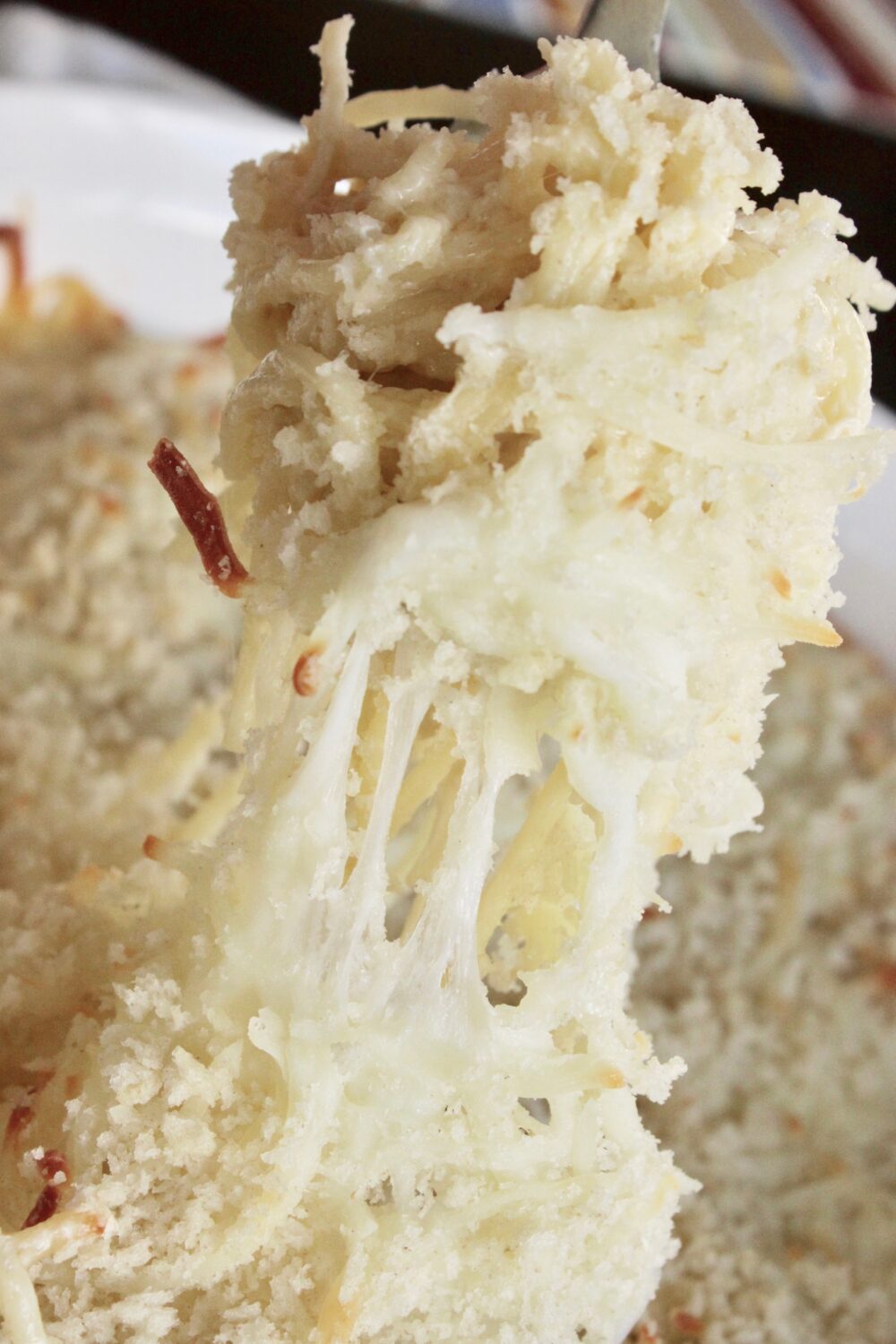
This easy Chicken Tetrazzini recipe is a family favorite. Tender shredded chicken, spaghetti and a creamy sauce baked under a pile of melty mozzarella cheese and crispy panko.
This casserole comes together in minutes, bakes at 350 degrees for 40 minutes and is perfect to make ahead.
Why This Tetrazzini Doesn’t Turn Out Mushy
Hands down this Chicken Tetrazzini Casserole is my most requested recipe to share. And, I’m not even talking about family members asking for this casserole to be made, and people are requesting it constantly.
This casserole is the perfect drop-off casserole for a friend in need, a meal train, etc. The flavor of this casserole is unbeatable.
The hands-on prep time for this recipe is about 10 minutes, the casserole then bakes at 350 degrees for 40 minutes so you’re adding that panko at just the right time to retain some of that crunch.
The original recipe called for two cans of cream of chicken soup and two cups of sour cream. When I first made this recipe I thought there was no way all of that was necessary, I mean that’s a lot of fat in a casserole dish.
Boy was I wrong.
I made a mental note to use only one cup of sour cream next time, sure, it’s a casserole, it’s supposed to be indulgent, but, come on, TWO cups of sour cream? Next time around I made this recipe and cut the sour cream to one cup since everything seemed so soupy, sure enough the finished product was a little on the dry side.
Lesson learned folks, don’t skimp on the sour cream. The sauce might seem like an outrageous amount, but, the pasta absorbs some of it in the oven and the chicken gives up its juices, the finished product isn’t gluey or runny and certainly not bland.
The trick to a casserole that isn’t soft and mushy is to cook your spaghetti for about 1 minute less than the directions. You want the noodles to be al dente because they will absorb some of that delicious sauce while in the oven and finish cooking.
If you cook the spaghetti according to the directions it will be perfectly cooked when removed from the pot but mushy after being baked. Scoops will no longer hold their shape.
Ingredient Notes
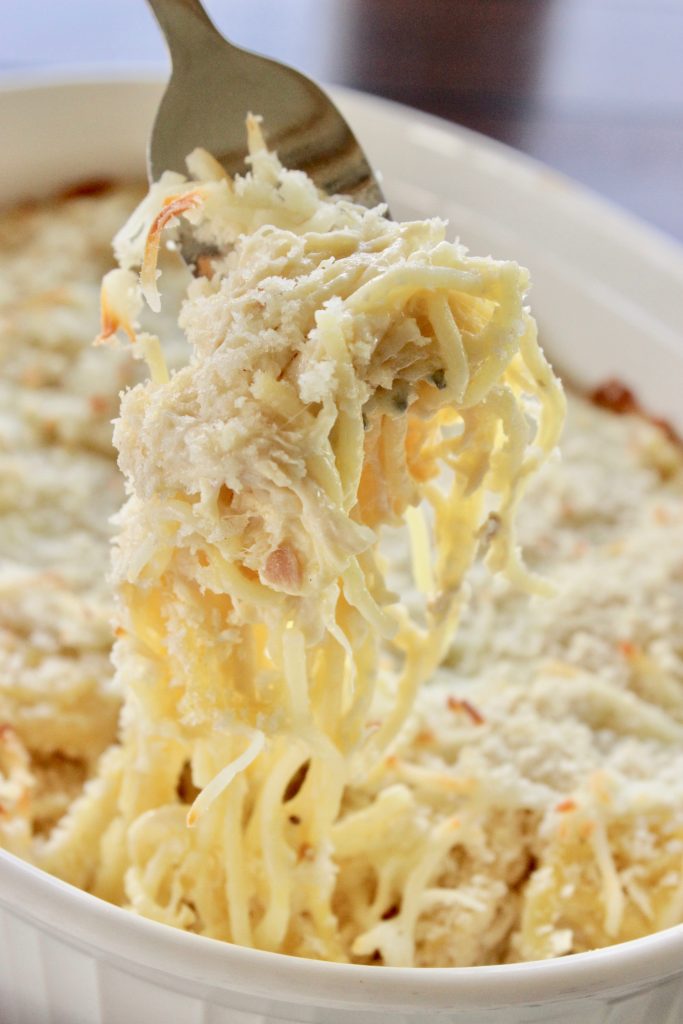
- I recommend using thin spaghetti here so it will incorporate nicely with the tetrazzini mixture. Linguine and fettuccine are also good options. I would give fettuccine a bit more oven time as it’s quite a bit thicker. Short pastas like rotini and penne also work well in tetrazzini. I personally like it best with spaghetti, but any pasta will do.
Cooked shredded chicken (4 cups)
- If using a rotisserie chicken you’ll need an entire chicken. If using chicken breasts, two large breasts should provide enough chicken. Basically, you’re looking for 4 cups of cooked, shredded chicken.
- Rinse your cooked spaghetti.
- Panko breadcrumbs go on in the last 10 minutes of baking.
Boneless chicken thighs (or breasts). Chicken thighs stay moister in the oven, but if you have breasts that aren’t super-dry to start with they will work well too.
Also, chicken thighs are easier to shred. Try to shred into 1” pieces or smaller.
You want it evenly distributed throughout the casserole and smaller pieces will make it easier to accomplish that goal.
Cream of Chicken Soup. There are so many variations on cream of chicken soup…low-sodium, low-calorie…this recipe calls for two 10.5-oz cans of regular cream of chicken soup.
I know…I know. However, this is a CASSEROLE after all.
Sometimes, in order to get the texture you’re looking for, you can’t shy away from the fattening foods. Besides, the seasoning from the soup adds a lot of flavor to the recipe, so it’s important to make sure you have a can of cream of chicken.
If you’re feeling adventurous, try one can of cream of chicken and one of cream of mushroom. The earthy flavor of the mushroom adds an interesting twist.
Two cans of cream of mushroom is a widely used substitute that works just fine too.
Sour Cream. I’ve seen variations where they call for using low-fat sour cream and while it will work, full-fat sour cream will give you the creamiest, thickest sauce.
You won’t believe the difference it makes. If you happen to be out of sour cream you could probably substitute full-fat greek yogurt.
The yogurt is a little tangy, but I’m sure it would work well enough.
Parmesan. It’s combined with the whole casserole but also mixed into the filling.
Two tablespoons doesn’t add an overpowering cheese flavor, but does add another level of savory-ness.
Butter. I know, another fattening ingredient…but trust me when I say the casserole is better for it.
The melted butter gets stirred into the filling and helps give the filling the perfect, creamy texture. It also helps the filling to coat all of the noodles when stirred together.
Milk. This recipe calls for 1/2-cup of whole or 2% milk.
The milk gets stirred into the filling as well to thin it out just enough to coat all of the noodles without clumping. You won’t get the same results if you use skim, as it won’t blend with the fat from the cream of chicken soup and sour cream.
Recipe Tips & Tricks
Rinse your pasta: I know that’s contrary to most cooking tips out there, but tetrazzini is the exception to the rule. Because we’re making the cream sauce separately, we don’t need to use any of the pasta’s cooking liquid.
Rinsing the cooked spaghetti under cold water will stop any residual steaming/cooking and make sure that your pasta doesn’t get gummy while you’re combining it with the tetrazzini mixture.
Use shredded chicken: Tetrazzini tastes best when every bite is balanced. Cutting your chicken into little pieces would lead to some bites having an obscene amount of chicken, while others would have none.
Shredded chicken incorporates much better and makes tetrazzini much easier to scoop into nice, even servings.
Save money by buying a rotisserie chicken from your local grocery store. For about the same cost as 2 raw chicken breasts, a rotisserie chicken will yield about 4 cups of meat.
Win-win.
Add the Panko at the END of cooking: Adding your topping at the beginning will steam under the tetrazzini and lead to a sad, soggy mess instead of a nicely browned and crispy Panko crust. Tetrazzinis should be creamy and luxurious, not soupy and sad.
The contrast of a creamy pasta with a crunchy topping is what separates casseroles from just a bowl of pasta with breadcrumbs in it. Trust me, wait until the tetrazzini is bubbling in the oven and it’s the last 10 minutes of cooking to sprinkle on those breadcrumbs.
What to Know Before You Start
Use fresh grated parmesan from the refrigerated section for best results. The canister powdered parmesan is grainy and will give the sauce an unnecessarily grainy texture.
It’s not blended with other ingredients like the other versions are, it’s just plain old parmesan, so it won’t blend into the sauce as well. You can use the refrigerated pre-shredded parmesan cheese OR you can grate your own.
Either option works well and melts into the sauce mixture really well.
Same story with the mozzarella. Freshly shredded will give you the best results.
The bagged shredded cheeses have a starch on them to keep the curds from clumping together and this inhibits melting ever so slightly. However, since we’re using a full TWO cups of shredded mozz in this dish the difference isn’t going to be very noticeable.
Go ahead and use the pre-shredded mozz if you’re feeling lazy, it’ll be ok.
If you have panko breadcrumbs on hand I’d highly encourage using them. They’ll be much lighter and crunchier than regular breadcrumbs.
Regular breadcrumbs will brown and crisp up just fine though. Crushed butter crackers like Ritz are another option that give this dish a great flavor.
These are the items you’ll sprinkle on top of the casserole for the last 10 minutes of baking. You’ll be using 1/2 to 1 cup of crumbs.
I used a 9×13 pan for this recipe. If your pan comes with a lid it will come in handy for storage purposes or if you’re taking this dish somewhere.
You can always cover with aluminum foil though.
This is a really easy recipe to make. You’ll spend 10-15 minutes boiling the pasta, shredding the chicken if necessary, and tossing together the filling.
Be sure to mix together, season, and TASTE the filling before dumping it into the prepared pan. I’ve found it’s best to have everything else, like cheeses, cracker crumbs, pasta, and chicken, ready to go before I get the pasta on the boil.
That way it’s ready to go and doesn’t get too dry by the time I’m ready to add it to the mixture. Grease your 9×13 pan before making the mixture, this way it’ll be ready to receive the filling.
How to Make Easy Chicken Tetrazzini
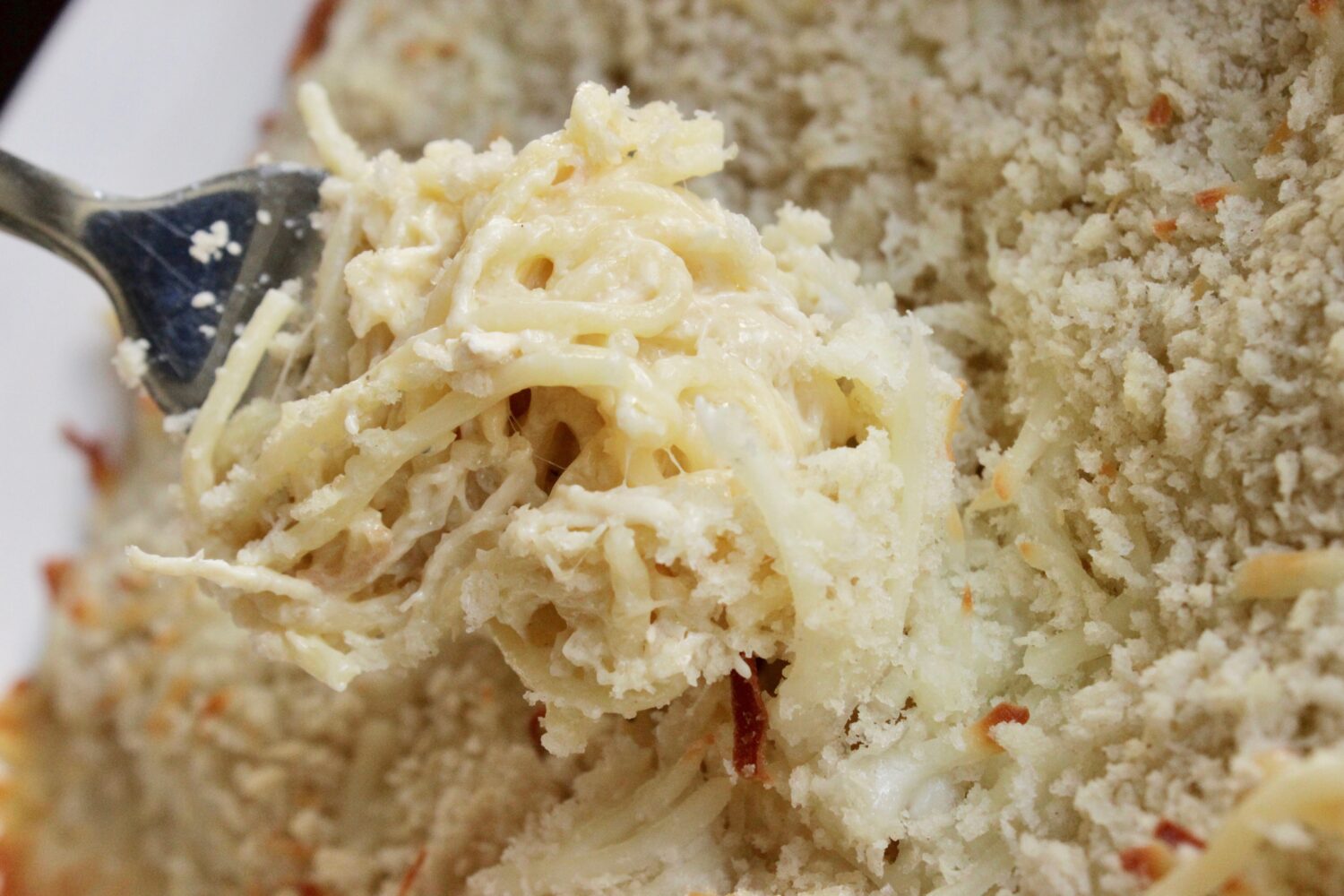
Boil thin spaghetti according to directions on package, in large pot of lightly salted, boiling water; cook 1 minute less than directions say, rinse, drain, and set aside. Pasta should be very firm when cooked, you can bite into one and it should have a noticeable raw spot in the middle of the noodle.
The pasta will continue to cook in the oven.
In a large bowl combine melted butter, shredded chicken, cream of chicken soup, sour cream, milk, salt, pepper, and Parmesan cheese until a thick and creamy sauce forms. Taste and adjust seasoning.
I would strongly recommend doing this. You won’t be able to adjust seasoning after baking so make sure you’re satisfied with the way it tastes before adding pasta and cheese and putting it into the oven.
NOTE: Be mindful of the fact that different brands of cream of chicken soup have different amounts of salt.
Use tongs or two forks to combine cooked spaghetti with chicken mixture. Make sure all of the spaghetti gets coated with chicken mixture.
Spoon into prepared baking dish. Top with shredded mozzarella.
Bake at 350 degrees for 30 minutes or until edges are bubbling and cheese is melted.
Add the Panko breadcrumbs AFTER removing from oven. When removing the dish from the oven add an even layer of breadcrumbs on top of the cheese and return to the oven to brown for an additional 10 minutes.
Panko will brown and then BURN very quickly during this last 10 minutes, so be sure to keep an eye on it. This recipe, and any recipe for a casserole dish that includes breadcrumbs, is much better by adding the breadcrumbs towards the end of the recipe.
By adding breadcrumbs from the start they become soggy as the dish bakes and release steam which prevents them from ever getting crispy. Limit breadcrumb addition to the last 10 minutes of casserole cooking.
Rest for 5 minutes. It is much easier to serve when it has set up a little.
It will run if you try to serve immediately and will be more of a challenge to get on plates nicely. Resting doesn’t affect the flavor but it makes a big difference in how it looks when scooped and served.
NOTE: This casserole makes six LARGE servings. This is a perfect casserole to make two of in 8×8 baking dishes, freeze one without baking, then bake the other.
If using 8×8 baking dishes check casserole at 25 minutes.
There’s got to be a lot of cheese because it shrinks down quite a bit during baking. You need to make sure there’s enough to hold on to the crumbs.
If there isn’t you’ll just have a bunch of Panko sitting on the counter when you’re done.
To save some time, you can shred the mozzarella in advance. Just keep it in the fridge until needed.
Tips for the Best Result
Season the sauce to your liking BEFORE baking. You won’t be able to season the sauce after the casserole is baked.
Taste it before baking and adjust as needed. Two cans of cream of chicken soup are used in the recipe.
There are different levels of sodium in the cream of chicken soups depending on the brand. Taste before baking and add additional salt and pepper if needed.
I highly recommend using rotisserie chicken for this recipe. One large rotisserie chicken will provide about four cups of shredded chicken, the amount needed for the recipe, and takes only about five minutes to shred.
It saves so much time, no additional seasoning or cooking is necessary and it is seasoned perfectly. I like to include some of the rotisserie chicken skin in the recipe for additional flavor.
You can absolutely use Thanksgiving turkey in the same way. Same amount, same prep, just a little richer.
Bake Time: this casserole bakes for 40 minutes.
Sometimes it’s a challenge to scoop out equal servings of ropey spaghetti. Here’s a trick to make it easier.
Break the spaghetti into pieces that are less than half of its original length. You can break them before you cook them or after.
Either way, it makes it easier to spread them evenly in the baking dish and saves sticky fingers. It will have no effect on the final flavor at all.
Rarely, but occasionally, I find that when I’m baking a casserole at 350 degrees the topping will get nicely browned but the casserole is still not quite ready. If this happens to you, especially if you’re using a shallower baking dish, try putting a tent of aluminum foil loosely over the casserole during the last 10 minutes of baking.
Remove the tent just before you add the Panko so it will still get a chance to brown.
Make-Ahead and Storage
Make-ahead: Assemble the casserole, except for the Panko topping, with cooked pasta, filling and cheese. Store tightly covered in the refrigerator for up to 2 days.
Remove from refrigerator and allow to stand about 20 minutes before baking, especially if it’s in a glass baking dish, as the temperature change can cause it to crack. Bake according to directions, adding an additional 5-10 minutes of cooking time if cooking directly from refrigerator.
Leftovers: Can be stored tightly covered in refrigerator for up to 4 days. Individual servings can be heated in microwave for about 90 seconds to 2 minutes or casserole can be heated, covered with aluminum foil in a 325F oven for 20 minutes.
While the texture of this dish will be a little different after a day as the noodles soak up all the tasty sauce which causes the noodles to soften a bit, many people say that it actually tastes even better.
Freezer: This dish freezes well. Allow casserole to bake completely and cool to room temperature before freezing.
May be frozen whole or by individual portions. Cover tightly with plastic wrap and aluminum foil, or store in freezer-safe containers.
Use within 2 months for best results. Thaw overnight in refrigerator before reheating according to leftovers’ directions.
To reheat, remove from freezer and thaw overnight in refrigerator. Cover and bake at 325° for 25-30 minutes, or until heated through.
You can freeze this recipe before baking. Make up recipe through adding Panko topping.
Place in freezer. To bake, remove from freezer and thaw overnight in refrigerator.
Add an additional 10 minutes to cooking time because casserole will be starting out cold.
If you plan to freeze a fully prepared dish, cook and cool completely before freezing. You can either freeze the entire casserole for 4-6 hours then take it out and separate into single servings which can then go back into the freezer, or you can separate into single servings and freeze.
Serving Suggestions
Because this dish incorporates all of the meal, including protein, starch/pasta and a sauce, it is complete. However, a nice dinner roll, garlic bread or other bread goes great with casseroles to soak up any remaining sauce.
If you’re feeling fancy, slice up a nice baguette, spread with butter and toast under the broiler for 3 minutes. Yum!
A garden salad with romaine hearts dressed with a simple vinaigrette or Caesar dressing would complement this recipe well. Casseroles tend to be hearty and filling and many recipes, like this one, are prepared with a heavy cream soup.
When there’s sour cream, butter, heavy cream and cheese involved, you need something on the side that’s a bit more acidic to offset the dish.
Vegetables can be a difficult option with casseroles. This recipe would do well with roasted broccoli or green beans.
Make sure to roast at a higher temperature to achieve a caramelized color. The crispness will go well with the creamy texture of the pasta.
Avoid soft, steamed vegetables.
Variations Worth Trying
You can substitute cream of mushroom for cream of chicken. You’ll still get the same flavoring, it’ll just have an earthier taste.
You could even add about a cup of sauteed mushrooms to the casserole for an enhanced mushroom taste.
Additions & Substitutions: I also like adding vegetables to this recipe, either thawed & drained frozen peas, some diced roasted red peppers, sauteed mushrooms, etc. You can stir these veggies into the filling sauce.
What other pastas can I use in this recipe?
You could definitely make this recipe with penne, rigatoni or other pastas. I personally think egg noodles would work very well in this recipe as long as you cook them only 1 minute less than the directions & rinse with cold water after cooking.
I like shorter pastas because it is easier to get more concise portions.
Can this casserole be made spicier?
Definitely. Add about 1 teaspoon of garlic powder to the recipe, as well as 1/2 teaspoon of crushed red pepper flakes.
You could also use pepper jack cheese instead of mozzarella, though I found that the recipe itself tamed the pepper jack cheese & made it more mild.
Can this recipe be made in advance?
You could prepare the entire recipe in advance & freeze it before baking. I like to split the filling into two pans.
This way I have one in the freezer, unbaked, for a busy night. I like to use 8×8 pans, then bake one casserole up for dinner & freeze the other casserole before baking.
Frequently Asked Questions
Can you make this recipe with canned chicken?
You can use canned chicken in this recipe. Just make sure to drain it really well and break it up.
The canned chicken will be a little different than a rotisserie chicken or other cooked chicken though. It will shred more finely and will be a little softer.
Can you make this recipe without breadcrumbs?
Yes you can leave them out. It will not be as crunchy without breadcrumbs, but it will be just as tasty.
It will still be super creamy and cheesy.
What can be used in place of breadcrumbs?
You can use crushed up Ritz crackers. You can use breadcrumbs, but they won’t get as crispy.
If you don’t happen to have breadcrumbs or Ritz crackers on hand, crushed up potato chips work great.
Why is my casserole dry?
This can happen when pasta is overcooked when boiled. As it bakes, the pasta will continue to cook and soak up moisture from the sauce.
Always undercook your pasta by a full minute. That extra moisture that would have been cooked out of the pasta will be available to mix into the sauce while it’s baking.
Can you use previously cooked pasta? Yes, but not leftovers, such as pasta salad.
The balance of liquids is different since it has already been cooked AND sauced. But if you’ve made some plain pasta, kept it in the fridge, etc. you can use that in place of the uncooked pasta called for in this recipe, just keep an eye on baking times, as it will already be cooked and could get overly soft.
Can I use cream cheese instead of sour cream?
Yes, but keep in mind you’ll be changing the balance of the recipe. Sour cream adds a bit of tang while cream cheese will be thicker and richer.
If you do, I’d suggest using 8 oz. cream cheese in place of the 2 cups sour cream. Soften the cream cheese thoroughly and add a splash of milk to loosen up.
Blend well, as cream cheese tends to leave little nubbins that sour cream doesn’t.
Can I make this gluten-free?
Yes! You’ll want to make sure you’re using gluten-free cream of chicken soup, such as Pacific Foods, and choose a good GF pasta, such as rice- or chickpea-based.
Be sure to cook them al dente and give them a quick rinse so they’re not sticky. Use GF breadcrumbs for the topping, or crushed rice crackers.
Gluten-Free cooks should note that Gluten-free pasta tends to cook up softer than wheat-based pasta in casseroles. To help it hold up in this dish, cook according to package directions, but take it out two minutes early.
How will I know when this casserole is done?
There are lots of signs. The casserole should be 165°F in the center, the edges will be bubbling, the cheese will be melty, the panko topping should be nicely golden-brown.
If your casserole edges are getting golden, but the center doesn’t look bubbly, give it another 5 minutes before checking the temperature and repeat as necessary. Depending on your oven, it could take closer to 40 minutes.
What to Do With Leftovers
Tetrazzini keeps in the fridge for several days, so you have lots of chances to make Tetrazzini something new:)
- Chicken noodle soup: Combine leftover tetrazzini and 1 cup of chicken broth in a saucepan. Heat through, adding more broth as desired, stirring, until tetrazzini begins to break up a bit. It will take on the consistency of a creamy chicken noodle soup. Add a squeeze of lemon juice just before serving.
- Tetrazzini-stuffed peppers: Spoon tetrazzini into bell peppers that have been seeded and cut in half top to bottom. Top with shredded mozzarella and bake in a 375°F oven until heated through and pepper is softened, about 25 minutes. Tetrazzini makes a wonderful individual-sized casserole this way, and the softened, sweet pepper complements the creamy, savory casserole beautifully.
- Chicken tetrazzini wraps: One of my kids asked for pasta in a tortilla, so we spread a layer of cold tetrazzini over a flour tortilla with some fresh spinach, then rolled it into a wrap. It was much less messy and floppy than I’d imagined. Cut in half on a diagonal for an unusual lunch.
- As the pasta absorbs the sauce, tetrazzini can be a bit thick the second time around. Stir in a spoonful or two of milk before microwaving for the same consistency it had when it came out of the oven.
Related Recipes