
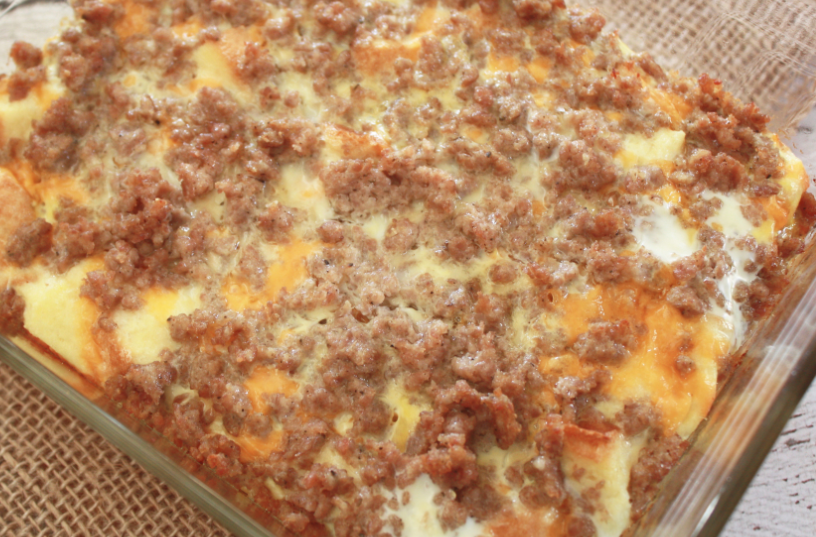
Breakfast Sausage Casserole Recipe
This easy make ahead recipe for breakfast sausage casserole makes a delicious and hearty holiday breakfast. It’s been on our Christmas morning table for years.
It’s an easy breakfast for crowds recipe.
I have a confession. I’m not a fan of reinventing recipes or improving upon tried and true recipes that have stood the test of time.
However, I am a fan of finding those tried and true recipes and sharing them with you.
This recipe for sausage casserole has been in my family for years. We make it every year on Christmas morning.
It’s easy to make ahead so you can pull it right out of the refrigerator and into the oven when you wake up on Christmas morning. It’s a crowd pleasing recipe that’s perfect for a hearty and filling breakfast.
The Breakfast Morning I Make This For
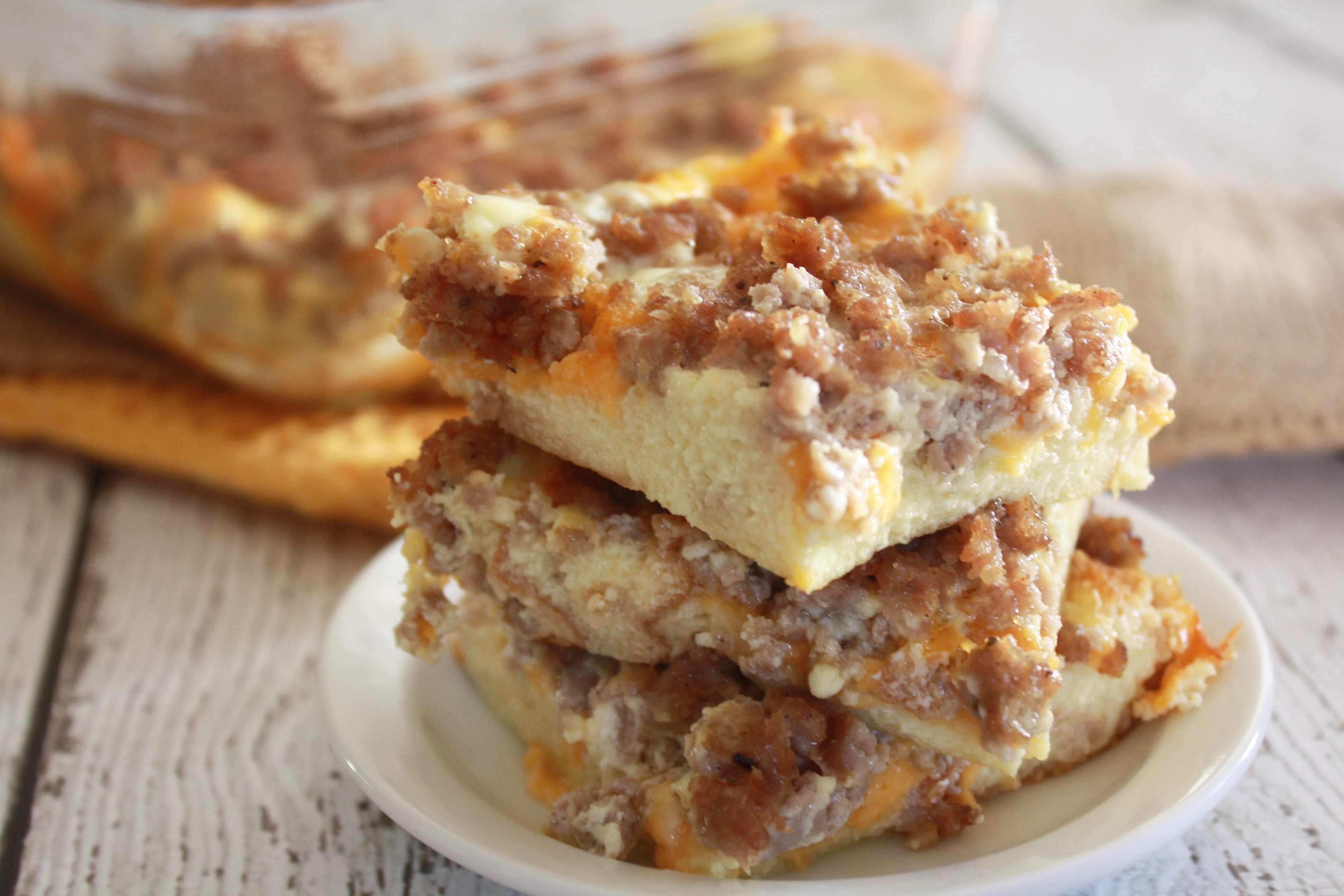
There are mornings I don’t want to stand in the kitchen. You know those mornings?
Those are the mornings this recipe comes out. It’s perfect for Christmas morning, after the kids are happy and excited and all the presents are out and you’re trying to get something delicious and hearty to feed everyone.
It’s perfect for Easter brunch and anytime you’re entertaining. This is a recipe that bakes in peace while you’re running around enjoying the morning.
Grab a cup of coffee, breathe deep and enjoy.
Why the Overnight Rest Makes All the Difference
The secret to making this recipe for sausage casserole? Overnight resting.
When the mixture rests overnight the bread will absorb all the liquid. When you pull it out of the fridge to pop it in the oven it’ll be one solid mass that will barely wiggle in the pan.
This will make it bake more evenly and make it easier to remove from the pan and serve.
Notes for Easy Make Ahead Sausage Casserole Recipe
Dry mustard will give the casserole more of a depth of flavor and a tiny kick, though you won’t even know it’s mustard.
This casserole is always the first item to disappear.
Ingredients for Sausage Casserole Recipe
Breakfast sausage (1 lb.), browned and drained. You can use regular, or sage.
I recommend against Italian, as I think the fennel interferes a bit. If you’re looking for a kick, use hot.
You could also use ham in place of the sausage.
White bread (8 slices), cut into squares and buttered. Any white sandwich bread should do.
Day-old works well because it’ll soak up more of the mixture; dense breads like sourdough don’t soak up the custard mixture evenly, so you’ll have areas of bread that are different textures.
Eggs (6). You really do need all six – any less than that and the casserole won’t really set up nicely, making it difficult to carve out individual pieces.
Six eggs + 2 cups of milk = a casserole that slices up nicely in a 9×13 casserole pan.
Milk (2 cups). I find whole milk makes the best version of this recipe, although 2% milk will do.
Skim, unfortunately, results in a runnier custard that doesn’t set up very well.
Dry mustard (1 teaspoon). People often miss this, but I recommend it – it’s a secret ingredient that enhances the whole casserole, and is another reason why prepared mustard doesn’t work here, as it doesn’t mix throughout the casserole as evenly.
Without this, the casserole is a bit lacking in flavor, in my opinion.
Salt (1 teaspoon). The eggs and other ingredients are unsalted, and the casserole really does need it.
Sharp cheddar cheese (1 cup, grated). Other cheeses will be okay here too – whatever you prefer – but cheddar is my favorite.
You could top the casserole with the cheese instead of mixing it in the egg mixture, but I like it better incorporated throughout. Note: It’s better to grate your own cheese.
Pre-shredded cheese doesn’t melt as nicely due to additives.
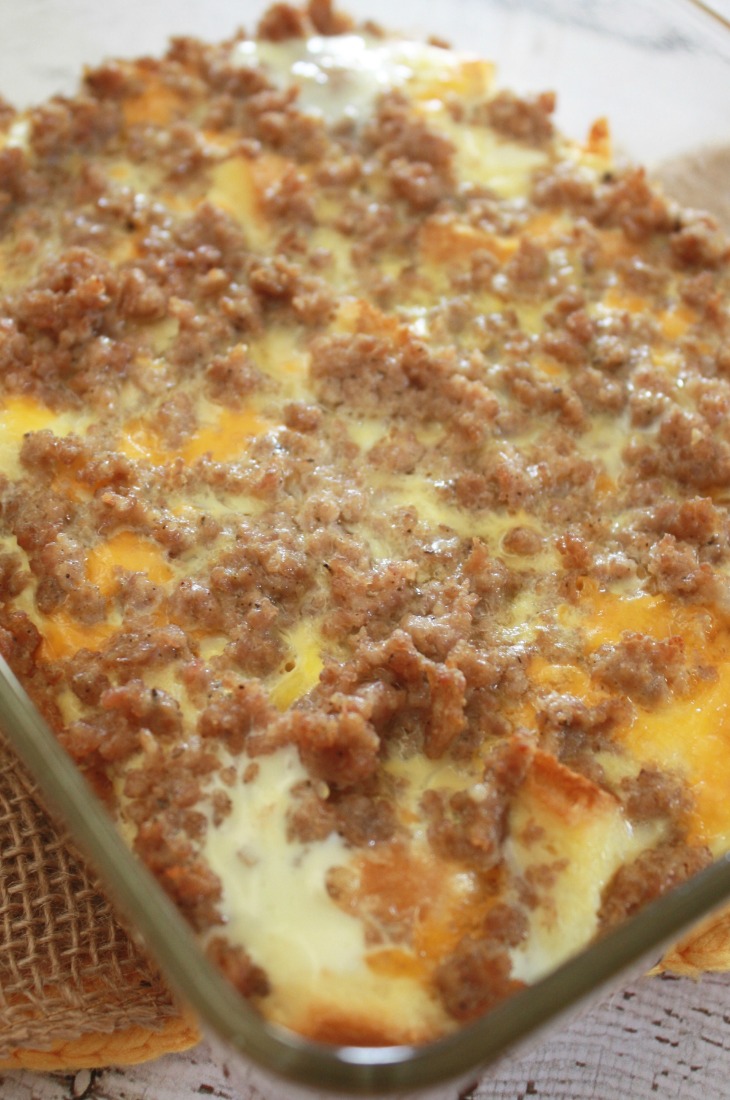
How to Make Overnight Breakfast Sausage Casserole
The Night Before: Assemble the Casserole
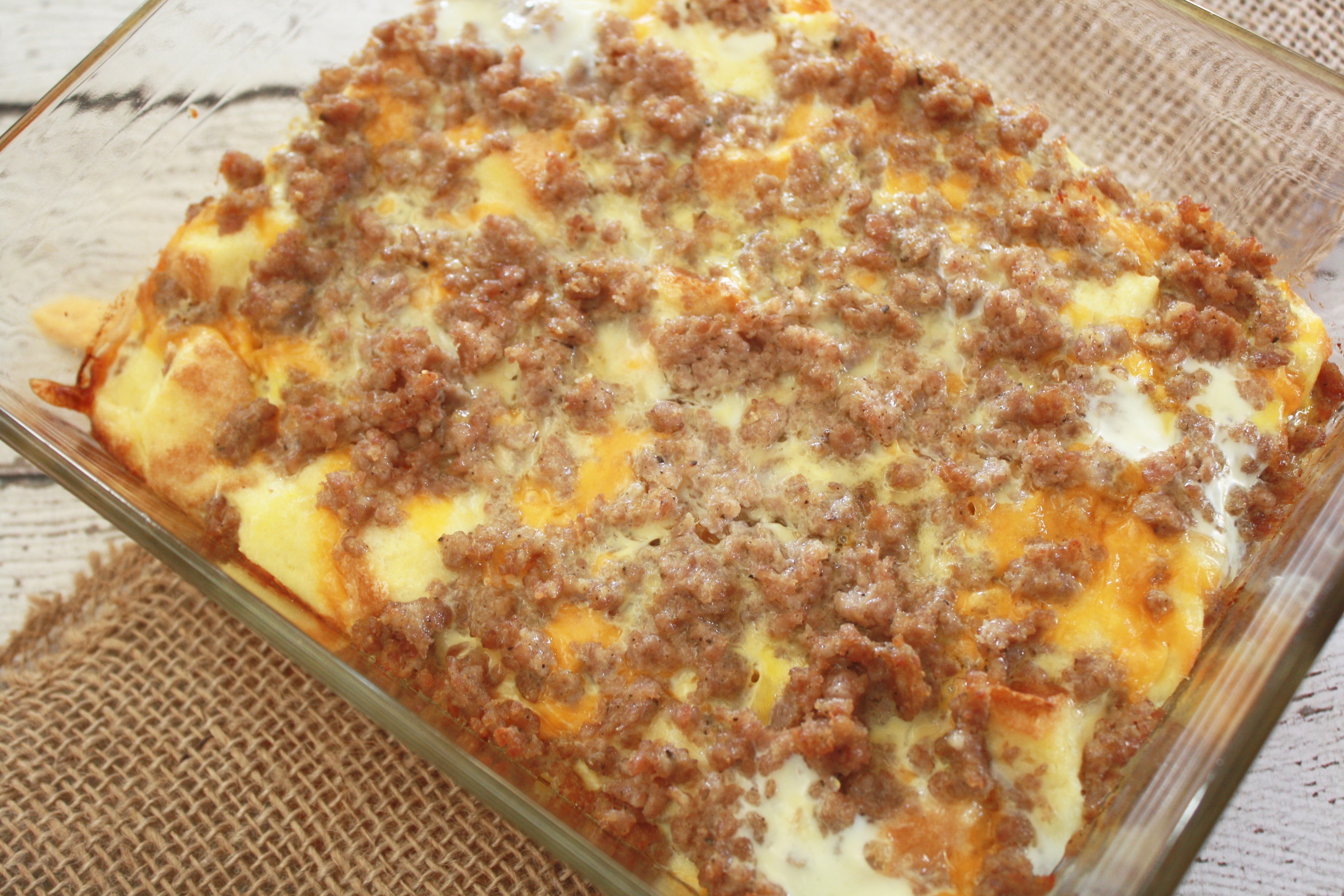
Brown the sausage in a large skillet; drain off any fat. Set aside.
Butter a 9×13 in. casserole dish; place bread squares butter-side down into dish.
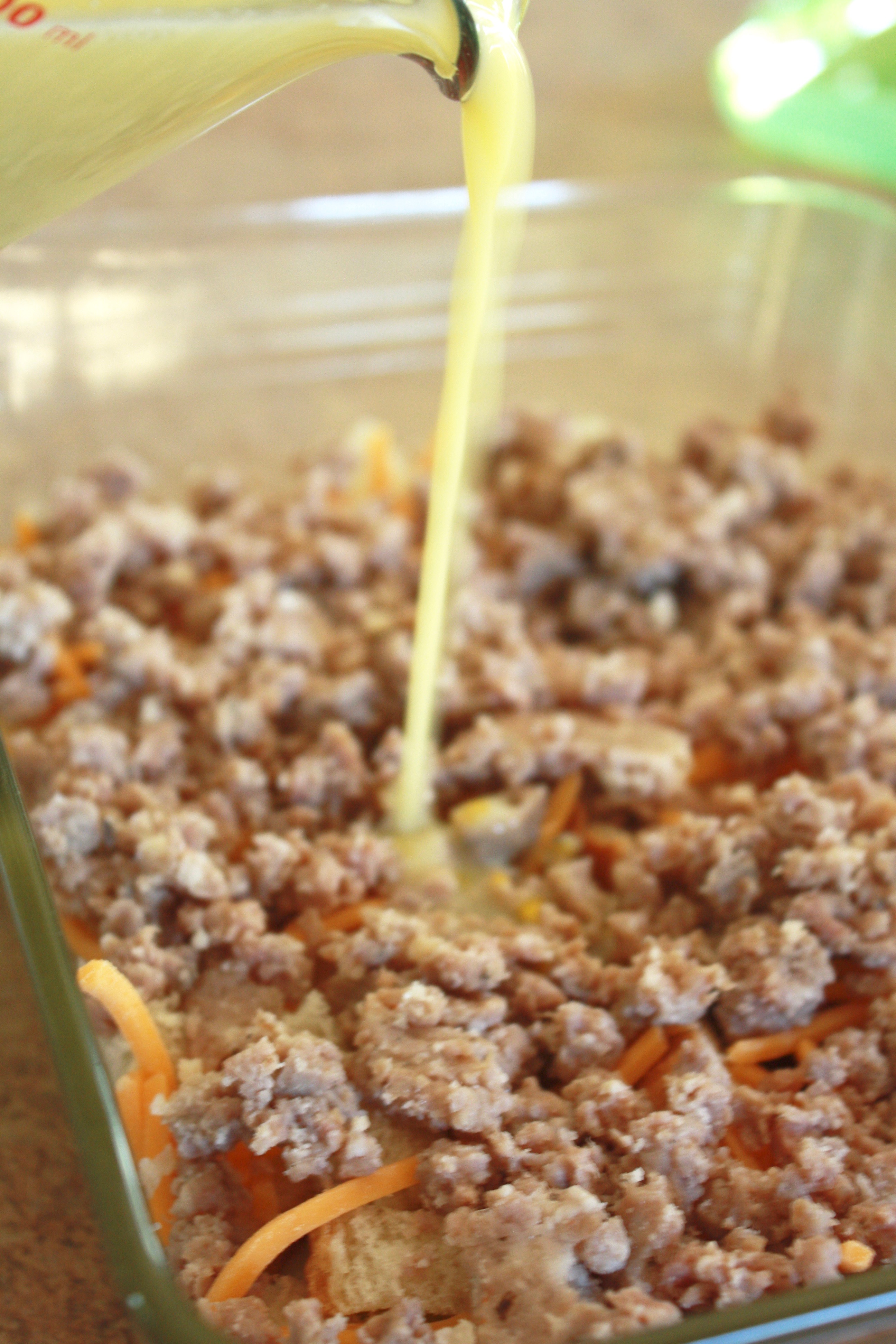
In a large bowl or pitcher, whisk together the eggs, milk, mustard, and salt. As I noted in a recent blog post, add grated cheddar and cooked, crumbled sausage; mix.
Pour over bread. Cover with plastic wrap and refrigerate overnight.
In the Morning: Bake.
Mix all ingredients well. Spoon into prepared pan.
Refrigerate overnight. In the morning, place directly from fridge to the oven.
Bake uncovered at 350° for 40-45 minutes, until the top is golden brown and the middle is firm; when a knife is inserted in the center, it should come out clean. Allow to rest for 5 minutes before cutting.
Makes about 12 very large servings. Halve recipe if necessary.
Five Things Worth Getting Right With This Casserole
- Chill time – This casserole has an important chilling period that can’t be skimped on. Bread slices need enough time to absorb the egg mixture. Skipping this step would result in a very soggy casserole – not to mention an uneven consistency with an eggy top and mushy bottom. Plan ahead – assemble this casserole the night before and pop it in the oven in the morning.
- Knife test – Like many casseroles, this one puffs up in the oven, making it tricky to determine doneness. A knife inserted in the center should come away clean, without any wet egg on it.
- Resting time – The casserole will fall back down a bit as it cools. Cutting into it too soon would result in sad, fallen-apart slices. Five minutes is all it takes.
- Sausage – I’ve seen some recipes call for raw sausage. I like to use fully-cooked sausage and add it to the egg mixture.
- Butter – If you’re looking for an extra-tender crust, butter your slices of bread and press them butter-side down.
Be sure to drain any excess grease from the crumbled sausage. Too much grease will make the casserole greasy.
Allow sausage to cool before mixing in egg mixture.
You can assemble the casserole and leave it in the refrigerator until baking. Allow to soak at least eight hours but you can leave it in the refrigerator up to a day ahead of time (24 hours) before baking.
Butter bread before adding to casserole dish. Place the bread with the buttered side down.
The bread will absorb some of the richness of the butter as it soaks and it will keep the bottom of the casserole from being too soggy.
Before removing from the oven, insert a knife or a wooden toothpick into the middle of the casserole to test for doneness (the edges will be done before the middle). Remove when knife/toothpick comes out clean.
Allow casserole to rest five minutes before cutting into squares.
What This Works Best Alongside
Serve alongside fresh fruit, fruit salad, orange juice, salsa, toast, pastries and hot sauce.
Great for holiday occasions like Christmas morning while the kids are opening presents, Easter brunch with company or Mother’s Day brunch with the girls.
If you’re looking to plan your menu for the week, this is a great option.
How to Store It and What to Do With Leftovers
To Store: Refrigerate leftovers up to 4 days. To re-heat in the microwave, cover casserole and microwave on high for 1-2 minutes until heated through.
To re-heat in the oven, cover casserole with aluminum foil and place in a 325 degree oven for 15 to 20 minutes.
Freezer: After casserole has been baked, separate into individual servings, allow to cool, wrap tightly in plastic wrap and freeze up to 2 months. Allow casserole to thaw in refrigerator overnight before reheating.
Breakfast casserole leftovers make an awesome hash. Cut leftovers into squares and place in buttered skillet on medium/high heat.
Once squares start to get hot, mash squares to crumble and allow to brown and get crispy. Top with fried egg and serve with hot sauce.
Six Ways to Change Up This Casserole
- Swap out sausage. In addition to pork, turkey, chicken, and other varieties of sausage, you can also sub 1-2 cups diced, cooked ham. This makes it a perfect recipe to use leftover ham after Christmas. Bacon also works, using about 8-10 slices, cooked and crumbled for some smoky goodness.
- Add other veggies. Diced bell pepper, chopped onion, and mushrooms are all good choices. Dice them small so they’re well-incorporated, sauté, and combine with sausage.
- Sub out the cheddar cheese for Colby Jack, Monterey Jack, or Pepper Jack for spice.
- Use other kinds of bread. Try Texas toast, thick-cut sandwich bread, or croissant halves for extra decadence. The thicker the bread the more hearty this casserole will be.
- Make this casserole gluten-free. Gluten free sandwich bread works well here, as the rest of the ingredients are GF making the whole casserole gluten free.
The Two Kitchen Details That Help This Come Out Right
- Sharp cheddar: This casserole tastes best with a sharp cheddar and is best when it melts smoothly into the egg mixture. I’ve found that pre-shredded cheeses contain additives to prevent it from clumping and they don’t always melt smoothly into custards. So for best results I highly recommend buying a block of sharp cheddar and grate it yourself. Try Tillamook Sharp cheddar as it’s pretty consistent.
- Give it time. The best texture happens when you give this casserole a good chill in the fridge. See below for more.
Breakfast Sausage Casserole FAQ
Can I bake this without refrigerating overnight?
If you’re pressed for time, let the mixture stand at least 2 hours so the bread has time to soak up the egg mixture, or otherwise you’ll be swimming in egg mixture and will just get a bread-y texture. Refrigerating it overnight really helps the texture.
What kind of dish do you use to bake this recipe in?
We have a 9×13 Pyrex baking dish that has a lid so we keep it in that in the fridge, cover with plastic wrap if yours doesn’t have a lid. Pyrex bakes more evenly edge-to-center so the edges don’t get done before the middle does.
And ours happens to have a lid which saves us covering with plastic wrap and then we can pop it right into the oven.
Can I substitute crescent rolls for the bread?
Yes you can. I’ve made this recipe with crescent roll dough flattened in the bottom of the pan instead of bread.
It is even more rich and flaky that way. Biscuit dough cut into small pieces would work too.
Can I double the recipe?
Yes, but you will need two 9×13 pans or a large roasting pan. Multiply each ingredient by two.
It may take an additional 10 to 15 minutes to bake if you spread out the batter too thin.
How do I know when it’s done?
A good rule of thumb is to stick a knife in the center and remove it. If there is wet, runny egg on the knife when you take it out it’s NOT done.
If the knife comes out clear it’s done. If it’s NOT done, put it back in the oven another 5-10 mins., even if you think it has been in long enough.
When you take the casserole out of the oven it will be somewhat jiggle in the middle and appear slightly underdone, but it will continue to cook as it rests.
Can I make a vegetarian version?
Yes! This recipe lends itself easily to a vegetarian version.
Just leave out the sausage and use 1-2 cups of your favorite vegetables. You might want to try bell pepper, onion, mushrooms or spinach.
I’d suggest sautéing them for a bit before putting them in the dish. That will help get rid of some of the extra liquid which would otherwise make this casserole a little soggy.
Other Breakfast Casseroles Worth Making

Biscuits and Gravy Casserole: Two helpings of buttery biscuits smothered in creamy, homemade, sausage gravy. All in one easy pan.
Easy Bacon and Egg Breakfast Casserole: The perfect combo of bacon, eggs, and cheese. Make it ahead of time the night before.
Sausage Croissant Breakfast Casserole: Savory sausage, egg, and cheese atop a tasty croissant base.
Breakfast Sausage Casserole Recipe
Ingredients
- 1 pound sausage browned and drained
- 6 eggs
- 2 cups milk
- 8 slices bread
- 1 tsp. dry mustard
- 1 tsp. salt
- 1 cup grated cheddar cheese
Instructions
- Butter bread slices and press butter side down in 9×13 dish
- Mix together eggs, mustard, milk and salt
- Mix in cheese and sausage
- Pour over bread slices
- Refrigerate 8 hours or overnight
- Bake uncovered at 350 degrees for 40-45 minutes
- Enjoy!