
This is the restaurant-style salsa I make year-round, regardless of whether tomatoes are in season. A 28-ounce can of whole peeled tomatoes plus an onion, cilantro, jalapeño, lime juice, garlic powder, and salt all go in the blender. Pulse a few times. Let it chill in the fridge for a few hours. Done. The result is the kind of smooth, slightly chunky salsa you’d order extra of at a Mexican restaurant.
A Little Story
I’m a tomato gardener. From August through October I have fresh tomatoes to spare. November rolls around and the garden’s done — and suddenly the salsa I want isn’t possible. Or so I thought. The first time I tried blender salsa with canned tomatoes in February, I was shocked at how good it was. As good as my August fresh salsa. Maybe better, because the canned tomatoes are picked at peak ripeness while my late-season tomatoes were getting watery. Now I make this year-round.
Canned tomatoes might sound like a downgrade from fresh, but for blender salsa they’re actually the smarter choice. They’re picked and packed at peak ripeness, they’re consistent year-round, and they break down beautifully in a blender into the perfect texture. Fresh winter tomatoes from a grocery store can’t compete.
The whole recipe takes about five minutes of active prep. The hardest part is the 24-hour rest in the fridge — the salsa needs that time for the flavors to meld and the raw garlic and onion edges to soften. Make it the day before you need it and it’ll be perfect by the time you serve.
Ingredient Breakdown
Whole peeled canned tomatoes (28 oz., 1 large can)
One standard 28-ounce can. Use the juice too — it all goes in the blender. Do not substitute diced canned tomatoes. They contain calcium chloride to keep them firm, which prevents them from breaking down properly in the blender. You’ll end up with a watery liquid and chunks of tomato floating in it. Whole peeled is the only choice for this recipe. Cento, San Marzano, Tuttorosso, store brand — any whole peeled works.
Yellow onion (3/4 of a medium onion)
Rough-chopped. The blender handles the rest. White onion or sweet onion substitutes fine. Red onion works if you don’t mind the color change and slightly sharper flavor.
Fresh cilantro (4 T., chopped)
Include the tender stems — they have as much flavor as the leaves. If you’re a cilantro hater (the genetic kind where it tastes like soap), substitute 2 tablespoons of fresh parsley plus an extra small squeeze of lime. It’s a different salsa, but it works.
Garlic powder (1 tsp.)
Garlic powder, not fresh garlic. I know this sounds like a shortcut, but it’s the right call. Raw fresh garlic blended into salsa is sharp and aggressive in a way that dominates everything else. Garlic powder distributes evenly and gives a mellower, rounder garlic flavor that belongs in the background. If you only have fresh garlic, use one small clove and roast it in a dry pan for 5 minutes first to take the edge off.
Jalapeños (start with 1, adjust from there)
One seeded jalapeño is mild. One with seeds is medium. Two jalapeños is noticeably hot. Start conservative — you can always add more jalapeño and blend again; you can’t take heat back out.
Lime juice (2 tsp.)
Fresh lime, not lemon. Lime is part of what makes this taste Mexican rather than generic tomato sauce. About half a lime. Bottled lime juice works in a pinch but the flavor is flatter.
Salt (1 tsp.)
Start with 1 teaspoon and adjust after blending. Different brands of canned tomatoes have different sodium levels, so taste before adding more.
How to Make Canned Tomato Salsa
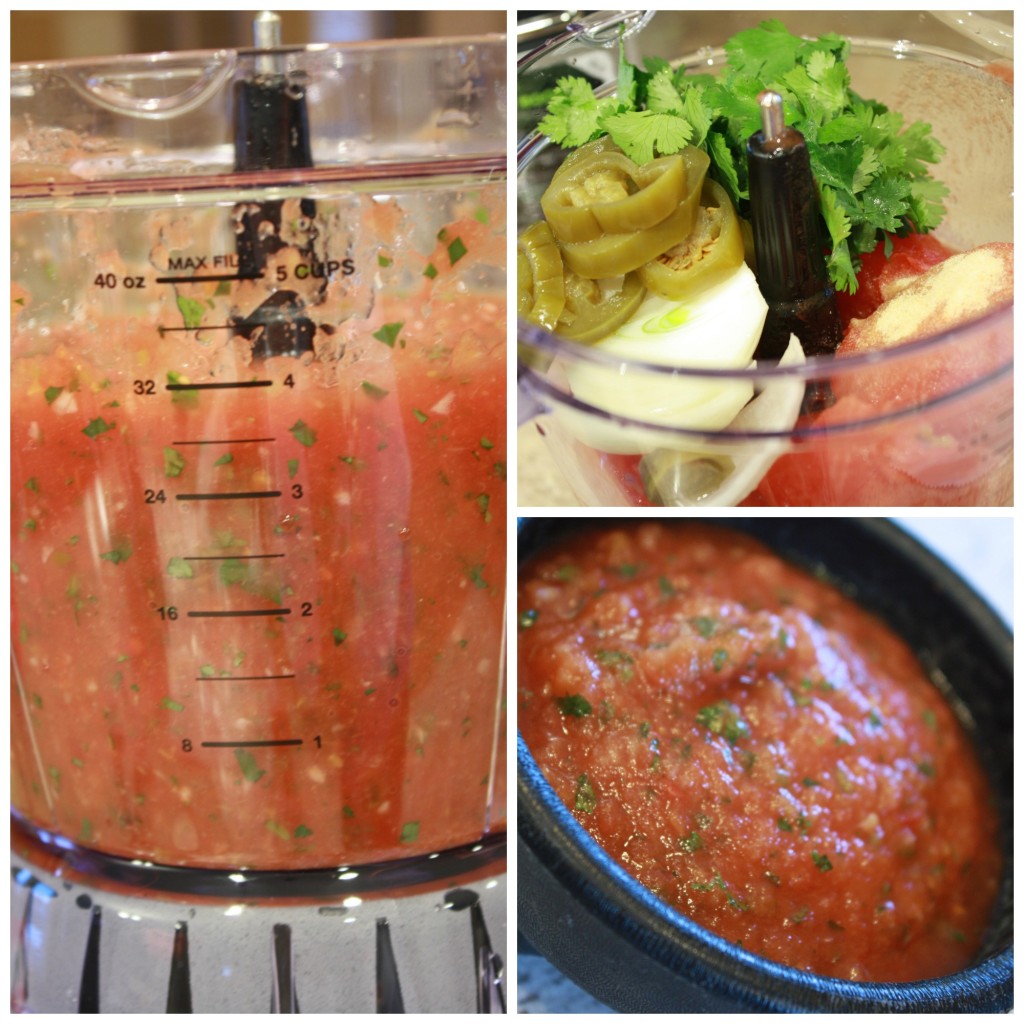
Open the can of whole peeled tomatoes and pour everything — tomatoes and all the juice in the can — into a blender pitcher. The juice is part of the salsa, not something to drain off.
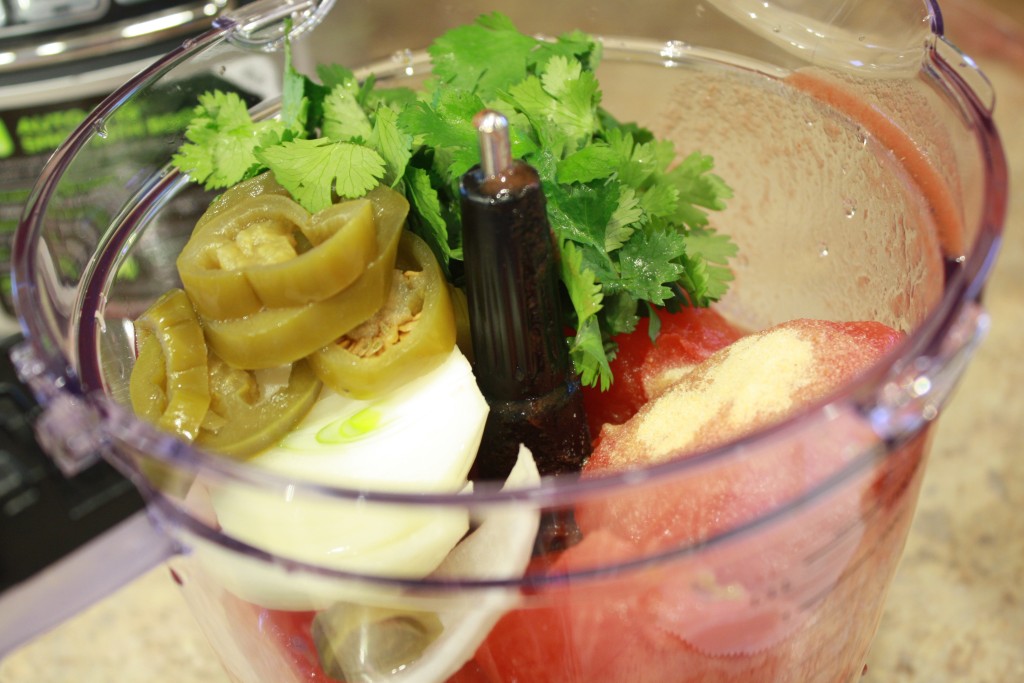
Roughly chop 3/4 of a yellow onion (no need to dice small — just cut into chunks the blender can handle) and add to the pitcher. Add the chopped cilantro, garlic powder, salt, jalapeño, and lime juice.
Pulse the blender 5 to 10 times for chunky restaurant-style salsa. For smoother salsa, blend on medium speed for 5 to 10 seconds. Don’t over-blend — the salsa should still have some texture, not become completely smooth like tomato soup. If it looks too liquid, you blended too long; no way back from that, but it’s still good as a smooth salsa.
Taste immediately after blending. Need more salt? Add a pinch. Too mild? Add another half jalapeño and pulse again. More tang? Another splash of lime. Get it where you want it now, before the rest changes the flavor.
Cover and refrigerate for at least 4 hours, ideally 24 hours. This step is not optional. Salsa eaten right out of the blender tastes raw and harsh — sharp onion, bright lime, aggressive garlic. Twenty-four hours in the fridge softens all of that into the balanced, mellow restaurant flavor you’re after. The texture also tightens slightly as it rests.
Stir well before serving — the salsa separates a little as it sits. Give it a good stir and it comes right back together.
Storage and Make-Ahead Tips
Store in an airtight container in the fridge for up to 10 days. Flavor peaks at days 2 to 4. Stir before each use as the solids settle. This is one of the best make-ahead recipes you’ll find — making it 24 hours early is genuinely the right choice, not just convenient.
Frequently Asked Questions
Why do I have to use whole peeled tomatoes?
Diced canned tomatoes are treated with calcium chloride to keep them firm. That additive prevents them from breaking down in the blender — you get a watery base with chunks floating in it rather than smooth, even salsa. Whole peeled tomatoes don’t have the additive and blend exactly right. This is the one ingredient substitution I’d push back on strongly.
Why does it need to rest 24 hours?
Raw onion blended into salsa tastes sharp and harsh for the first few hours. Garlic powder needs time to fully bloom and integrate. Lime juice needs time to mellow from bright/acidic to balanced. All of those things happen during the 24-hour rest. Salsa eaten immediately is technically the same ingredients but a noticeably inferior result. Rest it.
Can I use fresh tomatoes instead?
Yes, but only in peak tomato season (late summer). Four to five ripe Roma tomatoes equals one 28-ounce can. Grocery store tomatoes in fall through spring are mealy and bland — the whole point of this recipe is that canned tomatoes beat off-season fresh ones. If you have garden tomatoes or farmers market tomatoes at peak, use them. Otherwise, use the can.
Can I use a food processor instead of a blender?
You can, but the texture won’t be as smooth. Food processors leave more chunks. If you like chunkier salsa, a food processor works well. For restaurant-style smooth, use a blender.
How spicy is this?
Mild with one seeded jalapeño. Adjust from there — adding more is easy, removing heat is impossible. Taste before you rest it and again after the rest, since chilling can mellow heat slightly.
How long does it last in the fridge?
Up to 10 days in an airtight container. Flavor peaks around days 2 to 4 and slowly fades after. Still good at day 10, just less intense.
More Recipes You’ll Love
Corn and Black Bean Salsa with Avocado — chunky cold salsa with shoe peg corn, black beans, Rotel, and avocado. Pairs beautifully alongside this smooth tomato salsa.
Easy Baked Bean Dip — warm baked dip with cream cheese, sour cream, refried beans, and taco seasoning.
Seven Layer Dip — refried beans, guacamole, sour cream, taco-seasoned cheese, salsa, olives, and green onions.
Canned Tomato Salsa
Ingredients
- 28 ounce can whole peeled tomatoes
- 3/4 yellow onion
- 4 T fresh chopped cilantro
- 1 tsp garlic powder
- 1 tsp salt
- jalapeños to taste
- 2 t lime juice
Instructions
- Mix all ingredients in a blender and let sit 24 hours - that's it! And, enjoy with tortilla chips, quesadillas, nachos or breakfast casseroles. Yum!