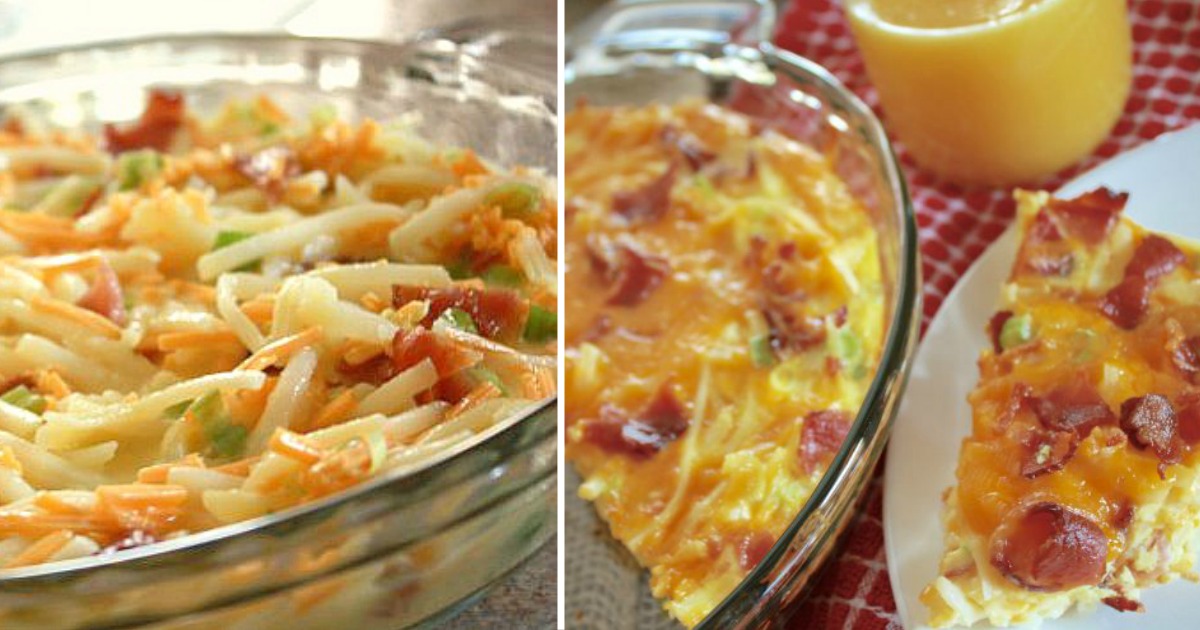
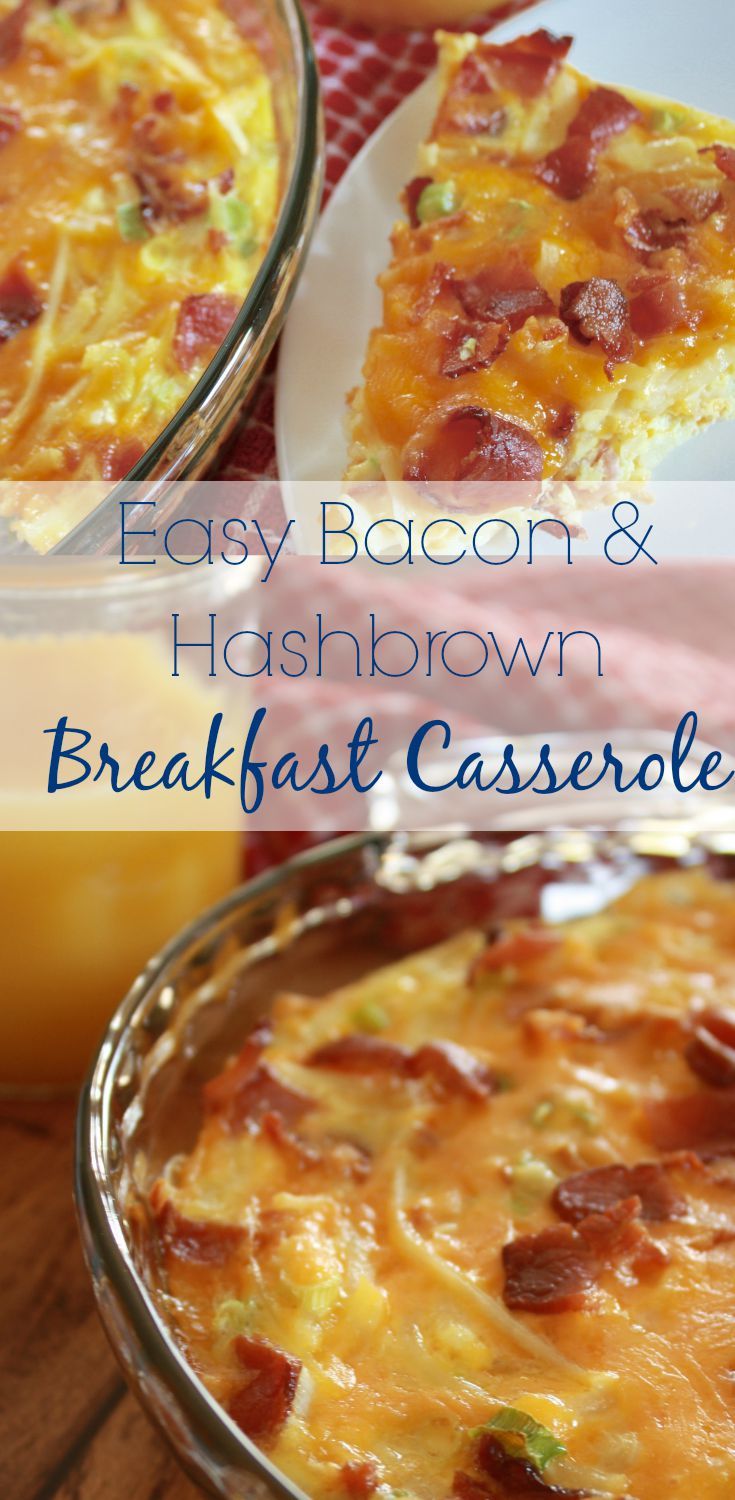
Ten minutes of prep, one pie plate, and breakfast is handled for eight people. This quick breakfast casserole layers frozen hashbrowns, eggs, crumbled bacon, green onions, and sharp cheddar into something that bakes up golden and sliceable — no fussing with individual portions, no timing five different pans at once. The version I keep coming back to is the one assembled the night before and slid into a cold oven Saturday morning while the coffee brews. By the time everyone wanders into the kitchen, it’s done.
Why This Works
Breakfast casseroles can be hit or miss depending on how they’re built. This one works because the ratios are right and the method is straightforward. Here’s what’s actually happening in each step:
- Thawed hashbrowns mix into the egg base rather than sitting on the bottom, which means every slice has potato, egg, and cheese throughout — not a separate potato layer that falls apart when you cut it.
- Five eggs plus half a cup of milk gives you enough liquid to saturate the hashbrowns without making the casserole wet. Four eggs and it comes out soft and hard to slice. Five is the number.
- Cheese inside and on top means flavor throughout and a golden, slightly crispy top layer that holds up when you cut it.
- Baking uncovered lets the surface brown properly. A covered casserole steams instead of bakes and the top stays pale and soft.
- The five-minute rest after baking lets the casserole finish setting before you cut into it. Skip that rest and the slices fall apart.
- The make-ahead method actually improves it. The hashbrowns absorb some of the egg mixture overnight and the whole casserole bakes up more cohesive in the morning than one assembled right before baking.
What to Know Before You Start
A few things that make a real difference in how this turns out:
Thaw the hashbrowns completely — this is not optional
This is the step most people skip when the casserole comes out wrong. Frozen hashbrowns carry a significant amount of ice crystal moisture. When they hit the oven still frozen, that water releases during baking and prevents the egg mixture from setting. You end up with a wet, loose center that won’t slice cleanly and looks underdone even after 45 minutes. Thaw them in the refrigerator overnight, or spread them on a plate and microwave in two-minute intervals until soft. Either way works. What doesn’t work is using them straight from the freezer bag.
Cook the bacon until genuinely crispy
The bacon softens during baking — that’s unavoidable when it’s surrounded by egg and cheese in a hot oven for 40 minutes. If you start with bacon that’s just cooked through but still chewy, you end up with unpleasantly soft, pale pieces in the finished casserole. Cook it until it’s properly crispy, drain it on paper towels, then crumble it. It’ll soften slightly in the oven but still have texture and flavor.
Shred your own cheese if you can
Pre-shredded cheese is coated with an anti-caking agent — usually potato starch or cellulose — that slightly interferes with how cheese melts and incorporates. It’s a small difference but it matters more in a baked dish than it does on a taco. A block of sharp cheddar shredded with a box grater takes about two extra minutes and melts noticeably better. I’d also recommend sharp cheddar over mild — more flavor for the same amount of cheese, and the stronger flavor comes through even when it’s mixed with eggs and potato.
Go by doneness, not the timer
35–40 minutes is the range, but ovens vary. The casserole is done when the top is golden and the center doesn’t jiggle when you shake the pan gently. A toothpick inserted in the center should come out clean. If it’s still wet in the middle at 40 minutes, give it another five. If you assembled it the night before and it’s going in cold from the refrigerator, add 10–15 minutes to the bake time.
Ingredients
The Eggs and Dairy
5 large eggs — the binding base of the casserole. Don’t reduce this to four. The difference is real: five eggs gives you a casserole that holds together and slices cleanly; four gives you something softer that falls apart on the spatula.
½ cup milk — lightens the egg mixture so the casserole isn’t rubbery. Whole milk gives the richest result. Two percent works fine. I tried it once with skim and it came out flat and dense — not worth the tradeoff.
The Filling
3 cups frozen hashbrowns, thawed — the hearty base that makes this casserole substantial enough to be a real meal. Shredded hashbrowns work better than diced here because they distribute more evenly through the egg mixture. If you can get refrigerated shredded hash browns (like the ones in the produce section), they skip the thawing step and work great.
⅓ cup green onions, sliced — adds mild onion flavor without overpowering everything else. If you substitute diced white or yellow onion, use significantly less — maybe 2 tablespoons — because they’re much stronger.
½ teaspoon salt and ⅛ teaspoon black pepper — season the egg base. Don’t skip the salt; underseasoned eggs taste flat no matter what else is in the dish.
The Protein
8 slices bacon, cooked and crumbled — or 1 cup diced ham. Seven slices go into the mix, one goes on top. With bacon, you get smokier flavor and a little more presence in every bite. With ham, you skip the cooking step, which matters if you’re assembling the night before. Both versions work well — it really comes down to what you have and how much time you want to spend.
The Cheese
1½ cups sharp cheddar, divided — one cup goes into the filling, half a cup goes on top. The recipe calls for mild cheddar, but I use sharp every time. The flavor holds up better when it’s baked and mixed with potato and egg. Shred it yourself if you can.
How to Make It
Preheat your oven to 350°F. Grease a 9-inch pie plate — standard or deep dish. Deep dish gives you a little more room and thicker slices.
Step 1: Cook and crumble the bacon. Cook the bacon over medium heat until genuinely crispy — not just cooked through. Drain on paper towels, then crumble into pieces. Set aside. If you’re using ham, just dice it and skip this step.
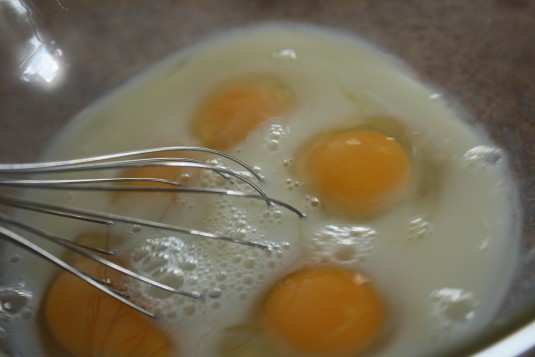
Step 2: Whisk the eggs and milk. In a large mixing bowl, whisk together the 5 eggs and ½ cup of milk until they’re fully combined — you’ll see the color lighten slightly as you whisk. That’s what you want. A good balloon whisk makes this faster and you get better incorporation than with a fork.
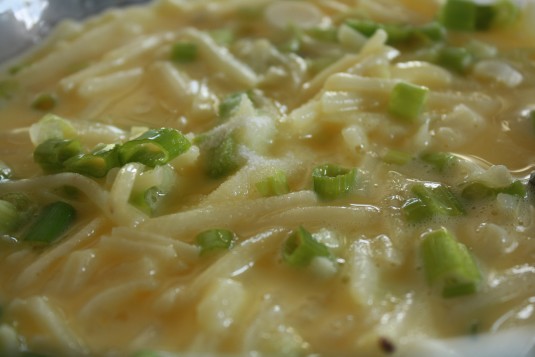
Step 3: Add the filling ingredients. To the egg mixture, add the thawed hashbrowns, sliced green onions, salt, pepper, and 7 of the crumbled bacon slices (hold one back for the top). Stir everything together until evenly combined — you want bacon and onion distributed throughout so every bite has a little of each, not everything clumped in one area.
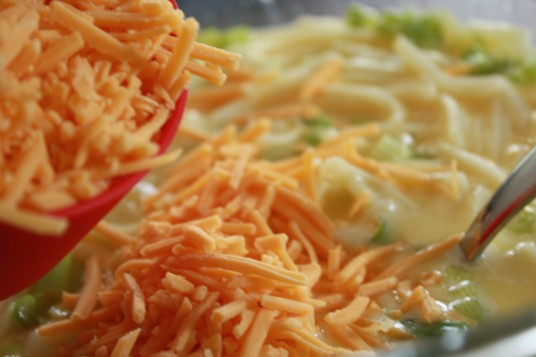
Step 4: Add the cheese. Stir in 1 cup of the shredded cheddar. The mixture will look thick and slightly chunky at this point — that’s exactly right. The hashbrowns hold everything together and the egg will fill in the gaps during baking.
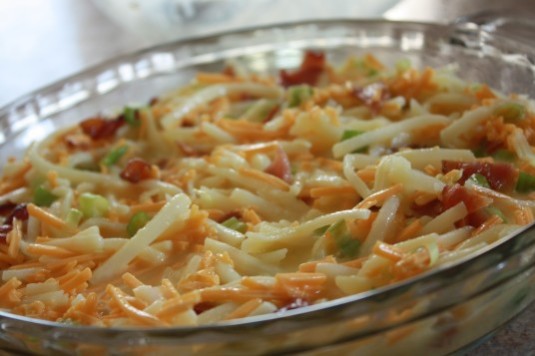
Step 5: Fill the pie plate and top it. Pour the mixture into the greased pie plate — it’ll come up close to the rim, which is fine. Spread it into an even layer. Top with the remaining ½ cup of shredded cheddar, then scatter the last crumbled bacon slice over the cheese.
Step 6: Bake uncovered for 35–40 minutes. The top should be golden — not just set, but genuinely golden with some color on the edges. The center should not jiggle when you gently shake the pan. If it still moves in the middle, give it another five minutes. A toothpick inserted into the center should come out clean, not wet.
Step 7: Let it rest, then cut. Five minutes on the counter before cutting. The casserole continues to set as it cools and slices dramatically cleaner after that short rest. Cut into wedges like a pie — a pie server spatula gets under the slices cleanly without tearing them apart.
Tips That Make a Real Difference
Use a deep-dish pie plate
The standard 9-inch pie plate works, but the filling comes right up to the rim and any small overflow can burn on the oven floor. A deep-dish pie plate — 9.5 or 10 inches — gives you breathing room and produces thicker slices. Ceramic pie plates conduct heat evenly, which matters for a casserole that needs to bake all the way through without the edges burning before the center sets.
Season more than you think you need to
Eggs and potatoes are both fairly neutral. The salt and pepper in the recipe are a starting point, not a ceiling. Taste your filling before it goes in the pie plate and adjust. Adding a pinch of garlic powder and a little smoked paprika to the egg mixture takes this from straightforward to notably better without changing what the dish is.
Don’t skip the greased pan
The egg and cheese mixture sticks. Spray the pie plate well, paying attention to the sides and the curve at the bottom. Cooking spray works fine; butter also works and adds a little flavor to the outer crust.
Let the bacon drain properly
Bacon grease in the casserole doesn’t hurt the flavor, but too much grease can make the texture slightly greasy throughout. Drain the cooked bacon on a paper towel-lined plate for a minute before crumbling it. You don’t need to press it dry — just let the excess grease run off.
Add a layer of hot sauce at the table
This casserole is mild and crowd-friendly as written — which is the point when you’re feeding eight people who have different heat tolerance. Put a bottle of hot sauce or salsa on the table and let people add it themselves. The ones who want heat will appreciate it; the ones who don’t can ignore it.
Variations Worth Trying
Sausage instead of bacon
Breakfast sausage cooked and crumbled is a direct swap — use the same amount. It gives the casserole a more savory, herby flavor. Italian sausage works too, though it takes the dish in a slightly different direction.
Ham version
One cup of diced ham replaces the bacon and requires zero cooking. This is what I use when I’m assembling the night before and want the morning to be as simple as possible. Leftover holiday ham cut into small cubes is excellent here.
Pepper jack for heat
Swap the cheddar for pepper jack — all of it, or just the top layer. The heat is subtle after baking but it’s there, and it pairs well with the bacon and egg. Good option if you know your crowd runs toward spicy.
Adding vegetables
Diced bell pepper — about half a cup — works well mixed into the filling. Baby spinach (a large handful) wilts into the casserole and disappears into the structure, adding nutrients without changing the flavor much. Mushrooms work too, but cook them first in a dry skillet until their moisture evaporates before adding them to the mix. Raw mushrooms release too much liquid in the oven and throw off how the casserole sets.
Vegetarian version
Skip the meat entirely and double the vegetables: half a cup of diced bell pepper, a handful of spinach, and some sliced mushrooms (pre-cooked). The casserole still holds together and bakes up well — the eggs and hashbrowns provide enough substance. Consider adding a little smoked paprika to compensate for the smokiness you lose without bacon.
Lighter version
Use 3 whole eggs plus 4 egg whites instead of 5 whole eggs. Swap regular cheddar for reduced-fat cheese and use turkey bacon or diced ham in place of regular bacon. Reduce the total cheese to 1 cup. The casserole will be a little less rich but still holds together and tastes like breakfast.
Make-Ahead and Storage
Assembling the night before
This is genuinely the best way to make this casserole when people are coming over for brunch. Mix everything together the night before, pour it into the greased pie plate, top with the remaining cheese and the crumbled bacon, then cover tightly with plastic wrap and refrigerate. In the morning, pull it out while the oven preheats. Bake as directed, but add 10–15 extra minutes to account for the cold start. Everything else is the same — look for the golden top and the jiggle test.
One note: don’t add the top cheese layer the night before if it bothers you to see it get a little wet-looking overnight. You can hold that half cup back and scatter it on top just before the pan goes in the oven. It makes no practical difference to the finished casserole, but some people find it more appealing to add it fresh.
Storing leftovers
Cover the pie plate with plastic wrap or transfer slices to an airtight container. Refrigerate for up to 4 days. The casserole holds up well — the hashbrowns and cheese actually keep it from drying out the way plain egg dishes sometimes do.
Reheating
Individual slices reheat well in the microwave — 1 to 2 minutes on high. Cover loosely with a damp paper towel to keep them from drying out. For better texture, reheat in a 325°F oven for 10–12 minutes. The oven method keeps the edges from getting rubbery and the top from getting tough, which the microwave tends to do.
What to do with leftover slices
Cold slices wrapped in a flour tortilla with a little hot sauce make a genuinely good portable breakfast. If you chop a leftover slice into cubes and scramble it with a couple of fresh eggs, you get a different dish with the same ingredients — the hashbrowns crisp up a bit in the pan and the cheese melts again. Worth doing rather than eating the same thing four days in a row.
Serving Suggestions
The casserole is a complete breakfast on its own — eggs, protein, carbs, and cheese in every slice. But it pairs naturally with:
- Fresh fruit or a simple fruit salad on the side
- Buttered toast, biscuits, or English muffins for people who want more carbs
- Orange juice and coffee — the obvious, for a reason
- Sour cream on top works surprisingly well, especially with the bacon version
- Salsa or pico de gallo on the side for people who want brightness and acid
For a larger brunch spread, this works well alongside something sweet — a tray of muffins or a coffee cake — so there’s a savory centerpiece and a sweet option. Most people take a slice of each.
A Few Things Worth Having
You don’t need special equipment for this recipe, but a couple of items make it consistently better:
A deep-dish ceramic pie plate. Standard 9-inch works, but deep dish gives you thicker slices and no overflow risk. Ceramic pie plates distribute heat evenly across the bottom and sides, which is how you get a casserole that’s fully set in the center without overcooked edges. They also go from oven to table without looking like a baking pan.
A large mixing bowl with a pour spout. You’re mixing a substantial amount of filling and then pouring it into the pie plate. A bowl with a built-in pour spout makes this cleaner and faster. Mixing bowl sets with pour spouts and lids are also useful for the make-ahead version — you can mix in the bowl, pour into the pie plate, and have the bowl ready for the next morning’s prep.
A box grater for the cheese. Freshly grated cheese melts better than pre-shredded, and a sturdy box grater makes it a two-minute job. The large hole side is what you want for cheddar — it melts into the casserole evenly and gives you that satisfying pull when you cut a slice.
Frequently Asked Questions
Can I make this the night before?
Yes — and it’s actually the version I recommend. Assemble everything in the pie plate, top with the cheese and bacon, cover tightly, and refrigerate overnight. Bake in the morning with an extra 10–15 minutes added to the bake time since it’s starting cold from the refrigerator. The overnight rest lets the hashbrowns absorb some of the egg mixture, which makes the finished casserole bake up more cohesive and easier to slice.
Do the hashbrowns really need to be thawed first?
Yes. This is the most commonly skipped step and it’s the reason casseroles come out wet and undercooked in the center. Frozen hashbrowns release a significant amount of water as they thaw in the oven, which prevents the eggs from setting. Thaw them completely in the fridge overnight or in the microwave before mixing. Refrigerated shredded hash browns from the produce section skip the thawing step entirely and work just as well.
Can I use ham instead of bacon?
Yes. Use 1 cup of diced ham in place of the 8 slices of bacon — no cooking required. The casserole is slightly milder and less smoky, but it still works well. Leftover ham from a holiday meal is excellent here. This is the version to make if you want even less morning prep time.
How do I know when it’s done?
The top should be golden and the center should not jiggle when you shake the pan gently. A toothpick inserted in the center should come out clean, not wet. Don’t pull it out just because the timer says 40 minutes — go by those visual and tactile cues. If it’s still wet in the middle, add five more minutes and check again.
Can I double the recipe?
Yes, but you’ll need a 9×13 baking dish instead of a pie plate. Double all the ingredients and increase the bake time to 45–55 minutes. The casserole will be a little thinner in the larger pan but will still set properly. Check for doneness with the jiggle test.
Can I freeze it?
Yes, though the texture is slightly different after freezing and reheating — the hashbrowns can get a little softer. Let the casserole cool completely, cut into slices, wrap individually in plastic wrap, and freeze in a zip-top bag for up to 2 months. Reheat from frozen in a 350°F oven for 20–25 minutes, or thaw overnight in the refrigerator and microwave for 1–2 minutes.
What if I don’t have a pie plate?
An 8×8 or 9×9 square baking dish works fine. The casserole will be a different shape but bake up the same. Adjust the bake time by a few minutes — square pans tend to conduct heat slightly differently than round pie plates, so start checking at 35 minutes.
Can I add vegetables?
Yes. Diced bell pepper and baby spinach work well added directly to the filling. Mushrooms should be cooked first — raw mushrooms release too much liquid during baking and will prevent the casserole from setting properly. Cook them in a dry skillet over medium-high heat until their moisture is gone, let them cool slightly, then mix them in.