
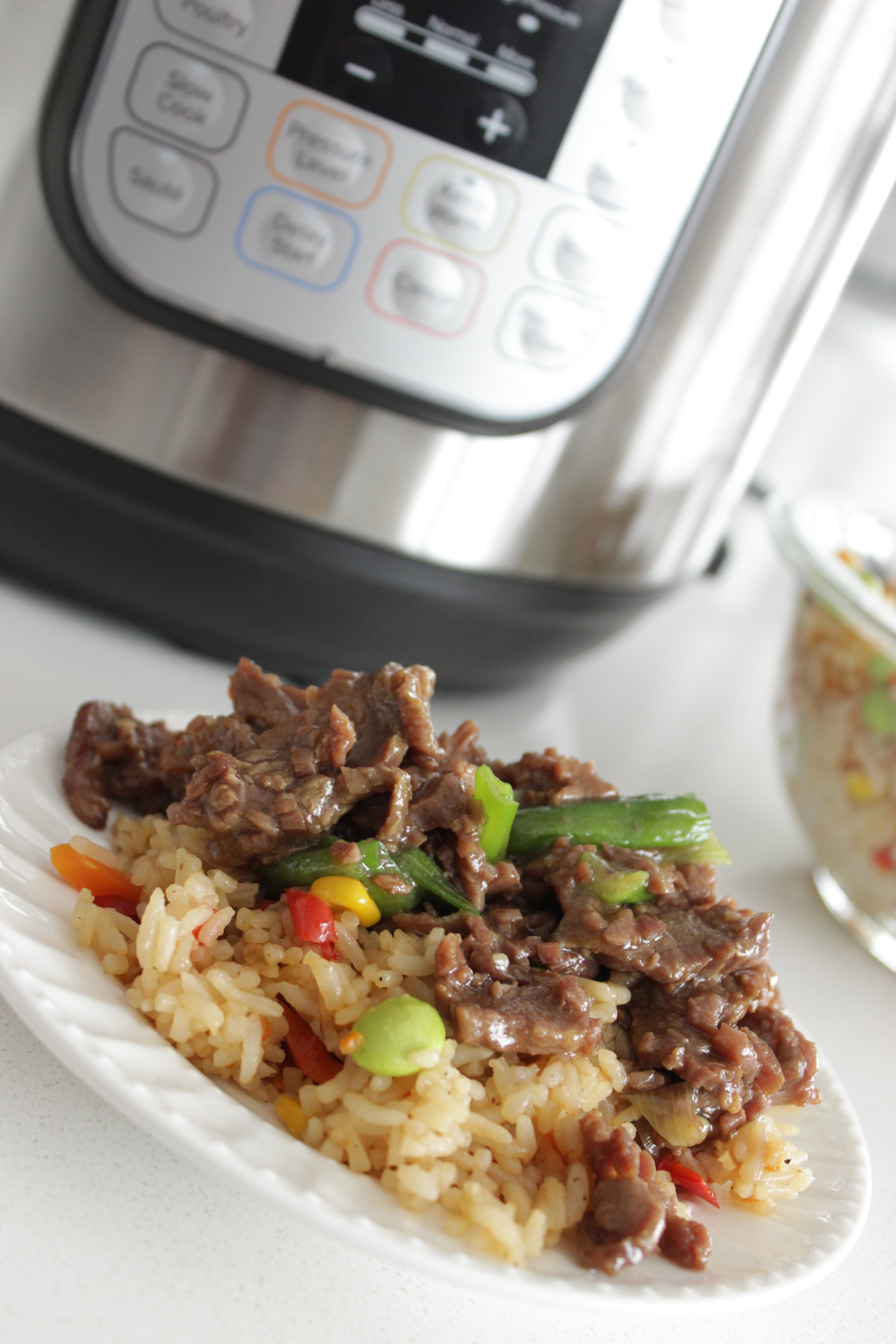
Instant Pot Mongolian Beef with Fried Rice
This recipe for Mongolian beef is easier than takeout and comes together in no-time thanks to the IP. Tender and delicious.
Mongolian beef is one of those dishes that’s amazing to order from a takeout Chinese restaurant but seems intimidating to make at home. But when made in an Instant Pot, it’s quick and easy.
And it’s served over fried rice making this dish a meal that takes less than 30-minutes.
What Makes This Recipe Reliable
- The magic combo of ginger and garlic, these are the main aromatics in Mongolian beef that give it that restaurant-quality flavor
- Flank steak pressure-cooked, Flank steak is a lean cut that can be tough if not cooked correctly (more below), but pressure-cooking it for just 12-minutes makes it fall apart perfectly. It’s tender but not overcooked and dry.
- Cornstarch for a restaurant-quality, thickened glaze, The sauce comes out of pressure-cooking pretty runny. A simple cornstarch slurry transforms it to a thicker, more glossy, restaurant-quality sauce.
What to Know Before You Start
- Flank steak, Flank steak is a lean, flavorful cut of beef that can be a little finicky to cook on the stovetop because it can get tough and chewy pretty quickly. That’s why we love making Mongolian beef in the IP. Pressure-cooking the beef breaks it down and makes it fall apart perfectly without drying it out.
- Prep your meat – Slice the flank steak into thin, 1/4-inch slices against the grain before cooking. Ask your butcher to slice it for you if you’d rather.
- Don’t crowd the Instant Pot – Searing the beef before pressure-cooking adds flavor and depth to the sauce, but it’s important to cook in batches if needed. If you crowd the IP, the meat will steam and won’t brown.
- Yield – This recipe makes plenty for 4 people. If you’d like to increase it to serve 6, add another 1/2 pound of flank steak but keep the same amount of sauce. It should work.
Tips for Success:
- Total time is about 30 minutes but there are a couple things not accounted for in the recipe. It takes about 11-12 minutes for the pressure cooker to come to pressure. Also, it’s much easier to slice the steak into even pieces after putting it in the freezer for 20-30 minutes. You can always ask them to cut it into strips at the butcher counter too, and they’ll do it for free. With these tweaks, the recipe takes about 30 minutes start to finish.
- Use a quick release so you don’t overcook the beef. It will be at the perfect level of tenderness after being cooked for 12 minutes under pressure. Tip: hold a large kitchen towel over the valve when releasing so you’re not standing directly in the venting steam or in front of your poor kitchen cabinets.
- Make sure you mix together the cornstarch and water before you start. You can make it and set it aside and it’ll be waiting for you when you’re ready.
- Stir continuously while it’s thickening (2 minutes).
The Beef
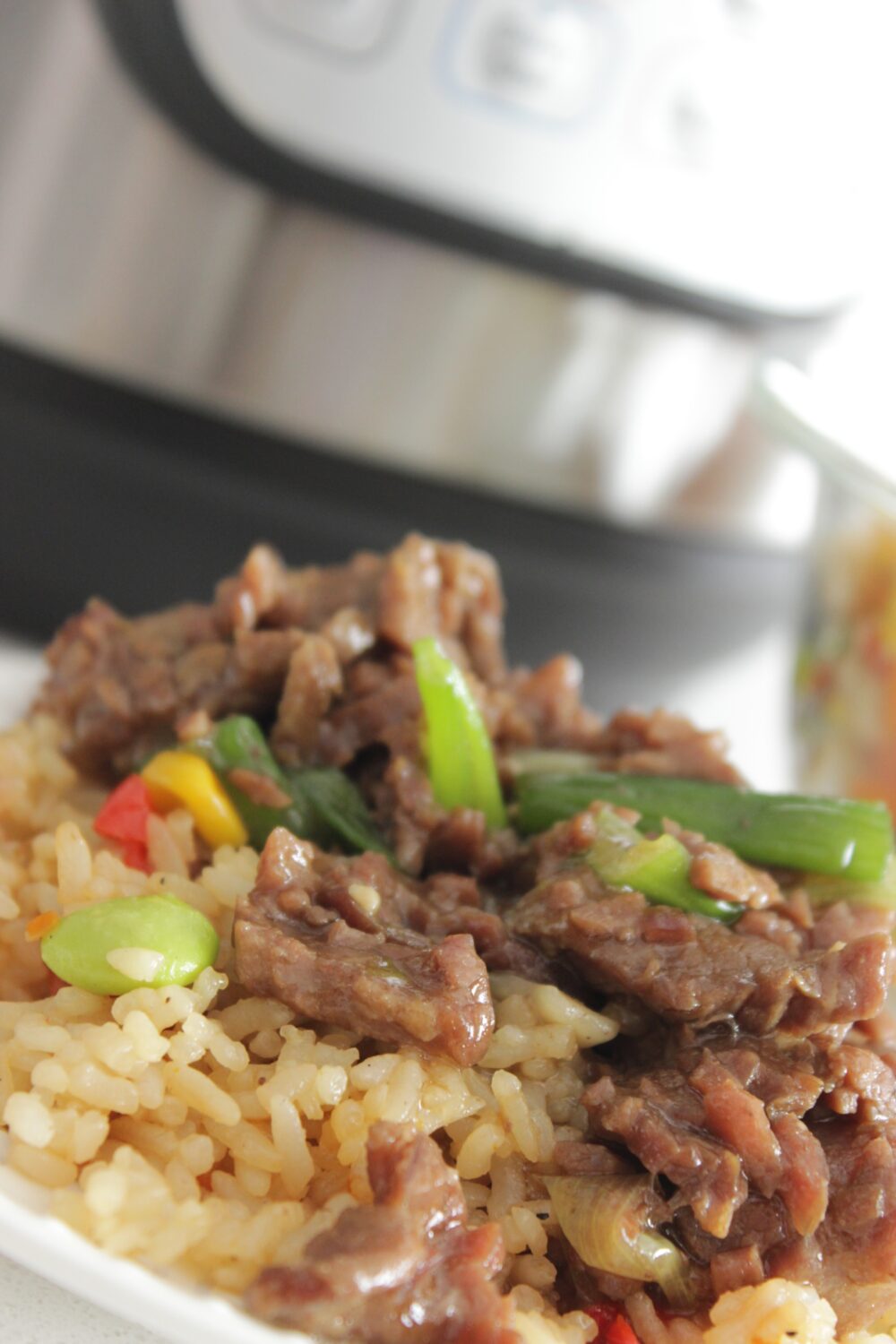
- It’s very important to use flank steak in this recipe and cut against the grain. It will make it super tender and will really up the beefy flavor. Flat iron or skirt steak could also work. Don’t use stew meat/chuck as the timing is perfect for a lean cut of meat and the sauce is balanced to accommodate.
- There’s a lot of beef in this recipe (2 lbs!), so to ensure it’s not crowded when sautéing, be prepared to do it in batches which takes about 5 minutes.
The Sauce
- The recipe calls for regular soy sauce (1/4 cup). It provides umami and saltiness to the sauce and balances out the brown sugar perfectly. Using low-sodium soy sauce will throw off the balance of the recipe.
3/4 cup beef broth – The Instant Pot does need enough liquid to come to pressure and this is what makes the sauce. Do NOT use water.
You will seriously compromise the flavor of the recipe.
1/3 cup dark brown sugar, or reduced to 1/4 cup – dark brown sugar has more molasses in it then light brown sugar, therefore, has a deeper flavor.
1/2 teaspoon minced fresh ginger or 1/4 teaspoon ground – ground is stronger so use less.
- 4 cloves of minced garlic
2 tablespoons of vegetable oil or another cooking oil with a neutral flavor, such as canola – You can use olive oil in a pinch, but we really do not suggest it.
To Finish
3 tablespoons cold water + 2 tablespoons cornstarch mixed well together – corn starch will help to thicken the sauce and give it a nice, thick, shiny glaze that clings to the beef
3 green onions cut into 1 inch pieces, to add a nice pop of color and presentation plus a bit of spice
How to Make Instant Pot Mongolian Beef
Step 1: Brown the Beef
Place the inner pot into the Instant Pot and choose Sauté until the display reads “on.” Add the cooking oil to the Instant Pot and wait for it to get hot, it should start to shimmer a little. Add the beef in two or three batches so the meat is not overcrowded, browning it for a few minutes on all sides, as crowding the meat will decrease the heat causing it to steam instead of brown.
Remove from Instant Pot and repeat until all of the beef has been browned.
Transfer the beef out of the Instant Pot onto another plate. It doesn’t need to be cooked through at this point, it’s simply getting browned on the surface.
Step 2: Sauté the Garlic
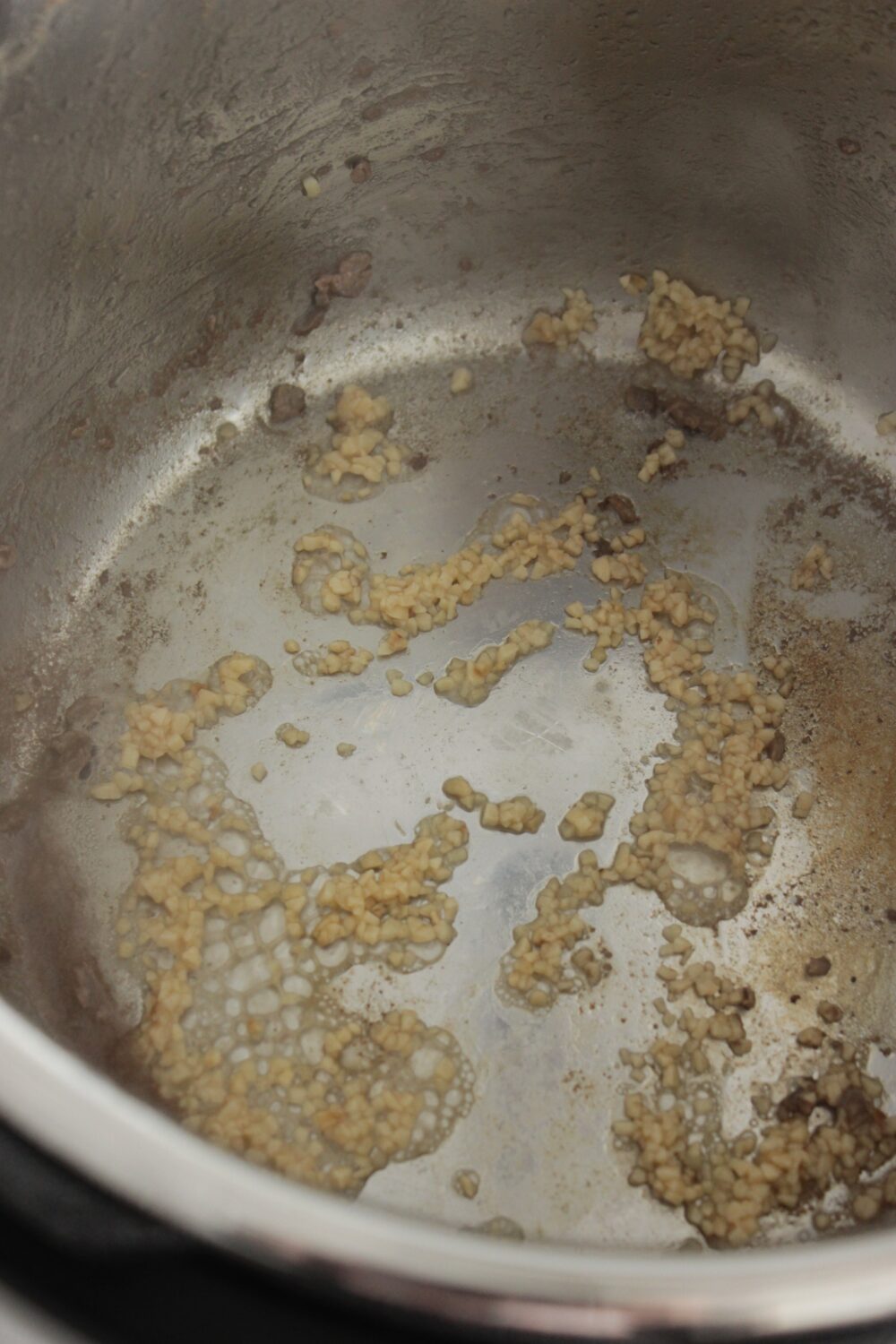
Add the garlic to the Instant Pot and cook on the saute setting for about a minute until fragrant and lightly browned. Keep an eye on garlic; it burns very quickly.
Step 3: Build the Sauce
Return the beef and any accumulated juices to the Instant Pot and stir in the soy sauce, beef broth, brown sugar, and ginger. Scrape the bottom of the pot to incorporate any browned bits.
This will give the dish tons of flavor and avoid getting a burn alert on your Instant Pot.
Step 4: Pressure Cook

Lock the Instant Pot lid in place and turn the valve to the sealed position. Turn the Instant Pot back on and select MANUAL or PRESSURE COOK, choose HIGH, and lower the TIME to 12 minutes.
It will take the Instant Pot 8-10 minutes to come to pressure, at which point the 12-minute cooking time will begin.
Once the Instant Pot beeps, indicating that it’s finished, switch it OFF and perform a QUICK PRESSURE RELEASE: Place a large towel over the pressure valve and stand away from the valve, where hot, pressurized steam shoots out; make sure it’s pointed away from you and any overhead cabinets. Flip the pressure valve to the vented position to release the pressure.
When the valve lowers and there’s no more steam coming out, it’s safe to remove the lid.
Step 5: Thicken the Sauce
The sauce will be very thin at this point, which is okay. Mix together the cornstarch and cold water until smooth.
Switch the Instant Pot back on and select the SAUTE setting. Give the beef and sauce a stir and pour in the cornstarch slurry.
Keep stirring over heat until the sauce becomes glossy and coats a spoon and has thickened, which usually takes 1-2 minutes. Remove from heat, stir in scallions, and serve.
What to Serve It With
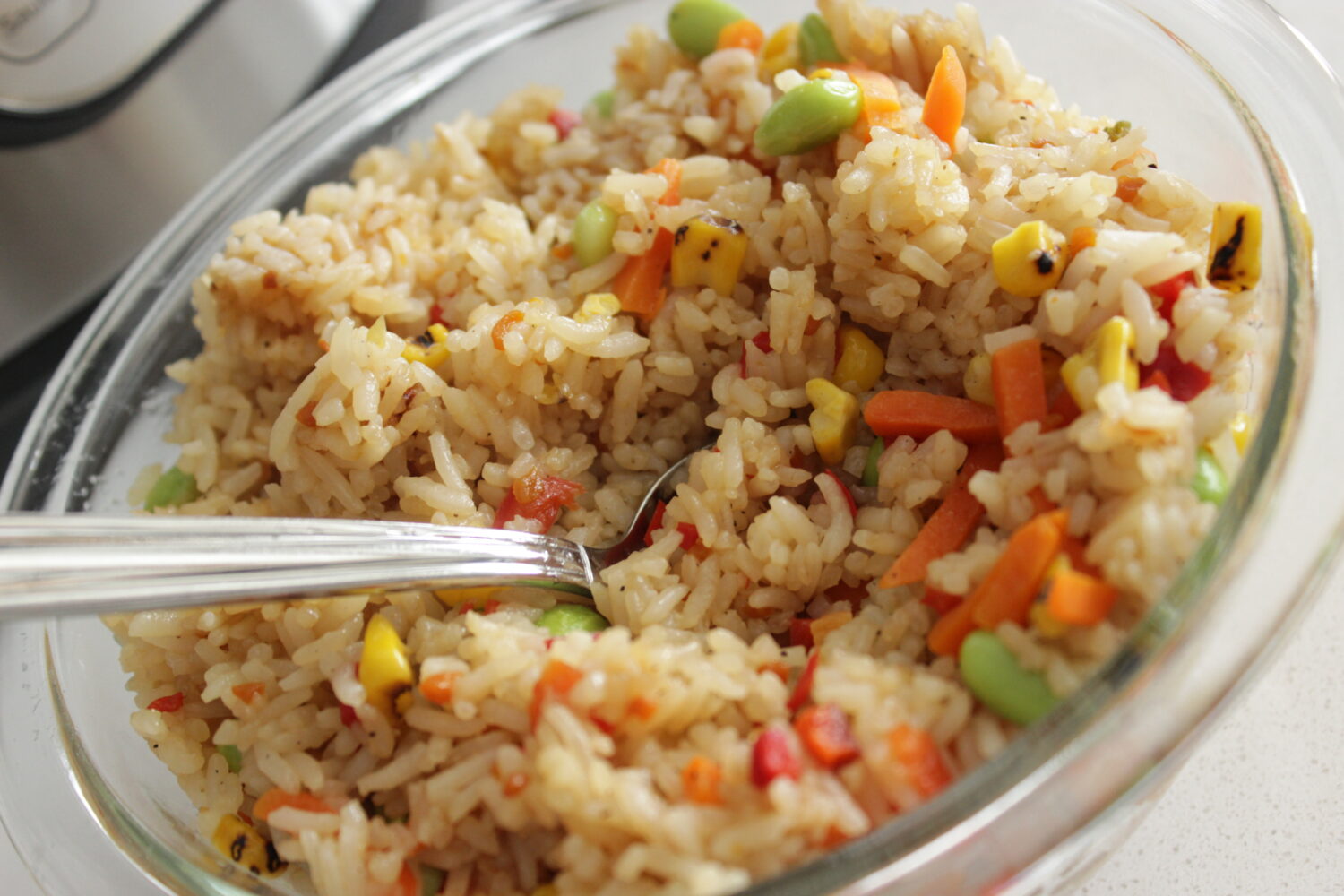
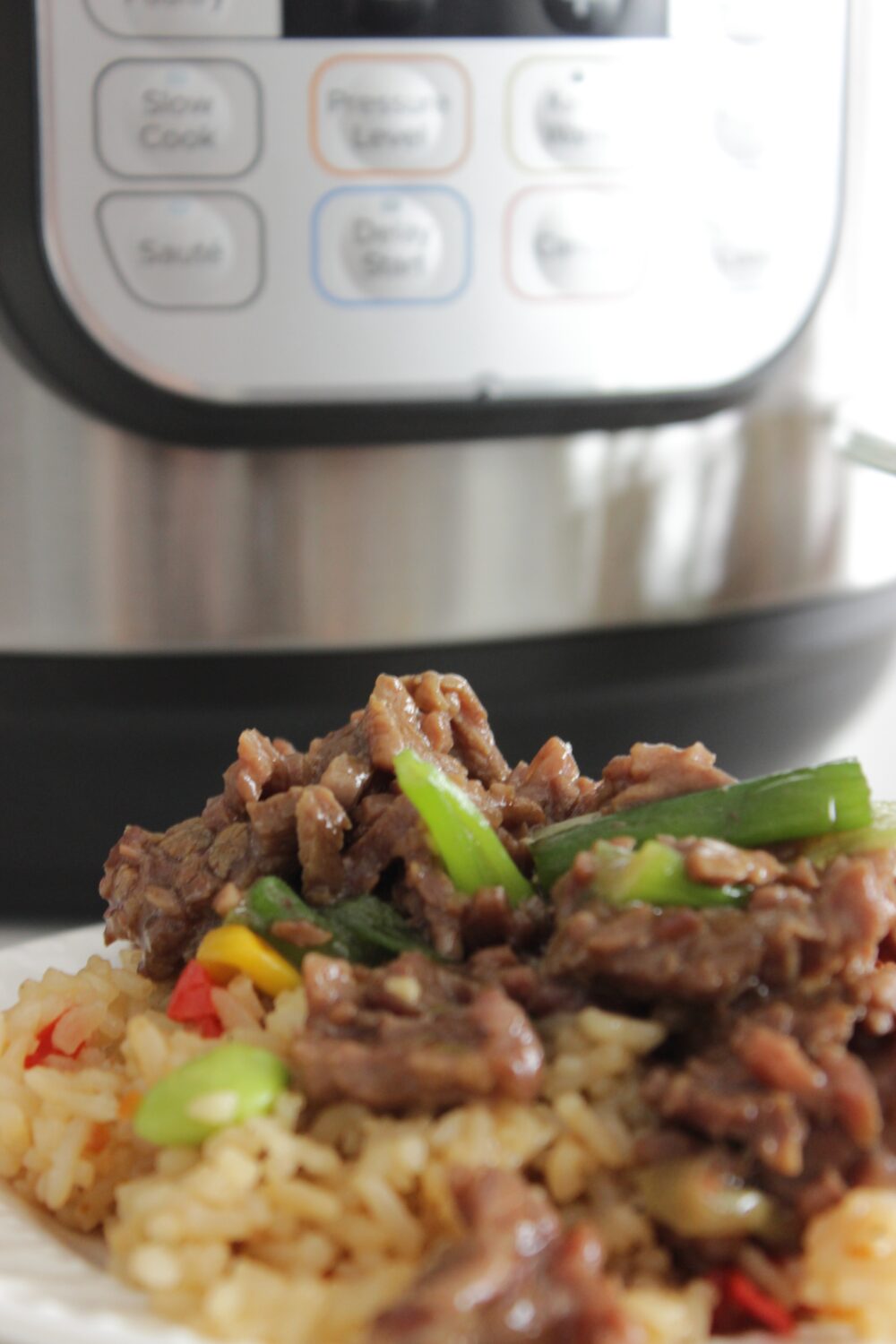
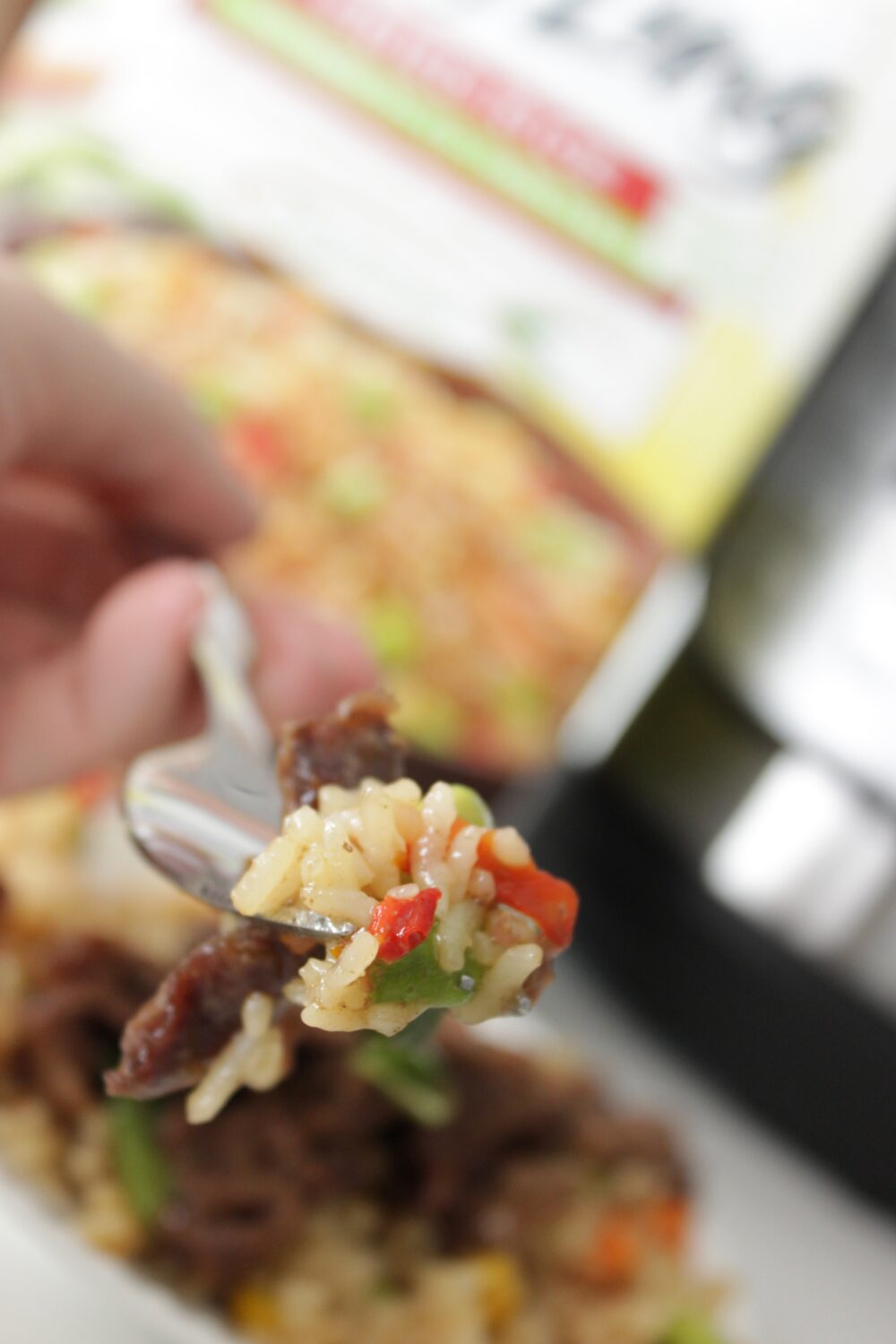
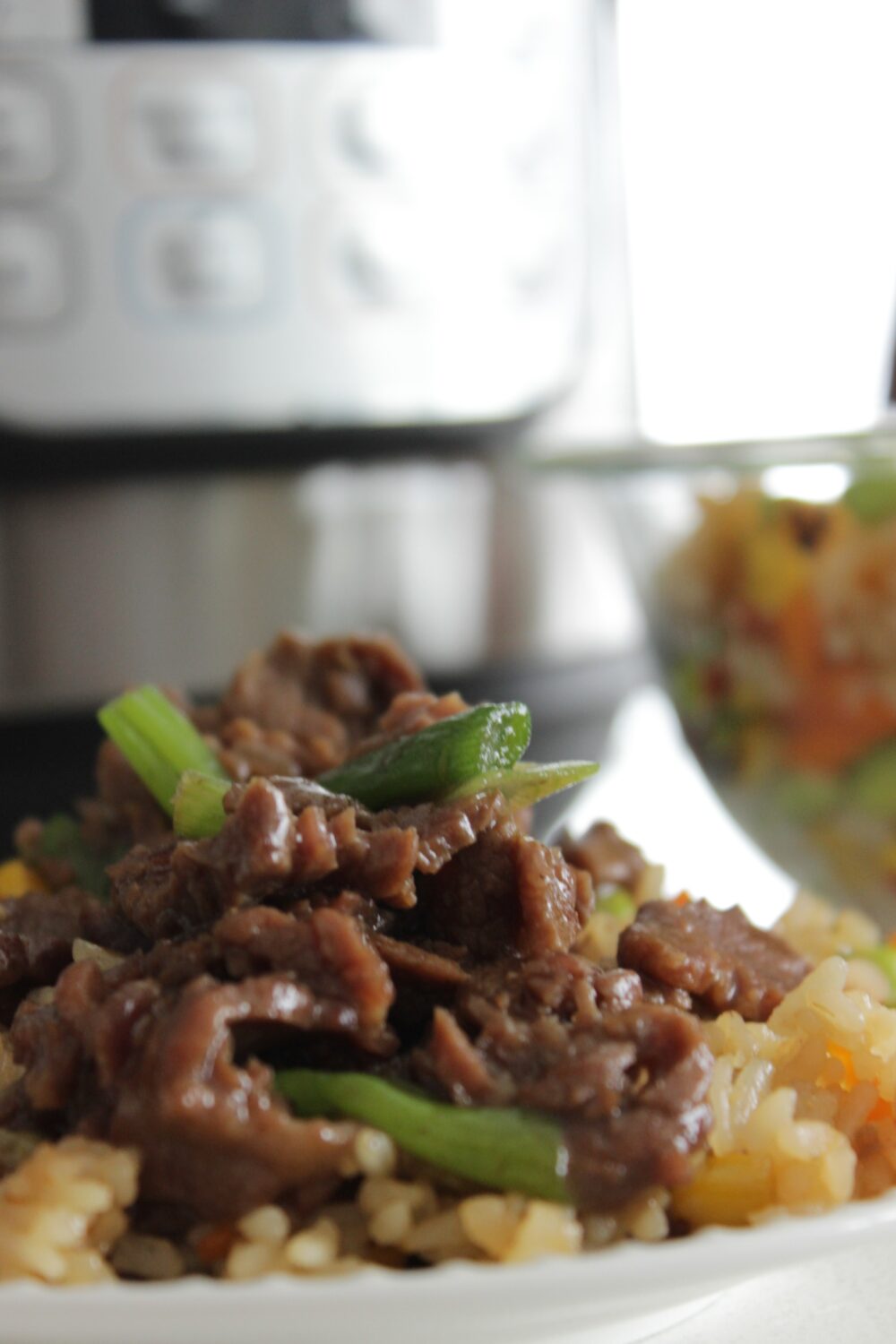
This Instant Pot beef is delicious over rice, and you can try making a batch of my Fried Rice to soak up that salty, sweet, soy-ginger sauce. YUM!
Helpful Tips
This recipe can be adjusted to accommodate your preferences. Feel free to add a couple of additional green onions.
Swap out the green onion for celery. Use frozen peas instead of snap peas.
Add some red pepper flakes to make it spicy. Whatever works for you.
- Steamed white rice and steamed broccoli make a great side dish for Mongolian beef. Steamed snap peas would be great, too. If you’re up for it, you can cook the broccoli in the IP during the last 3-4 minutes, during the saute/thickening step. Add some broccoli florets and cook until just tender-crisp.
- Cut the beef into smaller pieces, no more than 1/4″ thick, so it will absorb the sauce and cook more evenly. Thicker slices won’t ruin it, just might result in slight texture differences and require a little more cooking.
- Don’t skip browning the meat. Browning beef is important. Browning the meat develops flavor through a process called the Maillard Reaction. It will take a couple of batches and 5-7 minutes to brown the meat, but it’s worth it. There’s no substitute for browned meat and the flavors developed by browning simply cannot be duplicated when you pressure cook meat.
- Don’t skip scraping the bottom of the pot after adding the sauce and water. All it takes is a few seconds with a wooden spoon or silicone spatula and it’ll save you from receiving the burn notice. Bits of food in the bottom of the pot are the main culprit behind the burn notice.
- Serving suggestion: Lo mein noodles make a great alternate to white rice. Toss the cooked lo mein noodles with a small amount of sesame oil. Lo mein noodles and Mongolian beef is a winner and will help this recipe stretch to feed a crowd.
- If the sauce is a little too sweet after thickening, stir in 1/2 tsp rice vinegar. The vinegar will help balance the sweetness and will not taste vinegary. If the sauce needs a little more salt, stir in 1 tsp soy sauce as it incorporates better than adding table salt.
Make It Spicy
Want a little spice with your beef? Add 1/2 teaspoon of red pepper flakes to the dish before pressure cooking.
This will add a nice, subtle kick without overwhelming the other flavors. Alternatively, you can stir in a teaspoon of Chili Garlic sauce (Sambal Oelek) at the end of cooking.
Make It Gluten-Free
Sub the soy sauce for gluten-free tamari or coconut aminos. Note: If you’re using coconut aminos, I’d reduce the amount of brown sugar to 1/4 cup since coconut aminos are much sweeter than soy sauce.
Add Vegetables
You can add vegetables to beef such as broccoli, snap peas and/or bell peppers. Simply add them to the pot and saute with the beef for an additional 3-5 minutes.
Add them AFTER pressure cooking since vegetables do not pressure-cook well and will turn to mush.
The recipe as written contains 1/3 cup of brown sugar which lends itself to a sweeter version of mongolian beef. For a slightly savorier version that’s still sweet and will coat the meat, reduce to 3-4 tablespoons.
Storage, Make-Ahead, and Leftovers
This Mongolian Beef Pressure Cooker recipe stores well.
To store in the fridge, place in an air-tight container and consume within 4 days. Trust me, this gets even BETTER the next day.
The beef absorbs all of that glorious sauce.
To store in the freezer, place in an air-tight freezer safe bag or container and enjoy within 3 months. Thaw in fridge overnight before enjoying.
There’s a chance that the sauce will separate in the freezer, but that will go away when you give it a stir.
To reheat on the stove, add to a pot over medium-low heat and heat through. This is my favorite way to reheat since the sauce stays the same.
To reheat in the microwave, loosely cover and microwave in 1 minute increments until warmed, stirring in between.
Make Ahead
To save yourself some time in the week, slice up the beef and combine all of the sauce ingredients (minus the cornstarch slurry) the day ahead of time. Store in the refrigerator until ready to prepare.
Recommended Tools
I recommend the Instant Pot Duo 7-in-1 if you’re new to pressure cooking. That’s what I use and have been using for several years now.
For this particular recipe, 6-qt IP would be fine. In general, if you regularly make recipes for 6+ I’d go with an 8-qt.
What kind of spatula is that?
That is a silicone spatula which is helpful for getting into all the cracks and crannies without scratching the IP. This one is bendable which is helpful.
Frequently Asked Questions
Can I use a different cut of beef?
I think skirt or flat iron steaks could be used as they have similar cooking times, texture, and fat levels as flank. Sirloin may work too but you never quite know what you’re going to get with sirloin as some parts will be really soft and thin.
Chuck or other cuts of stew beef would require a longer cooking time in the pressure cooker.
My sauce came out too thin. What happened?
There are a couple of things that may have happened. Maybe your cornstarch and broth did not fully incorporate and some cornstarch lumps made their way into the pot.
Make sure you’re stirring that cornstarch into the broth really well. It may be that your IP’s Sauté function isn’t heating things up enough or maybe you didn’t stir often enough or long enough.
Try sautéing it a bit longer and see if it thickens. If it’s been two minutes and it’s not thickening, mix together 1 tsp of cornstarch and 1 Tbsp cold water and add to pot.
Stir for another minute and hopefully it will start to thicken.
I got a burn notice. What do I do?
It happens to the best of us. Turn off IP, open valve to release pressure, open lid being careful of hot steam.
Most times the burn notice happens when there are browned pieces stuck to the bottom that weren’t scraped up after sautéing the meat and veggies. Add about 2-3 Tbsp of the broth and scrape up any browned pieces.
Close lid and start cooking time again.
- Can I double the recipe? Yes. Say you use 2 pounds of beef, so if you’re doubling it, it’ll be 4 pounds of beef. That’s VERY close to the max fill line in a 6 quart Instant Pot, but it will fit. You’ll likely have to brown it in extra batches as you don’t want to crowd the Instant Pot with it. The meat will cook in the Instant Pot the same time, 12 minutes on high pressure. If you have an 8 quart pressure cooker, this recipe will fit/double much more easily.
- Can I make this without a pressure cooker? Yes, it’s easy to make it on the stovetop with a large skillet or wok. Keep in mind, it WILL have a different texture than the pressure cooker version. Essentially, you’d brown the meat in batches and remove it from the pan, add the garlic and cook until fragrant, add the rest of the sauce ingredients EXCEPT the cornstarch and beef, bring to a boil, add the beef, reduce the heat to med-low, cover, simmer for about 15-20 minutes until beef is cooked through and tenderized, stir in cornstarch slurry and simmer until thickened. Be careful to keep an eye on it as it’ll turn out more chewy with wrong cooking time/heat, especially with flank steak.
- Is this recipe sweet? Can I adjust it? Mongolian beef IS supposed to be on the sweeter side but this recipe isn’t overly sweet. There is 1/3 cup of dark brown sugar. If you’d like it to be less sweet, reduce the brown sugar to about 3-4 Tbsps. You may even want to add another Tbsp of soy sauce to amp up the salty/savory aspect of it. You can easily adjust the seasonings/sauces once they’re all stirred together and thickened, and then taste and adjust.
Serves: 4
This Instant Pot Mongolian Beef recipe has tender slices of beef in a deliciously sweet and savory sauce. Make it in 30 minutes with your Instant Pot.
- 2 pounds flank steak sliced thinly against the grain
- 2 tablespoons vegetable oil
- 4 cloves garlic, minced
- 1/4 cup soy sauce
- 3/4 cup beef broth
- 1/3 cup dark brown sugar
- 1/2 teaspoon fresh ginger, minced
- 2 tablespoons cornstarch
- 3 tablespoons cold water
- 3 green onions, sliced into 1 inch pieces
- Cut flank steak thinly, making sure to cut against the grain for more tender pieces of beef. Set aside.
- Heat vegetable oil in Instant Pot using Sauté function. When oil starts to shimmer, add beef and allow to brown, turning once. This should take 1 to 2 minutes per side. Remove beef to a plate and repeat with remaining meat.
- Add garlic to same pot and cook for about 1 minute, stirring frequently.
- Add soy sauce, beef broth, brown sugar and ginger, stirring to loosen up browned bits on bottom of Instant Pot. Add beef and any accumulated juices. Lock lid, making sure valve is in sealing position. Cook on high pressure for 12 minutes. Perform a careful quick release of steam.
- Whisk cornstarch and water together. Switch Instant Pot back to Sauté function and add cornstarch mixture. Allow mixture to simmer for 1-2 minutes, stirring frequently, until thickened and glossy. Remove from heat. Stir in green onions. Serve over steamed rice. Enjoy!
You can reduce the amount of dark brown sugar if you don’t like it too sweet. I would go as far as 1/4 cup if you want it less sweet.
If you make this Mongolian Beef recipe in the Instant Pot, you HAVE to try our Instant Pot Fried Rice recipe to serve alongside. We love this recipe because we make everything in the Instant Pot.
You’ll thank us later.
- You can double this recipe with no change to cook time. An 8-quart Instant Pot will help to accommodate the increased portion.
- Do not crowd the Instant Pot when browning beef. Crowding can result in steaming the beef. It’s okay to do this in batches.
- If you’re looking for another fantastic meaty pressure cooker recipe, be sure to try our Instant Pot Teriyaki Chicken recipe. This recipe uses tender chicken thighs that soak up the teriyaki sauce.

Instant Pot Mongolian Beef with Fried Rice
Ingredients
- 2 pounds flank steak sliced thinly against the grain
- 2 tablespoons vegetable oil
- 4 cloves garlic minced
- 1/4 cup soy sauce
- 3/4 cup beef broth
- 1/3 cup dark brown sugar
- 1/2 teaspoon fresh minced ginger
- 2 tablespoons cornstarch
- 3 tablespoons cold water
- 3 green onions sliced into 1-inch pieces
- Fried rice or steamed rice for serving
Instructions
- Add vegetable oil to the Instant Pot and select Sauté. Let the oil heat until shimmering.
- Brown beef strips in batches for 1 to 2 minutes per side. Do not crowd the pot. Transfer browned beef to a plate.
- Add minced garlic to the pot and sauté about 1 minute, stirring constantly.
- Add soy sauce, beef broth, brown sugar, and ginger. Scrape up browned bits from the bottom of the pot.
- Return beef and any juices to the pot. Lock the lid, set valve to sealing, and cook on high pressure for 12 minutes.
- Quick release the pressure carefully, then switch back to Sauté.
- Whisk cornstarch with cold water to make a slurry. Stir it into the pot and simmer 1 to 2 minutes, stirring, until the sauce is glossy and thickened.
- Stir in green onions and serve immediately over fried rice or steamed rice.