
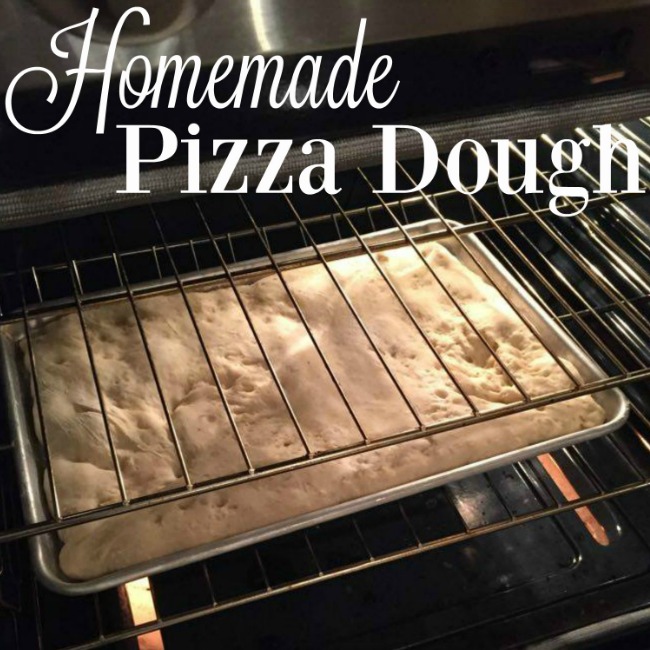
Easy Homemade Pizza Dough Dinner Recipe
Friday night = pizza night in our house. And, once I found a really easy pizza dough recipe that ALWAYS turns out well, making homemade pizza became automatic.
Homemade pizza dough is so easy to make. Just mix together ingredients and let the dough rise.
Then, when the dough has risen, you’ll be able to easily stretch it out and top with pizza sauce and toppings.
The process of making homemade pizza is pretty much all clock time and not actually that much work at all. You can make it in a bread machine, stand mixer or with a bowl and your hands.
Why This Pizza Dough Works
Homemade pizza dough that tears when you try to stretch it out or bounces back is disappointing, to say the least. Baking it only to find it tastes like cardboard isn’t any more encouraging.
Clock time is about an hour and forty-five minutes before you’ll add pizza sauce and toppings and pop it into the oven. Starting at 3:00 will have it ready to go by 5:30.
This recipe for homemade pizza dough uses olive oil which keeps the gluten from being too tight before rising. As a result, it is easier to stretch.
It also helps to make sure you get the perfect pizza crust that is crisp and chewy, not cracker like or like a loaf of bread.
I also add garlic powder and Italian seasoning so there is great flavor from the pizza crust. It may not be important on a slice with tons of toppings, but, on a slice with a lighter amount of toppings, the crust can shine on its own.
Baking pizza at home is fun and this recipe for homemade pizza dough always works for me. Once it’s completed its cycle, remove the dough and let it rise again, still covered, for 30 minutes on the counter.
Then, roll out on a lightly floured surface and top.
What You Need to Know Before You Start
Don’t skimp on resting the dough, as it relaxes the gluten and makes it much easier to work with, and resting will make a difference in the end product. Prebake your pizza, which saves you from that dreaded soggy bottom.
Prebake the pizza at 450°F for 15 minutes without anything on it, then top and cook according to directions.
Mixing Directions
Bread Machine: add ingredients in order. Start bread cycle.
Important: leave bread machine alone to regulate humidity and temperature or yeast may stop rising. When finished, turn out onto lightly oiled cookie sheet.
Rest before using.
Kitchen Aid: combine in order in large mixing bowl. Fit with dough hook; mix 2 min. on low.
Increase to medium, mix 6-8 min., dough should be smooth and leave sides of bowl. Remove from mixer and shape into ball.
Rest before using.
By hand: combine ingredients as noted. Knead for about 10 min., then rest as noted.
Pizza Crust Directions
This recipe makes one big sheet pan pizza and serves four to six. Divide dough in half for two smaller pizzas or one thinner crusted pizza, or freeze.
Dough freezes well.
To make sure that your yeast is active, heat about 1⅓ c. water to approximately 110 degrees. If you don’t have a way to test the temp, microwave the water for about 45 sec.
It should feel warm when you hold your wrist in it, not cold, which would kill the yeast. Add yeast; set aside.
How to Make Homemade Pizza Dough
All you need is a few items that are likely already in your pantry. No special trips to the grocery store necessary.
Ingredients:
- 1⅓ cup Warm Water, microwaved for about 45 seconds
- ¼ cup Extra Virgin Olive Oil
- 3½ cups unbleached all-purpose flour
- 1 Tbs Sugar
- 1½ tsp Sea Salt
- ½ tsp Garlic Powder
- ½ tsp Italian Seasoning
- one ¼ oz packet of Active Dry Yeast or 2¼ teaspoons of ADY from the big canister
Step 1: Load the Bread Machine
Place the ingredients in the bread machine in the above order and lastly make a little well in the center of the flour and place the yeast in that well. The yeast should be in its own little pile.
Make sure it’s separated from the other ingredients. The reason for this is because we don’t want it touching the salt because the salt inhibits the yeast from rising.
Note about yeast: Most bread machines call for the use of Active Dry Yeast and this is why I have that in the recipe. However, if your bread machine calls for Instant Yeast, also known as Rapid Rise, that’s ok.
You can substitute ADY or Instant/Rapid Rise on a 1:1 ratio. You’ll need to have the setting on your bread machine to match whichever type of yeast you’re using.
These types of yeast typically have a shorter process. Check your bread machine directions for details.
Note about Flour: Using unbleached flour will provide a better end product. Bleached flours have less protein than unbleached flours.
Protein helps give the gluten in bread better texture and structure. Bread flour actually has the best protein content and will give you a more chewy crust.
If all you have on hand is AP bleached flour then go ahead and use it but the results may not be as good.
Set the Bread Machine to Dough and let it do its thing, usually about 90 min on most machines.
Step 2: Rest the Dough
Remove the dough when finished. On a lightly floured surface shape the dough into a light ball.
Cover with plastic wrap or a clean kitchen towel and let rest for 30 min.
Step 3: Shape the Dough
Grease a half-sheet pan (18×13 inches) with cooking spray or a little olive oil. Now, after such a long rest, your dough will have softened, relaxed, and will have expanded a little, making it much easier to stretch.
Transfer the dough to the pan. With floured hands, press out from the middle to the edges.
If necessary, shape with the heels of your hands, pressing out from the middle to the edges. If the dough seems to be resisting, cover with plastic and let it rest again for a few minutes before continuing to stretch it out.
Step 4: Prebake the Crust
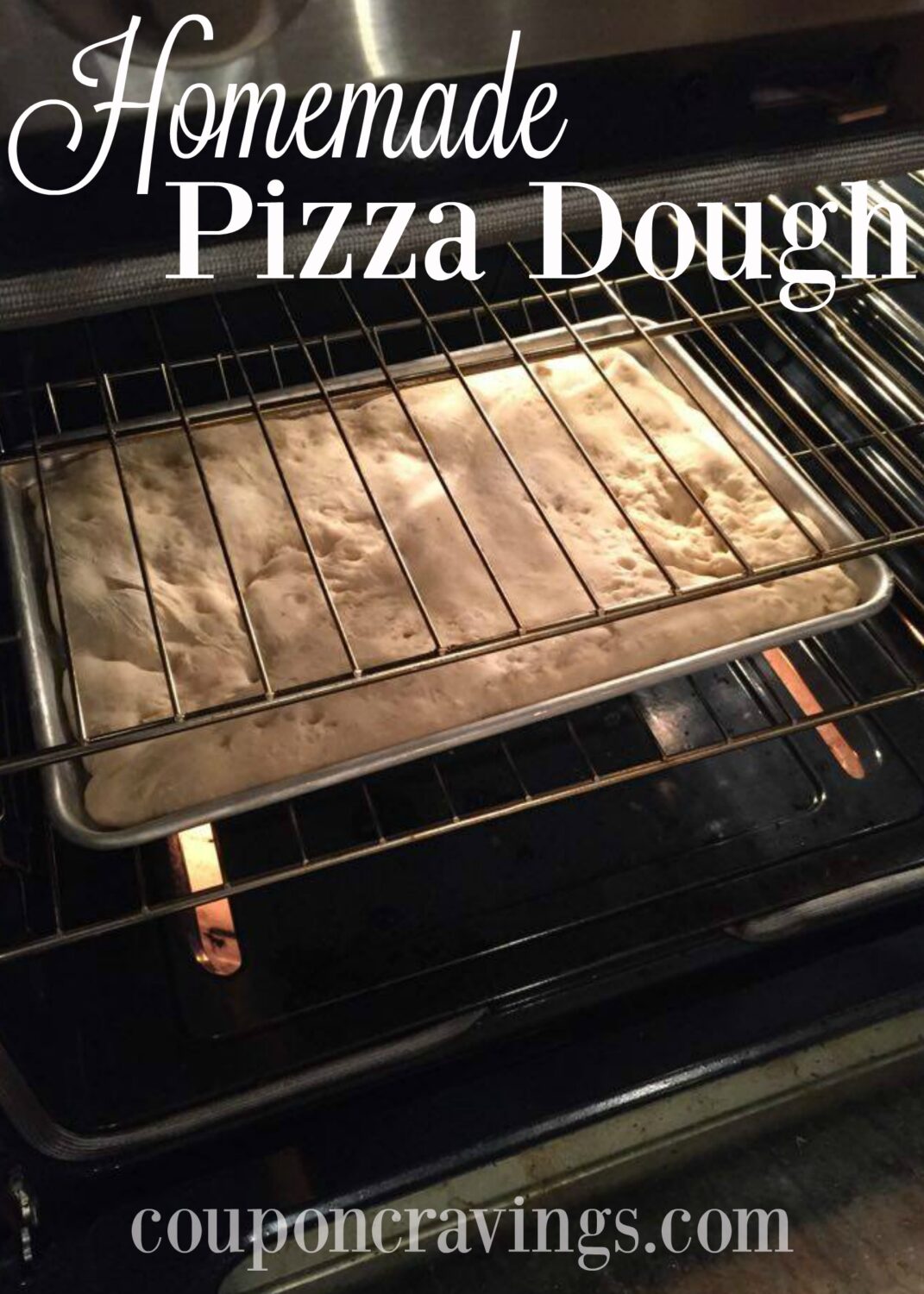
Preheat the oven to 450 degrees F. Once the dough is shaped, allow it to rise on the pan for another 10 minutes as the oven heats.
This will help the pizza puff up as it bakes, resulting in a lighter crumb. Then prebake for 15 minutes, until it’s just barely set with golden browned edges.
Remove from oven.
Step 5: Top and Finish Baking
Top the pizza with sauce, cheese, and other toppings and bake for an additional 10 to 12 minutes, or until the cheese is bubbly and the crust is browned and crispy. Remove the pizza from the oven and allow to sit for five minutes before slicing.
That might seem counterintuitive, especially if you’re dying for some pizza, but melted cheese is a little easier to deal with after it’s set up just a tad. Trust us.
Those first couple of slices will be a bit less than photogenic and a lot more messy otherwise. Cut into squares and serve.
Tips for Better Results
- Don’t Skimp on the Olive Oil
- Dough Roller Optional: A dough roller makes the process of stretching the dough easier, but isn’t necessary for sheet pan pizza.
- A wheel cutter makes it easy to cut the pizza: Since sheet pan pizza is more of a rectangle, a large pizza or pastry cutter works easier than a knife or a pizza cutter that requires a rocking motion.
Use a Scale If You Can
The addition of a quarter cup of fat is what separates pizza dough from the dough for soft sandwich loaves, producing a crisp and chewy crust. So don’t skimp.
Also, if you tend to pack your measuring cups when measuring flour, you’ll add more than you think, producing a very stiff dough that’s difficult to stretch. For more precise results, invest in a simple, inexpensive scale for the kitchen.
For this recipe, weigh out 420 grams of flour. If you don’t have a scale, spoon flour into a 3½-cup measure and level it with a knife.
Grease the Pan Generously
You want enough oil to make a slick on the bottom of the pan, not just a sheen. Greasing well will prevent sticking and will help the bottom of the pizza to brown and crisp up; the abundance of fat may sound counterintuitive, but all that oil will cause the crust to steam as it bakes, resulting in a crispier, not softer or soggier, bottom.
Try a Pizza Stone for Individual Pizzas
If you make individual round pizzas, invest in a pizza stone, which, like a pan, conducts heat from your oven and produces a nicely browned crust. To use it, preheat the stone in the oven at 500°F for 30 minutes, then bake the pizzas directly on the stone for the stated times, and the crust will be wonderfully like those from a pizzeria.
The stone is a splurge item, totally unnecessary if you’re making pizzas in sheet pans.
Don’t Overload the Toppings
If you overload the pizza with lots of wet toppings, they will release moisture during baking, making the crust soggy. To make up for that, prebake the crust for the entire 15 minutes, not 12.
Whenever possible, blot vegetables before using, and always drain tomatoes and pat them dry.
Stand Mixer Method (No Bread Machine)
Combine warm water and yeast in the bowl of a stand mixer fitted with a dough hook attachment, and let stand until foamy, about 5 minutes. Add remaining ingredients.
Beat dough on low speed for 2 minutes; beat on medium speed 6-8 more minutes or until smooth, slightly sticky, and cleans sides of bowl. Turn out dough into a lightly oiled bowl and cover with plastic wrap.
Let rise in a warm place until doubled in volume, about 1 hour. Divide and shape.
Hand Method
Combine all ingredients except olive oil in a large bowl and stir with wooden spoon until mixture resembles coarse crumbs. Make a crater in the center of ingredients; pour in olive oil and water.
Mix until a shaggy dough forms. Turn out onto a floured work surface and knead until dough is smooth and elastic, about 10 minutes.
Cover with plastic wrap and let rise in a warm place until doubled in volume, about 1 hour. Divide and shape.
Kneading the dough by hand takes more work, but produces the same results.
Can this recipe be refrigerated or frozen?
Once the dough has risen, it can be transferred to an olive-oil-slicked bowl and covered tightly with plastic wrap. Store in refrigerator up to 3 days.
Remove from refrigerator about 30-60 minutes before use so it will stretch easier when forming into pizza. If it’s too cold, it will be resistant to stretching.
Alternatively, once risen, divide dough into sections, coat with olive oil, wrap tightly with plastic wrap and place in a zip-top freezer bag. Freeze up to three months.
To use, remove dough from freezer and thaw in refrigerator overnight. Let sit at room temperature about 30-60 minutes before use.
Don’t leave dough out to thaw at room temperature. It will warm up on the outside and be cold on the inside, making it difficult to work with, plus the yeast won’t re-activate evenly.
Leftover Baked Pizza
Store any leftover pizza in the fridge, wrapped up or in an airtight container, where it’ll keep for 3-4 days. Reheat it in a 375°F oven for 8-10 minutes or in a skillet over medium-low heat (cover it!) for 5-6 minutes.
Resist the urge to nuke it in the microwave, which is a sure-fire way to ruin a perfectly good pizza. Bonus: The skillet reheating method takes less time and gives you a really crispy crust.
Frequently Asked Questions
Can I make this without a bread machine?
Yes! Use your stand mixer fitted with a dough hook to mix and knead the dough, which takes about 15 minutes of active time and adds about an hour of rise time to the recipe, or do it by hand, adding 10 minutes of kneading.
That said, a bread machine can make your life easier. You can get used ones at thrift stores and garage sales for a song.
My dough isn’t rising.
What went wrong?
The yeast is likely the problem. Either your yeast is old/dead (see tip below) or your water was too hot, since yeast is alive and can’t rise if it’s been boiled to death.
To make sure your yeast is good, sprinkle it into a bowl along with a little sugar and pour in 1/4 cup of warm water. Give it a stir and leave it for about 10 minutes.
If it foams and bubbles, it’s ready to go. If not, start with a new jar of yeast.
Tip: Keep your yeast in the freezer to make it last longer because dry yeast expires quicker if it’s living in a toasty kitchen pantry.
Can I use this dough for more than sheet pan pizza?
This dough is very versatile. It can be used to make traditional round pizzas, by dividing the dough into two and forming into two 12″ round pizzas to bake on a pizza stone, calzones, stromboli, breadsticks and flatbreads.
To make breadsticks, allow the dough to rise and rest as directed. Turn out onto a floured surface and divide in half.
Slice the dough into strips and smear them with garlic butter. Bake at 425°F for 12–15 minutes or until cooked through.
Serve warm.
Can I use whole wheat flour?
You can replace about 50 percent of the flour with whole wheat flour in this recipe with good results. Using all whole wheat would make the crust significantly heavier, denser and more difficult to work with.
The chew of the crust would also be different. If you’re looking to get the nutritional benefits of whole wheat, I’d recommend starting with half-and-half and going from there.
How do you know when it’s done?
You’re looking for deep golden brown crust and completely melted cheese with some browned areas. Most likely it’ll take 10 to 12 minutes in a 450°F oven after you’ve given it that quick prebake, though ovens vary, so keep an eye on it.
You can always lift a piece up with a spatula and look at the bottom of the crust to make sure it’s not white and it’s not pale yellow on top.
Can I mix the pizza dough ahead of time?
Absolutely. In fact, I’d encourage it.
The flavor is so much better when you do that. You can mix it up, cover it well and leave it in the fridge overnight.
When you’re ready to make your pizza, leave it out for 45 minutes before working with it. Many good pizzerias do this with their doughs (called cold fermentation).
Can I make a simple pizza sauce from scratch?
Yes, if you don’t have any on hand or prefer to use a simple sauce you can mix together a can of good-quality crushed tomatoes, strained if they’re very juicy, with some salt, garlic (minced) and oregano. Try to keep it to a thin layer on the pizza, about 3/4 cup for the whole pan, so it’s not too wet since a soggy crust isn’t anyone’s idea of great after that lovely prebake.
You can also make a white pizza using a thin layer of ricotta cheese seasoned with some herbs and garlic.
Easy Homemade Pizza Dough
Equipment
- Bread machine
- Half sheet pan
Ingredients
Ingredients
- 1 1/3 cups warm water
- 1/4 cup extra virgin olive oil
- 3 1/2 cups unbleached all-purpose flour
- 1 tablespoon sugar
- 1 1/2 teaspoons sea salt
- 1/2 teaspoon garlic powder
- 1/2 teaspoon Italian seasoning
- 1 packet active dry yeast or 2 1/4 teaspoons
Instructions
Instructions
- Add warm water to the bread machine pan, followed by olive oil, flour, sugar, salt, garlic powder, and Italian seasoning.
- Make a small well in the flour and add yeast last.
- Run the bread machine dough cycle, about 90 minutes.
- Remove dough to a lightly floured surface, shape loosely into a ball, cover, and rest 30 minutes.
- Grease a half sheet pan and press dough toward the edges. Rest 5 minutes if it snaps back.
- Preheat oven to 450°F and let shaped dough sit 10 minutes.
- Bake bare crust for 15 minutes, until set and lightly golden at the edges.
- Add sauce, cheese, and toppings. Bake 10 to 12 minutes more, until cheese is melted and crust is deep golden.
- Cool 5 minutes before cutting.