
Chicken Noodle Soup Recipe
One of the best parts about this recipe is how thick and comforting it is. It’s like eating chicken and dumplings, but it’s a soup.
What Makes This Recipe Reliable
Cream of Mushroom as the Base: Adding cream of mushroom to chicken noodle soup may seem strange. It doesn’t really taste of mushroom at all, but the soup adds some depth and thickness to the dish.
Some people use cornstarch or a roux to thicken their chicken noodle soup. That’s fine.
But for weeknight cooking I think it’s easier and more fail-proof to add some of that condensed goodness. If you’re craving a clear broth, skip the cream of mushroom and add 1 tbs flour when the onions become translucent.
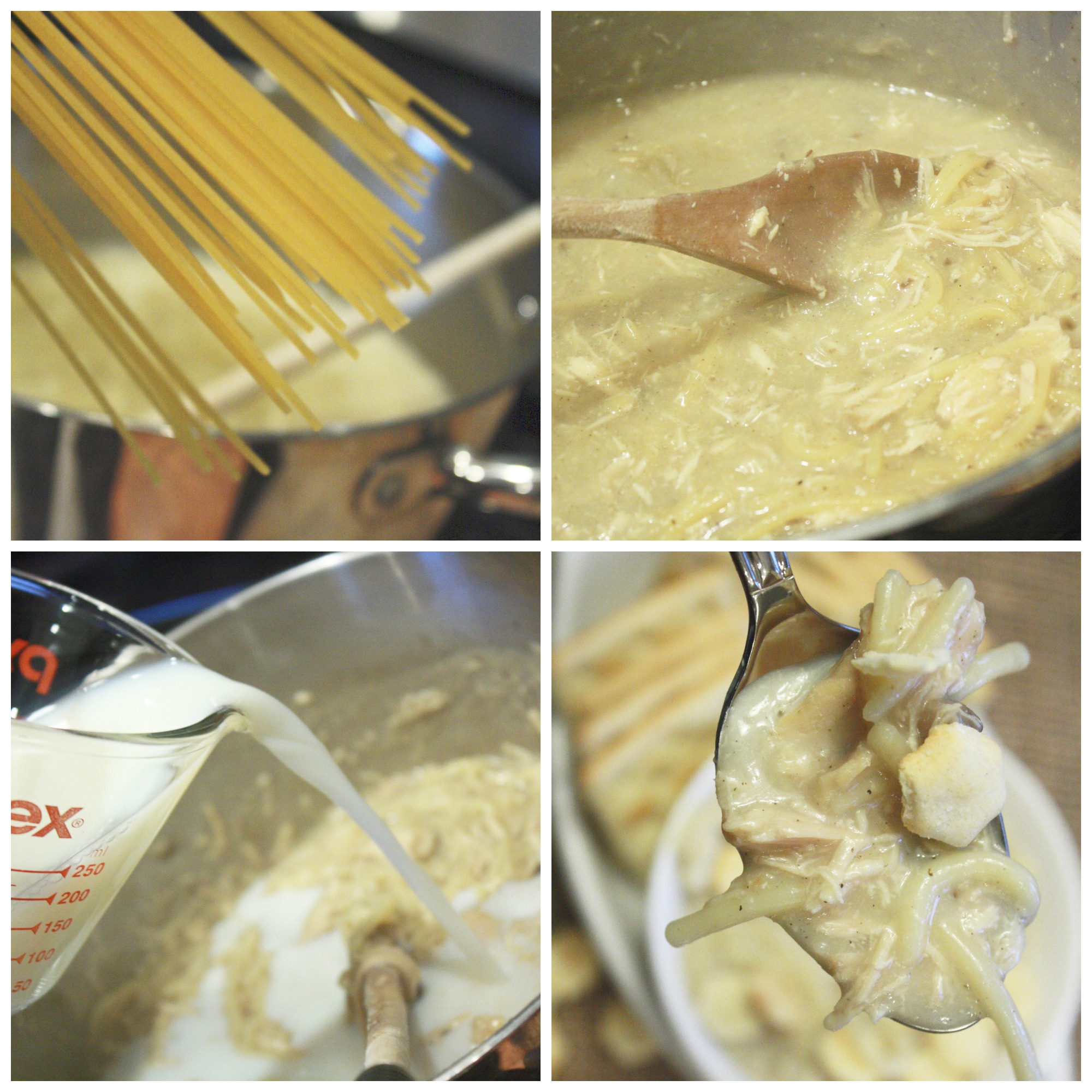
Mix well then add chicken broth and noodles.
Lemon Pepper + Poultry Seasoning: I know lots of recipes call for parsley and maybe some Italian Seasoning. I’ve been making this recipe for years with Lemon Pepper seasoning (2 tsps) and Poultry Seasoning, though.
The acidity of the Lemon Pepper is a good complement to offset some of the heaviness of this recipe. Poultry Seasoning is an amalgamation of sage, thyme, rosemary and sometimes marjoram.
If you’ve got those handy, awesome. Otherwise poultry seasoning provides that chicken soup taste without you needing to measure out six different herbs.
Shredded Chicken: If you’ve got leftover shredded chicken, awesome. If not, toss boneless skinless chicken into your slow cooker on LOW for 4-6 hours.
Use your hand mixer and shred in 2 minutes flat, right in the same vessel it was cooked in. Trust me.
This is SO much easier than shredding by hand and you’ll get long, consistent shreds instead of a mixture of really small bits and large chunks.
The Milk Goes In at the End
The milk goes into the soup at the very end of simmering, after the full 45 minutes are up. This is really important.
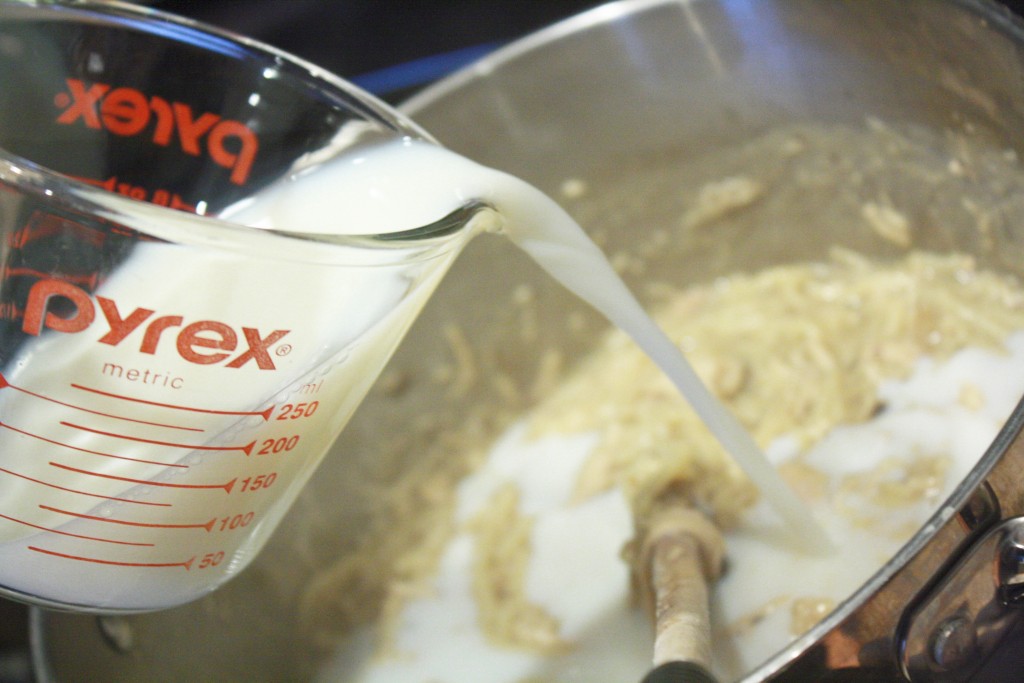
Adding the milk at the very end ensures that you’ll add the right amount to make the soup come out with just the right consistency. Also, milk will burn and curdle if added at the beginning.
The texture of the soup would be off (grainy) and taste weird if you did this.
Spaghetti Noodles, Not Egg Noodles
This recipe calls for cutting up spaghetti. The spaghetti separates well and gets tender in the right spots.
The broth gets absorbed by the spaghetti without getting soggy, and the noodles just generally work better in this recipe. You can make chicken and egg noodles but it’s a whole different experience.
Egg noodles swell up significantly more and make more of a chicken and noodles casserole, which can be great sometimes, but the spaghetti makes for a lighter, more soupy chicken and noodles.
What You Should Know Before You Start
The Soup Gets Very Thick During the Simmer
After the first 45 minutes simmering, you’re going to open up the pot and it’s going to look REALLY THICK. Almost like a chicken and noodles casserole.
Don’t be alarmed, don’t add more broth. Trust me here.
The noodles absorb a LOT of liquid during that 45 minutes. Adding more broth will result in a runny soup when you add the milk.
Let It Rest Before Serving
After adding the milk, be sure to remove from heat and allow to sit for 10 minutes before serving. This allows the noodles to get completely tender, the thickness of the soup will also change during this time.
If you serve it right away, the soup will not be together, the thickness will be off and the noodles may have a definite sink.
Make the Chicken Ahead
Slow-cooked chicken can be made on a weekday before work, as I often do, or made in a larger batch on Sunday and used for other recipes through the week.
The Hand Mixer Shredding Method
About two large chicken breasts will give you around 3 cups shredded chicken. You can slow-cook chicken breasts in plain water which works great, or in chicken broth to add more flavor and seasoning.
Either way, transfer warm or hot chicken to a large bowl and shred in about 30-60 seconds on a hand mixer on a low speed. The end results are so much more even and easier to work with using the hand mixer, especially when dealing with larger quantities.
Cold chicken is much more difficult to shred and doesn’t come apart into separate shreds as evenly.
Ingredient Notes
- low-sodium chicken broth: You can opt for regular chicken broth, but the recipe already contains a fair amount of salt in the form of the cream of mushroom soups so I highly recommend using a low-sodium chicken broth. You can always add more salt at the table if needed.
- cream of mushroom soups: You can use cream of chicken soups instead of cream of mushroom for a very similar soup with a slight variation in flavor. However, I would steer clear of the other condensed soups like cream of celery or cheddar soups which will alter the flavor in a not-so-delicious way.
- whole milk: Whole milk works best in this recipe but you can use 2% if needed.
You could use skim milk for a thinner soup that is not as creamy, but I would NOT recommend a heavier cream, as it would take away from the flavor of the broth.
- celery: Celery adds a great texture and flavor to this recipe but you can leave it out if needed.
- carrots: If you like carrots in soups, they can be added. If not, feel free to leave them out!
How to Make Chicken Noodle Soup
Celery and carrots are traditional in this recipe. If you’d like to add these vegetables, dice them into small (about 1/4 inch) pieces so they’ll cook down.
Larger pieces will still be a little firm after simmering.
Step 1: Saute the Onion
Saute onion in butter for about 5-7 minutes on medium-low heat, stirring frequently. The onions should be softened and translucent, and NOT browned, when you move on to Step 2.
If they’re browned, they’ll be too sweet (caramelized) for this recipe.
Step 2: Add the Main Ingredients
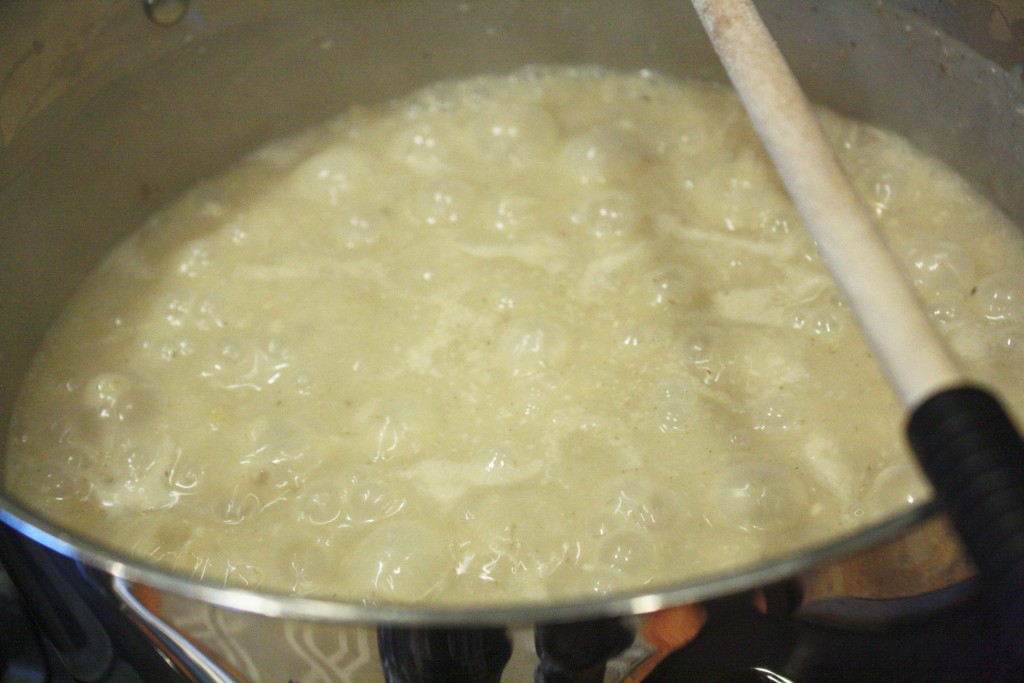
Add shredded chicken, chicken broth, cream of mushroom soup, broken spaghetti noodles, poultry seasoning, and lemon pepper. Stir to combine.
Make sure to incorporate the cream of mushroom soup completely, as I find it can leave some chunks/clumps if it’s not mixed in well.
Cook for about 45 minutes on medium-low heat, checking periodically. Stirring prevents the noodles from scorching on the bottom of the pot, but this recipe calls for a longish cook time at a relatively low temperature so a heavy-bottomed pot is best for cooking Chicken Noodle Soup.
A regular saucepan has a thinner bottom which can cause sticking.
You can find more uses for the trusty Dutch oven here. The one pictured here is a 6 quart size, which is perfect for braises, soups, pasta, etc.
This particular pot is a recent addition to my arsenal, and I’m excited to have a go-to pot for soups, pastas, braises, etc. It distributes heat very evenly, which makes it great for long, low-and-slow recipes like this Chicken Noodle Soup.
If you don’t have a heavy-bottomed pot, check periodically and stir with a wooden spoon or silicone spatula to make sure nothing is sticking to the pot.
Step 4: Simmer for 45 Minutes
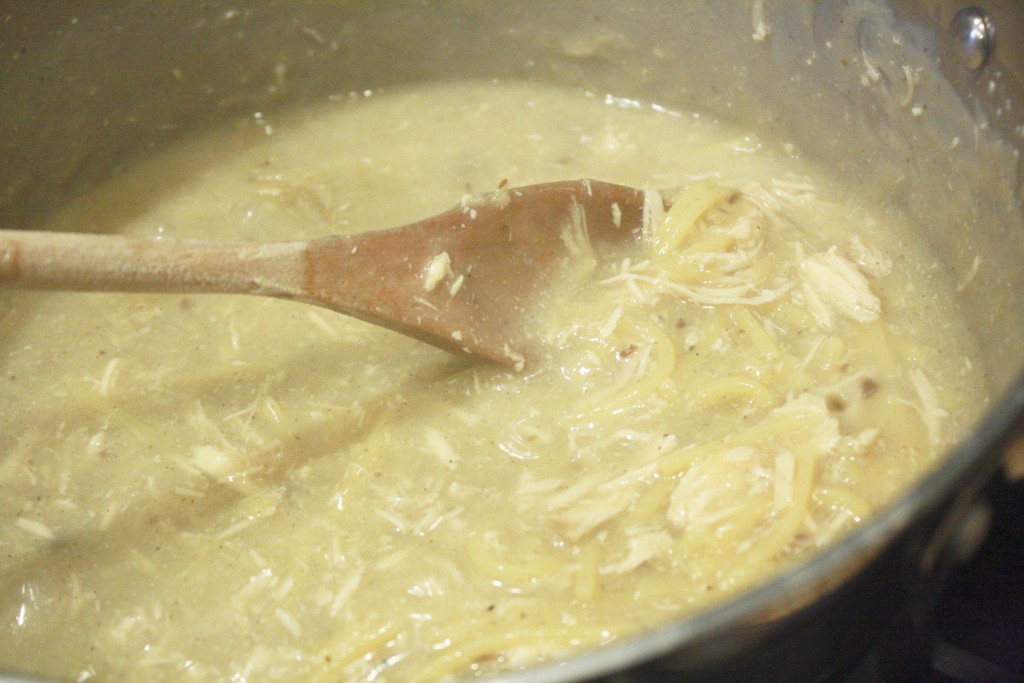
Bring soup to a boil over medium-high heat, which should take about 8-10 minutes depending on brand/type of stove. Once it reaches a full boil, lower the heat to medium-low and allow to simmer.
Stir every 10 minutes. Simmer for 45 minutes.
DO NOT increase the heat to get it done faster and DO NOT add more liquid to the pot at this time. The noodles will soak up a lot of liquid and it will appear more casserole-y then soupy at this point.
That’s okay. If your pot holds heat well, the soup might try to stick/burn.
Turn the heat down to low and stir more frequently.
Step 5: Stir In the Milk

Once it’s been simmered for 45 minutes, stir in 2 cups of milk. Soup should resemble a soupy consistency at this point.
Allow to cook over low heat for a few more minutes. Again, do not allow soup to boil.
Taste soup, making sure to stir throughout pot, adding salt if desired. Remove from heat.
Step 6: Rest Off Heat
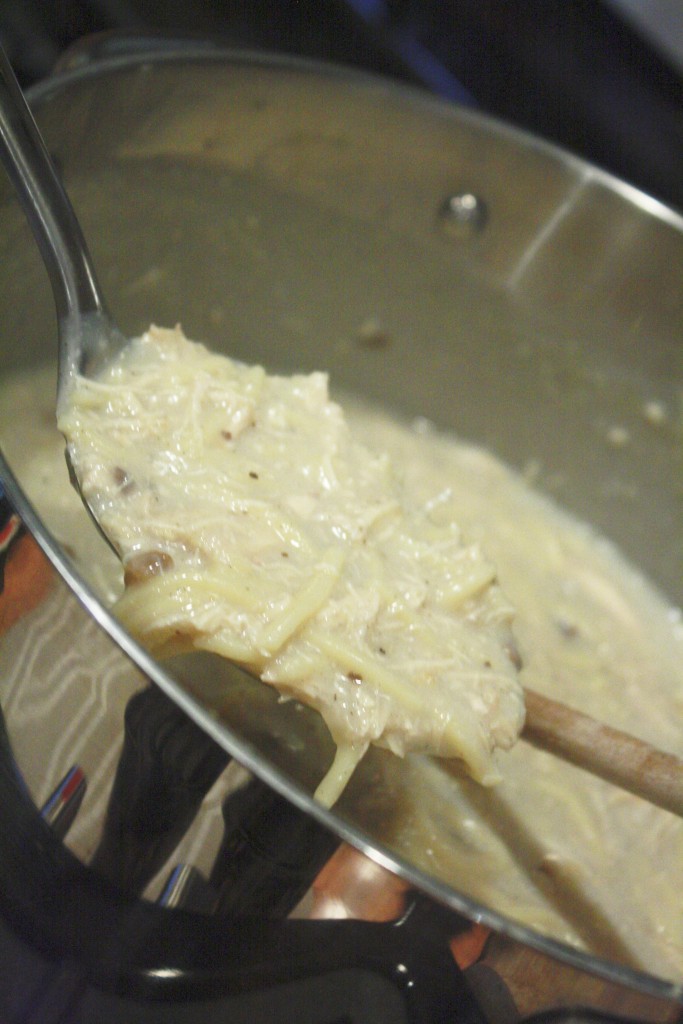
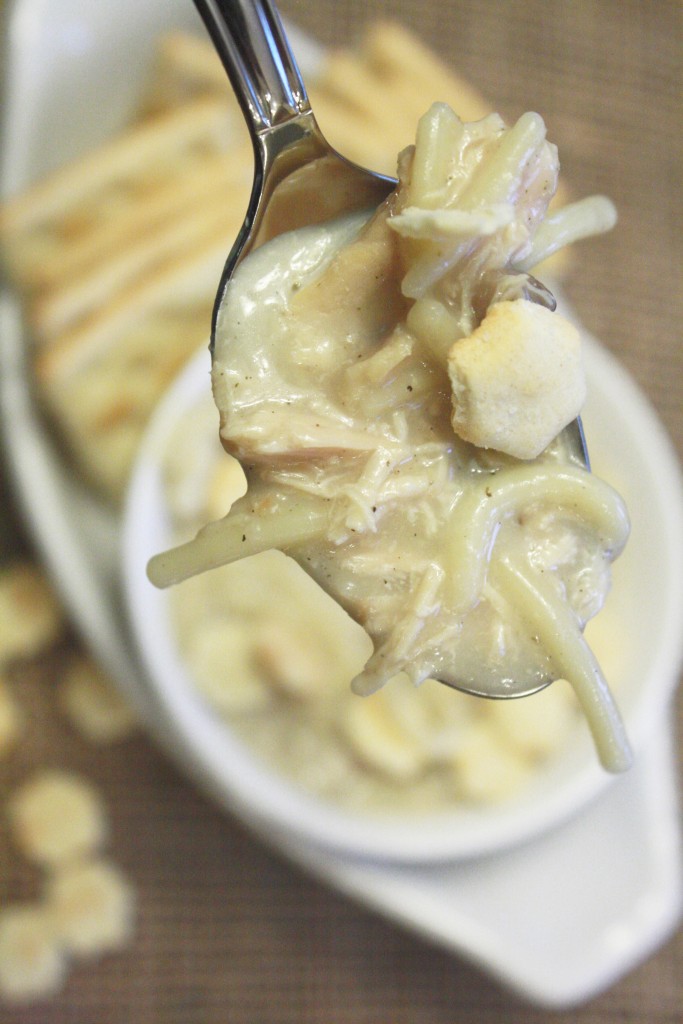
Allow soup to sit for 10 minutes off heat. Broth will thicken and flavors will intensify during rest period.
Serve from pot.
Tips for the Best Chicken Noodle Soup
Cream based soups may spit when boiled. This leads to an unnecessary mess so be patient while bringing to a boil and make sure to turn down the heat once it comes to a boil.
I highly recommend purchasing a heavy duty stainless steel ladle with a long handle and a deeper ladle portion. Not only will you not scald your hand with steamy soup, it’s much harder to spill when transferring from pot to bowls.
You will be using your ladle often.
The thicker the soup is after rest period, the more of a casserole texture it has. Some prefer this, others prefer soupy.
Adding more broth after rest period will thin it out but I’ve never needed to do this. It’s a personal preference so adjust accordingly.
Serve immediately after rest period. Serve with crusty bread to soak up all of that glorious broth.
Servings vary depending on appetite. Store leftovers in the refrigerator.
Reheat on medium-low stirring frequently until heated through. Add more milk/broth upon reheating if necessary.
Break the Spaghetti Evenly
Break the spaghetti into two-inch pieces before adding to the pot. By doing this, all of the pieces will be the same length and will cook evenly.
Otherwise, there will be some really soft pieces of spaghetti and some that are still a little too firm. Breaking all of the spaghetti at once can be a little tricky.
Try breaking up small groups at a time (about 4-5 pieces) which will break much more easily.
Don’t Skip the Butter
This recipe calls for sauteing the onion in 1 Tbs butter for 2 minutes before adding all of the remaining ingredients. Although you could add the raw onion to the pot along with all of the remaining ingredients and it would cook fine, sauteing the onion brings out its flavor and improves the entire recipe.
Trust me. It’s worth it.
(Optional but recommended) Add a squeeze of Lemon
About a teaspoon of fresh lemon juice added at the end of cooking improves the flavor of this recipe. It won’t really taste lemony but the addition of the lemon rounds out the flavor of the whole thing and balances out the lemon pepper.
Try adding some of the juice just before serving.
Taste Before Adding Salt and Pepper
This recipe calls for adding salt and pepper to taste. Resist the urge to add the salt and pepper at this point in the recipe.
At this point in the recipe, the soup has been cooking for 45 minutes which concentrates all of the flavors. It would be easy to add too much salt and pepper.
Taste the soup again after adding the milk and allowing to sit. At that point it will be easier to determine if more salt and pepper is necessary.
Use a Large Enough Pot
This is not the time to get creative. This recipe will make a lot of soup.
With the liquid from the broth and canned soup in the pot, plus the milk and the spaghetti expanding during cooking, that’s a whole lot of soup. This recipe calls for a 6-qt pot because it will leave enough room at the top of the pot to account for the total volume.
If you choose to use a 5-qt pot there may not be enough room at the top and it is very likely to boil over. If you don’t own a 6-qt pot, cut all of the ingredients in half and it will make a delicious, smaller batch.
Use an 8-qt soup pot. You’ll be glad to have the extra room for adding in the stocks, if you’re boiling the pasta in batches and for the soup itself.
The Soup Thickens as It Cools
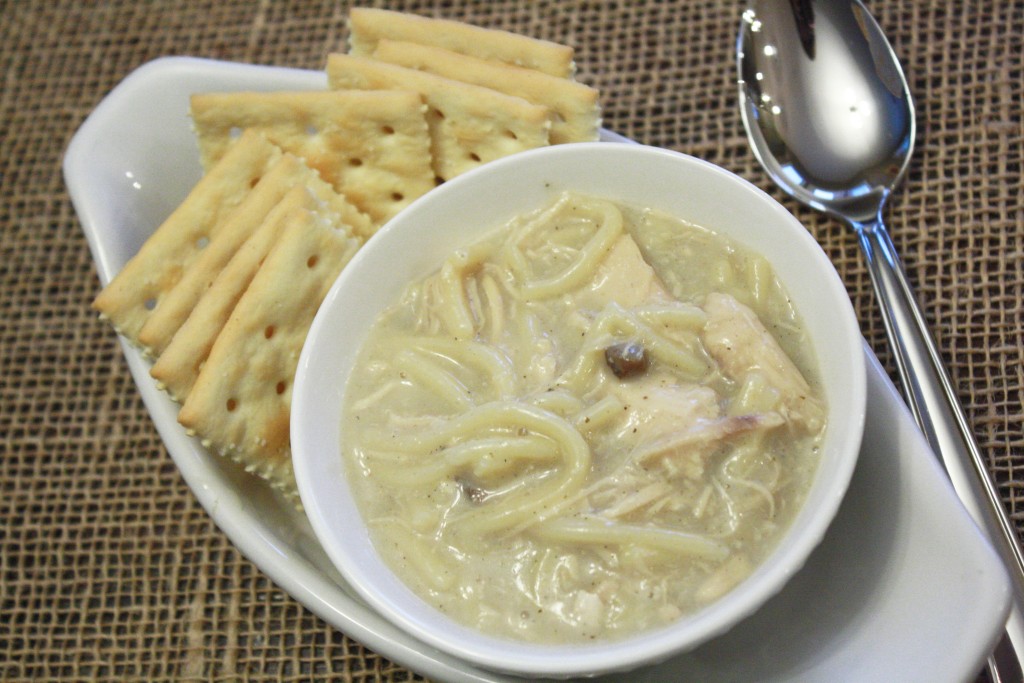
The soup will thicken quite a bit after you serve it, as the pasta absorbs the broth. If it’s sitting on the table for 15 to 20 minutes before everyone digs in, the soup will have thickened significantly.
No worries. That’s normal.
Just give it a stir and add a splash of warm broth or water to loosen it up a bit, if needed.
Variations Worth Trying
Add Garlic: Add 2-3 cloves of garlic, minced, to cook along with the onion in the butter, stirring constantly for about 30 seconds until garlic is fragrant. Garlic powder just doesn’t compare, as garlic adds a whole new dimension of flavor, especially when cooked in a fat.
Use Rotisserie Chicken: Save time and make it even easier to make this recipe by grabbing a rotisserie chicken on your way home from the store. Remove the meat from the carcass to get about 3-4 cups, which is a tad more than this recipe calls for, shred by hand as rotisserie chicken is dryer and will get mashed and over-processed in a hand mixer, and use that meat instead of cooking fresh chicken.
Make It Creamier: On a nippy day, trade out 1 cup of the milk for half-and-half. It’s a tad richer that way.
Using all heavy cream would be a tad too much and you’ll start to lose the broth-y-ness of the recipe. It will start to taste more like a pasta dish than a soup.
Make It Dairy-Free: To make it dairy-free, sub olive oil for the butter, use a dairy-free cream of mushroom soup, such as the one from our local health food store, and use an unsweetened oat milk in place of the dairy milk. Oat milk has a neutral flavor and has a similar consistency and thickening quality to whole milk.
Almond milk is much thinner and has a slight sweetness/nutty flavor.
Feel free to double the veggies in this recipe.
Celery and carrots are optional. They’re not included in my recipe but it’s delicious with them.
You could use them if you’re trying to double the recipe to make it heartier. If you use celery and carrots, use 8-10 medium sized carrots and 6-8 celery ribs.
Add them in the beginning of the recipe with the onion to saute. That way they’ll get softened.
Guaranteed each bowl will be chock-full of veggies.
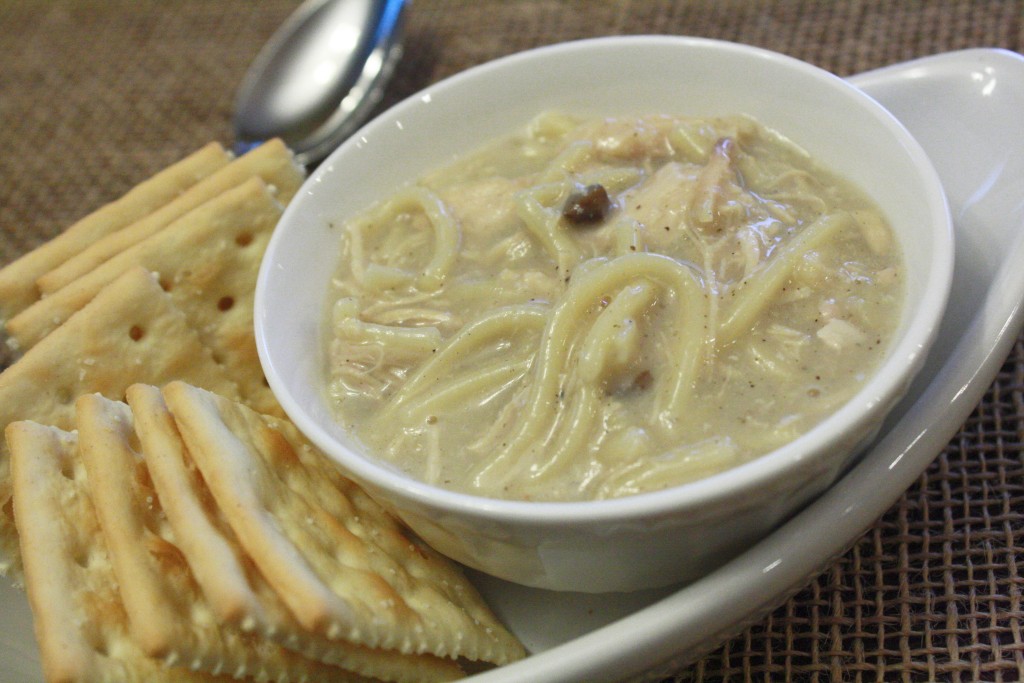
Storage and Reheating
Refrigerating: Transfer soup to an air-tight container and store in refrigerator. Heads-up: the next day it will be MUCH thicker because the noodles will have soaked up the liquid.
Simply add some of the chicken broth you used in the recipe or some water to thin it back out.
Freezing: I’m a bit of a know-it-all on freezing noodles because I’ve done a lot of noodly freezy research and experiments. Here’s my conclusion: spaghetti does NOT freeze well.
It ends up soft and mushy. Therefore, the BEST way to freeze this recipe is to make it WITHOUT the noodles.
Freeze the soup. When you’re ready for some soup, take out however much soup you’ll be serving.
Re-heat on stove-top and add uncooked spaghetti noodles directly into the pot to boil. When spaghetti is tender, remove from heat and enjoy.
If you DO decide to freeze the soup with the cooked spaghetti, transfer to freezer-safe containers with lids that seal well and freeze for up to 3 months. When ready to enjoy, thaw in refrigerator overnight and heat on the stove.
Reheating: Add soup to a pot and re-heat on medium-low heat, stirring frequently, until warmed through. Be sure to stir frequently so the noodles don’t stick to the bottom of the pot and burn.
You may add a little of the chicken broth used in the recipe if it looks like it might start to burn. For single-serving bowls, microwave for 90 seconds (stirring half-way through) until warmed through.
Keep in mind the noodles can prevent the soup from absorbing the microwave’s heat evenly.
Frequently Asked Questions
Can I use uncooked chicken instead of pre-cooked?
From a food-safety standpoint, simmering the recipe for 45 minutes is not enough time to cook raw chicken through. In addition, cooking raw meat in a soup will lead to less-tender (aka, rubbery) results.
This is especially true when cooking in a creamy soup. Use pre-cooked chicken.
As a tip, raw chicken will take approximately 20 to 25 minutes in the simmering broth. Remove, shred and add back into the pot along with the rest of the ingredients.
If the chicken is fully cooked, remove from pot and shred. Add noodles and cook according to directions.
Add shredded chicken and cook until noodles are tender.
Can I make this in a slow cooker instead?
You can use a slow cooker as indicated in the recipe. Personally, I like to finish soups on the stove since I find that I have better control over the doneness of the noodles.
It’s very easy to overcook noodles in a slow cooker. If you want to make the entire recipe in the slow cooker, add the noodles for the last 30 minutes and check frequently so they don’t get too soft/mushy.
What can I use instead of cream of mushroom soup?
Cream of chicken would be the most similar in both flavor and texture. You can also make your own condensed soup: Melt 2 tablespoons of butter.
Add 3 tablespoons of flour and cook, whisking often. Whisk in 1 cup of chicken broth and 1/2 cup of milk and cook until thickened.
Use same as you would a can of condensed soup. You will need to double this recipe to get the amount you need.
My soup is too salty.
How do I fix it?
Adding a bit more milk can help cut down on the saltiness. Another trick is to add a peeled and roughly chopped potato to the soup.
Make sure to cut it into fairly large chunks. Simmer for 15 minutes then remove the potato and throw it away.
The potato will have absorbed some of the salt. Adding an additional cup of chicken broth (unsalted or low-sodium) will help to cut down on the saltiness a little as well.
Next time you can opt for using a low-sodium cream of mushroom soup and low-sodium chicken broth for better control.
Can I use a different pasta shape?
Absolutely, use whatever appeals to you. Ditalini, orzo, small shells, rotini and more.
How do I know when the soup is done?
Once your pasta is cooked. Different brands/pasta require varying amounts of cook times so follow directions on your particular pasta’s packaging.
I find egg noodles take less time to cook than spaghetti. Also, it’s possible some of the noodles may be cooked through quicker than others (that is, still firm) due to the heat not being super even during simmering.
If after the 45 min of simmering your pasta is still firm, give it an additional 5-10 mins then proceed with adding milk. When the soup is done, it will have thickened slightly, especially with egg noodles, enough to coat the back of a spoon, but will still be pourable once you add in the milk and allow to sit for about 10 mins.
Your noodles should be cooked through, no longer firm in the middle.
Can I add more vegetables?
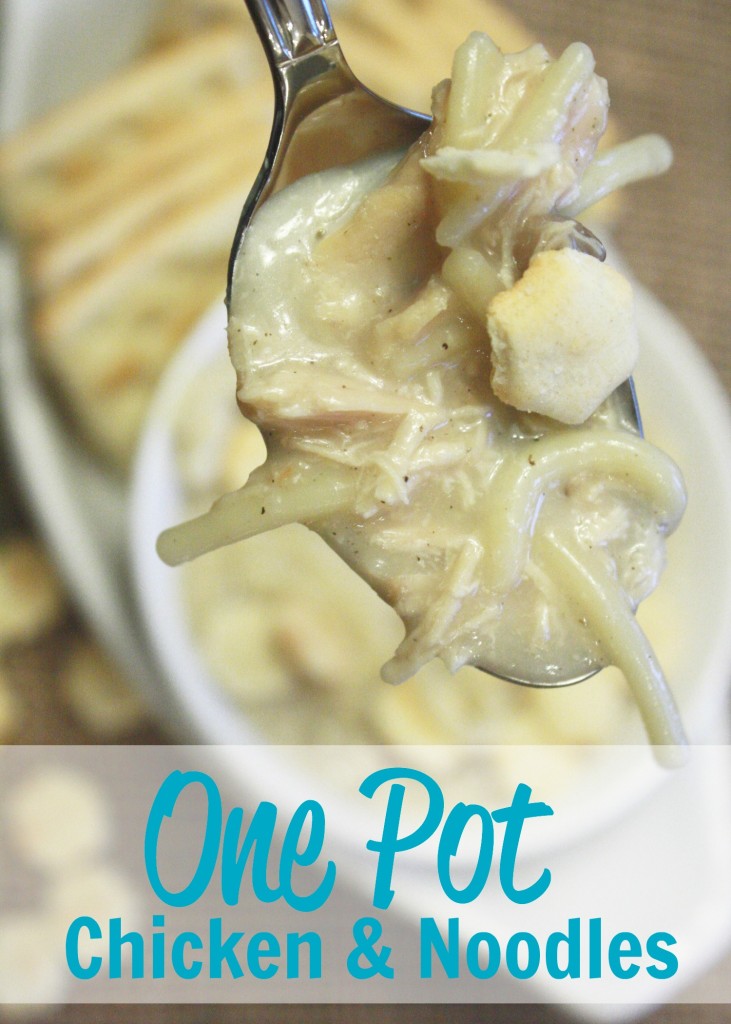
Yes! Add frozen peas in the last 5 mins.
Diced potatoes would be added with your broth and will be cooked through after simmering 45 min. Corn, diced zucchini or green beans all sound good.
Just keep in mind if you’re adding lots of vegetables you’ll want to add another 1/2 can of chicken broth to accommodate. I wouldn’t recommend leafy greens – spinach/kale will make the soup very watery and probably won’t look very appetizing.
More Chicken Recipes to Try
Need more easy chicken recipes to add to your weeknight repertoire?
These are some of our readers’ favorites.
- Slow Cooker Chicken Tacos – just 3 ingredients and falls apart/shreds so easily – serve over tortillas or turn into Chicken Taco Bowls, make Chicken Taco Burritos, etc.
- White Chicken Chili – creamy, delicious, and packed with flavor. Green chiles and white beans compliment each other perfectly.
- Chicken Tortilla Soup – made with a tomato based broth and piled high with tortilla strips, cheese, etc. YUM!
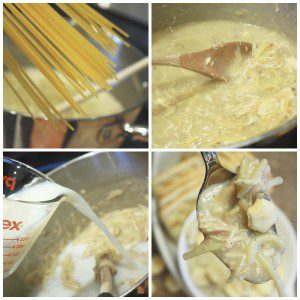
Chicken Noodle Soup Recipe
Equipment
- Large heavy-bottomed pot
Ingredients
Ingredients
- 1 tablespoon butter
- 1 large onion diced
- 3 cups cooked shredded chicken
- 3 14.5-ounce cans chicken broth
- 2 cans cream of mushroom soup
- 8 ounces spaghetti noodles broken into 2-inch pieces
- 1 teaspoon poultry seasoning
- 2 teaspoons lemon pepper
- 2 cups milk
- 5 ribs celery diced, optional
- 6 medium carrots diced, optional
Instructions
Instructions
- Melt the butter in a large pot over medium-low heat. Add the onion and cook 5 to 7 minutes, until soft and translucent. Add celery and carrots here if using.
- Add the shredded chicken, chicken broth, cream of mushroom soup, broken spaghetti, poultry seasoning, and lemon pepper. Stir until the soup is fully incorporated into the broth.
- Increase heat to medium-high and bring to a full boil, stirring occasionally so the noodles do not stick.
- Reduce heat to medium-low and simmer for 45 minutes, stirring about every 10 minutes.
- After 45 minutes, stir in the milk. Return to a low simmer for a few minutes without boiling hard.
- Taste and adjust seasoning with salt if needed. Serve warm.