
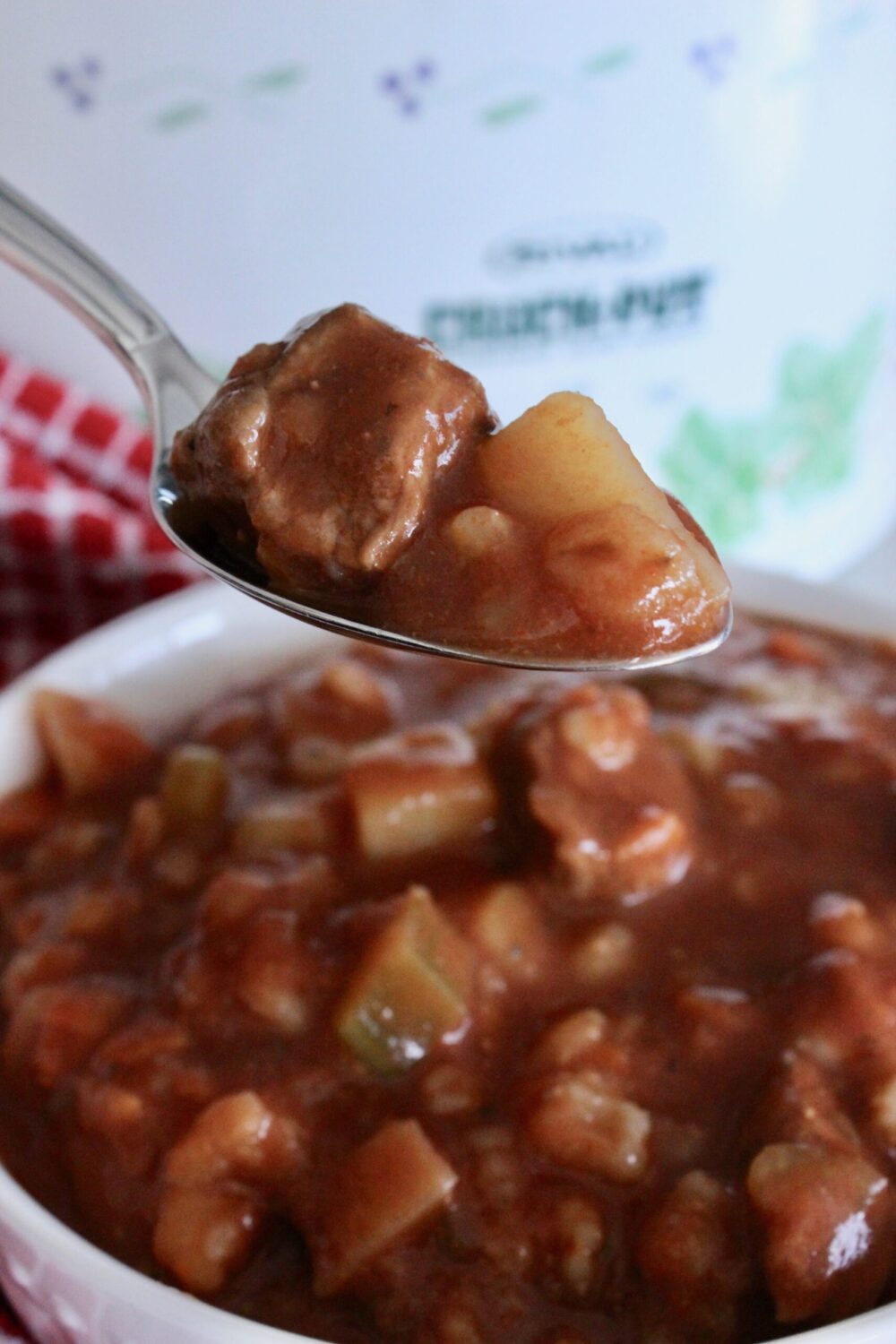
Beef Stew Recipe
This slow cooker beef stew has been on our cold weather menu rotation for years. It’s hearty, comforting, and my husband gives it a ten out of ten though he rates everything, often without being asked.
Here are three things that make this recipe different from other beef stews:
- The beef gets browned first
- The broth is tomato juice based
- The barley is added at the last minute
How to Make It
Step 1: Season and Brown the Beef
Combine the stew meat, salt, basil, pepper, and garlic powder together in a bowl and stir well.
Heat some veggie oil in a frying pan on medium-high. Add the beef to the pan and brown in a single layer*.
Remove and set aside. Repeat until all of the beef is browned.
- Do not crowd the beef in the pan, it will steam instead of brown.
Step 2: Load the Slow Cooker
Add the beef, tomato juice, chicken broth, carrots, celery, potatoes, sugar, and bay leaf to your slow cooker. Stir well.
Cover and cook on LOW for 7 hours.**
** Resist the urge to peek under the lid. You’ll be taking heat out of the crock pot which will mean longer cook times.
Step 3: Add the Barley
Remove the cover and stir in the barley. Replace the cover and cook for 1 hour on LOW.
Step 4: Serve
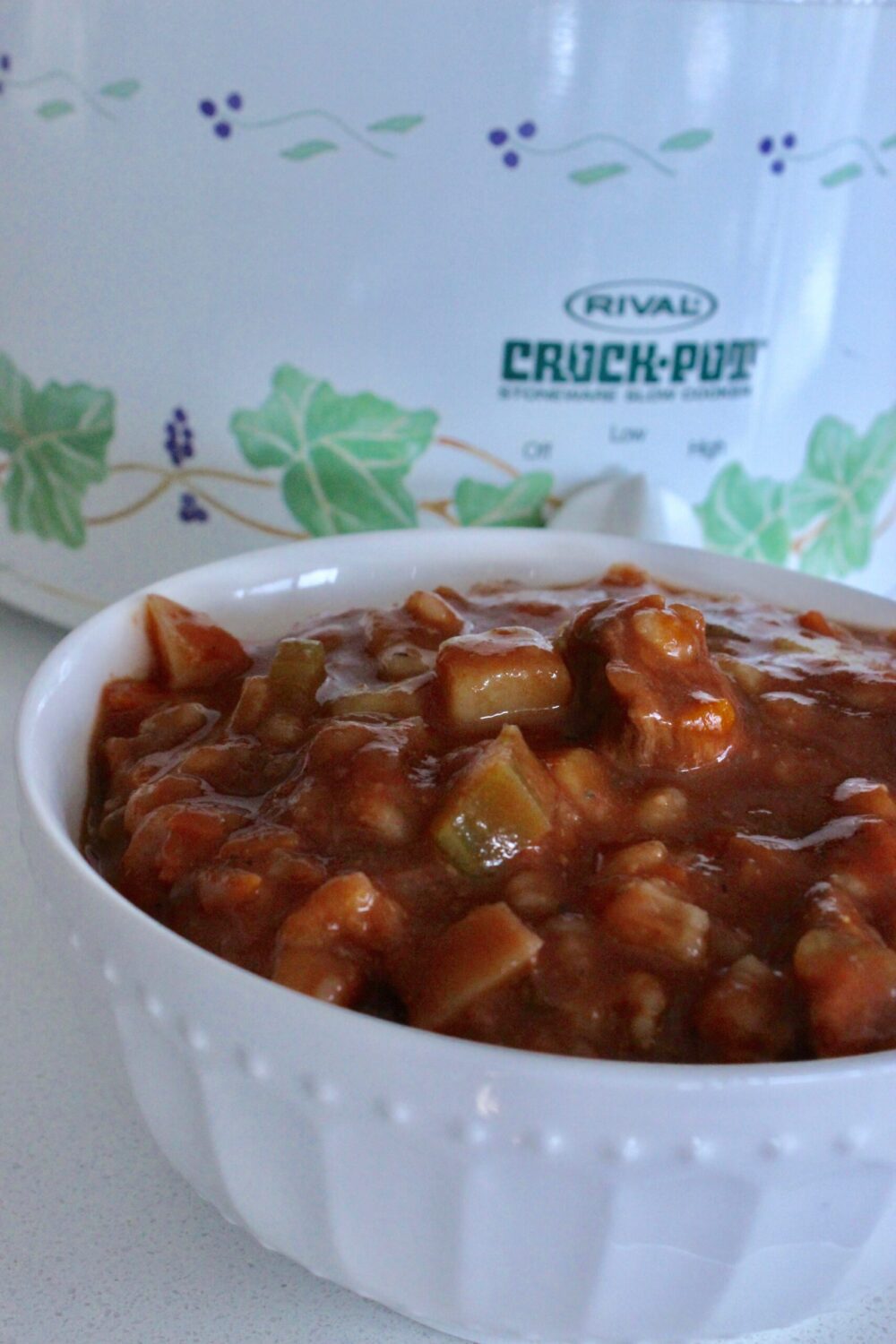
Remove the bay leaf and ladle stew into bowls. Serve with a nice buttered roll warmed in the oven, or serve as is with crushed crackers on top.
Helpful Tips
I like to use quick-cooking barley in this recipe. If you add the barley at the beginning of the recipe, it will soak up all of the broth and get kind of gluey.
Adding it at the last minute fixes this problem. You can substitute any vegetables you’d like into this recipe.
I like the texture of carrots and potatoes in beef stew, but feel free to make this recipe your own.
I’ve been making this recipe for years and have never once written it down. Finally got around to photographing this classic comfort food.
Enjoy!
Quick Barley vs. Regular Barley
Quick barley is precooked barley that takes slightly less than an hour to cook in the pot. Regular pearl barley takes about 1.5-2 hours to cook.
Make sure you have the correct type of barley before beginning to cook.
If the Stew Is Too Thick
If the stew turns out thicker than you’d like, whisk in 1/2 cup warm chicken stock a ladleful at a time to reach desired consistency. Barley can absorb a lot of the liquid, so consistency varies.
If the Stew Is Too Thin
If the stew turns out thinner than you’d like, uncover and cook on HIGH for another 20-30 minutes to reduce. Alternatively, stir in a mixture of 1 tablespoon cornstarch and 2 tablespoons cold water, cook for 15 minutes until thickened.
Cutting the Potatoes
This may seem like an insignificant step, but I promise that it’s important. If the chunks are much smaller than 1/2-inch, the potatoes will melt away into the broth, which still tastes really good, but doesn’t look as nice, by hour 7.
If the chunks are much larger than 1/2-inch, the potatoes will be crunchy when you eat it. Cutting them to 1/2-inch cubes is perfect, as they soften up nicely but maintain their own identity in the stew.
A Good Slow Cooker Makes a Difference
This recipe takes about 8 hours to make, so make sure your slow cooker is large enough to cook all of the food evenly, ideally 6 or 7 quarts.
If you have a slow cooker with a sear/saute feature, brown the stew meat right in the pot to minimize cleaning.
Variations and Substitutions
Brown the Stew Meat: I see this step routinely skipped in other recipes, and this is 10 minutes of your life well spent for the purpose of making your stew both taste better (in the meat and the liquid) and look prettier. It’s worth the extra effort.
Swap the Barley
If you don’t want to use pearl barley in your beef and barley stew, you can try cooking it with ditalini or another small pasta shape instead. Just add the pasta during the last half-hour of cooking time.
You can also leave the barley out altogether for a low-carb option. The stew will be a little runnier but is still hearty and thick.
Add More Vegetables
Beef stew is a blank canvas, so get creative and add any other veggies that sound tasty. Just be mindful of cooking times and add them accordingly.
Other veggies that work well include parsnips, green beans, mushrooms, and frozen peas. Add frozen peas during the last 30 minutes of cooking.
Add mushrooms or other veggies you plan on adding at the same time you add the rest of the veggies. Mushrooms will lend an earthy taste to the broth as they cook down.
Use Beef Broth Instead of Chicken
Although the stew is tomato-based, chicken broth helps to balance out the flavor. If you prefer something with more of a classic beef flavor, you can absolutely use beef broth instead of chicken.
It will make the stew a little more on the rich side.
Add Red Wine
For even richer flavor, you can substitute 1/2 cup of the chicken broth with 1/2 cup of dry red wine, such as Cabernet or Merlot. Add along with other liquid ingredients.
This will complement the tomato-based broth nicely.
Serving Ideas
This beef stew is delicious with buttered dinner rolls on the side to sop up any remaining broth. Top with saltine or oyster crackers for a nice textural contrast.
Serve with a slice of sourdough or other crusty bread on the side. Since the stew is pretty rich, a green, acidic salad is a nice accompaniment as well.
Storage, Make-Ahead, and Leftovers
Refrigerator: This beef and barley stew will keep, covered, in the refrigerator for up to 4 days. Note that the barley will absorb some of the broth as it sits and will cause the stew to be a little on the thick side when you pull it out the next day.
This is normal; just add a splash of broth or water when reheating to loosen up the stew a bit.
Freezer: You can freeze the beef and barley stew for up to 3 months. For easier reheating, divide the stew up into individual servings and place in freezer-safe containers.
You can also pour into zip-top freezer bags, lay flat and freeze. When ready to serve, thaw in refrigerator and reheat in microwave or on the stovetop.
Note: The texture of the barley and potatoes will change a bit with freezing. The barley will be a little on the soft side and the potatoes will be a tad grainy.
To avoid this, leave the potatoes and barley out and prepare fresh when you’re ready to serve the stew.
To reheat on stovetop, pour into a pan over medium heat and warm through, stirring occasionally. To warm in the microwave, warm for two minute intervals, stirring between, until warmed through.
If the stew has thickened more than you’d like, loosen up with a little more broth.
Make-Ahead Tips
- If you’re in a time crunch, brown the beef ahead of time and leave in slow cooker insert. When you’re ready to start the stew, stir together remaining ingredients with beef, place insert into slow cooker base and proceed according to directions. If going straight from refrigerator into slow cooker, you’ll need to increase the cook time a few minutes to make up for starting with a cold insert instead of one that’s been heated on stovetop.
- Can cook on HIGH instead of LOW? Yes, but it’ll cook in about 4-5 hours on high instead of 7. That said, the meat will not be as tender as if you cook it on LOW, but will be a little chewy/tough instead. If cooking on HIGH, add the barley during the last 45 minutes of cook time.
Frequently Asked Questions
- Why use both beef broth and tomato juice? Tomato juice adds a touch of acidity, sweetness, and thickness that beef broth does not. You can use all beef or even chicken broth, but the stew will not have the same flavor. For the best and most traditional results, use some of each. It makes for a richer, more complex stew.
- Can you use all tomato juice? Yes, but it’s best to mix stock and tomato juice together. The broth makes for a much richer and more complex flavor.
- What kind of beef to use for this recipe? Pre-packaged beef stew meat is best because it’s already cut into stew-worthy chunks and is typically chuck, which is ideal for stews because of the fat content, which makes the beef more tender. You can, however, dice a chuck roast into cubes. Avoid cuts like sirloin and round as they’re much leaner and will be drier/chewier since they’ll be cooking for more than 7 hours.
- Can you use potatoes with the skins on? I prefer to use Yukon Golds, which have thinner skins so there’s no need to peel. The skins on a russet are tougher and will be a little chewy/papery after such a long cook.
Related Recipes
Looking for more crock pot beef recipes? Try:
- Crockpot Beef Barley Soup, this is a great, lighter, soup option. Learn how to cook barley in a slow cooker.
- Slow Cooker Pot Roast, all of the same principles just with a whole roast. Includes gravy.
- Crock Pot Beef and Noodles, fall-apart tender chuck roast, cooked in crock pot and served over egg noodles.
- Crock Pot Beef Stroganoff, creamy, savory, delicious, and EASY, hands-off cooking.
Beef Stew Recipe
Equipment
- Slow cooker
- Large skillet
Ingredients
Ingredients
- 2 pounds stew meat
- 1/2 tablespoon vegetable oil
- 1 tablespoon salt
- 1/2 teaspoon dried basil
- 1/4 teaspoon pepper
- 1/4 teaspoon garlic powder
- 2/3 cup diced carrots
- 2 stalks celery diced
- 2 Russet potatoes peeled and diced
- 46 ounces tomato juice
- 2 cups chicken broth
- 1 bay leaf
- 1/2 tablespoon sugar
- 1/2 cup quick barley
Instructions
Instructions
- Toss the stew meat with salt, basil, pepper, and garlic powder until evenly coated.
- Heat vegetable oil in a skillet over medium-high heat. Brown the stew meat in a single layer, working in batches if needed.
- Transfer the browned beef to the slow cooker. Add the tomato juice, chicken broth, carrots, celery, potatoes, bay leaf, and sugar. Stir to combine.
- Cover and cook on low for 7 hours without lifting the lid.
- Stir in the quick barley, replace the lid, and cook on low for 1 more hour.
- Remove the bay leaf before serving. Ladle into bowls and serve with rolls or crackers.