
Salt has always been used in kitchens to clean, most likely because it is found in almost every home. Salt is gentile abrasive, draws out odors, and soaks up fresh spills. It shines metal as well. Virtually every grandparents used salt to clean as it was a means of avoiding getting a specialized cleaning product to clean up every mess. Salt is a product that most households already have and can be utilized for numerous things in the household at virtually no cost.
I began using the salt container as something more than just an added seasoning, and out of sheer practicality, it sits between two teens who burn pans and a husband who believes an indestructible cast-iron skillet to be the cast-iron law. It’s inexpensive, already in the cupboard, and because salt can be abrasive enough to scratch things, I don’t have to worry about how rough it is. Several of them lean toward coarse or kosher salt for more scrubbing power, but regular table salt does the trick for most. So here are 30 more uses for salt, to justify its place beyond the dining table.
1. Scour a Cast-Iron Skillet
Add some coarse salt to your warm cast-iron pan and use a paper towel or cloth to remove stuck-on pieces without damaging the pan’s seasoning. The salt completes the task of scrubbing that soap shouldn’t do, and then you just wipe it clean and add a bit of oil.
My husband treats our cast iron like it’s self cleaning after cooking bacon. A salt scrub is how I get out of lecturing him about ruining the seasoning again.
2. Lift Burnt-On Food from Pots and Pans
The burnt area can be easily cleaned by sprinkling some salt on it and adding a little water to it. Once this is done, let it soak for a bit, then boil it, or if you want, just scrub it. The salt will make the burnt layer easier to lift and clean, rather than requiring you to spend hours scrubbing.
I have burned more pots than I would like to admit, usually because I get distracted mid-cooking. Salt has saved pans I’ve already considered to be garage-bound.
3. Remove Coffee and Tea Stains from Mugs
Using a damp cloth along with a sprinkle of salt, you can remove that brown stain ring from inside your mugs. Salt acts as a mild abrasive to remove the buildup of tannins. Once you rinse, the mug will look brand new!
My favorite mug had this stupid brown line that I just accepted as a part of the mug, but I used some salt scrub to clean it, and now I regret waiting so long to clean it.
4. Deodorize and Sanitize Cutting Boards
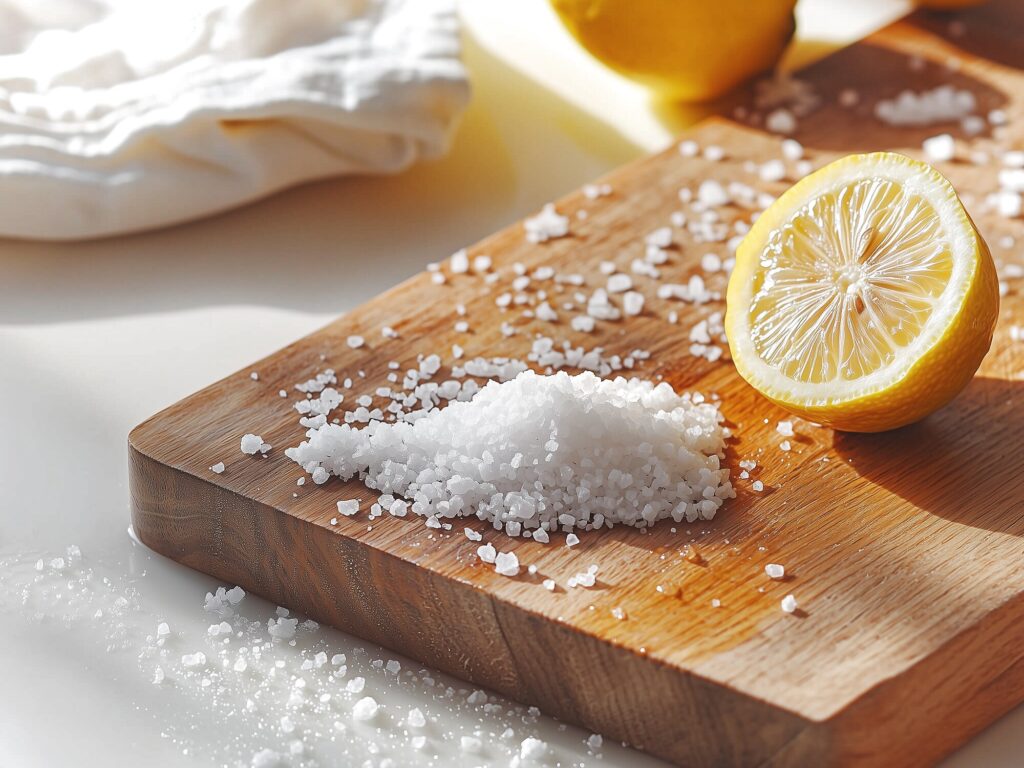
Clearing stains and removing garlic and onion smells from your cutting board is easy! Simply sprinkle salt over the board, and then scrub the salt using a half lemon, a damp cloth or a scrubber. Let the salt sit for a while, and then rinse the cutting board to finish!
My boards absorb the scents of everything I chop. A salt scrub refreshes them, and it’s a lot cheaper than replacing cutting boards on a regular basis.
5. Clean a Cloudy Glass Coffee Carafe
Add a few pinches of salt along with some ice to a stained glass carafe or pitcher and swish it around a bit. This combination lets the ice and salt act like a scrubbing tool to clean the inner walls where your hand can’t reach.
The coffee pot has a difficult to clean brown coating. I would never be able to scrub it off. However, a mixture of salt and ice cleaned my problem with ease.
6. Clear a Slow, Smelly Drain
To help clear drain pipes of grease and odors, pour salt down the drain followed by baking soda and then hot water. This will help keep the drain from getting clogged.
Each few weeks, our kitchen drain tends to slow down after one of us rinses some food down the drain, as opposed to throwing it in the trash, which usually causes the problem. A combination of salt and baking soda delayed the issue, but I know I will have to deal with it more seriously soon.
7. Soak Up Fresh Oven Spills
If food bubbles over in the oven, while the mess is still warm, sprinkle some salt on it. This will absorb some of the spill and help to prevent the mess from turning into a hard crust that will be a pain to get off and brush away when it cools.
This was taught to me by a bubbling berry pie. Sunny the spill, rather than a smoke cemented catastrophe at the bottom of my oven, it wiped right up once it cooled.
8. Absorb a Fresh Spill
To absorb freshly spilled red wine or grease splatters, pour salt directly onto the stains. Allow the salt time to absorb the stain before sweeping or vacuuming it away.
I’ve had my fair share of carpet stains, especially the kind that involve red wine. When I’ve had a red wine spill on a beige carpet, I was able to fix the problem using salt.
9. Shine Tarnished Copper and Brass
Combine salt and vinegar or alternatively salt and lemon, then make a paste that can be applied to the copper and brass. Rub the paste into the products and then rinse and buff. The salt’s grit combined with the acids will remove tarnish and restore tarnished products.
This is an old trick but it really does work. I was able to revive an old copper-bottom pot with it and the difference was enough to send to my mom.
10. Scour Stained Enamel and Ceramic Cookware
After rinsing, the discoloration will come off with a damp sponge and salt. Use it to scrub the stained enamel pots and ceramic dishes to get off stains without scratching the surface.
A good dutch oven is a real investment, and I want to keep mine in great condition. While mine is enameled and looks beautiful, I have noticed that it does pick up stains from food. I love braising meat, and I don’t want to rub the finish by using harsh cleansers. Good to know that salt is a great option for cleaning stains, along with ensuring me that it won’t create scratches.
11. Refresh a Smelly Kitchen Sponge
You can remove some of the odor from a funky sponge by soaking it in strong saltwater, which can also help draw out some of the gunk. To reuse it, just wring it out and you can use it again.
A kitchen sponge is an experiment in repeated failures. I know before long, I will throw it out, but I see how a salt soak gives it a little more time to live.
12. Clean Narrow Vases and Bottles
Add some salt and a little bit of water to your narrow vase or bottle, swirl it around, and let the salt scrub the leftover residue off of those stubborn spots you can’t reach with a cleaning brush. As the cleaning process scrub those leftover. Then rinse it out to have it clean.
I own several skinny vases that are hard to clean by hand, so I just left them dirty for a long time. A swirl of salt removes the cloudy film that builds up on the interior!
13. Scrub Away Rust Spots
Combine salt and lemon juice to make a paste, then apply the mixture to the rusted metal and let it sit. After that it can be scrubbed and rinsed off. The abrasiveness of the mixture combined with the rust breakdown will pull the rust off.
I discovered some rusty metal underneath a can that had been placed on a metal shelf for an extended period of time, and rubbing a mixture of salt and lemon directly took it off. It feels a little like a magic trick every time.
14. Clean a Sticky Iron Soleplate
To clean the sticky residue off the soleplate of an iron, you can sprinkle some salt on a sheet of paper or towel and run the iron (without steam) over it. Let the iron cool down and wipe it clean.
My iron had sticky brown gunk that was leaving marks on everything I pressed. The salt trick cleaned the plate right up, wish I had known that several ruined shirts ago.
15. Use as a Gentle Sink Scrub
Add salt to a wet sponge and use it as a light scrubber on your porcelain or stainless steel sink, then rinse the sink. The salt will remove dirt and lift minor stains without scratching the surface.
I used to buy a scouring powder specifically for the sink until I noticed that the salt in the pantry does the same gentle job. That’s one less thing cluttering the cabinet underneath.
16. Scrub Greasy Grill Grates
Coarse salt can also be sprinkled on warm grill grates and a wadded paper towel or a grill brush can be used to scrub the salt and lift the greasy, charred buildup. The loose wire bristles are not an issue with this method.
By mid-summer, our grill grates have a baked-on layer. I can give them a coarse-salt scrub so I no longer have to dread the chance wire bristles could end up in dinner.
17. Deodorize Shoes and Sneakers
To absorb moisture and odor from smelly shoes and sneakers, try sprinkling some salt inside, shaking it out before you wear them. It works to dry out the dampness that feeds the smell.
The sneakers of my teenagers construct a toxic atmosphere in the room, and I am not exaggerating. Sprinkling a bit of salt overnight makes the room bearable once more.
18. Smother a Small Grease Fire
In the event of a small grease fire, keeping salt nearby can help as it will smother the flames and stop them from spreading. If the fire is getting bigger, do not pour water on the fire and call for help.
This is one I hope you never need, but it’s good to know. I keep both salt and a lid right next to the stove to help mitigate the risk from an oil splatter.
19. Lift Watermark Rings from Wood
To remove white watermark rings on wood, try mixing salt with a few drops of water to create a thin paste. Using this paste, gently rub the mixture on the watermark, then buff the area to dry. Always test a hidden area first.
I thought the white ring from a sweating glass on our coffee table was going to be permanent. However, a careful rub with a salt paste has saved us from the guilt of having to use a coaster.
20. Freshen the Garbage Disposal
To scrub the blades and eliminate odors, throw some ice cubes and a little salt down a running disposal then add some citrus peels. The citrus deodorizes the disposal while the salt and ice do the scrubbing.
My disposal creates a stench that makes me question the entire kitchen. The combination of salt, ice, and citrus is the quickest I’ve found to reset when it really takes hold.
21. Brighten Dingy Dish Towels and Rags
Revive dingy dish towels by soaking them in a hot salt water solution. This method helps lift stains and brighten fabric, bringing back the original look of gray and grimy towels.
To save my dish towels from ending up in my trash repeatedly, I give them a soak in a mixture of salt, and water, and then I wash them so I can persist salt soaks on towels that are covered with stains. They endure permanent damage from scents and stains of an unwashed mixture of spaghetti sauce and dog paws among other things.
22. Pretreat Sweat and Underarm Stains
To help break down buildup, dissolve salt in warm water and soak sweat-stained or yellowed shirts before washing. It helps with discoloration left behind underarms by regular detergent.
My husband’s undershirts get yellow stains in the armpit area that no regular wash removes. Most of them are destined to be retired and turned into cleaning rags, but I’ve saved a few with a saltwater presoak.
23. Scrub Baked-On Grease off the Stovetop
Sprinkling Salt onto grease and splatters that are cooked on your stovetop and adding a damp cloth to the mix encourages scrubbing, and the salt provides additional grip and adds the required grit needed to cut through the grease. Finally, wipe, rinse, and clean.
Just like the rest of my family, I let the stovetop greasiness build up for a while. The mess is bad enough that I cover my eyes as I walk past it. I let my dirty mind take over to avoid cleaning, but I want to avoid using any more harsh chemicals to clean it. I just got a tiny bit of salt to use as an abrasive, and I think that’s enough cleaning power to actually get the mess cleared up.
24. Clean a Burnt Casserole or Baking Dish
To clean burnt casserole dishes, cover the burnt area with a mixture of salt and a little water. Let it soak and then scrub it. The salt will loosen the stuck mess and eliminate the need for excessive scrubbing.
Each cheesy bake I’ve made brings back memories of my glass casserole dishes. It shouldn’t feel this good to see them clear again after a salt soak.
25. Remove Hard-Water Film from Glassware
Cloudy glasses can be cleared by soaking them in salt water. Just scrub them gently and rinse, and the hard water film that covers them will be cut, helping the clear shine to be restored.
I notice my hard water leaves a chalky coating on my glasses straight out of the cabinet, and it’s even worse when guests are over, but a salt soak is a good temporary fix.
26. Clean Greasy Hands After Cooking
To remove grease and odors like garlic, fish, and onion, rub a bit of soap and water and some salt between your hands, then rinse with warm water.
Once I finish breaking down a whole chicken or mincing a head of garlic, I’ve got the evidence on my hands for several hours. A salt scrub removes the grease and the odor in one go.
27. Scrub a Wooden Spoon or Bowl Fresh
To remove odors and stains from wooden bowls and spoons, rub salt into the surface and then rinse. Afterward, make sure to dry them really well so that the wood doesn’t warp.
I will reminisce over family meals when I see (and smell) my wooden spoons. With a little oil, they will become even more vibrant! Salt scrubs do the trick to keep them looking fresh!
28. Scrub a Scorched Pot Bottom
To deal with a burned ring on the bottom of the pot, make a thick paste of salt and cover the area of the burn. After a while, scrub it. The paste breaks the carbonized layer, allowing it to come off in pieces.
Once, I forgot about a pot of rice, and the bottom of it was a crime scene. A long soak and a little bit of salt saved it from the trash.
29. Clean a Greasy Sheet Pan
Cleansing baked-on residue is easy. Just sprinkle salt on a greasy, stained sheet pan and scrub it with a damp sponge. It loosens the grease without scratching the pan.
I’ve given up the fight on the permanent toasted-brown tint on my pans. For actual grease gunk, I salt scrub while I try not to think about doing it.
30. Clean and Sharpen a Coffee or Spice Grinder
To clean the blades and scrub out oily residue and smells, run some salt through the grinder. Afterwards, do a final wipe down.
My coffee grinder is haunted by the residual spice remnants of every herb and spice I’d ever ground in it, throwing me off every morning. A spin of salt resets the grinder to neutral.
What makes cleaning with salt such a keeper is its cost-effectiveness combined with convenience and versatility. Cleaning with salt is practically free, and it is likely already in your cabinet! Salt works as a scrub, absorbent, deodorizer, and shining agent. And the best part is no cleaning chemicals are needed. It replaces and does the work of numerous specialty products.
Coarse Salt + Cast iron skillet + A burnt pan = A satisfied customer! It happened with my first few ruined pots, and it will probably happen with you too. And I will probably provide you with a reason to keep a box of salt handy.
Salt resolves so many problems you will be astonished.
You will love a pan so much that you’ll buy a box of salt just to keep it handy.
Salt and a little scrubbing power = A happy customer.
Common Questions About Cleaning With Salt
Is it good to clean with salt?
Yes. Salt works as a gentle, natural abrasive that scours without scratching, and it absorbs fresh spills and helps cut odors. It is cheap, already in most pantries, and an easy eco-friendly option for a surprising range of kitchen and household jobs.
How do you clean a cast-iron skillet with salt?
Sprinkle a generous amount of coarse salt into a warm cast-iron pan and scrub with a folded paper towel or cloth to lift stuck-on food without stripping the seasoning. Wipe it clean, rinse and dry if needed, then rub on a thin layer of oil. Avoid soap so you keep the seasoning intact.
What should you not clean with salt?
Because salt is abrasive, skip it on surfaces that scratch easily, like nonstick coatings, glass cooktops, and polished or lacquered finishes. Use a lighter touch or finer salt on delicate items, and test a hidden spot if you are unsure.
Does salt remove rust and stains?
Yes. A paste of salt and lemon juice (or vinegar) breaks down rust spots so they scrub away, and salt sprinkled on a fresh spill like red wine absorbs it before it sets into a stain. Salt also lifts coffee and tea rings from mugs as a mild scouring powder.
Can you mop your floors with salt water?
A little salt dissolved in warm mop water adds mild cleaning and freshening on sealed tile, vinyl, or linoleum. Skip it on natural stone and unsealed wood, which do not react well to the abrasive or the extra moisture.