
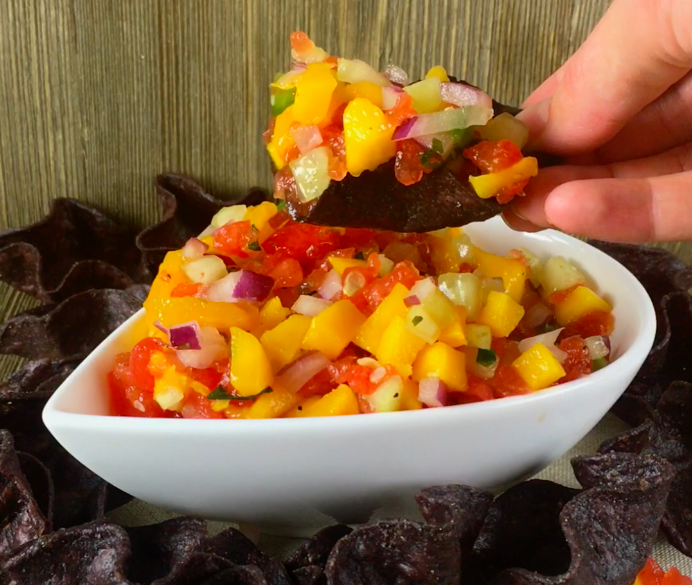
Watermelon Mango Salsa
Watermelon Mango Salsa takes about 15 minutes to make. It’s super easy and seriously delicious.
Sweet, spicy, refreshing, and tangy, this Watermelon Mango Salsa is an incredible dip for parties, potlucks, cookouts, etc.
Watermelon Mango Salsa is a crowd pleaser
On a recent Saturday, when a handful of teens and their friends came to our place, I made Watermelon Mango Salsa to go with chips. Better than plain ol’ chips sitting out on the counter, this colorful, flavorful salsa disappeared before I even got a chance to grab a bowl.
Why the Lime Zest Matters More Than You Think
I highly encourage you to include the zest. It has a lot to do with the oils of the lime’s rind, which offer a bitter and floral element to balance out the tartness of the lime and bring out the sweet side of lime.
It’s amazing! You cannot zest a lime after you’ve squeezed it.
So, zest first, then juice. You can use a microplane zester, which is my favorite, or you can remove strips of peel with a vegetable peeler and then use a sharp knife to mince them finely.
What Goes Into This Salsa
- the sweet and juicy watermelon
- brightness and acidity from lime juice
- just enough heat from the jalapeño to make you reach for another chip
- lime zest
- a hint of cucumber for a cooling and crisp factor
- the herbal flavoring from the fresh basil that makes it worthwhile to buy a full bunch of basil just for this recipe
Watermelon Mango Salsa Ingredients
- 3 cups watermelon, cut into small, consistent, 1/2 inch cubes and seeded or use seedless watermelon
- 2 mangoes, peeled and diced
The cucumber adds a refreshing, crisp element
Watermelon is super juicy and could make this salsa watery without the addition of lime. The acid in the lime keeps the watermelon from literally melting into a puddle of redness.
The cucumber also adds a crisp, refreshing factor to this salsa.
This recipe comes together quickly and can be served immediately. If you choose to make this recipe ahead of time, keep it covered and store it in the refrigerator.
Serve with tortilla chips.
2 whole mangoes – Mango adds another layer of sweetness and texture. You can make salsa with just watermelon but it’s nice to have some dense fruit to balance all the watery melon.
Choose mangoes that yield to slight pressure. Not ripe, but not hard and starchy either.
They’ll ruin the salsa. Note: It takes two whole mangos to make a surprisingly small amount of diced mango.
1 cucumber, peeled, seeded, diced – Adds a nice crunch and a subtle flavor that blends in with the melon and mango. Do not skimp on deseeding the cucumber, it takes about 10 seconds.
Cut in half and scoop. Leaving the seeds will make the salsa really watery in about an hour.
1 seeded jalapeño pepper, minced – Adds heat and flavor. Leaving the seeds and the white pith inside the pepper will make the salsa spicier.
Remove these items for a salsa that has a tinge of hot, not an overwhelming spice. Adjust to suit your own spice preferences.
1/2 red onion – Adds flavor. Dice the onion as fine as possible.
Onion is a strong flavor that will take over if there are big pieces. Finely chopped, you’ll taste onion in each scoop but it’s mild and balanced with all the fruit.
Sugar
Garlic salt
Ground black pepper
1/4 cup freshly squeezed lime juice – Watermelon without the tang of lime is really bland. Lime is what keeps the whole salsa from getting too sweet.
Fresh is so much better than bottled. Use all from fresh squeezed limes.
The recipe calls for 3 limes for zest and juice. About 3 limes will provide both 1/4 cup juice and 1 1/2 t zest.
- 1 1/2 Tsp Lime zest
10 fresh basil leaves, finely chopped – Adds a sweet, herby flavor. Fresh basil brings all the fruity flavors together.
Dry herbs don’t meld with fruity flavors in the same way. You can swap out the basil with an equivalent amount of cilantro.
It changes the flavor but is still delicious.
How to Make Watermelon Mango Salsa
Step 1: Make the lime base
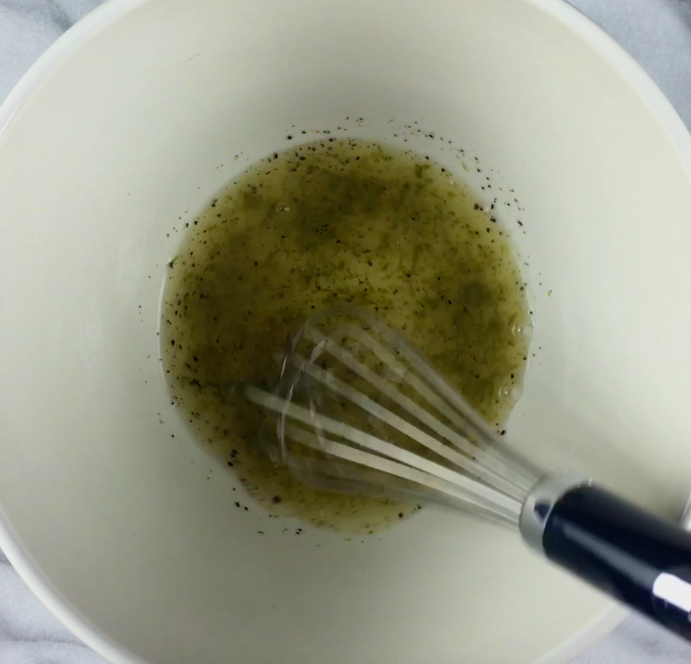
In a bowl, stir together the lime juice, lime zest, 1 tablespoon of sugar to take the edge off the acid of the lime, and 3/4 teaspoon of black pepper until the sugar is mostly dissolved, about 1 minute. This way, the dressing will be more evenly distributed among the fruit.
Set aside.
Step 2: Prep the watermelon
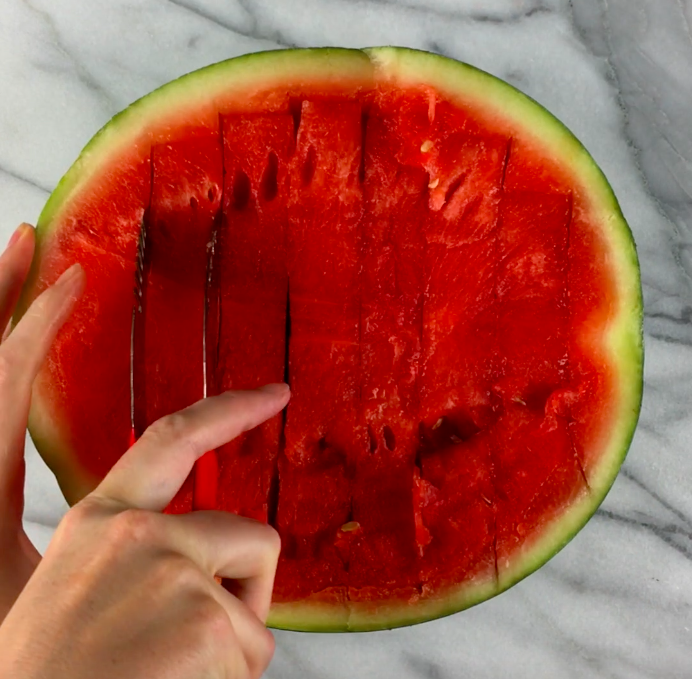
Remove the seeds from the watermelon. Cut into 1/2-inch (approximately) cubes.
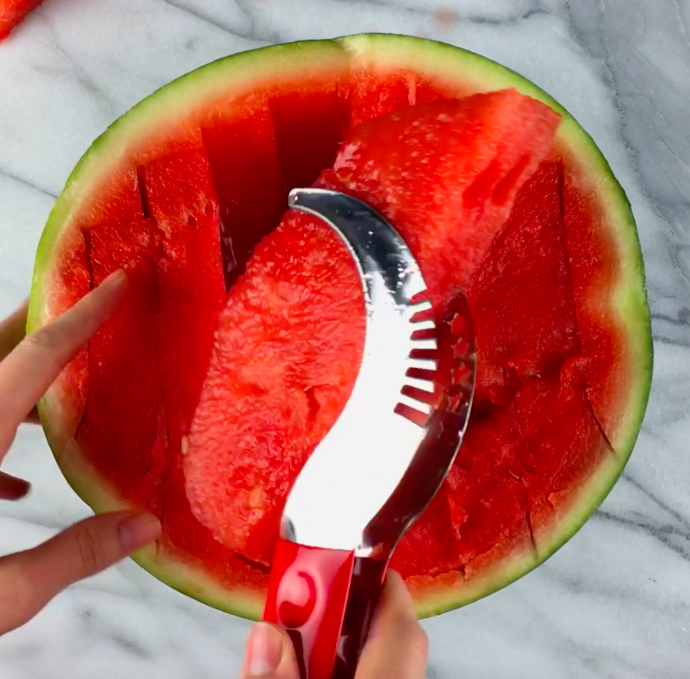
If your watermelon is extremely juicy, place the watermelon cubes in a colander and allow them to drain for a few minutes, about 5, so you don’t add excess juice to the salsa. Tip: Invest in a watermelon slicer, as they are inexpensive and make short work of preparing watermelon.
Plus, the juice stays within the rind of the melon making the task less messy and quicker.
Step 3: Seed and dice the cucumber
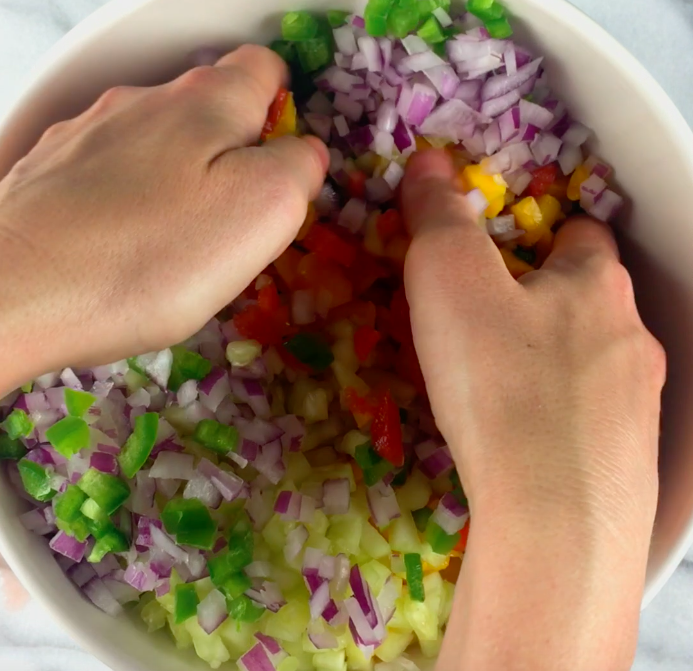
Remove the peel of the cucumber. Slice in half lengthwise and use a small spoon to remove the seeds.
If you don’t remove the seeds, they will release water making your salsa runny. Dice the cucumber into pieces approximately the size of the watermelon.
Step 4: Dice the mango
Remove the peel of the mango and dice. Tip: The key to dicing the cucumber and mango is to cube the pieces into smallish, relatively, evenly-sized pieces.
Evenly-sized pieces make for easier scooping onto a chip, ensuring that every bite has an even distribution of ingredients.
As a tip, if you are going to use frozen mango, make sure you allow it to thaw and drain completely, which is much better than trying to use an underripe mango. And while dicing the mango, go slowly, because it’s slippery, so use a sharp knife.
And try to dice the mango as small as you possibly can, because we’re going to be scooping this salsa onto chips.
Step 5: Prep the jalapeño and onion
- Prep the jalapeño by removing the stem. Cut it in half, lengthwise. Remove seeds and white membranes with a small spoon, because the longer you keep the white membrane, the kickier it’ll be. Dice as small as you can – we really want this salsa to be as uniformly diced as possible, for two reasons: 1) to ensure that you get a bit of everything in every scoop onto a chip; 2) if the jalapeño pieces are too large, there will be some bites that are really hot while the majority of the salsa is pretty tame.
- Finely dice the red onion. Again, the goal is to incorporate all the ingredients as thoroughly as possible, so that there are no bites that are overwhelmingly onion-y.
- Important: Wash your hands thoroughly after handling jalapeño before touching your eyes.
Step 6: Combine, taste, and chill
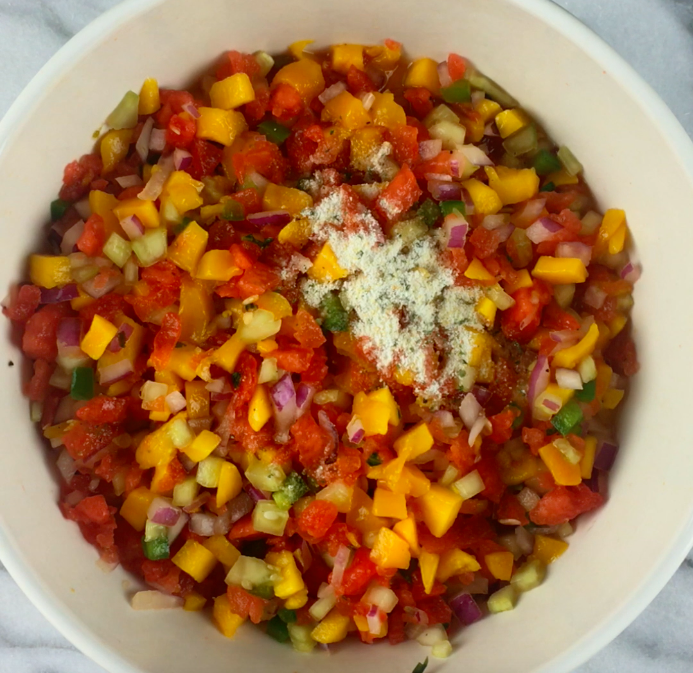
- Add the watermelon, cucumber, mango, jalapeño, red onion and fresh basil to the bowl with the lime mixture and toss to combine, being sure to coat everything thoroughly, but try not to smash the watermelon pieces. Taste for seasoning, as I would recommend adding more lime juice at this point.
- Transfer the salsa to a large, lidded serving bowl. Chill for at least 2 hours, and preferably 4, before serving, because this step is extremely important, as it’s a must! It allows all of the flavors to mingle, resulting in an altogether different (much better) end product.
Step 7: Add garlic salt and serve
- Remove salsa from fridge and add garlic salt. Serve chilled.
- Add the garlic salt just before serving, giving it a light stir. Add it any sooner and the salt will pull the juice out of the watermelon, a process called osmosis. You’ll be left with a bowl of watermelon chunks swimming in a sea of pink.
Tips for success
Cut all ingredients into even, tiny pieces. Not only is it hard to scoop a big chunky salsa on a chip, but it also makes for inconsistent flavors.
To save on clean-up, cut the watermelon on a tray. You can scrape the tray into the bowl, saving yourself from washing a cutting board with sticky residue.
This salsa tastes best when ingredients are fresh.
The One Thing That Ruins This Salsa and How to Avoid It
The biggest complaint I’ve seen about watermelon salsa recipes is that they’re too wet. There are only two reasons for that:
- Your watermelon is too ripe and extremely juicy. To combat this, dice the melon and place in a colander to drain for about 5 minutes. This won’t stop all of the juices from being released but will help.
- You didn’t remove the seeds from the cucumber. To do this, cut cucumber in half lengthwise then scrape out seeds with a spoon before cutting.
Watermelon and cucumbers (without their seeds) hold lots of liquid and release some of that juice when combined with the lime. If you find your salsa to be too wet, drain off some of the liquid before serving.
All of the flavor is in the fruit, not the juice, so don’t worry about wasting anything.
Ways to Use It Beyond the Chip Bowl
Pita chips are great with this, along with tortilla chips. Find a chip that holds up to this salsa, as you’ll be taking large scoops so skip the flimsy chips that crumble under pressure.
- With fish, the watermelon and mango pair wonderfully with grilled fish. Try over a piece of grilled tilapia, mahi-mahi or even a piece of salmon. The lime in the salsa is great on fish, so use salsa in lieu of a sauce to brighten fish and shrimp. Try it in fish tacos as a stand-in for cabbage slaw for a hit of sweetness, freshness, and crunch.
- With chicken, spooned over sliced, grilled chicken thighs. Try a rub that features cumin or chili powder for a wonderful blend of flavors.
- With shrimp, pile some of this salsa onto grilled shrimp for a quick weeknight dinner.
- On a grain bowl, pile rice or quinoa into a bowl. Add some black beans, avocado, then top with salsa. A summery dinner with no cooking required.
Four Variations Worth Making
- Add some avocado: If you’re sensitive to spice, avocado is a must. Its creaminess offsets the jalapeño beautifully. However, avocado turns pretty ugly sitting in liquid, especially acidic liquid. Add right before serving.
- Sub cilantro for basil: If you want the salsa to be more traditionally Mexican, swap in an equal amount of chopped cilantro, about ten leaves or a small handful.
- Sub peach for mango: If mangoes aren’t super ripe and delicious and you happen to be able to score some perfectly ripe summer peaches, feel free to sub them here. Texture will be a little different (softer), but equally delicious.
- Get smoky: Add a little tajín (chili-lime seasoning) or chili powder along with the lime juice if you’re looking for a little smokiness, like they do to fruit in Mexico. This variation would go well with some grilled meat dishes.
How Far Ahead You Can Actually Make This
Watermelon softens pretty quickly when tossed with other ingredients and releases a lot of liquid. I like this salsa best within 2-4 hours of making it.
After that point, it’s getting pretty sloppy and the watermelon is turning soft and mushy. If you know that you’ll be making it for a party that afternoon, make everything except the garlic salt, keep it chilled, and combine 2-4 hours before serving.
Add the garlic salt just before serving no matter how far in advance you made the rest of the salsa.
Watermelon Mango Salsa FAQ
How long does it last?
This salsa will last about 2 days in an airtight container in the refrigerator. However, it’s best eaten as soon as possible as it loses a lot of it’s zing once it sits.
Also, the watermelon will release a lot of liquid and become pretty soft. Drain before eating.
Can I freeze it?
The watermelon and cucumber will turn to mush, so freezing is not recommended.
Can I omit or substitute the spicy ingredient?
Yes, you can. This salsa is delicious without it.
The sweet-spicy combo is the source of most of its excitement, but if spicy isn’t your thing, feel free to leave it out or substitute an equal amount of finely diced red bell pepper for color and crunch.
Can I use frozen mango?
I’d rather use fresh, but if necessary, defrost and drain it really well before use. It will be a little softer and release more liquid, but will still be flavorful.
Even if you can get fresh mangoes but they’re hard and green, frozen would be a better alternative.
Can I use lemon juice instead of lime?
I love the intense, floral acidity of lime and think it complements the other tropical ingredients in this recipe best. But in a pinch, lemon juice has a calmer, more rounded acidity which won’t shine as brightly.
Use the same amounts of juice and zest, 1/4 cup juice and 1 1/2 t of zest.
What are the best chips for Watermelon Mango Salsa?
I’ve been enjoying pita chips lately, which scoop really well and don’t take over your whole mouth. Thick tortilla chips, like you might get at a restaurant, are another favorite of mine.
Small, thin chips can be frustratingly flimsy in the face of a hefty scoop of salsa.
More Fresh Dips and Salsas Worth Bookmarking
Canned Tomato Salsa, a year-round recipe that deserves a place in your pantry. Easy to can at home, too.
Corn and Black Bean Salsa with Avocado, great as a summer salsa and dip for chips or over grilled fish, tacos, etc.
Spicy Pretzels: An Easy Make Ahead Snack | Crunchy, addictively spicy and oh-so-easy to make ahead, these homemade Spicy Pretzels will be your new favorite snack. Perfect alongside dips like Watermelon Mango Salsa.
Watermelon Mango Salsa
Ingredients
Ingredients
- 1 1/2 teaspoons lime zest from about 1 lime
- 1/4 cup lime juice from about 3 limes if using fresh
- 1 tablespoon sugar
- 3/4 teaspoon ground black pepper
- 3 cups watermelon seeded and finely chopped
- 1 cucumber peeled, seeded, and diced
- 2 mangoes peeled and diced
- 1 jalapeno pepper seeded and minced
- 1/2 red onion finely chopped
- 10 fresh basil leaves finely chopped
- 1/2 teaspoon garlic salt
- pita chips or tortilla chips for serving
Instructions
Instructions
- Stir together the lime zest, lime juice, sugar, and black pepper in a large bowl.
- Add the watermelon, cucumber, mangoes, jalapeno, red onion, and basil. Toss gently so the fruit stays intact.
- Cover and chill the salsa for at least 2 hours before serving.
- Add the garlic salt just before serving and stir gently again.
- Serve chilled with pita chips, tortilla chips, fish, or grilled chicken.