
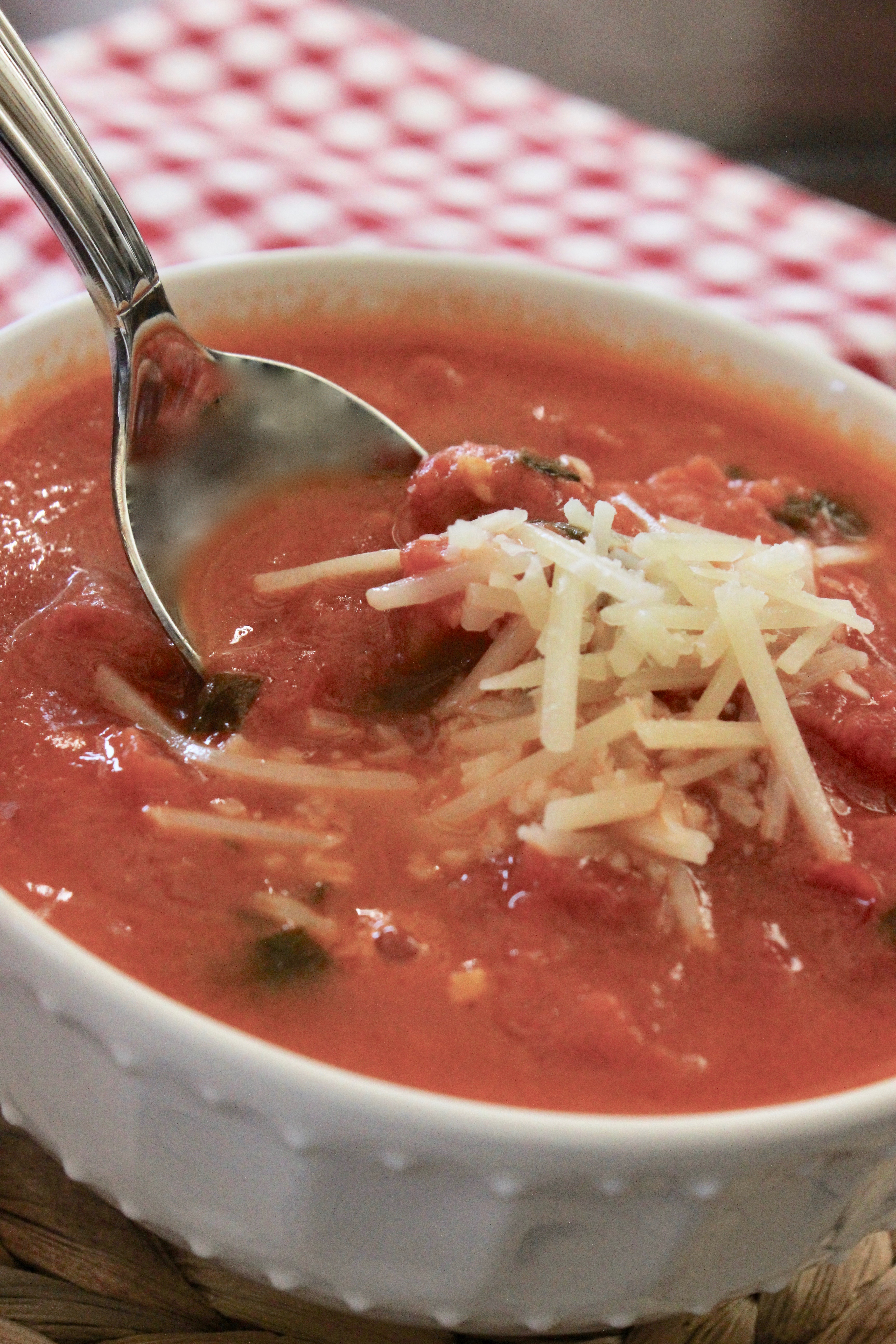
Creamy Tomato Basil Bisque Recipe
This rich, creamy, easy, and flavorful tomato basil bisque comes together in about 30 minutes and requires no roasting or fussing around with batches of blended tomatoes. It’s super easy to make on the stovetop and tastes incredible.
When I was trying to recreate this soup I’d fallen in love with at a local cafe, I tested this recipe several times to make sure I had all of the ingredients in just the right proportions. Once it hit that mark, this creamy tomato basil bisque became one of our go-to soups every year from fall through early spring.
Ingredients for Tomato Basil Bisque
The Tomatoes
You will need two 28 ounce cans of tomatoes. One can crushed tomatoes and one can of diced tomatoes.
Using crushed tomatoes ensures the bisque will be thick enough that you won’t have to blend it.
Adding in the can of diced tomatoes provides depth of flavor that crushed tomatoes just don’t have on their own. Using only crushed tomatoes can result in a flat-tasting bisque, while using only diced tomatoes results in a thinner, more broth-like bisque.
Look for crushed and diced tomatoes grown in the San Marzano region, with a label indicating they are DOP. They are less acidic and sweeter than others.
Brands like Hunt’s and Muir Glen are reliable, too. Just avoid lesser known brands.
Some cans of tomatoes have a strange, almost metallic, smell. Don’t even try cooking with those.
Chicken Broth
Two cups of liquid will make it nice and fluid but still scoopy. More would make this a tomato soup and not a tomato bisque.
Low-sodium is best since it will allow you to add as much salt as you like. Vegetarian?
You can use vegetable broth. It’s not going to make a big difference anyway because this recipe is all about those tomatoes.
Garlic
- Garlic: One tablespoon. Use fresh, not jarred garlic as jarred garlic is harsher in flavor and will not mellow out once boiled. Three to four cloves, minced, is about a tablespoon.
Sugar
- Two tablespoons of sugar will mellow out the acidity of the tomatoes. It won’t make it sweet at all, it’s there to balance out the acidity of the canned tomatoes which tends to be a little more harsh (almost metallic) than fresh tomatoes. It really does make the tomatoes taste more like tomatoes. If it still tastes sharp after the boil, add a little more.
Butter
- Five tablespoons. Yep, I know. That’s what makes this a bisque and not a tomato soup. This recipe starts out like many others with butter and garlic, so don’t skimp on the amount. Whether salted or unsalted is entirely up to you, just keep in mind to taste before adding more salt to the recipe if using salted butter.
Heavy Cream
The secret to making a tomato-based soup into a bisque is drizzling heavy cream into the pot at the very end of cooking. Add it last and it won’t curdle or separate on you.
That’s where the body comes from, that rich, creamy texture you’re after.
One cup of heavy whipping cream will help the bisque achieve the right consistency and provide a richness that cannot be duplicated with milk or half-and-half.
Fresh Basil
Using fresh herbs adds another dimension to your bisque and cannot be duplicated by dried herbs. Ten to fifteen leaves (finely chopped) will add a floral, peppery taste to your bisque.
Cayenne Pepper
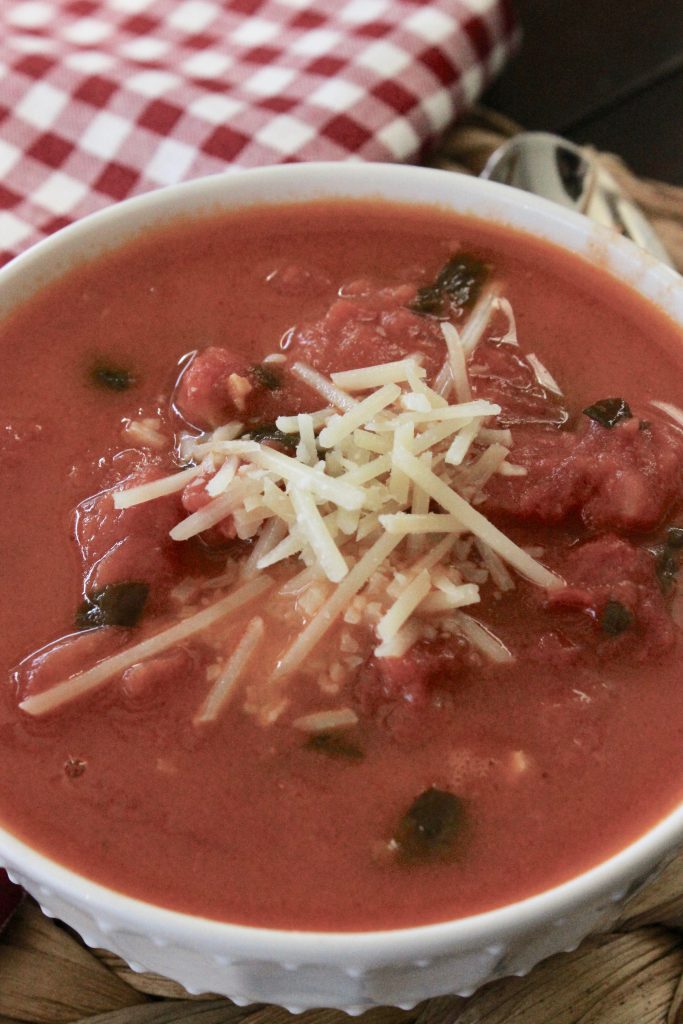
About ½ tsp. will complement the bisque nicely. The cayenne cuts the richness of the bisque and takes away the edge without adding any spice to it.
Omit if you wish.
How to Make Tomato Basil Bisque
Step 1: Start the Tomato Base
Before you get started, be sure to measure out all of your ingredients and get everything else you need. This recipe moves pretty quick.
Add the tomatoes, chicken broth and garlic to a large pot or dutch oven and bring to a boil over medium-high heat. Once boiling, stir well, reduce heat to medium, cover, and let simmer for 10 minutes or until garlic is no longer sharp.
Stir occasionally as they simmer. They will soften and darken in color.
Step 2: Add Butter and Sugar
Remove from heat and add the butter and sugar. Stir until melted and mixed in.
If it is still a little acidic, add more sugar by the ½ tsp. until it suits your tastes. Reduce heat to low and leave on the burner.
Step 3: Blend (Optional)
At this point, you can leave the tomatoes and garlic chunky, or blend them up until they are nice and smooth. You can either take your countertop blender, being careful not to fill it more than half-way, place a clean dish towel over the lid to contain any splattering, and blend them up.
Add them back to the pot, stirring to incorporate. You can also use an immersion blender directly in the pot.
Either way, it’s going to get hot, so take your time.
Step 4: Add the Cream
Remove the cream from the refrigerator about 10 minutes before adding it to the tomato mixture. Do not add cold cream from the refrigerator into the mixture.
Place the pot back onto the burner and drizzle the cream in over about a minute and a half, stirring the whole time. Do not allow it to come to a boil.
The color will lighten to a warm orange-red. Add cayenne and stir to combine.
Add basil at the very last minute or take the soup off the burner. Stir to combine.
Step 5: Stir in Basil and Cayenne
Add the chopped basil and cayenne pepper. Taste and adjust as necessary.
If it looks like it’s curdling or has gotten too greasy then you may have had the heat too hot, so lower the heat and stir constantly. Allow to warm on low for another 2-3 minutes before proceeding.
Taste again, adding salt and cayenne as necessary.
Step 6: Serve
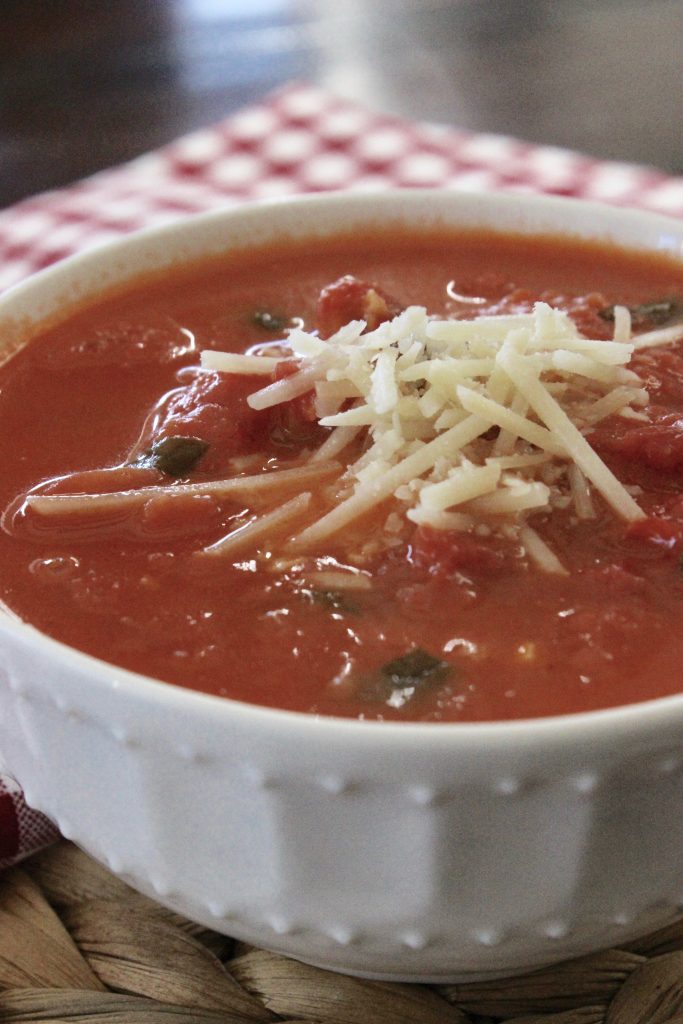
Ladle soup into bowls, serve with croutons, a drizzle of olive oil or a dusting of freshly grated Parmesan cheese (optional) and enjoy.
Helpful Tips:
Don’t Add Cold Cream to a Hot Soup
If you find that your bisque is broken, meaning too much of the fat has separated from the bisque, you added the cream too quickly and/or your soup was at too high of a heat when you added the cold cream. Always add the cream slowly, stir constantly and make sure that the soup is simmering gently when you add the cream.
As a preventative measure, I recommend taking the heavy cream out of refrigerator and allow it to sit out for about 10 minutes before adding to the soup. Also, if you find that your bisque is too greasy, turn down the heat and stir vigorously to get the bisque to incorporate.
Taste After the Boil, Not Just at the End
Taste often, after boiling, after adding butter and sugar and one last taste at the end. Boiling changes the flavor dramatically so don’t just count on adjusting the seasonings at the end.
Add the Basil Last
Adding the basil at the beginning of the recipe and allowing it to cook would result in losing its freshness and brightness. Adding the basil at the end and letting it cook for 2-3 minutes brings out its flavor without allowing it to get murky and dull.
Make It Vegetarian
Substitute equal amount of chicken broth for vegetable broth. You will barely notice the difference considering the flavor of the tomatoes.
Make It Dairy-Free
Substitute an equal amount of coconut cream for heavy cream. Again, you’ll barely notice the difference and perhaps a slight undertone of coconut.
Do not use coconut milk, as you need the thicker and creamier coconut cream to get the same texture.
- Coconut cream should be full-fat canned coconut cream. Add this ingredient in slowly, stirring constantly, on low heat.
- To make vegan, leave out butter and/or substitute with a vegan butter alternative.
If the Soup Tastes Too Thin
If the soup seems thin for your liking, try leaving step 1 to boil a bit longer before proceeding. This will reduce the amount of liquid in the dish, concentrating the bisque a bit.
Alternatively, you can stir in a Tbsp of tomato paste in step 1. This won’t make the soup particularly acidic, but it will thicken and intensify the flavor.
If the Soup Tastes Too Acidic
If it seems acidic, add sugar in small amounts and taste often to bring out a bit of sweetness. You can also add a teeny-tiny amount of baking soda to balance out acidity, though it will foam when added to soup, so add less than 1/4 tsp at a time or just a pinch.
Or, you can add a bit of butter.
Serving Ideas
This soup is versatile. Serve as an appetizer or as an entree with sides, depending on your mood and appetites.
It goes especially well with crusty breads, and a grilled sandwich is a favorite: just grill two slices of sourdough spread with butter with some sharp cheddar or Gruyère in between; serve in strips for easy dipping. Homemade croutons are also fabulous.
Cut up bread, toss with melted butter and some garlic powder and salt, and bake on a sheet pan in a hot (375°F) oven until golden, about 15 minutes. Even plain pieces of sourdough or a baguette are nice for dipping and save some prep.
A dusting of Parmesan is another good accompaniment, though freshly grated cheese is better than the shredded stuff out of a bag. Finally, for presentation, garnish with a tsp of cream just before serving.
The saltiness and savoriness of Parmesan complements the richness of the cream.
Storage, Make-Ahead, and Freezing
Refrigerator
Store cooled soup in a lidded airtight container in the refrigerator up to 4 days. Reheat on LOW in the microwave, adding some cream or broth.
Cream soups don’t like to be microwaved on high because the cream tends to separate. Freezes okay, better than most cream soups actually, but be sure to cool before freezing.
Freezing
Yes, this bisque freezes well. Portion it into gallon-size freezer bags, removing as much air as possible.
Seal the bags and lay them on a baking sheet to freeze. You can then stack the bisque bags or stand them up to save freezer space.
Tomato bisque freezes well for up to 3 months. Defrost overnight in the refrigerator.
Bisque may look a little separated or grainy but will come together beautifully when stirred over low heat on the stovetop. You can also add cream at this point if you made the recipe without it.
Can I Make Tomato Bisque in Advance?
Yes, this soup is fantastic when made in advance. It can be made 1-2 days in advance and stored in the refrigerator.
I find the flavors are even better after resting for a day. Just reheat the soup over low heat on the stovetop, stirring often, not in the microwave.
You can stir in fresh cream at the end if you’d like as well to revive it. If you’re making the recipe for a crowd, I’d hold the basil back and add fresh basil right before serving rather than letting it sit in the bisque for two days.
It’s best with bright, fresh basil.
What are the Best Tools to Make Tomato Bisque?
While it’s not absolutely necessary to own the following tools to make tomato bisque, they make the process so much easier:
- A large, heavy-bottomed pot or Dutch oven: The weight of the pot helps to distribute the heat evenly throughout the pot, helping to keep the bisque from scorching on the bottom. My favorite is a 6-quart size that’s large enough to fit the recipe as written or doubled.
- Immersion Blender: This will come in handy for blending the tomato bisque in the same pot it was cooked in. You won’t have to transfer it to a standard, countertop blender.
- Ladle with a pour spout: This is great for serving up soups in general. The spout makes it easier to pour the bisque without drips and spills. Less mess.
Frequently Asked Questions
What’s the difference between tomato soup and tomato bisque?
Tomato soup is an entire genre of soups, while bisque refers to a type of smooth, typically cream-based soup. Tomato soups can be creamy, thin, or chunky, etc.
Can I Make Tomato Bisque in a Slow Cooker?
Yes, combine tomatoes, broth, garlic, sugar, butter, and cayenne in slow cooker. Cover and cook on low for 6-8 hours, or high for 3-4 hours.
Stir in remaining ingredients.
However, do not add heavy whipping cream at the beginning as it will not hold up during such a long cook.
Why did my tomato bisque turn out curdled/grainy?
This recipe calls for adding in cream towards the end of the recipe to give the bisque it’s silky, creamy texture. Sometimes, however, the fat can separate from the liquid making the soup appear curdled or grainy.
This typically happens if you add the cream while it’s cold, or if the cream is added too quickly. In some cases you can rescue it.
Try turning your heat down to low and whisking vigorously, or try an immersion blender, both of which should re-emulsify it. To avoid it in the future add the cream more slowly and with the heat turned down.
What is bisque?
Bisque is a thick, creamy soup. This tomato bisque is made in a very similar fashion to tomato soup but cream is added towards the end for a silkier, creamier soup.
Can I Use Fresh Tomatoes instead of canned?
While this recipe is best made with canned tomatoes, fresh will also work. Peeling fresh tomatoes is a pain (blanching will help), you’ll have to remove the seeds and cook them down longer to concentrate the flavors and it’s not guaranteed you’ll achieve the same results.
Canned tomatoes are a more consistent, reliable option since they’re canned at their ripest. If you happen to have perfectly ripe tomatoes from the garden it’d be worth giving it a try.
You may find you need to add an additional pinch of sugar to cut down on the acidity.
Can I Use Dried Basil instead of Fresh?
While you can, fresh is best since it lends it’s fresh, bright flavor to the recipe. Dried basil has more of an earthy, Italian seasoning kind of flavor that’s better suited to recipes like pasta sauces that simmer for hours.
If you do, I’d add the basil towards the beginning (when everything is brought to a boil). Use 1 teaspoon dried basil and keep in mind you’ll basically have a very delicious tomato soup instead of this unique, flavorful bisque.
How do I make this thicker?
There are a few different ways that you could thicken this recipe if desired. Allow the bisque to boil down a little longer which will reduce excess liquid.
You could also blend the tomatoes instead of leaving it chunky, and only blend part of it before stirring in the heavy cream. The blended tomatoes would help to thicken this recipe.
Adding about a Tablespoon of tomato paste and stirring into the recipe at the beginning could also thicken. Finally, a slurry made from 1 Tbsp cornstarch and 2 Tbsp cold water would help to thicken as well.
Add during boil, let cook a few minutes before turning heat down.
Related Recipes
If you liked this bisque, you may also enjoy these soup and comfort food recipes:
- Potato Soup – creamy, hearty, and ready in under 45 minutes
Tastes homemade without all the hassle of making it from scratch.

Creamy Tomato Basil Bisque
Equipment
- Large pot
- Immersion blender optional
Ingredients
Ingredients
- 28 ounces crushed tomatoes
- 28 ounces diced tomatoes
- 2 cups chicken broth
- 1 tablespoon minced garlic
- 2 tablespoons sugar
- 5 tablespoons butter
- 1 cup heavy whipping cream
- fresh basil chopped
- cayenne pepper to taste
- salt to taste
Instructions
Instructions
- Add crushed tomatoes, diced tomatoes, chicken broth, and minced garlic to a large pot. Stir and bring to a rolling boil over medium-high heat.
- Boil for about 10 minutes, stirring regularly, until the soup reduces slightly and the garlic mellows.
- Reduce heat to low. Add butter and sugar and stir until the butter melts completely.
- Blend with an immersion blender if you want a smoother texture, or leave it slightly chunky.
- Slowly drizzle in heavy cream while stirring constantly over low heat.
- Stir in fresh basil and cayenne. Let sit on low heat for 2 to 3 minutes, then taste and adjust salt or cayenne.
- Serve warm.