
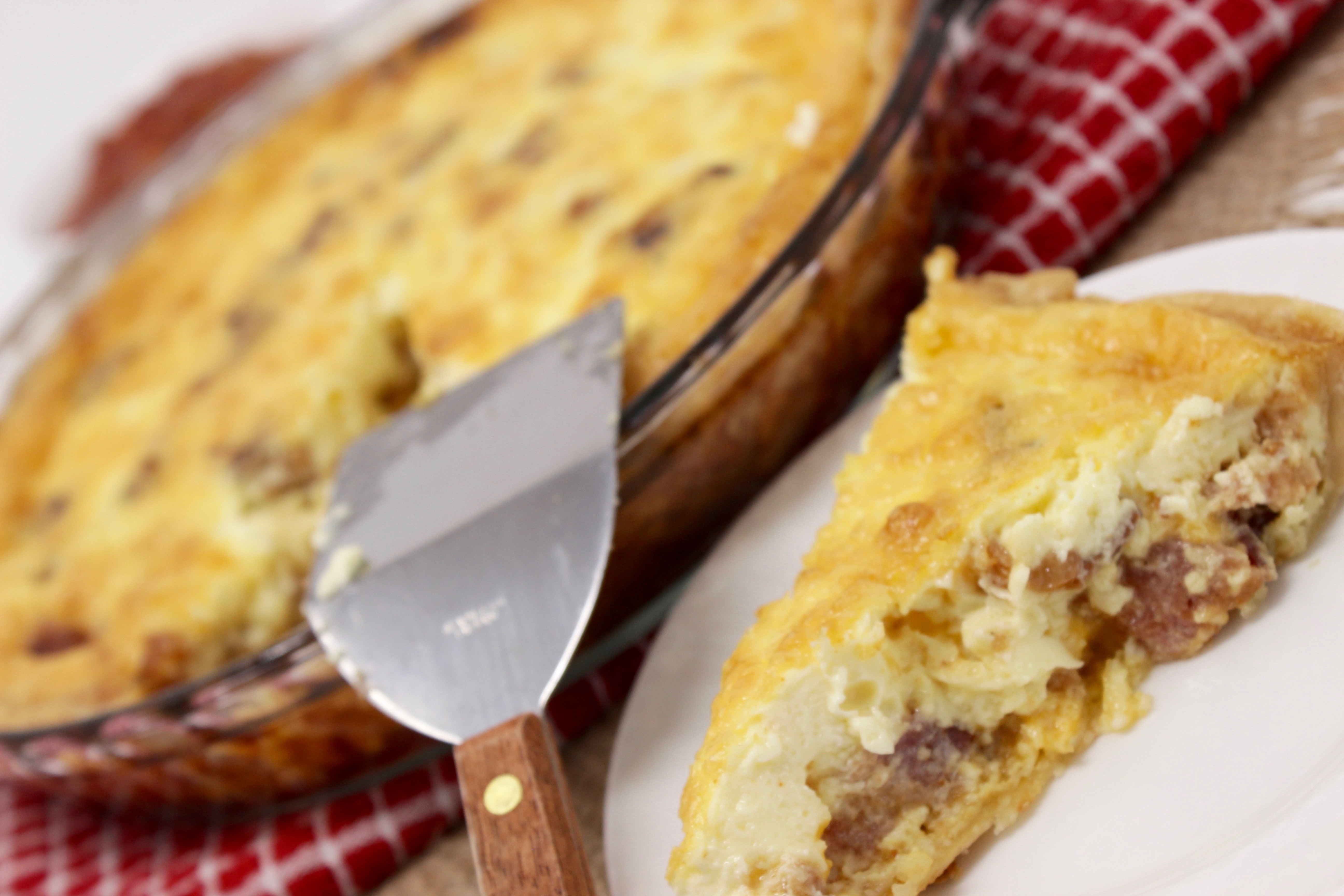
EASY BREAKFAST QUICHE WITH BACON AND CHEESE
Quiches are notoriously forgettable brunch food for me. Except for this quiche recipe.
Crispy bacon + colby jack + sharp cheddar + egg custard spiced with cayenne all nestled into a flaky, perfectly pre-baked crust is one heck of a recipe. People ask me for this recipe before they’re done with a slice, trust me on that one.
I made a couple changes to what is known as a quiche lorraine, which is essentially bacon and gruyère in a pie crust. Instead of gruyère , I used colby jack and sharp cheddar because my family likes it better that way.
It’s one of those holiday dishes that I’ll make because I hate making custom breakfasts for my family, it’s great for brunching with friends and it means I don’t have to get up at the crack of dawn for houseguests. It’s the recipe to reach for when you just want a really good breakfast but want something special.
It’s quick enough, under 60 minutes, start to finish, when you want to make a breakfast-y lunch on a random Wednesday. Basically, this is what I make when I want to spend my time making something, not rush something quick and convenient, but don’t want to eat cereal for lunch.
HOW TO MAKE THIS BREAKFAST QUICHE
This is my version of blind-baking the crust. It can seem a little confusing the first time through but trust me, once you do it once or twice, it will be second nature.
It’s worth it.
STEP 1: BLIND-BAKE THE CRUST
Preheat your oven to 450 degrees Fahrenheit. Remove pie dough from refrigerator and leave at room temperature for 15 minutes.
On a lightly floured surface, roll out the crust to fit in the pie plate. If it tears, patch the holes together by pressing them.
There’s no need to make it look pretty at this point. You can trim away any extra dough with a paring knife, leaving enough to create an overhang to press against the insides of the plate, and then use your thumb to make a decorative edge.
Press the extra crust under the pie and then pinch/crimp the top and bottom together with your fingertips.
Line the pie with two sheets of aluminum foil and press down against the sides of the crust. This prevents the crust from puffing up and sagging during the blind-bake.
Bake for 5 minutes at 450, then pull the pie out of the oven and take off the foil. Bake for another 5 minutes or until the crust looks dry and the edges are pale gold but not browned.
Remove from oven and cool on cooling rack for at least 20 minutes. Reduce oven temperature to 375 degrees.
STEP 2: COOK THE BACON
Meanwhile, place 8 slices of bacon in a large, unheated skillet. Cook over medium heat until slices are nicely browned and crisp.
Flip over and cook a couple of minutes longer. Bacon is done when fat portion of bacon looks translucent and meat portion is deep reddish brown.
Drain well on paper towels and allow to cool. Once cool, crumble into small pieces.
We recommend using thick-cut bacon. If you’re unsure whether bacon is crispy enough, err on the side of crispy, because if it’s not crispy enough, it will soften as it sits in custard mixture and won’t provide that nice textural crunch when biting into quiche, though it won’t hurt anything, since you’ll just have a chewy bacon rather than a crunchy one.
Save bacon drippings to cook other foods or eggs.
STEP 3: MIX THE CUSTARD
Add eggs, cream, salt, sugar, and cayenne to a large mixing bowl with a spout or a liquid measuring cup with a spout and whisk until combined. It should be uniform, light yellow in color, with no streaks of egg yolk remaining.
Once well-combined, stop mixing, and don’t over-mix the mixture as incorporating too much air will make the custard puff up in the oven and deflate as it cools.
STEP 4: ASSEMBLE THE QUICHE
Scatter pieces of bacon over cooled pie shell. Sprinkle onions over the bacon then divide cheeses evenly over the top, sprinkling as you go.
Slowly and steadily pour egg/cream mixture over cheese/onion/bacon filling, making sure to distribute egg mixture as evenly as possible. Do not stir the filling, because the egg/cream mixture will find its way into any spaces between ingredients.
Don’t worry if there are large chunks of ingredients peeking out, since you’re looking for a nice balance of veggies/cheese/meat throughout the pie. Stop filling pie when it’s about 1/4-inch shy of pie rim, because custard will rise when it’s baked.
Over-filling the pie can result in custard bubbling up and spilling over pie edges, which is a major pain to clean.
Also, adding too much filling makes it difficult to scoop up nice, defined slices. Use a light hand when adding veggies/cheese/meat, as a little goes a long way.
STEP 5: BAKE
Place the quiche in the preheated oven. Be careful and go slow, as it takes two hands to transfer the pie dish and the liquid will slosh around quite a bit.
Bake on the center rack for about 40 to 45 minutes. After 40 minutes check for doneness.
The edges should be set and look a little puffy. The center should not be liquid, but may still jiggle a bit, kind of like Jell-O.
Insert a toothpick into the center of the quiche. If it comes out clean, your quiche is done.
If it’s wet, bake another 5 minutes. If the quiche is getting too dark, loosely tent it with foil.
Remove from oven.
STEP 6: REST, THEN SLICE
Transfer the quiche to a cooling rack to cool for at least 10 minutes. The custard is not quite set and will continue cooking with residual heat during the resting.
Then cut into wedges. Enjoy!
See how easy this recipe is? The final product is nothing short of spectacular.
The top gets nice and golden and slightly puffed. The custard caramelizes a bit as it cooks against the edges of the pie, concentrating the flavor and making it even tastier.
The crust is flaky and has a nice snap to it and the creamy filling is chock-full of melty cheese and smoky bacon. Yum!
TIPS FOR THE BEST BREAKFAST QUICHE
START WITH A PREMADE PILLSBURY PIE CRUST
Everyone loves a quiche made with a homemade pastry. But in case you don’t want to make one, Pillsbury makes a premade crust in the refrigerated section of the grocery store that works wonderfully in this recipe.
It saves tons of time and blind bakes beautifully. Trust me, your table guests won’t know or care.
If you do opt to use a homemade crust, make sure you give it a good chill in the refrigerator before blind-baking.
DON’T SKIP THE FOIL DURING BLIND-BAKING
If you skip this step the sides of the pie will likely slump and the bottom will puff-up. Line the chilled pie shell with foil and add pie weights or dried beans.
Remove once done blind-baking.
SHRED YOUR OWN CHEESE
I know it takes an extra couple of minutes to shred cheese yourself, but it’s worth it. Pre-shredded cheeses usually contain additives like cellulose or starches to prevent it from clumping in the bag.
This prevents the cheese from melting well and may result in a grainy and oily texture. Trust me, it’s worth the effort.
ROOM TEMPERATURE EGGS AND CREAM
Remove the cream and eggs from the refrigerator ahead of time so they come to room temperature before using.
All the ingredients should be room temp. Especially important is allowing eggs and cream to come up to temp, as these will blend together more smoothly.
Also, you don’t want to pour cold custard into a warm pie crust; everything will bake more evenly when ingredients start out at room temp. Not going to destroy you if you don’t, but easier on temp.
USE A PIE SHIELD IF THE CRUST EDGES START GETTING TOO DARK
The crust on the edges of a pie is thinner and will get darker sooner than the pie. If this happens well before the 40 minutes are up, you can lay strips of foil or a pie shield over the edges.
A pie shield is a ring that lays over the edge of a pie to prevent burning; silicone shields are flexible and will conform to a pie plate and can be lifted during baking to check on your pie. I highly recommend owning one; there’s nothing worse than a perfectly baked pie with a scorched crust.
VARIATIONS TO TRY
Once you’ve got the hang of a basic quiche recipe, have fun adding your own ingredients. Some ideas:
- pepper jack instead of colby jack for a little more zing and the same consistency
- diced ham instead of bacon to skip the bacon-cooking step
- add 1/2 cup diced bell pepper, cooked down ahead of time to get rid of excess water
- add a handful of spinach, cooked and patted dry to remove as much of the water as possible, since veggies release a lot of water and will thin out your custard if you’re not careful
- swap in gruyère, as it melts like a dream and the nutty flavor goes great with bacon
STORAGE AND MAKE-AHEAD INSTRUCTIONS
STORING LEFTOVERS
Once taken out of the oven, let the quiche cool for an hour. Then cover and refrigerate for up to 4 days.
To make reheating easier and more even, I recommend keeping the quiche in an airtight container instead of the pan it was baked in, and slicing it up before storing.
To reheat:
- For the best results: Warm individual slices in a 325° oven for about 15 minutes, loosely covered with aluminum foil. The foil will help keep the filling from overcooking, and protect the top of the crust from further browning. You’ll retain that crisp crust and silky-smooth, barely set custard.
- For a quicker method: Place one serving on a microwave-safe plate and heat on medium power for about 60 to 90 seconds until warmed through. This will give you a softer (which means soggier) crust, so I’d save this method for busy week-day breakfasts.
CAN I FREEZE A COOKED QUICHE?
Yes! Allow the quiche to cool, then slice and wrap slices tightly in plastic wrap.
Place wrapped slices in a large piece of aluminum foil or a large zip-top freezer bag and freeze for up to 2 months. To reheat from frozen, place slices on a parchment-lined or foil-lined baking sheet, loosely cover the slices with aluminum foil, and bake at 325 degrees until warmed through in the center, which should take about 25 to 30 minutes.
Freezing the quiche won’t affect its flavor, but the texture will be a little softer.
MAKE-AHEAD OPTIONS
- AHEAD OF TIME: Blind-bake the pie crusts the day ahead and keep them at room temperature, loosely covered. Cook and crumble the bacon ahead of time; cooked, refrigerated bacon will keep in an airtight container for up to 3 days. Mix up the custard and keep that in the refrigerator until you’re ready to use it. Allow the custard to sit on the counter for about 15 minutes before assembling the quiche so it’s closer to room temperature, which will help the crusts from getting soggy.
- For weekend brunches, holiday mornings, or any other occasion where you’ll be entertaining, you can assemble and bake the quiches the day ahead. Keep them loosely covered and store in the refrigerator. Rewarm in a 325°F oven for 15-20 minutes before serving.
FREQUENTLY ASKED QUESTIONS
CAN I MAKE THIS QUICHE WITHOUT A CRUST?
Yes. You can either pour the custard mixture into a cast-iron skillet or other oven-safe dish or use a disposable, pre-made crust.
For a full guide on how to make quiche without a crust, check out this recipe.
CAN I MAKE A CRUSTLESS QUICHE?
Absolutely. A crustless quiche will have a softer, more custard-y consistency and will also cut back on the carbs.
Simply omit the crust, grease a pie plate with cooking spray or butter, add your filling and custard, and bake at 375 degrees F for 35 to 40 minutes, or until a toothpick inserted into the quiche comes out clean. Think of it more as a baked frittata.
WHY DID MY CUSTARD COME OUT RUBBERY?
Remove quiche when a toothpick inserted into the quiche comes out clean. Do not wait for the quiche to appear done, carryover cooking will finish it off.
This is true with any baked item, but particularly so for egg custards. Check oven calibration with an oven thermometer, because chances are your oven is much hotter than 375F!
Egg custards cook at surprisingly low temperature. Overbaked egg custards will be rubbery because the egg proteins have contracted, squeezing out any liquid.
CAN I USE HALF-AND-HALF OR MILK INSTEAD OF HEAVY CREAM?
A substitution like half-and-half works well. However, you’ll get the richest and silkiest quiche if you use heavy cream.
If you’re looking to make substitutions for dietary reasons, I recommend using half-and-half if possible. The custard will be less rich, but it’s better than using milk.
Milk has less fat, which means the custard will be thinner and less rich. It will set up firmer during cooking.
Quiche made with milk tends to be more likely to weep.
MY CRUST SLUMPED DURING BLIND-BAKING.
WHAT WENT WRONG?
There are two possible reasons for this: the pie crust wasn’t cold enough or the foil isn’t bracing the sides of the pie crust. Refrigerate the pie crust after it’s been pressed into the pan for 15 to 20 minutes before blind-baking it.
Make sure that you are pushing the foil against the sides of the pie crust, not just laying it loosely on top of the pie.
CAN I MAKE THIS IN A DEEP-DISH PIE PLATE?
Absolutely. Make sure you leave plenty of room for the quiche to rise in the oven.
Bake time will vary depending on your oven, so use the toothpick test to determine doneness. If you choose to make this in a deep-dish pie plate the filling will be thicker and will require some more than what fits into one pie shell.
Be sure to use a deep-dish refrigerated pie crust. This will take an additional 10-15 minutes to bake so check it with a toothpick every 5 minutes after it’s been in the oven for 40 mins.
HOW MANY PEOPLE DOES THIS SERVE?
This recipe makes a standard 9″ pie plate which can be sliced into 6-8 servings depending on the situation. If this is a main dish in a brunch and you’re serving fruit or a side salad then I’d say it’s reasonable to divide it into 6 slices.
If it’s one of many dishes at the table then it’s more practical to slice it into 8. Either way, quiche is pretty darn filling so one slice will be plenty.
It’s rich and satisfying from the combination of egg and cream and then you’re doubling down by adding bacon and cheese.
WHAT GOES WELL WITH THIS QUICHE?
Rich and hearty foods call for lighter sides. Fruit, a simple green salad with vinaigrette or some sliced tomatoes with salt are great accompaniments to quiche.
If you’re serving it as a main dish for brunch though it does go well with many of those classic brunch foods: roasted potatoes, a simple hash, fresh squeezed OJ or coffee. Believe it or not crisp sparkling water is the most surprising but successful combo since it cuts through the richness.
WHAT IS THE SECRET TO A GOOD QUICHE?
Blind baking the crust and baking gently. Blind baking ensures a crispy, not soggy bottom.
Baking gently means take it out of the oven as soon as you can so that the custard will be creamy and not rubbery. Grate your own cheese, use room temp eggs and cream and allow the quiche to rest for 10 minutes before slicing.
WHAT ARE THE MOST COMMON QUICHE MISTAKES?
The biggest quiche mistake is overbaking it. You want there to be a slight jiggle, think of the wobble in a bowl of Jell-O, in the middle.
Other common mistakes are not blind baking the pie crust which makes the bottom soggy, filling the pie crust too high, which will lead to messes in your oven, whisking the egg mixture too much, which causes the quiche to rise up and then collapse, and slicing it before allowing it to rest, as the final set happens as it’s resting, so give it that 10 minutes before slicing.

Easy Breakfast Quiche with Bacon and Cheese
Ingredients
- One Pillsbury Pie Crust or make your own
- 8 thick bacon strips cooked and crumbled
- 1/2 cup colby jack cheese pepper jack would be delish as well!
- 1/2 cup shredded sharp cheddar cheese
- 1/3 cup finely chopped onion
- 4 extra large eggs
- 2 cups heavy whipping cream
- 3/4 tsp salt I use sea salt
- 1/4 t. sugar
- 1/8 t. cayenne pepper
Instructions
- Grab your pie dish.
- Unroll and lay your pie crust in the dish. Cut the excess of the edges with a paring knife.
- Put two layers of foil over the pie crust and bake at 450 degrees for five minutes.
- Take the foil off and bake for an additional five minutes.
- Let the pie crust cool for atleast 20 minutes.
- Fill the pie crust with the bacon, onion and cheese.
- Mix the remaining ingredients and pour over the pie dish.
- Carefully transfer to an oven preheated to 375 degrees, noting that you'll need to turn the temp down after baking the pie crust.
- Bake for 40-45 minutes or until a toothpick comes out clean.
- The quiche will still jiggle a little, but once the toothpick comes out clean, it's good to sit and set up.
- Let sit for ten minutes after baking and cut in pie pieces.