

GRILLED POTATO SIDE DISH
Hi friends. Today, I’m happy to bring you a classic.
This grilled potato side dish never misses at the cookout.
WHAT YOU NEED
- 6-8 red potatoes, washed and sliced thin
- 4 bacon strips, cut in half lengthwise, yielding 8 half-strips of bacon
- 3 Tbsp butter, cut into pats
- 8-10 baby carrots, diced
- 1/4 onion, diced
- 1 green pepper, diced
- 2 tsp seasoned salt
- Heavy-duty aluminum foil
- Cooking spray
INGREDIENT NOTES
THE POTATOES: This recipe was designed around red potatoes. These little guys can take a lot of steaming and still maintain their consistency.
Other white potatoes will work, but may turn to mush, particularly russets since they’re starchier. I’m sure Yukon Golds would work well, too.
This recipe will serve about 6 people as a side dish.
THE BACON: You can use regular or thick-cut bacon. Thick-cut will take longer to render, but has more fat and flavor than regular.
THE BUTTER: Don’t skimp here – the potatoes aren’t getting charred on the grill, so they’ll need the richness of the butter.
SEASONED SALT: Usually, this means Lawry’s Seasoned Salt.
Notes on recipe: This recipe makes the most of the juices released by the ingredients, because the potato and bacon flavors mingle as they cook and the bacon fat coats the potatoes and makes them taste like they were actually grilled. All of the flavors are amplified since they’re cooked by steam and the potatoes are actually braised a bit in the juices that collect at the bottom of the foil as the butter melts.
These are easy to underestimate, so give them a chance and I’m sure you’ll be converted. Make sure the potatoes are sliced thin enough to ensure they’ll be thoroughly cooked in the given amount of cooking time.
If they are too thick, you’ll have a cooked outer layer but a raw middle.
THE VEGETABLES
- Spice Blend: A combo of spices that go great with potatoes and on the grill. If you use table salt you’ll be missing out. It’s a mixture of salt, paprika, turmeric and other spices.
- Carrots, green peppers and onions: These veggies add flavor and color. The juices from them will cook with the potatoes and enhance their flavor. The carrot adds a little sweetness, the onion mellows out and the green pepper adds a savory freshness. If you don’t care for green peppers try yellow or red onion, red bell pepper or even some sliced celery.
WHY THE FOIL PACKET METHOD WORKS
By combining all of the ingredients into a foil pouch, the vegetables get braised on both sides by the butter and bacon fat mixing with the steam inside the foil. This way they come out tender (steamed) but not boiled or watery and the flavors are concentrated and tasty, like a slow-cooked roast, not dry like they might be on the grill.
The bacon goes on the bottom of the potatoes so the fat will render into the potatoes as it melts. We divide the butter and vegetables in half and make 2 layers to help season all of the potatoes.
Bonus points, the foil itself can be served from, which means less dishes after the cookout.
STEP-BY-STEP INSTRUCTIONS
STEP 1: PREP YOUR VEGETABLES
Thinly slice the red potatoes leaving the skins on. Make sure to scrub them well.
Tip: If you use a mandoline slicer it’s much easier to get them to be very thin and uniform, which means they’ll all cook evenly. Dice up the green peppers, carrots and onions.
STEP 2: PREPARE THE FOIL
Spritz a little cooking spray onto the middle of a heavy duty piece of aluminum foil, which should be about 18” to give you some working space.
STEP 3: LAYER THE INGREDIENTS
- Add about 4 half-strips of bacon
- Add ½ of the red potatoes in an even layer
- Sprinkle the spice blend
Divide carrots, onion, and green pepper in half; place half of them on top of the potatoes. Add two of the thin pats of butter and half of seasoned salt.
Repeat potato/vegetable/butter/seasoning layers. If using bacon you can either place it on top of the potatoes, or weave it into the second layer of potatoes.
STEP 4: SEAL THE PACKET
Bring the two long sides of foil together over the filling, folding/rolling them down towards the potatoes. Fold ends of foil over, making sure to get a tight seal on the packet.
Make sure there’s a pocket of air in the top of the packet; this will be where the steam collects. The tighter you can seal the ends of the packet the better.
If steam escapes the potatoes won’t cook as well.
STEP 5: GRILL
Preheat grill to a medium heat, about 350-375°F. Place potato packets directly on the grates and cook for 35-45 minutes, turning packets over half way through cooking time.
Resist the urge to peek into the packets. Let all of that delicious steam stay contained within the foil so the potatoes can cook.
STEP 6: OPEN AND SERVE
At the 35 minute mark you can open one of the packets and poke a piece of potato with a fork to make sure they’re done. They should be very tender; if potatoes are still resisting your fork reseal the packet and leave on grill for another 5-10 minutes.
When done, be sure to use tongs to grab a corner of the foil and turn the opening away from you before opening packet. There will be very hot steam escaping the packet.
Serve potatoes directly out of foil, or dump onto serving dish. Be sure to scrape juices from bottom of packet over cooked potatoes.
OVEN METHOD
You can also cook the potato packets in a 350°F oven for about 45 minutes. The only downfall to cooking in an oven is that they won’t be quite as smokey tasting; however, an oven does allow you to cook a lot of packets at once.
Most grill’s cooking areas aren’t big enough to cook that many foil wrapped potato packets at once.
CAUTIONS AND COMMON MISTAKES
Potato slices need to be very thin for proper cooking. Anything more than 1/4 inch thick will most likely still be raw in the middle of the potato.
Try and slice them as thin as you can with a sharp knife; a mandoline is perfect for getting really thin slices of potato. Seal the packet as tightly as possible.
Moisture within the packet will cook the potatoes. Loose foil = half-cooked and dry potatoes.
COMMON PITFALLS TO AVOID:
- Resist the urge to check these out at the 20 minute mark!! You’ll let all of the precious steam out and add a lot of cooking time to these!! Trust me, wait at least 35 minutes!! I know this is hard to do when I’m cooking. I always want to go back and peek!! But these will be delicious if you give them enough time.
- If you’re having trouble with your foil, you might want to use heavy duty aluminum foil. Or, use 2 squares of aluminum foil. I find that the thin, use-it-and-toss-it kind of aluminum foil tears pretty easily when you’re folding and turning. I’ve ruined more than one packet this way. It’s so frustrating!!
- Cut the potatoes as evenly as possible so that they cook evenly. You’ll end up with some cooked and some still crunchy if you have some super thin and some thicker cuts.
SERVING SUGGESTIONS
These foil packet potatoes would be great with just about anything. Especially with any of these recipes:
- Grilled burgers or hot dogs, because the bacon and potatoes go great with these and they would be a favorite at cookouts. Serve with corn on the cob or a green salad for a complete plate.
- Grilled chicken recipes
- Ribeye Steak or Grilled strip steak recipes
- Grilled pork chop recipes
- Grilled brats or italian sausage recipes
VARIATIONS
CHEESY POTATO FOIL PACKETS
Once these are done, sprinkle with shredded cheddar cheese and loosely close the foil again. Let sit for 2-3 minutes for the cheese to melt.
Yum!! You can also add cubes of velveeta between the layers of potatoes and they will melt and mix in with all of the delicious liquids that collect in the foil and make a cheesy sauce.
Mmm!!
SPICY POTATO PACKETS
In this version of foil wrapped potatoes you’ll want to skip the seasoned salt and instead add cajun seasoning, a small diced up jalapeno pepper and a sprinkle of cayenne pepper. These would be great with grilled chicken or fish.
GARLIC HERB VERSION
For a much subtler flavor that will go well with a chicken breast or other grilled fish or chicken recipes, skip the seasoned salt and add the following:
- Garlic powder
- Onion powder
- Dried rosemary
- Dried thyme
- Salt and pepper
CAMPFIRE VERSION
If you’d like to make these over an open campfire lay them directly on top of the coals, not in the flames, and cook 35-45 minutes. The coals aren’t even, so I’d suggest turning them over about every 10 minutes.
Start checking for doneness around 30 minutes.
STORAGE AND LEFTOVERS
No good deed goes unpunished: potato packets DO NOT freeze well. Defrosted cooked potatoes tend to be grainy and fall apart.
Only make as many packets as you think you’ll be able to eat within a couple of days. But, if stored in an airtight container, the leftovers will keep in the refrigerator for 3-4 days.
When ready to eat them again, microwave on High in 90 second increments, stirring between microwaving and adding a little water to the container if you think the potatoes will benefit from additional moisture, or heat in a skillet with a little butter over medium heat until heated through. The bacon fat and butter in the recipe means they won’t dry out and will even come out better than they went in, featuring crisped edges.
SCALING THE RECIPE
As written, this recipe makes about 6 side dish servings, in 2 separate foil packets. Each packet serves about 3.
If you’re cooking for a crowd, make more packets rather than a super-sized one. Larger packets will take longer to cook and will not seal well.
Multiple packets will cook at the same time just fine. If your grill has hot spots, you may need to rotate the packets.
FREQUENTLY ASKED QUESTIONS
CAN I USE REGULAR FOIL INSTEAD OF HEAVY-DUTY?
While these packets won’t touch direct heat, they are going to spend some amount of time on the grill and will be heavy because they are essentially an all-in-one cooking pot. Heavy duty aluminum foil will hold up best.
If you don’t have any, line up 2 layers of regular aluminum foil so they don’t tear as you assemble the packets or flip them during cooking.
DO I NEED TO PARBOIL THE POTATOES FIRST?
If you slice them thin enough, there’s no need to precook the potatoes. They will cook through in 35-45 minutes in a tightly sealed foil packet.
If your slices are thicker than 1/4 of an inch, add 10-15 minutes to the cook time.
CAN I PREP THESE THE NIGHT BEFORE?
If you assemble these ahead of time, say the night before, keep them refrigerated and UNSEALED until you’re ready to cook. Potatoes will give off moisture and will react to the salt if you assemble the night before and seal.
Seal right before placing them on the grill.
MY POTATOES WERE STILL HARD AT 45 MINUTES.
WHAT HAPPENED?
There are 3 potential problems here. It can happen when the potatoes are sliced too thickly, the packet wasn’t properly sealed (steam escapes) or the grill was too cool.
Return them to the grill, tightly sealed for another 10-15 minutes. Next time, watch the thickness of the slices and double-check your seals before placing them on the grill.
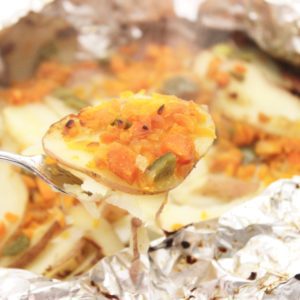
Grilled Potato Side Dish
Ingredients
- 4 pieces bacon cut in half
- 6 to 8 red potatoes washed and sliced
- 8 to 10 baby carrots diced
- 1/4 onion diced
- 1 green pepper diced
- 3 tablespoons butter about 4 slices
- 2 teaspoons seasoned salt
Instructions
- Lay a large piece of heavy-duty foil on the countertop.
- Spray foil with cooking spray.
- Lay out 4 half-strips of bacon in the center of the foil.
- Top with half of the potatoes, then sprinkle with half of the carrots, onion, and green pepper.
- Lay two pats of butter on top and sprinkle with 1 teaspoon seasoned salt.
- Repeat layers with remaining potatoes, vegetables, butter, and seasoned salt.
- Fold all ends of foil over tightly so the potatoes can steam inside the packet.
- Grill on a preheated grill for 35 to 45 minutes, until potatoes are tender.
- Alternatively, bake in a 350°F oven for about 45 minutes, or until potatoes are tender.