
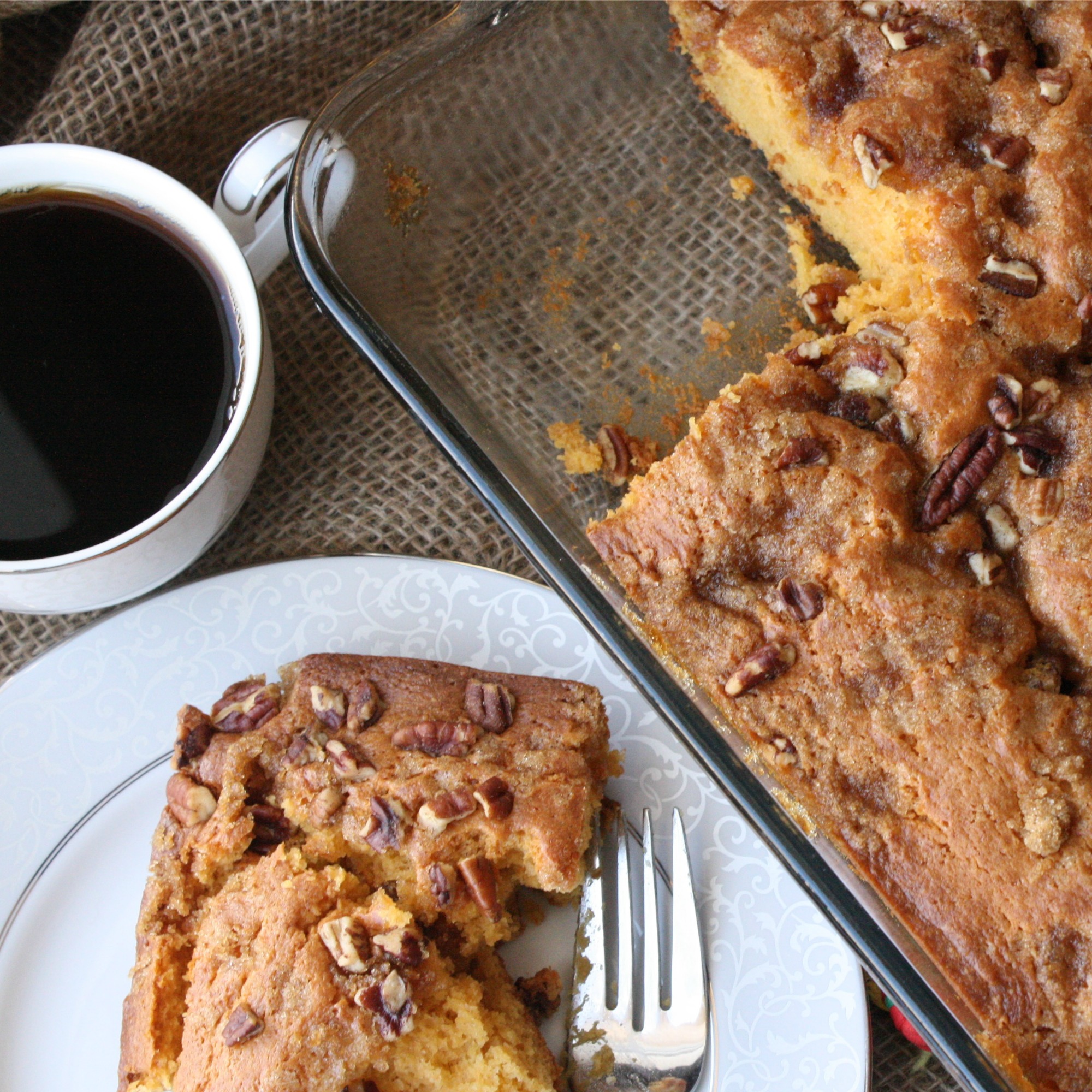
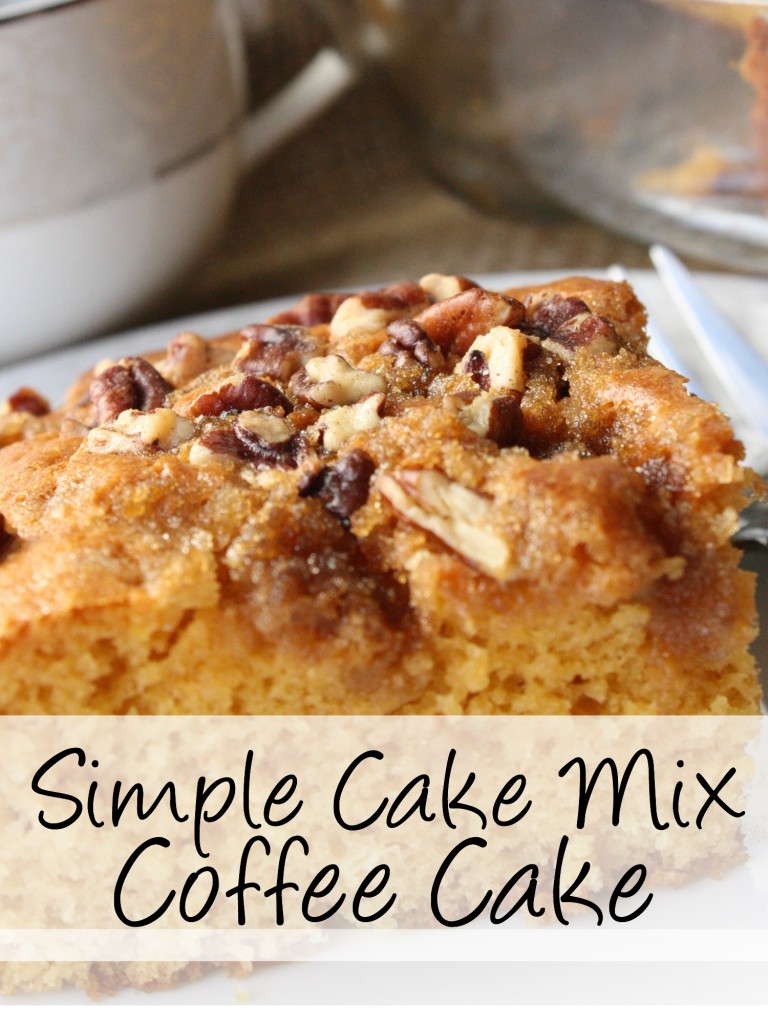
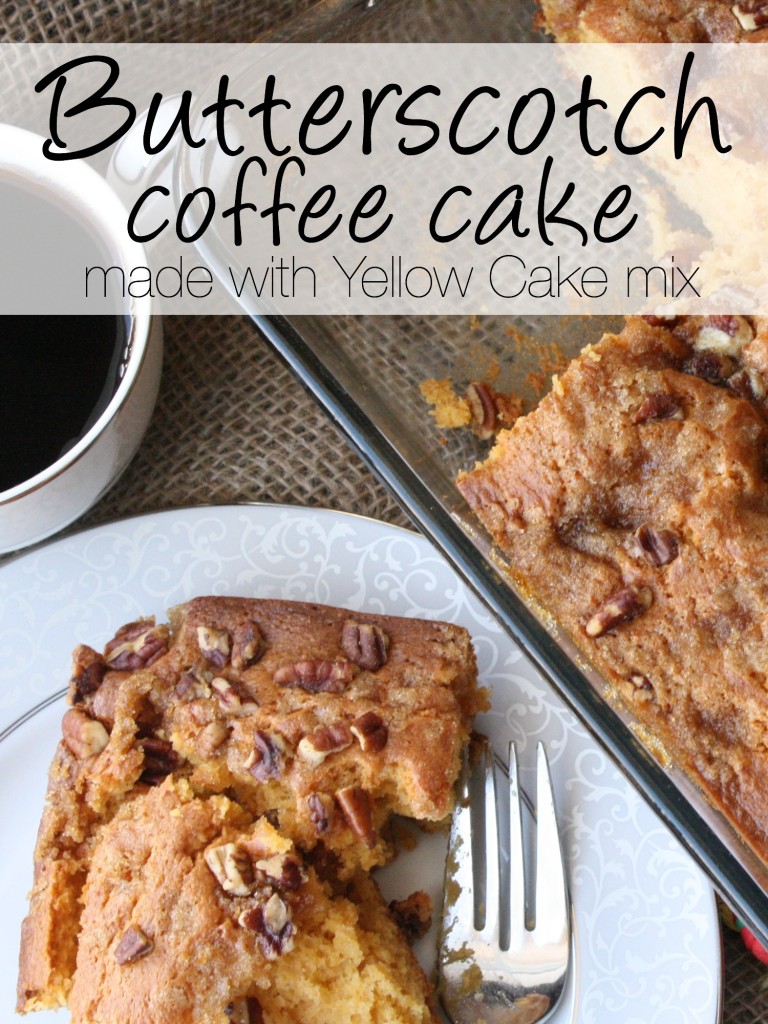
This Butterscotch Coffee Cake uses a cake mix and pudding mixes to make an unbelievably moist and deliciously flavored cake. Make-ahead friendly for effortless brunches.
If you’re looking for a show-stopping recipe for your next brunch, this is it. It’s a coffee cake, but it’s so much more than your run of the mill cake.
It’s made with two different pudding mixes, butterscotch and vanilla, and a yellow cake mix. Then it’s finished with a luscious crumbly brown sugar topping.
It’s incredible.
What Makes This Breakfast Easy
The cake can be made ahead. Make it the night before, cover, leave on the counter and you’re done. There’s no prep required the next morning.
Pecans are optional. Skip them or make half of the pan without pecans for those that don’t care for nuts.
This cake can be made with a hand-held mixer, stand mixer or by hand with a whisk. It’s forgiving and will rise and bake up beautifully regardless of method.
What to Know Before You Start
This cake bakes up more dense and moist than a typical coffee cake recipe. The pudding mixes help to create a tighter, more dense crumb in the cake. It stays moist for days. I’ve actually never made this recipe from scratch, but I’ve made many coffee cakes from scratch and found that this recipe has a much deeper flavor and a moister texture.
The cake is made in a 9×13 inch pan because it does make a lot. It’s a crowd-pleaser so it’s best to make it when you have a crowd to feed.
The crumbly brown sugar topping gets dropped onto the cake before it’s baked. Some of the topping sinks into the cake and creates an amazing caramelized sugar layer while some of the topping stays crisp and crumbly on top of the cake. Expect some of the topping to get picked off during prep.
This recipe is an absolute dream to snack on straight from the oven at night. Trust me. It’s dangerous.
Tips and ingredient explanation
Use only INSTANT pudding mix. The regular or cook and serve pudding will behave differently in the cake.
It can result in a gummy texture.
The addition of the pudding and the oil will result in a VERY thick batter that cannot be poured into the pan. Spread it into the pan with a rubber spatula.
Baking times vary with ovens so watch closely after 35 minutes for doneness. A toothpick inserted into the center of the cake should come out with a few crumbs attached to it, the edges of the cake will be pulling away from the sides of the pan and the cake should be completely set in the middle when it’s done.
The suggested baking time is 35-45 minutes.
The butter for the Crumb topping should be SOFT but not completely melted or the topping will make a paste that will spread instead of maintaining its lumpiness.
For the Cake Batter
one box yellow cake mix, a standard size is 15-16 ounces, and I used a store brand
one 3.4 oz. box INSTANT dry butterscotch pudding
one 3.4 oz. box INSTANT dry vanilla pudding
1/2 cup vegetable oil
four large eggs, cold from the refrigerator
1 cup water
Explanation of Ingredients
The yellow cake mix forms the basic foundation for this recipe. The dry butterscotch pudding adds a warm, brown-sugar type of flavor.
The vanilla pudding adds moisture and takes the edge off the butterscotch flavor. Water is the liquid of choice here to leave the door open for the butterscotch flavor to come through, since milk’s flavor might compete with the pudding flavor.
The eggs are the structural part of this recipe and bind all of the ingredients together. Oil is the fat in this recipe because a cake made with oil will stay moist longer that a cake baked with melted butter.
For the Crumble Topping
1 cup brown sugar, packed
2 tablespoons butter, softened (see note above)
1 cup chopped pecans, optional
The softened butter gets mixed with the dry ingredients to form a coarse, moist mixture that piles on top of the cake.
If you’re looking for a more molasses-y brown sugar flavor, opt for dark brown sugar. Otherwise, light brown sugar is fine.
Either way, make sure you’re adding 1 cup of brown sugar that’s been firmly packed into the measuring cup.
How to Make Butterscotch Coffee Cake
Step 1: Prep Your Pan and Preheat
Preheat the oven to 350°. Generously grease a 9×13 glass baking dish with butter or cooking spray.
Be sure to get the corners and sides, too; this is a pretty dense cake that likes to hold onto whatever pan it’s baked in.
As a tip, I find that glass bakeware is the best to use for cakes and bars that are super-dense like this one. Dense items take longer to bake, so metal pans, which conduct heat better than glass pans, may result in a cake with overly-done edges before the center is baked through.
Glass pans conduct the oven’s heat more evenly, resulting in an evenly-baked cake.
Step 2: Mix the Batter
In a large bowl, combine cake mix and pudding mixes. Add the water, vegetable oil, and eggs.
Mix with a hand mixer or a stand mixer fitted with a paddle attachment on medium speed for about 2 minutes. Batter will be much thicker than typical cake batters.
Scrape down sides of bowl and give it one last mix. Pour batter into prepared pan and spread to even out the batter’s surface.
Set aside.
Step 3: Make the Crumble
In a small bowl, stir together the brown sugar and melted butter with your fingers or a fork until it is crumbly and holds together when pinched. If the mixture seems too dry to hold together, add more butter, 1 teaspoon at a time, mixing well after each addition.
I like to add 1 cup of chopped pecans to the crumble and stir them in with my fork before spreading on top of the cake. Raw nuts are perfectly fine to add because the residual heat from the cake will toast them as it bakes, but I think pecans have better flavor when toasted.
Either way, I like the texture and slight bitterness of pecans to complement the sweet, soft goodness that is this cake.
Next, evenly distribute the crumble over the batter. I typically just scoop it up and drop it unevenly like snowflakes coming down.
Do not smooth it out or pat it down. The pockets of softness will create a nice contrast with the crispier parts.
Step 4: Bake
Bake in a preheated 350°F oven for 35 to 45 minutes. I typically check it at 35 minutes.
Some ovens are hotter than others; if yours runs hot, start checking at 33 minutes and it usually takes 40 minutes in my oven. If your oven tends to run a bit cool, it may take 45 minutes.
When the cake is done, the top will be slightly browned and set. The crumble will be a deeper amber color and will have sunk in a bit, which is ok.
The sides will be starting to pull away from the pan. You can also stick a toothpick or knife into the middle to check, and you should see moist crumbs and NOT wet batter.
If there is wet batter on the toothpick, bake 5 more minutes and check again.
I like to bake in a glass pan so I can monitor the color of the cake. The bottom and sides will be browned.
Darker metal pans will make it harder for you to monitor the cake’s color.
Step 5: Cool Before Cutting
Remove from oven and allow to cool in pan for at least 15 to 20 minutes before cutting. Because this is such a dense cake, it will be holding onto the heat and will actually continue to cook for a few minutes.
It will be ready when it has JUST set in the middle, and if it’s completely done in the oven, it’ll be overbaked. It’s best to allow it to cool before cutting, otherwise you’ll mess up the beautiful crumb layer on top.
You can serve at room temp or still slightly warm, which is not piping hot, just out of the oven.
Helpful Tips
If you don’t like pecans or someone doesn’t in your party, add pecans to the crumble and then only spread it on one side of the batter.
Room temp ingredients equal smoother batter. Take out the eggs to sit on counter 20 minutes before beginning recipe.
While I used a stand mixer, you can use a hand mixer with equally good results. If you do happen to be mixing by hand with a whisk, just make sure to really work at mixing well. You want to be sure to incorporate everything thoroughly so that none of the dry instant pudding clumps up.
Variations Worth Trying
Swap the Pudding Flavor: Butterscotch is what makes this recipe, but you can definitely use a different instant pudding mix if you’d like. Vanilla is more versatile and would be delicious.
Cheesecake is another option – its tangy flavor would provide an element of richness that goes well with butterscotch.
Use a second box of instant pudding: Want an even more rich and sweet coffee cake? Use two boxes of butterscotch pudding mix.
Add a Cinnamon Layer: Add 1 tsp of cinnamon to the brown sugar for a classic coffee cake flavor while still having that delicious butterscotch flavor coming through as well.
Use Walnuts Instead of Pecans: Pecans have a buttery sweetness that goes wonderfully in this crumbled topping. Walnuts are less rich and a little more bitter, making them perfect for taming overly sweet creations.
Try toasting walnuts for an even nuttier flavor. To toast walnuts or any nuts for that matter, simply add them to a dry skillet on medium-high heat, tossing frequently.
Set aside to cool before adding.
How to Store This Butterscotch Coffee Cake
At Room Temperature: Covered tightly with plastic wrap or foil or simply stored right in the baking pan with foil pressed to cover the top, this coffee cake will keep for 3 days. It will stay moist and fresh, and I promise you’ll hardly notice the difference.
The topping will soften a bit and become less crumbly by day 2.
In the Refrigerator: The coffee cake will last 5 days in the refrigerator. The cake will be a tad less moist and a tad firmer.
Allow individual servings to sit out for 10-15 minutes before digging in or zap ’em for 15-20 seconds in the microwave. Room temperature is best though.
Make-Ahead the Night Before: This recipe would be PERFECT to bake the night before so that it would be ready and waiting in the morning. Just allow the cake to cool completely then cover tightly with foil or plastic wrap.
It will be just as tasty at room temperature the next day.
Can I freeze slices of this cake?
Slices of this cake freeze well. Wrap in plastic wrap and store in a freezer-safe container or zip-top freezer bag for up to 2 months.
Thaw in the fridge overnight or a couple of hours at room temperature. The cake itself freezes fine but I found that the crumble does lose its texture and is softer after being frozen.
Equipment That Helps

A glass baking dish is best for this recipe because it will bake the cake more evenly than a darker-colored metal pan and it’s easy to check that it isn’t browning too much as it bakes. Use a 9×13.
A hand mixer is optional but helpful to mix this thick batter together. It takes me 2 minutes in my mixer. It’s doable without one, but it’s not fun.
A small offset spatula is helpful for spreading the cake in the pan, especially since it’s so thick.
Frequently Asked Questions
Why can’t I use regular pudding mix in this recipe?
Buy instant. Cook-and-serve pudding mix can’t be added to this recipe.
Pudding thickens because of a starch in the powder. For instant pudding, the starch has been chemically treated to activate with just the addition of cold liquid.
Regular pudding needs the starch to be heated to activate. If you try to make this recipe with regular pudding instead of instant, the cake may have a gummy texture.
It’s possible you may also notice that the pudding seems not to be cooked through in the middle of the cake, but the edges of the cake appear to be done baking. This is the effect of adding regular pudding to this recipe.
Why is this cake batter so thick? Is there something wrong with mine?
This batter is supposed to be pretty thick. There are two boxes of pudding in addition to the box of cake mix, and the amount of water is only 1 cup.
It’s difficult to pour it in the pan and needs to be spread. If it’s giving you trouble spreading it out, double-check that you added 1/2 cup oil and 1 cup water.
Why is this cake so dense? Isn’t it supposed to be fluffy?
This is a very moist and dense cake. Some folks expect it to be lighter.
It’s supposed to have a dense texture.
Can I use a Bundt pan or two 9” round pans?
Yes! If you’d like a prettier presentation, a Bundt pan would be gorgeous.
Just increase the baking time to 45-55 minutes. Test with a toothpick in the center to make sure it’s baked through.
Note: since the crumble goes on top of the batter, it will become an inner layer when you invert the cake from the pan. You could also use two 9” round pans.
Just decrease the baking time to 25-35 minutes and begin checking for doneness a bit sooner than usual. An 8×8 pan is not large enough for this recipe because it will be very overfilled and will not bake through in the center.
Why is my crumble pasty?
If the butter is too soft/melted when mixed with the crumble ingredients, the brown sugar will absorb the butter and create a paste-like consistency. However, you can totally salvage it.
Use a fork or butter knife to smear the crumble paste into thin, uneven shards. They will melt and caramelize a bit in the oven and make a lovely crumble layer once solidified.
For next time, use room temperature butter instead to prevent any issues.
How will I know when the cake is done baking?
The cake is ready to remove from the oven when a toothpick comes out with moist crumbs. It should be set and the crumble should be a rich amber color.
The cake will start to pull away from the sides of the pan, too. However, ovens run differently, so I’d rely on the toothpick test.
Can I add a glaze to the Coffee Cake?
A simple glaze made with 1 cup powdered sugar and 2-3 Tablespoons milk sounds lovely. You could also melt some butterscotch chips with 1 Tbsp cream and drizzle over top.
The crumble layer is pretty sweet so adding a glaze will make the cake more like a traditional cake/dessert. Just allow the cakes to cool completely before adding a glaze so it doesn’t run right off.
Related Recipes:
Looking for a make-ahead recipe to serve a crowd in the morning? Try this Quick Breakfast Casserole Recipe.
This Pork Chop and Hashbrown Casserole is great as a main dish at brunch and would go perfectly with Coffee Cake.
Although not exactly a breakfast item, Mongolian Beef is one of our most-visited recipes.